
Executive Overview
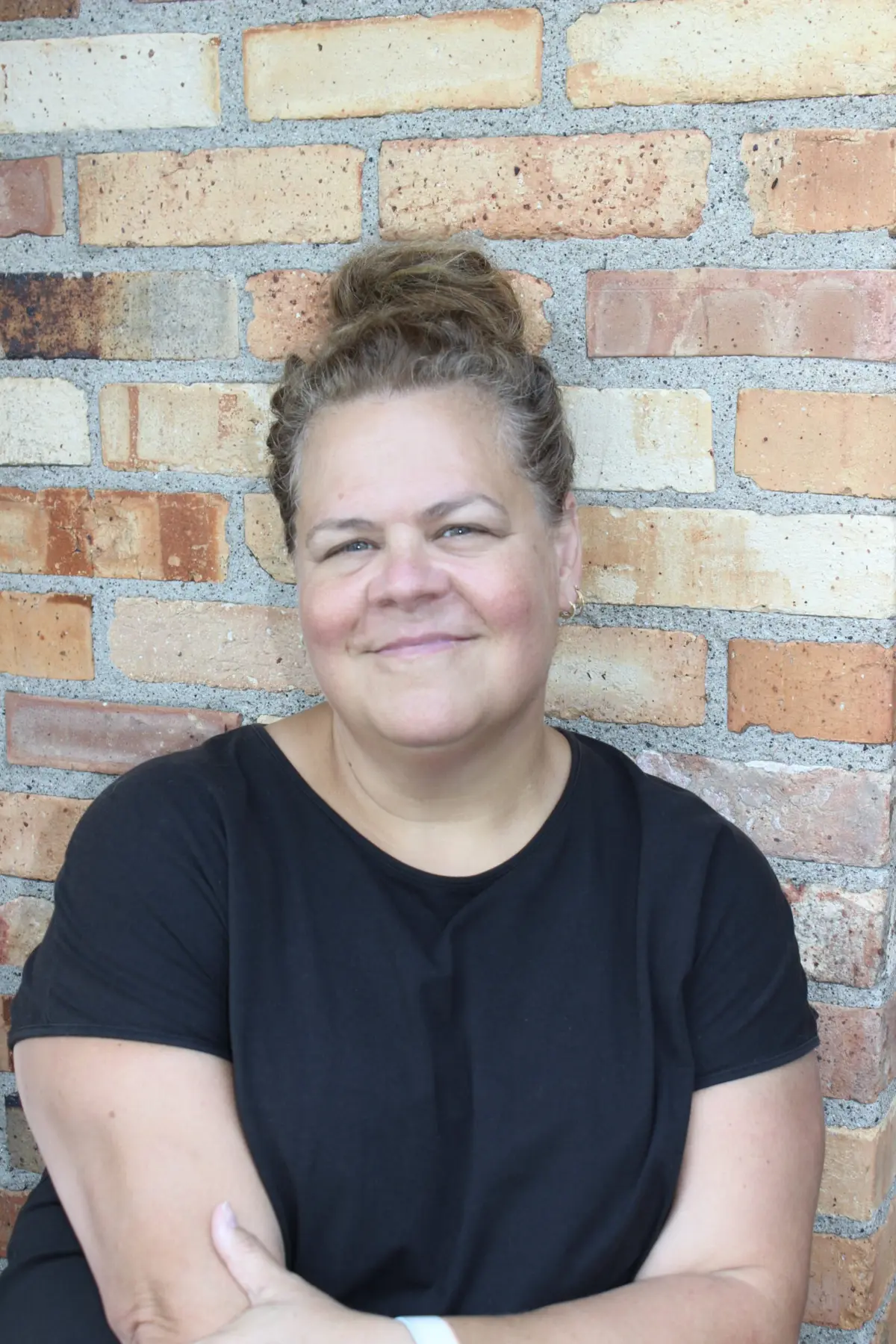
In the contemporary literary landscape, few works interrogate the silences of American expansion quite as sharply as the poetry of Catie Rosemurgy. Celebrated for her distinct lyrical voice and acclaimed collections—My Favorite Apocalypse and The Stranger Manual, both published by Graywolf Press—Rosemurgy has long charted the fault lines of memory, trauma, and domestic survival. A recipient of prestigious fellowships from the Pew Foundation, the National Endowment for the Arts, and the Rona Jaffe Foundation, the Philadelphia-based educator at the College of New Jersey brings a rigorous, inquisitive eye to the mechanics of history.
This week, The Missouri Review has designated Rosemurgy’s unsettling and masterful work, "Diorama 1871 (while a pie burns, the schoolteacher’s wife keeps going)," as its official Poem of the Week. Accompanying the feature is an excerpt that captures the sheer, overwhelming deluge of colonial settlement: an avalanche of goods, claims, bodies, and afflictions that flooded frontier towns like Gold River.
The poem, set against a backdrop of domestic routine colliding with cataclysm, serves as an entry point into a much larger project. In her accompanying Author’s Note, Rosemurgy reveals that the piece emerged from a haunting encounter with local history museums in the upper Midwest. Struck by the glaring omission of colonial displacement within their exhibits—particularly a diorama of a once-thriving, now-ghost town—the poet set out to break the silence. By animating the tiny white figures frozen within museum glass, Rosemurgy confronts the fatal mixture of institutional inability and willful ignorance that prevents modern society from reckoning with a shared, truthful narrative of its past.
Read Also
Detailed Chronology: The Genesis of a Poetic Project
The Upper Midwest Museum Encounters
The origin of Rosemurgy’s latest creative trajectory traces back to a series of visits she paid to regional history museums in the upper Midwest, not far from the landscape of her childhood. These institutions, common fixtures of rural Americana, are typically designed to celebrate regional ingenuity, pioneer resilience, and the rapid establishment of civilization along the frontier.
However, for Rosemurgy, the curatorial framework of these museums revealed a profound and disturbing omission. While meticulous attention was paid to the tools of settlement—the ironware, logging equipment, and agricultural machinery—the foundational reality of colonial displacement and indigenous erasure was whitewashed or entirely ignored. This absence of historical accountability did not read as a mere oversight; to the poet, the institutional silence felt hauntingly malignant, hanging heavily in the days following her departure.
Confronting the Miniature: The Gold River Diorama
At one specific museum, Rosemurgy encountered a permanent fixture that would ultimately anchor her new collection: a sprawling historical diorama depicting Gold River, a boomtown that had surged into existence during the nineteenth century only to eventually fade into a deserted ghost town.
Within the glass case, frozen in permanent stasis, were miniature figures—tiny, white-painted plastic or plaster representations of early settlers engaged in the daily theater of frontier life. This aestheticized miniaturization of a violent and complex historical transition fascinated and disturbed the author. Rather than viewing the diorama as a quaint relic of local heritage, Rosemurgy recognized it as a monument to denial. The miniature town encapsulated the hubris of rapid settlement and the subsequent amnesia that settled over the land once the boom went bust.
Imagining the Statuesque to Speak
Fascinated by the fatal mixture of institutional inability and deliberate unwillingness that paralyzes modern attempts to build a cohesive, honest public narrative of American history, Rosemurgy made a radical artistic choice. She decided to give voice to the inanimate.
Beginning with the premise that the tiny figures trapped inside the museum diorama could bear witness, she started crafting poems from their perspective. In works like "Diorama 1871," the ordinary domesticity of frontier life—exemplified by a schoolteacher’s wife managing household chores while a pie burns in the oven—collides with the overwhelming, chaotic influx of civilization. The resulting poems serve as linguistic excavations, peeling back the layers of dust, shavings, and institutional omissions to expose the raw physical and psychological toll of westward expansion.
Supporting Context & Metrics: The Weight of Settler-Colonial Archives
To fully understand the heft of Rosemurgy’s poetic intervention, one must examine the sociological and historiographical data surrounding nineteenth-century frontier settlements like the fictionalized Gold River.
The Logistics of Sudden Influx
The excerpt from "Diorama 1871" cataloged by The Missouri Review reads almost like an inventory of colonization, categorized by sheer accumulation:
- Material Infrastructure: stools, bunks, bowls, shovels, nails, cleavers, ladders, chutes, pipes, levers, cinches, planks, bolts, shears
- Land Commodification: stakes, plots, parcels, holdings, claims, allotments
- Maritime and Logistics: freighters, schooners, barges, barks, steamers
- Legal and Social Records: disputes, interests, debts, ledgers, accounts, names, births, graves, clans, vows, curses, oaths
Historically, the acceleration of the American frontier was defined by this hyper-fixation on quantification. Land offices tracked acres down to the decimal; shipping manifests recorded every barrel of flour and iron wedge; census takers attempted to map the demographic explosion of newcomers. Yet, as Rosemurgy’s poem acutely observes, this bureaucratic obsession ultimately broke down under its own weight: "Accurate records could not be maintained. They lost track of what hurt and how much and who felt it."
The Physical Toll of Frontier Realities
While traditional museum dioramas sanitize the pioneer experience into a clean narrative of progress, archival medical records from nineteenth-century settlement towns paint a grim picture of physical degradation. The body count of expansion was not merely measured in land wrested from original inhabitants, but in the bodily toll extracted from the settlers themselves.
Rosemurgy’s catalog of physical ailments in the poem reflects historical realities well-documented in frontier diaries and surgeon logs:
- Trauma and Injury: nicks, cuts, bruises, rots, punctures, sprains, fractures, limps, twists, tears, pulls, knots
- Medical Intervention: pithings, pokings, severings, suturings, swellings
- Epidemic and Environmental Illness: infections, fevers, fugues, visions, airs, aches, contusions, blisters, ruptures, drainings
- Dermatological and Systemic Stress: abrasions, breakings, brandings, bulgings, boils, plaques, rashes, pimples, pustules, scrapes, bumps, gashes, stings, dislocations, oozings, numbness, faintings, blindings, chokings
By placing the mundane objects of commerce side-by-side with the intimate vocabulary of bodily breakdown (femurs, arteries, knuckles, spines, tongues), Rosemurgy bridges the gap between macroeconomic history and visceral human suffering. The museum diorama attempts to present a clean, orderly snapshot of progress, but the poetry insists on bleeding through the cracks of the display case.
Official Statements & Critical Reception
The Critical Acclaim of Catie Rosemurgy
Catie Rosemurgy’s contributions to American letters have consistently drawn praise for their linguistic verve, psychological depth, and formal inventiveness. With the publication of The Stranger Manual and My Favorite Apocalypse through Graywolf Press, critics noted her unique ability to inhabit eccentric, hyper-articulate personas that interrogate cultural anxieties.
Reviewers have frequently highlighted her capacity to balance whimsical phrasing with profound existential dread. Her receipt of fellowships from the National Endowment for the Arts, the Pew Foundation, and the Rona Jaffe Foundation underscores her standing as a vital voice in contemporary poetry—one capable of shifting effortlessly between personal introspection and sweeping cultural critique.
The Missouri Review Feature
The selection of "Diorama 1871 (while a pie burns, the schoolteacher’s wife keeps going)" as The Missouri Review’s Poem of the Week brings renewed attention to Rosemurgy’s ongoing book project. Editors at the publication have lauded the poem for its rhythmic accumulation and its haunting meditation on domestic endurance amidst historical upheaval.
In featuring the work alongside T.A.J. Vermeulen’s 1930 painting Gezin kijkt verschrikt op van het diner. Dat’s de wekker! as a conceptual companion, the journal emphasizes the uncanny shock of domestic interruption—a theme that runs deep through Rosemurgy’s exploration of the forgotten ghost towns of the American interior.
Future Outlook: The Evolution of Historical Memory in Literature
As American culture continues to grapple with the complexities of public memory, monuments, and institutional representation, literature plays an increasingly vital role in challenging sanitized historical narratives. Rosemurgy’s forthcoming collection, born out of her unsettling encounters in Midwestern history museums, points toward a broader movement among contemporary writers who refuse to let local history remain neatly packaged behind glass.
Redefining Regional Archives
The future of historical curation—and the literary responses it inspires—relies heavily on what cultural theorists call "counter-memory." By looking at the spaces where traditional museums fail—their blind spots, their deliberate omissions, and their romanticized dioramas—writers like Rosemurgy are constructing alternative archives. These projects do not seek to destroy the artifacts of the past, but rather to interrogate them, forcing the silent, miniature figures of history to speak of the costs, the violence, and the unrecorded grief that built the American landscape.
What Lies Ahead for Rosemurgy’s Work
With her new manuscript taking shape through these poetic excavations, readers can anticipate a collection that challenges our collective addiction to historical comfort. As Gold River and its phantom inhabitants step out of the museum diorama and onto the page, they bring with them a demand for accountability that extends far beyond the upper Midwest. Through Rosemurgy’s precise and relentless lyricism, the burnt pie in the oven and the endless inventory of settlement tools become enduring symbols of a past we are still learning how to name, record, and truly feel.

Comments
Facebook App ID not configured. Please add it in the Customizer.