
Executive Overview
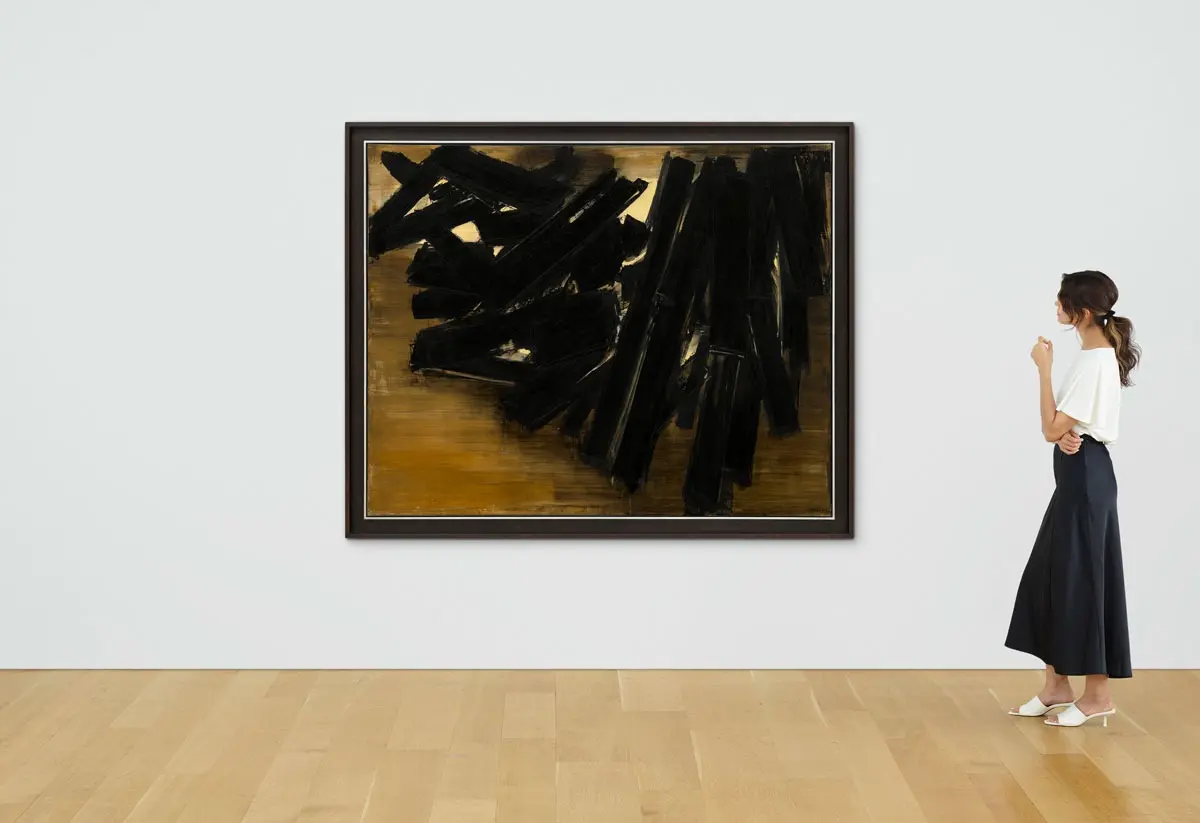
The intersection of high finance, elite real estate, and blue-chip art has once again generated a courtroom showdown in New York. At the center of the legal dispute is a monumental 1958 abstract painting by the celebrated French artist Pierre Soulages: Peinture 161 x 200 cm, 14 novembre 1958.
The painting, which achieved a hammer price of $4 million (totaling $4.955 million with buyer’s premiums) when it crossed the auction block at Christie’s last November, has triggered a high-stakes ownership battle. Two prominent American dynasties—the Zeckendorf real estate family and the heirs of retail and real estate magnates Patricia G. Ross Weis and Robert F. Weis—are locked in a bitter legal contest over who is rightfully entitled to the multimillion-dollar proceeds.
The funds from the sale are currently sequestered in a secure escrow account while a New York court determines the true legal owner of the work. The dispute escalated significantly when Jennifer Weis, Colleen Ross Weis, and Jonathan Weis—acting as personal representatives of the Estate of Patricia R. Weis—filed a comprehensive answer and counterclaim. In their court documents, the Weis children fiercely reject the Zeckendorf family’s ownership claims, describing their legal narrative as an evolving, "moving-target" series of allegations designed to manufacture negative press and obscure decades of inaction.
Read Also
Conversely, the Zeckendorf family originally initiated the lawsuit just days before the Christie’s auction in November, alleging that the prized abstraction was stolen from a family-controlled trust decades ago, specifically between 1977 and 1980. With millions of dollars hanging in the balance, the case has opened a Pandora’s box of decades-old probate records, missing invoices, accusations of fabricated documentation, and questions about the diligence of international art registries.
Detailed Chronology of a Disputed Masterpiece
To understand the modern legal battle over Peinture 161 x 200 cm, 14 novembre 1958, one must trace a provenance trail spanning more than six decades. The timeline reveals a web of inheritance, marital disputes, gallery transactions, and delayed reporting that forms the foundation of both legal arguments.
1. The Origin and Early Provenance (1959–1968)
There is rare consensus between the warring parties regarding the initial acquisition of the painting. In 1959, Marion Zeckendorf purchased the Pierre Soulages canvas directly from the legendary, now-defunct Kootz Gallery in New York City, a major champion of Abstract Expressionism and European modernism. For nearly a decade, the painting remained within the Zeckendorf household until Marion’s death in 1968.
2. The Post-Death Murkiness and the William Zeckendorf Sr. Era (1977–1984)
Following Marion’s death, the legal trail grows murky. According to the Zeckendorf family’s current narrative, Marion’s will dictated that upon the death of her husband, real estate tycoon William Zeckendorf Sr. (which occurred in 1977), the artwork should have passed into a protected trust for the benefit of the family. The Zeckendorfs maintain that William Sr. never personally owned the painting.
The Weis children sharply dispute this interpretation of history. Citing available historical evidence, their legal filing contends that William Sr. received the artwork with the full knowledge, consent, and blessing of the Zeckendorf family. The Weis counterclaim points out an awkward reality for the opposing side: the Zeckendorfs have previously acknowledged that William Sr.’s fourth wife, Louise Betterly Malcom, allegedly stole numerous personal items and artworks from William Sr.’s residence following his death—including the Soulages canvas.
Furthermore, the Weis estate emphasizes a glaring temporal discrepancy:
"Indeed, the family’s prior generation took no action to treat the Artwork as stolen for three decades. It is only the current generation that is pretending William Sr.’s receipt of the Artwork was illegitimate."
3. The 1984 Gallery Sale and the Niveau Invoice
The paper trail picks up definitively in 1984. Christie’s published provenance records stating that the prominent New York-based Gimpel and Weitzenhoffer Gallery sold the painting in 1984 to collectors Patricia and Robert Weis. However, the gallery’s historical records omit the exact date or mechanism by which Gimpel and Weitzenhoffer originally acquired the painting for inventory or consignment.
To bridge this gap, the Weis family introduced a critical piece of documentation in their counterclaim: an invoice dated August 1984 showing that Robert Weis purchased the work for $35,000 from the Niveau Gallery. The transaction is documented by an invoice signed by Richard Librizzi, who was employed at the gallery during that era. The Weis filing characterizes the transaction as an unassailable "arms-length" deal, noting that $35,000 was a fair and reasonable market price for a Soulages abstraction in 1984.
The Zeckendorf family, in their original complaint, dismissed the Niveau Gallery invoice as "a fabrication." The Weis family retaliated against this accusation in their recent filing, labeling the claim "wholly unfounded and nothing more than incredible deflection."
4. The 2024–2026 Auction and Legal Showdown
- August 2024: Following the death of Patricia G. Ross Weis, her children decide to liquidate a portion of their parents’ extensive art collection.
- August 2025: Christie’s formally announces a major auction featuring works from the Weis collection, scheduling the sale for November.
- November 11, 2025: Just days before the auction, the Zeckendorf family steps forward, filing a formal ownership claim asserting rights to the Pierre Soulages painting.
- Late November 2025: Rather than pulling the high-value painting from the auction block, both parties reach an agreement allowing the sale to proceed. The painting sells for a $4 million hammer price ($4.955 million total), with the proceeds placed into an escrow account pending judicial review.
- November 2025–February 2026: Correspondence between opposing legal counsels reveals shifting narratives. According to the Weis counterclaim, a November 11 letter from the Zeckendorfs claimed the painting was placed in a trust for William Sr.’s lifetime use and should have been distributed to the Zeckendorf heirs in 1980. However, a subsequent letter on February 12, 2026, conceded that Marion’s will permitted William Sr. to take title to artworks from her estate "as necessary" for his well-being. The February letter also reiterated the blame on the fourth wife, Louise Betterly Malcom, for stealing the painting from William Sr.’s estate, while still failing to explain why no theft was ever reported to law enforcement.
- Tuesday (Filing Date): The Weis children file their formal answer and counterclaim in a New York court, aggressively demanding the release of the $4 million escrow funds.
Supporting Context & Metrics: The Art Market and Recordkeeping Flaws
This legal battle exposes vulnerability in the due diligence processes of the international art market, shining a spotlight on institutional recordkeeping, historical provenance gaps, and database registrations.
The Role of the Art Loss Register (ALR)
A cornerstone of the Weis family’s defense rests on the absolute absence of historical red flags when Robert Weis purchased the painting in 1984. At the time of the transaction:
- The painting had never been reported to law enforcement as stolen.
- There was no active insurance claim filed for theft or mysterious disappearance.
- The work lacked any listing on the Art Loss Register (which did not yet exist in 1984, but was similarly absent from institutional tracking for decades after).
Records show that the Art Loss Register did not receive a claim for a Soulages painting matching this title until 2008. Crucially, that initial registration was submitted without images.
When interviewed by ARTnews, ALR director James Ratcliffe admitted the inherent fragility of such documentation: without images, "it is difficult to be absolutely certain that the works are one and the same although we worked on that basis."
Ultimately, the ALR registration was terminated in 2025. The nonprofit took this step after receiving no further evidence to substantiate the claim, alongside written confirmation from the registering party that they understood the registration would be removed so as not to impede the Christie’s auction.
The Mystery of the "Second Soulages"
In a fascinating twist of forensic art history, the Weis estate’s counterclaim introduces an alternate hypothesis that directly challenges the accuracy of the Zeckendorf family trust’s records.
According to the suit, Marion Zeckendorf had purchased a second Pierre Soulages painting—titled Peinture, 130 x 130 cm, 29 decembre 1958—also from the Kootz Gallery in 1959. The artist’s official catalogue raisonné documents that this second work was sold by Gimpel and Weitzenhoffer after Marion’s period of ownership.
The Weis legal team argues that Marion’s trust documents completely fail to account for this second Soulages painting. They posit that this glaring omission points to sloppy recordkeeping by the Zeckendorf trustees, who may have inadvertently confused the second 1958 Soulages painting with the one that successfully sold at Christie’s last November.
Official Statements and Legal Posturing
The rhetoric emanating from the legal camps is uncompromising, signaling that neither family is willing to settle out of court without a definitive ruling on their moral and legal standing.
Paul Cossu, a partner at Pryor Cashman representing the Weis children, issued a direct and scathing statement to ARTnews:
"The Zeckendorfs’ claims against the Weis Estate’s good and lawful title to this artwork and its sale proceeds are baseless. The Estate eagerly looks forward to litigating the unfounded allegations of the Zeckendorf’s and proving the Estate’s entitlement to the artwork’s sale proceeds."
In their formal court filings, the Weis children characterize the Zeckendorf family’s shifting legal theories as "flatly false," arguing that the original complaint contained "irresponsible and now-withdrawn allegations… offered for no purpose other than to garner negative press attention."
Meanwhile, representatives for the Zeckendorf family have maintained a guarded posture. When reached for comment by ARTnews, an attorney representing the Zeckendorfs declined to speak publicly on the matter, choosing instead to let their legal memoranda speak for the family in court.
Future Outlook: What Lies Ahead for the Escrow Millions?
As this contentious litigation proceeds through the New York court system, several critical questions remain unanswered, and the ultimate destination of the $4 million escrow fund hangs in the balance.
- The Burden of Proof on Laches and Statute of Limitations: Legal experts note that the Weis estate will likely lean heavily on doctrines of equity, such as laches—arguing that the Zeckendorf family waited unreasonably long (nearly half a century) to assert their rights, thereby prejudicing subsequent innocent purchasers like Robert Weis.
- The Authenticity of the Niveau Invoice: The court will inevitably have to evaluate competing claims regarding the validity of the 1984 Niveau Gallery invoice and the testimony surrounding the transaction executed by Richard Librizzi.
- Unraveling the Trust Administration: A New York judge will have to meticulously parse Marion Zeckendorf’s 1968 will, subsequent trust documents, and the mechanics of William Zeckendorf Sr.’s estate administration to determine whether the painting ever legally breached the trust boundaries—and whether the "fourth wife theft" narrative holds legal weight.
For now, Peinture 161 x 200 cm, 14 novembre 1958 rests safely in a physical sense, having found a new private buyer at Christie’s. But its financial shadow looms large over the New York legal landscape. The resolution of this case will not only determine which estate collects a $4 million payout, but it will also serve as a cautionary tale for collectors, galleries, and auction houses regarding the perils of long-dormant provenance claims in the high-stakes art market.



Comments
Facebook App ID not configured. Please add it in the Customizer.