
Executive Overview
Over the past twelve months, the international art world has faced a profound generational shift, bidding farewell to a cohort of visionary collectors whose dedication, intellect, and extraordinary philanthropy reshaped the cultural infrastructure of the modern era. These individuals were far more than passive accumulators of wealth and aesthetics; they were passionate patrons, institutional architects, and civic leaders whose outsize holdings and strategic benefactions breathed life into museums across the globe.
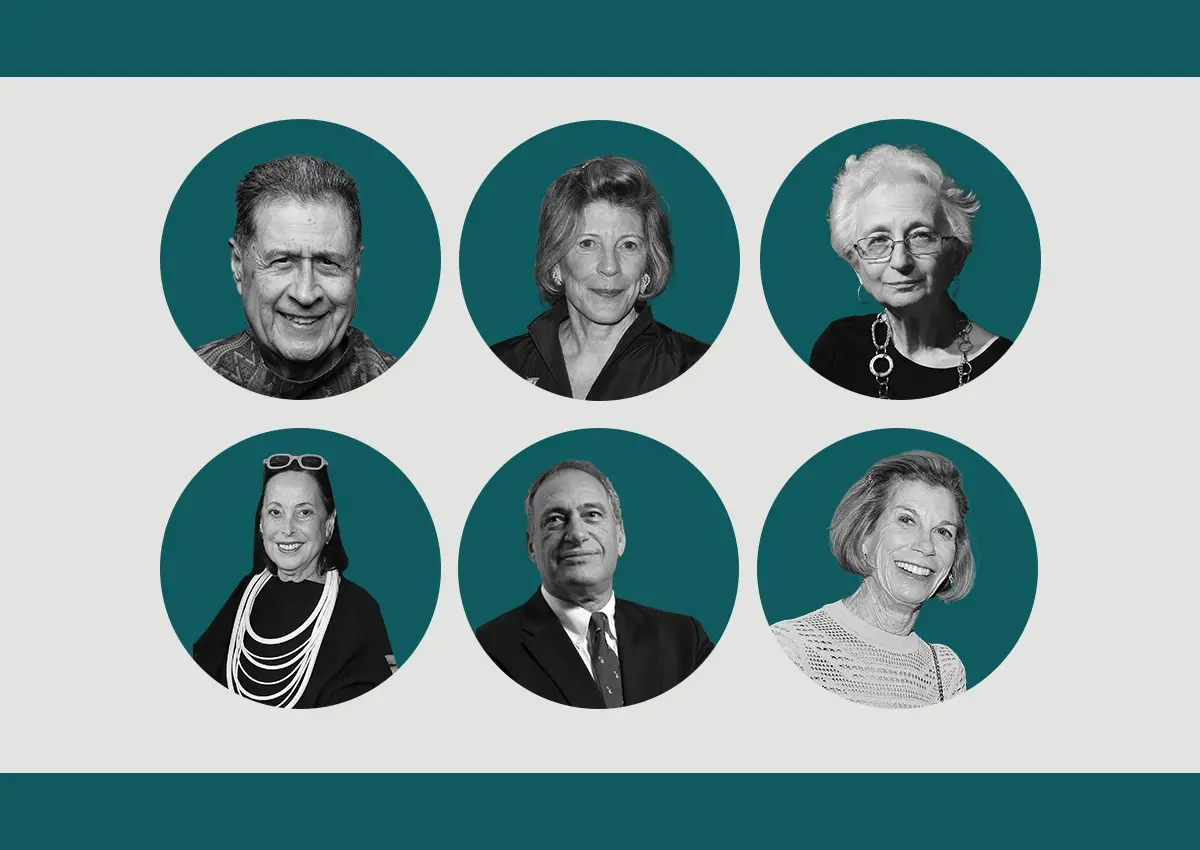
From the hushed galleries of the Museum of Modern Art in New York to the expansive halls of the National Gallery in Washington, D.C., the indelible marks left by Agnes Gund, Barbara Jakobsen, Dorothy Vogel, Susan Marx, John P. Axelrod, and Gilberto Cárdenas are currently being reassessed. Their passing—or the final, sweeping settlement of their estates—brings to a close a golden age of individual museum patronage. Unlike the transactional, highly financialized collecting models that often dominate the contemporary market, these six figures approached art as a public trust, a catalyst for social discourse, and an educational imperative.
This retrospective examines the extraordinary lives and cultural legacies of these six monumental figures. Through conversations with museum curators, fellow collectors, and institutional leaders, ARTnews explores how their timeless generosity bridged the gap between private passion and public enlightenment, permanently altering the trajectory of American and international museology.
Read Also
Detailed Chronology: A Year of Profound Institutional Transitions
The past year will be remembered by museum directors and art historians not merely as a period of mourning, but as a transitional epoch defined by the integration of monumental private holdings into public institutions. The timeline of these losses reflects a steady, sobering erosion of a foundational generation of tastemakers.

Spring: The Guardians of Modernism
The cycle of institutional mourning effectively began with the passing of figures deeply embedded in the DNA of mid-century and contemporary institutional development. Barbara Jakobsen, a stalwart of the Museum of Modern Art (MoMA) in New York, departed after decades of quiet yet profoundly effective stewardship. Alongside her, Agnes Gund—whose name is practically synonymous with progressive American arts philanthropy—left a vacancy at the highest levels of cultural governance. Gund’s leadership at MoMA was marked by a relentless push toward institutional inclusivity, championing artists whose voices had historically been marginalized by mainstream academies.
Summer: The Populist Visionaries
As the seasons turned, the art world reckoned with the loss of collectors who defied the stereotype of the aloof, ultra-wealthy connoisseur. Dorothy Vogel, who worked humbly as a librarian alongside her postal-worker husband Herbert, proved that profound institutional impact does not require staggering inherited wealth. Their joint accumulation of minimalist and conceptual art—acquired through disciplined budgeting and a laser-focused aesthetic vision—ultimately transformed the National Gallery of Art in Washington, D.C. Their passing and the final distribution of their collection marked the end of a uniquely egalitarian collecting narrative.
Simultaneously, Susan Marx’s passing reverberated through the mountains of Colorado and the broader West Coast cultural scene. Marx was instrumental in elevating the Aspen Art Museum from a regional showcase into an internationally recognized hub for avant-garde thought and exhibition-making.
Autumn and Winter: The Definitive Bequests
As the year drew to a close, the monumental gifts of John P. Axelrod and Gilberto Cárdenas were fully accessioned, bringing both sorrow for their passing and immense celebration of their archival generosity. The Museum of Fine Arts, Boston, absorbed an injection of 700 distinct artworks from Axelrod, fundamentally reshaping its holdings. Meanwhile, the Blanton Museum of Art in Austin, Texas, integrated Cárdenas’s staggering donation of 5,000 works of Latinx art—a transformative act that rewrote the art-historical narrative of the Americas and ensured that underrepresented creators would forever hold a place of institutional prominence.

Supporting Context & Metrics: The Scale of Generosity
To truly comprehend the void left by these six collectors, one must examine the raw metrics of their giving. In an era where museum acquisition budgets are perpetually strained by skyrocketing market values, private donations have become the primary engine of collection growth. The collective impact of Gund, Jakobsen, Vogel, Marx, Axelrod, and Cárdenas represents billions of dollars in cultural capital, translated directly into public access.
The Quantifiable Impact on Major Institutions
| Collector | Primary Beneficiary Institution | Estimated Scope of Impact / Key Holdings | Focus Area |
|---|---|---|---|
| Agnes Gund | Museum of Modern Art, New York | Countless acquisitions, institutional endowment, and social justice initiatives via the Art for Justice Fund. | Modern & Contemporary Art |
| Barbara Jakobsen | Museum of Modern Art, New York | Decades of trustee leadership, targeted acquisitions, and curatorial support. | 20th-Century European & American Art |
| Dorothy Vogel | National Gallery of Art, Washington, D.C. | Over 4,000 works collected with husband Herbert; thousands housed at the NGA and distributed nationally. | Minimalist & Conceptual Art |
| Susan Marx | Aspen Art Museum | Board leadership, capital support, and strategic collection development. | Contemporary Art & Regional Development |
| John P. Axelrod | Museum of Fine Arts, Boston | 700 diverse works spanning multiple eras, mediums, and cultural backgrounds. | American & Folk Art, 20th-Century Works |
| Gilberto Cárdenas | Blanton Museum of Art, Austin, Texas | 5,000 works of art representing a comprehensive survey of Latinx visual culture. | Latinx & Chicanx Art |
The Vogel Phenomenon: A Blueprint for Egalitarian Collecting
The story of Dorothy and Herbert Vogel remains one of the most remarkable case studies in the history of institutional patronage. Operating on a modest dual-income budget in New York City—Herbert as a postal clerk and Dorothy as a reference librarian—the couple dedicated virtually all of their disposable income to purchasing art directly from young, unheralded artists who would later become household names, such as Sol LeWitt, Robert Mangold, and Richard Tuttle.
By living among their art—storing paintings under their bed and sculptures in their closets—they developed an intimate relationship with the creators they supported. Their eventual decision to gift their entire collection of over 4,000 works to the National Gallery of Art, supplemented by the innovative "Fifty Works for Fifty States" program (which distributed portions of their collection to museums in every single U.S. state), redefined what it meant to be a national cultural benefactor.
Cárdenas and the Correction of the Canon
Gilberto Cárdenas’s donation of 5,000 works to the Blanton Museum of Art addresses a historic imbalance in American museum collections. For decades, major institutions struggled to adequately represent Latinx and Chicanx artists within their permanent galleries. Cárdenas, through decades of methodical, passionate collecting, built an archive that is nothing short of encyclopedic. By placing this colossal holding within a university art museum in Texas, Cárdenas ensured that future generations of scholars, curators, and students would have immediate access to a rich, complex tapestry of cultural expression that mainstream institutions had long overlooked.

Official Statements and Curatorial Perspectives
The loss of these cultural titans has prompted an outpouring of reflection from the curators, directors, and fellow collectors who worked alongside them. Their testimonies paint a vivid picture of individuals whose passion for art was matched only by their deep personal warmth and civic responsibility.
Speaking with ARTnews, senior curators at the Museum of Modern Art reflected on the stabilizing presence of Agnes Gund and Barbara Jakobsen during periods of intense institutional growth and economic volatility.
"Agnes didn’t just give money; she gave her moral authority, her incredible eye, and her boundless optimism," noted one senior MoMA curator who requested anonymity to speak candidly about institutional benefactors. "When Aggie walked into a gallery, she saw not just objects on a wall, but a challenge to make the museum more open, more reflective of the world outside its walls. Barbara Jakobsen shared that same quiet, unshakeable dedication. They were the institutional memory of an era that believed art could genuinely improve society."
The sentiment is echoed across the country in Boston, where the legacy of John P. Axelrod continues to animate the galleries of the Museum of Fine Arts. Axelrod was renowned for his eclectic taste, which rejected rigid categorization in favor of emotional resonance and formal daring.

"John saw collecting as an act of profound curiosity," shared a colleague from the MFA Boston curatorial team. "His gift of 700 works wasn’t just an addition to our inventory; it was an injection of personality. He collected with his heart first, and his intellect second. The breadth of his collection reflects a man who was deeply engaged with the human condition across diverse cultures and eras."
In Aspen, the transformation of the art museum from a local community center into a global destination is inextricably linked to Susan Marx. Colleagues remember her as a relentless advocate for artistic risk-taking.
"Susan understood that remote or regional institutions could punch far above their weight if they were bold enough," said a former director of the Aspen Art Museum. "She brought a sophisticated, international perspective to our board, yet she remained deeply committed to supporting the local community and ensuring that contemporary art was accessible to everyone who walked through our doors."
Future Outlook: The Evolution of Patronage in the Post-Legacy Era
As the art world digests the departure of Gund, Jakobsen, Vogel, Marx, Axelrod, and Cárdenas, a pressing question emerges: Who will step into the void left by this extraordinary generation of collectors?

The contemporary art market bears little resemblance to the landscape in which these patrons built their holdings. Today’s market is heavily financialized, characterized by hyper-accelerated auction cycles, speculative flipping, and the rise of ultra-wealthy tech and crypto entrepreneurs who often view art through the lens of asset management or status signaling rather than long-term civic stewardship.
However, curators and cultural analysts suggest that patronage is not dying, but rather evolving. The remarkable gift of Gilberto Cárdenas highlights a growing trend among contemporary collectors: a deliberate focus on rectifying historical omissions, championing identity-based narratives, and decentralizing the traditional East Coast/European museum axis. Collectors today are increasingly aware of their power to shape cultural equity, shifting away from anonymous corporate giving toward deeply personal, mission-driven philanthropy.
Furthermore, the democratization of information and the rise of digital platforms have empowered a new demographic of diverse, younger collectors who are beginning to forge relationships with regional institutions. While these emerging patrons may operate within a different economic and social framework, they inherit a rich lineage established by pioneers like the Vogels and Agnes Gund—a lineage that proves institutional support is most effective when driven by authentic passion, intellectual curiosity, and a commitment to public access.
Challenges Ahead for Institutions
For museums, the loss of these foundational trustees and donors presents immediate strategic challenges:

- Acquisition Budgets: With inflation and rising artwork valuations outpacing endowment returns, museums will increasingly rely on gifts-in-kind rather than cash purchases to grow their collections.
- Trustee Leadership: Replacing the institutional memory and visionary governance provided by decades-long board members like Gund and Jakobsen will require cultivating a new generation of dedicated civic leaders.
- Storage and Conservation: Massive bequests, such as Cárdenas’s 5,000 works or Axelrod’s 700 pieces, place immense logistical and financial strain on museum infrastructure regarding storage, conservation, and rotational display space.
Conclusion
The passing of these six remarkable collectors marks the definitive end of an exceptional chapter in art history. Yet, their enduring gifts ensure that their spirits will continue to inhabit the galleries, study rooms, and classrooms of the institutions they cherished. As museums navigate an uncertain future, the legacy of Agnes Gund, Barbara Jakobsen, Dorothy Vogel, Susan Marx, John P. Axelrod, and Gilberto Cárdenas stands as an inspiring monument to what can be achieved when private passion is placed in the service of the public good. Their collections remain living testaments to the belief that art is not a luxury to be hoarded, but a shared heritage to be preserved, studied, and celebrated by all.



Comments
Facebook App ID not configured. Please add it in the Customizer.