
Executive Overview
The global contemporary art market is navigating a complex period of strategic recalibration, defined by high-value private deaccessioning, blurring boundaries between high fashion and commodified fine art, and a structural pivot toward institutional inclusivity. In recent weeks, developments across major international capitals—from New York auction houses to Parisian national museums and Berlin cultural hubs—have underscored a shifting paradigm in how art is owned, monetized, and exhibited.
Most notably, whispers within elite market circles indicate that blue-chip American artist Jeff Koons is quietly liquidating roughly $100 million of his personal art collection through Christie’s. This move comes as the market for Koons’s own works stabilizes following historic peaks. Simultaneously, provocateur Damien Hirst has reignited the perennial debate over art as consumer merchandise through a high-end fashion collaboration with luxury cashmere house Barrie.
Institutional shifts are equally pronounced. Annick Lemoine, the newly appointed president of Paris’s Musée d’Orsay, has outlined a sweeping, female-focused curatorial agenda aimed at transforming the 19th-century institution into a "museum of debate." Meanwhile, structural challenges and security threats—such as a foiled robbery at the Musée Nissim de Camondo and reports of gallery downsizing in New York’s Tribeca district—highlight the ongoing volatility facing physical arts spaces worldwide.
Read Also
This comprehensive report examines these intersecting narratives, providing an exhaustive breakdown of the financial, cultural, and institutional forces currently shaping the international art ecosystem.
Detailed Chronology of Recent Art World Developments
Mid-September: The Foiled Raid at the Musée Nissim de Camondo
Security protocols were put to the ultimate test in Paris when an unidentified intruder attempted to breach the Musée Nissim de Camondo on a Saturday night. Housing a spectacular collection of 18th-century French decorative arts and paintings, the historic mansion located on the edge of the Parc Monceau was targeted under the cover of darkness. According to reports from Le Parisien, the perpetrator’s efforts were thwarted entirely by the building’s advanced electronic alarm systems, which triggered an immediate response from local authorities. Paris police have since launched a formal investigation to identify the suspect and determine whether the attempted break-in was a targeted hit or a random crime of opportunity. The incident serves as a stark reminder of the escalating security vulnerabilities faced by museums holding irreplaceable cultural heritage assets.
Late September: Jeff Koons’s $100 Million Deaccessioning Revealed
As first reported by The New York Times via insider sources within the upper echelons of the auction trade, Jeff Koons has initiated a discreet, multi-million-dollar sell-off of his personal blue-chip art collection. Estimated to total approximately $100 million, the liquidation features nine exceptional paintings spanning half a millennium of art history. The crown jewel of the consignment is Pablo Picasso’s monumental 1969 canvas Le Baiser, which alone carries an estimated valuation of roughly $40 million.
The collection, consigned by an anonymous "distinguished private collector" whose identity was leaked by two independent auction specialists, is scheduled to cross the auction block at Christie’s in New York this November. In addition to Picasso, the offerings include works by 19th-century French master Édouard Manet and Dutch Golden Age painter Cornelis van Haarlem.
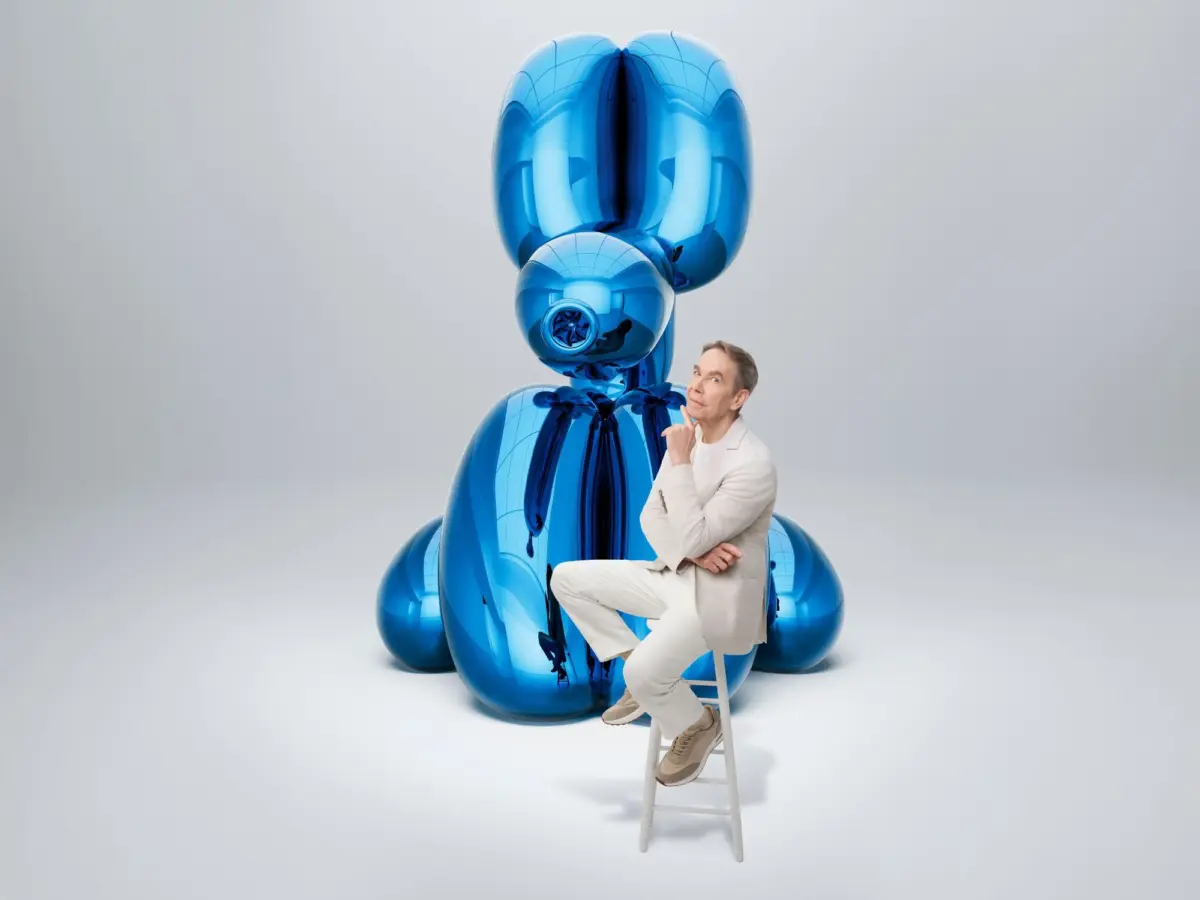
The timing of Koons’s quiet deaccessioning has sparked intense speculation among market analysts. Koons, whose commercial zenith arrived in May 2019 when his stainless-steel Rabbit (1986) sold at Christie’s for a staggering $91.1 million, has experienced a cooling-off period in his secondary market prices in the years following. Representatives for Koons have declined to comment on the upcoming sale, leaving the art world to interpret the financial maneuvers of one of its most commercially successful living figures.
October: Damien Hirst Unveils the Barrie Cashmere Collaboration
True to his lifelong fascination with the commodification of culture, British artist Damien Hirst announced a high-profile capsule collection with luxury Scottish cashmere brand Barrie. Comprising 100 limited-edition pieces adorned with Hirst’s iconic spot paintings and butterfly motifs, the collaboration positions wearable garments as accessible extensions of his artistic output.
In a wide-ranging interview with Vanity Fair, Hirst defended the intersection of high fashion and fine art, asserting, "Anything done well is art." Challenging the traditional sanctity of museum culture where visitors are warned not to touch fragile works, Hirst embraced the utilitarian nature of fashion: "Fashion is art that you can wear. I come from a museum world where people go, ‘don’t touch it.’ In the art world, we all believe that art is a sacred thing."
Hirst’s career has long courted controversy regarding commercialization, from his multi-thousand-part Currency project—which tied physical spot paintings to digital NFTs—to past criticisms concerning the industrial production of his spot and formaldehyde installations. Addressing the wearable nature of the Barrie collection, Hirst emphasized his desire for consumer utility: "I really want to make sure that people wear this and don’t put it into dusty storage."
Fall Season Openings: Performance and Institutional Realignments
In Berlin, Austrian artist Florentina Holzinger delivered a characteristically provocative start to the cultural season at the Volksbühne theater. Holzinger inaugurated the venue’s programming by rappelling down its monumental neoclassical façade entirely in the nude, subsequently scrubbing the exterior clean. According to the artist, the radical performance was designed to symbolically and literally "make room for new ideas."
Simultaneously, reports surfaced within New York’s gallery district indicating that Luhring Augustine has quietly shuttered its Tribeca branch located at 17 White Street. While the gallery’s digital directories continue to list the outpost as operating "by appointment," official confirmation of the permanent closure has been withheld from press inquiries, reflecting the ongoing realignments and overhead pressures facing mid-sized commercial galleries in Manhattan.
Supporting Context & Metrics: Market Trends and Institutional Metrics
The Economics of Deaccessioning: Koons and the Blue-Chip Market
Jeff Koons’s decision to liquidate $100 million in masterworks points to a broader liquidity preference among high-net-worth collectors during periods of economic uncertainty. The art market has transitioned from the frenzied, speculative highs seen between 2021 and 2022 toward a more conservative, risk-averse climate.
- The Picasso Benchmark: Valued at $40 million, Picasso’s Le Baiser (1969) represents the anchor of Koons’s consignment at Christie’s. Late-period Picassos have historically demonstrated strong institutional and private demand, serving as a reliable store of value.
- The Koons Market Index: Following the record-breaking $91.1 million sale of Rabbit in 2019, Koons’s market has undergone a healthy consolidation. While primary market demand for his new mirror-polished stainless steel and glazed porcelain sculptures remains steady among elite galleries like Gagosian and David Zwirner, secondary auction results have experienced fluctuating hammer prices, making strategic portfolio rebalancing a logical financial move.
Art as Merchandise: The Hirst-Barrie Economic Model
Damien Hirst’s collaboration with Barrie highlights the lucrative convergence of luxury fashion houses and contemporary art brands. By leveraging his recognizable iconography (spots and butterflies) onto high-end cashmere garments, Hirst bridges the gap between exclusive fine art ownership and consumer-accessible luxury goods.
- The Currency Precedent: Hirst’s The Currency project, launched in 2021, involved 10,000 unique physical works priced at $2,000 each, forcing buyers to choose between holding the physical paper or a digital NFT. The Barrie capsule collection similarly tests the boundaries of value, treating the wearer’s body as a mobile gallery space.
Official Statements and Institutional Vision
Annick Lemoine and the Feminist Redefinition of the Musée d’Orsay
The appointment of Annick Lemoine as president of the Musée d’Orsay in Paris marks a decisive turning point for one of the world’s premier 19th-century art institutions. In an extensive interview with the French daily Le Monde, Lemoine articulated an ambitious, forward-looking vision centered around gender equity, social history, and civic engagement.
Transitioning from her previous role directing the Petit Palais—where she notably curated a critically acclaimed retrospective dedicated to pioneering Impressionist painter Eva Gonzalès—Lemoine is wasting no time reshaping the Orsay’s curatorial narrative.
"I would like us to become a museum of debate, a civic museum that, while being a place of delight, builds critical thinking, especially among young people."
— Annick Lemoine, President of the Musée d’Orsay
Key components of Lemoine’s strategic roadmap include:
- Amplifying Women Impressionists: Building on the momentum of the museum’s major Mary Cassatt exhibition opening this week—running concurrently with other major exhibitions celebrating women artists across the French capital—Lemoine is systematically elevating female practitioners of the 19th century who were historically marginalized by patriarchal art histories.
- Institutional Acquisitions: Highlighting institutional commitment, Lemoine noted that the Musée d’Orsay has acquired over 530 works by women artists over the last 15 years, a purchasing trajectory she intends to accelerate.
- The 2028 Modernity Project: Looking ahead to 2028, Lemoine has announced plans for a series of national initiatives centered on women artists, anchored by a major social-history exhibition explicitly addressing the question of women within the framework of 19th-century modernity.
Tarek Atoui on Sound, Space, and the Turbine Hall
In a separate profile with The Guardian, Lebanese sound artist Tarek Atoui reflected on his sculptural and acoustic practice while dropping tantalizing hints regarding his forthcoming commission for the Tate Modern’s prestigious Unilever Series in the Turbine Hall. While maintaining strict confidentiality regarding the technical specifics of the installation, Atoui emphasized his collaborative, community-driven approach to sound design, reinforcing the museum’s role as an experiential acoustic environment.
Future Outlook: Where the Art World Is Headed
As the autumn auction season gathers momentum in New York and London, several critical trajectories will define the art market and institutional landscape over the coming quarters:
- Increased Market Selectivity: With blue-chip collectors like Jeff Koons trimming their portfolios of museum-quality historical assets, auction houses are relying on top-tier, museum-grade masterworks to drive liquidity. Expect secondary market sales to remain highly selective, with buyers prioritizing undisputed provenance and blue-chip stability over speculative contemporary production.
- The Normalization of Art-Fashion Hybrids: Damien Hirst’s venture with Barrie demonstrates that luxury brands will continue partnering with controversial contemporary artists to capture affluent consumer demographics. The debate over whether such commercial ventures dilute or democratize artistic integrity will persist, but the financial incentives ensure that "wearable art" is here to stay.
- Museums as Centers of Civic Discourse: Under leaders like Annick Lemoine at the Musée d’Orsay, major cultural institutions are shedding their traditional identities as passive repositories of the past. By foregrounding neglected narratives—such as the contributions of women artists to modernity—museums are actively positioning themselves as vital platforms for contemporary social debate and critical education.
- Operational Vulnerabilities: The attempted break-in at the Musée Nissim de Camondo and the continued consolidation of brick-and-mortar gallery spaces (such as Luhring Augustine’s Tribeca adjustments) serve as sober reminders of the logistical and financial pressures confronting physical art venues in an increasingly complex global environment.
Ultimately, the contemporary art ecosystem remains a dynamic arena where financial pragmatism, commercial entrepreneurship, and progressive institutional reform continually intersect and collide.




Comments
Facebook App ID not configured. Please add it in the Customizer.