
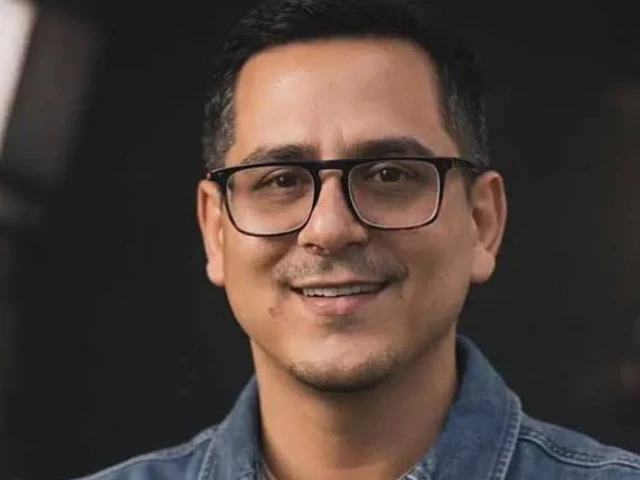
The release of award-winning Kashmiri filmmaker Arfat Sheikh from United States Immigration and Customs Enforcement (ICE) custody on Thursday marks a critical development in a high-profile case that sits at the intersection of artistic expression, geopolitics, and intensifying American immigration enforcement. Sheikh, whose cinematic portfolio critically interrogates the sociopolitical friction and human toll of conflict in his native India-administered Kashmir, had been held in detention for over two weeks following his arrest on September 24 at Washington Dulles International Airport.
According to an organized advocacy campaign spearheaded by his friends, relatives, and professional supporters, Sheikh was granted a bond by an immigration judge on Tuesday and subsequently released on Thursday. While this grants him temporary freedom from the confines of an ICE facility, the legal jeopardy surrounding his future in the United States remains unresolved. The underlying deportation proceedings initiated against him by the Department of Homeland Security (DHS) remain active, setting the stage for what legal analysts anticipate will be a prolonged and complex administrative battle.
Sheikh’s case has rapidly evolved into a flashpoint for broader debates concerning the treatment of asylum seekers, the vulnerability of foreign artists whose work touches upon sensitive geopolitical themes, and the aggressive posture of the current federal immigration enforcement apparatus. Entering the United States in 2019 on a valid student visa to pursue graduate studies in film at Georgia State University, Sheikh subsequently filed an application for asylum in 2020. His supporters maintain that he was living and working in the country lawfully under the provisions of a pending immigration application, residing in Alexandria, Virginia.
Read Also
Conversely, federal authorities offer a contrasting legal interpretation. The Department of Homeland Security maintains that Sheikh overstayed the terms of his original temporary admission, asserting that a pending asylum application does not, in and of itself, confer formal legal status or immunity from removal proceedings under federal statute. This fundamental discrepancy between administrative definitions of lawful presence highlights the precarious legal limbo frequently navigated by thousands of asylum seekers across the United States.
Furthermore, the timing of Sheikh’s detention coincides with an aggressive, administration-wide crackdown on immigration spearheaded by President Donald Trump. This policy drive, aimed at dramatically accelerating deportations and tightening domestic security protocols, has placed renewed scrutiny on foreign nationals who transition from temporary non-immigrant visas to permanent residency claims via asylum applications. For human rights advocates, civil liberties organizations, and international film communities, the detention of an acclaimed artist whose work explores state conflict has raised profound alarms regarding the protection of free expression and the potential for selective enforcement or racial profiling.
Detailed Chronology: From Arrival to Release
To fully understand the gravity of Arfat Sheikh’s legal ordeal, it is essential to trace the precise timeline of events, from his initial migration to the United States to his apprehension and subsequent release on bond.
2019–2020: Arrival and the Pursuit of Asylum
Arfat Sheikh arrived in the United States in 2019, securing a standard student visa to undertake advanced graduate studies in filmmaking at Georgia State University. Eager to bridge his lived experiences in a region marked by decades of militarization and political strife with the global medium of cinema, Sheikh immersed himself in his academic and creative pursuits. Recognizing the increasingly perilous political climate surrounding expression in South Asia and seeking protection under international and domestic humanitarian law, Sheikh formally filed an application for asylum in the United States in 2020. Under standard administrative practice, the filing of this application granted him authorization to remain in the country, live, and work while his case wound its way through the backlogged immigration court system. For several years, Sheikh resided in Alexandria, Virginia, balancing his life as an expatriate artist with the demands of independent filmmaking.
September 24: The Arrest at Dulles International Airport
The situation shifted dramatically on September 24. According to statements released by his support campaign, Sheikh was returning to the Washington, D.C. area after traveling to California. As he deplaned at Washington Dulles International Airport—a major international transit hub monitored heavily by federal law enforcement—he was intercepted by agents from Immigration and Customs Enforcement, an operating division of the Department of Homeland Security. Without prior warning, Sheikh was taken into custody, abruptly severing him from his daily life, creative projects, and support network. He was subsequently transferred to an ICE detention facility, where he remained isolated while his legal representation scrambled to mount a defense.
Early October: Legal Mobilization and Bond Proceedings
In the days following his detention, a coalition of friends, family members, and professional colleagues mobilized rapidly, launching a public advocacy campaign demanding his immediate release. Simultaneously, Sheikh’s legal team prepared emergency motions for bond, arguing that he posed neither a flight risk nor a danger to the community, and emphasizing his deep ties to the academic and artistic fabric of the United States.
The legal arguments bore fruit on Tuesday when an immigration judge officially granted Sheikh a bond. Following the administrative processing required for release from federal custody, Sheikh walked out of detention on Thursday, reuniting with his supporters. However, legal representatives and advocacy groups were quick to emphasize that his release on bond represents merely a tactical victory; the overarching deportation case initiated by the federal government remains active and unresolved, meaning Sheikh must continue to navigate the labyrinthine American immigration court system.
Supporting Context & Metrics: The Art and Vulnerability of Arfat Sheikh
The detention of Arfat Sheikh cannot be viewed in a vacuum; it directly intersects with his identity as an artist, an activist, and a chronicler of one of the world’s most protracted geopolitical conflicts.
Cinematic Work and Critical Acclaim
Sheikh’s artistic output has consistently focused on the human dimensions of state conflict, diaspora, and displacement. Hailing originally from India-administered Kashmir—a region defined by decades of geopolitical dispute, heavy military presence, and civil unrest—Sheikh utilized his technical training and creative vision to bring localized narratives to an international audience.
His artistic breakthrough culminated in the 2024 release of his debut feature film, Saffron Kingdom. The film traces the harrowing journey of a family forced to navigate the profound dislocations of conflict, moving from their ancestral home in Srinagar, India-administered Kashmir, in the turbulent 1990s, all the way to their eventual relocation in Atlanta, Georgia, by 2019. Through a deeply personal and visually striking lens, Saffron Kingdom explores themes of generational trauma, cultural preservation, and the psychological weight of exile.
The film received widespread critical acclaim across the independent circuit, securing prestigious accolades that underscored Sheikh’s rising prominence in global cinema:
- Best Feature Film: Awarded at the Chicago Filmmakers Awards, the LA Film and Documentary Awards, the Melbourne Independent Film Festival, and the Wake Forest Film Festival.
- Emerging Filmmaker Activist Award: Bestowed upon Sheikh at the Teaneck International Film Festival in recognition of his dedication to highlighting human rights and sociopolitical struggles through visual storytelling.
The Vulnerability of Independent Artists in Exile
Sheikh’s trajectory illustrates a broader, increasingly precarious reality for foreign artists and intellectuals living in the United States who utilize their work to critique state policies or examine sensitive geopolitical realities. When creators hail from conflict zones such as Kashmir, Tibet, Palestine, or other heavily contested regions, their artistic output frequently draws the scrutiny not only of foreign governments but also of immigration authorities who evaluate their status within domestic political frameworks.
The defense campaign organized on Sheikh’s behalf argued that his detention targeted a voice of conscience, stripping an award-winning artist of his liberty while his lawful immigration applications were pending adjudication. This dynamic has sparked intense discussions within academic and artistic circles across the United States regarding the safety and freedom of international scholars and creators who seek refuge in Western democracies.
Official Statements and Administrative Policy Shifts
The divergent narratives offered by Sheikh’s defense campaign and the federal government highlight the complex statutory terrain governing immigration enforcement, asylum, and temporary non-immigrant visas in the United States.
The Department of Homeland Security’s Stance
In official statements issued on Wednesday, the Department of Homeland Security clarified the legal basis for Sheikh’s arrest on September 24. DHS representatives asserted that Sheikh had "legally entered the US on a temporary basis and illegally overstayed his lawful admittance."
Addressing the central argument raised by Sheikh’s supporters—that his pending asylum application conferred legal protection—DHS explicitly stated that a pending application does not constitute legal status under United States immigration law. The agency emphasized that while foreign nationals retain the right to due process through the immigration court system, submitting an asylum application does not grant blanket immunity from enforcement actions or administrative removal proceedings if the individual’s initial non-immigrant visa has expired. DHS officials reiterated their commitment to ensuring that Sheikh, like all detainees, would receive full due process as his case proceeds through the judicial system.
The Broader Trump Administration Immigration Agenda
Sheikh’s detention unfolds against the backdrop of a broader, highly aggressive immigration enforcement strategy championed by the administration of President Donald Trump. As part of a multifaceted campaign aimed at reinforcing domestic security and curbing unauthorized migration, federal agencies have systematically targeted individuals whose immigration status is perceived as irregular or expired.
In August, the administration announced a major policy shift directed at tightening controls over non-immigrant visas. Specifically, federal officials stated they were actively working "to identify and revoke the non-immigrant visas of foreigners who have come to the US claiming to be short-term visitors, but then file for asylum to stay here permanently." This policy initiative represents a significant hardening of stance against defensive asylum claims filed by individuals who initially entered the country on student, tourist, or temporary worker visas.
The administration defends these measures as essential steps to restore integrity to the legal immigration system, prevent perceived abuse of humanitarian pathways, and enhance national security. However, these policies have drawn fierce criticism from civil rights organizations, legal scholars, and immigrant advocacy groups. Critics argue that the administration’s sweeping enforcement actions undermine fundamental due process guarantees, stifle free speech and artistic expression, and foster an environment of fear and uncertainty—particularly for ethnic and political minorities who express valid fears of persecution in their countries of origin and raise legitimate concerns regarding racial profiling.
Future Outlook: Legal Uncertainties and the Path Ahead
As Arfat Sheikh adjusts to his temporary freedom following his release on bond, the long-term trajectory of his life and career in the United States remains shrouded in profound uncertainty.
The Pending Deportation Case
While the bond ruling granted by the immigration judge allows Sheikh to await the resolution of his case outside the confines of an ICE detention facility, the underlying deportation proceedings remain fully active. His legal team must now prepare for upcoming court hearings where they will argue the merits of his 2020 asylum application. This legal battle will require proving that Sheikh faces a well-founded fear of persecution if returned to India-administered Kashmir—a standard that demands rigorous documentation, expert testimony, and persuasive advocacy.
The outcome of these proceedings will serve as a crucial test case for how immigration courts handle asylum applications filed by individuals whose non-immigrant visas have expired, particularly in light of the Trump administration’s stated mandate to crack down on such transitions. If the court rules in Sheikh’s favor, he may secure permanent legal residency and the freedom to continue his artistic endeavors without the constant threat of removal. Conversely, an adverse ruling could exhaust his legal remedies and pave the way for formal deportation.
Implications for the Artistic Community
Beyond the courtroom, Sheikh’s case has catalyzed a wider mobilization among international artists, academic institutions, and human rights advocates in the United States and abroad. Film festivals, university departments, and cultural organizations that celebrated Saffron Kingdom are closely monitoring the proceedings, viewing Sheikh’s legal battle as emblematic of the challenges facing cultural workers in exile.
As the legal process unfolds in the coming months, the case of Arfat Sheikh will continue to resonate as a powerful reminder of the delicate balance between national immigration enforcement policies, the protection of fundamental human rights, and the enduring power of cinema to bear witness to conflict across borders.



Comments
Facebook App ID not configured. Please add it in the Customizer.