
Executive Overview
In the pre-dawn darkness of August 5, 1944, a violent eruption shattered the quiet Australian countryside. At the Cowra prisoner-of-war (POW) camp in New South Wales, more than 900 Japanese prisoners launched the largest and bloodiest prison breakout in the history of World War II. Armed with improvised weapons—baseball bats, sharpened cutlery, gardening tools, and blankets draped over razor-wire fences—the men staged a mass uprising that defied logic, strategy, and self-preservation.
When the dust settled and the gunfire ceased at sunrise, 234 Japanese men and 4 Australians lay dead, with dozens more wounded. Every single prisoner who managed to break free from the perimeter was recaptured within days. Yet, despite eclipsing the scale of better-known Allied breakouts—such as the March 1944 Stalag Luft III escape immortalized by Hollywood in The Great Escape—the Cowra breakout remains largely obscured in the global historical consciousness outside of Australia and Japan.
/https://tf-cmsv2-smithsonianmag-media.s3.amazonaws.com/filer_public/93/b2/93b2606a-1623-4018-8a40-5857fe0dd865/gettyimages-453574876.jpg)
This retrospective investigates the cultural forces that drove hundreds of men to choose certain death over the perceived dishonor of captivity. By examining Imperial Japan’s militaristic indoctrination, the stark ideological divide between Western and Japanese military codes, and the complex socio-political legacy left in the wake of the tragedy, this feature unpacks why Cowra stands as a haunting testament to the psychological traumas of global total war.
Read Also
Detailed Chronology: The Road to the Uprising
The Establishment of Camp Cowra
The Cowra POW camp was originally constructed to house Italian prisoners captured in North Africa. However, as the Pacific Theater intensified, the camp was expanded to accommodate captured Japanese service members. The first Japanese POW on Australian soil was naval pilot Hajime Toyoshima, whose Zero fighter crashed on Melville Island in February 1942. By early 1943, Toyoshima and hundreds of other Japanese enlisted men, officers, and civilian laborers—including conscripted Koreans and Taiwanese—were interned at Cowra.
/https://tf-cmsv2-smithsonianmag-media.s3.amazonaws.com/accounts/headshot/meilan_headshot2.png)
The camp was divided into separate compounds. Enlisted men resided in Compound B, while officers and laborers stayed in Compound D. By contemporary standards, Cowra was remarkably well-equipped. Adhering to the broad tenets of the 1929 Geneva Convention (which Japan had signed but never officially ratified), Australian authorities provided canteens, recreation huts, sports fields for baseball and soccer, and adequate medical care. To many Allied observers, the camp conditions were generous, even comfortable.
The Spark: August 4, 1944
Despite the material comforts, an undercurrent of tension pervaded Compound B. As news of Japan’s deteriorating military position filtered into the camp, hard-line leaders among the prisoners argued that remaining passive while their homeland faced defeat was intolerable.
:focal(2492x1638:2493x1639)/https://tf-cmsv2-smithsonianmag-media.s3.amazonaws.com/filer_public/93/b2/93b2606a-1623-4018-8a40-5857fe0dd865/gettyimages-453574876.jpg)
The immediate catalyst for the revolt occurred on August 4, 1944. Camp authorities announced plans to transfer Japanese enlisted men below the rank of lance corporal to a separate camp to alleviate overcrowding. Compound leaders vehemently protested, arguing that younger soldiers relied on older officers as surrogate father figures and would suffer psychologically if separated. Australian camp commandants, bound by logistical necessity rather than cultural intuition, dismissed the objections.
That evening, Compound B held a clandestine vote. Urged on by radical nationalists who framed a mass escape as a way to wash away the indelible shame of surrender, approximately 80 percent of the prisoners voted in favor of a suicidal breakout. Survivors later recalled that the coercive peer pressure made dissent nearly impossible. The plan was set: at a signal from a bugle, the men would rush the fences en masse, expecting to die in a final, glorious act of military defiance.
/https://tf-cmsv2-smithsonianmag-media.s3.amazonaws.com/filer_public/14/29/1429fe5b-958d-477f-ac5c-ca00faa46df6/baseball.png)
The Breakout: August 5, 1944
At approximately 2:00 a.m., a distressed Japanese prisoner climbed over the camp fence, weeping and shouting warnings—an action that prompted a guard to fire two warning shots. Immediately, the night air was pierced by a bugle call.
More than 900 men swarmed out of their wooden huts, setting fire to their quarters and charging the perimeter. They used blankets, rugs, and baseball mitts to insulate themselves against the razor wire. The prisoners divided into squads with distinct objectives. One group targeted a Vickers machine gun manned by privates Benjamin Gower Hardy and Ralph Jones. Though the guards were swiftly overwhelmed and Jones was killed, Hardy managed to pull a vital component from the gun, rendering it useless to the charging prisoners and saving countless lives.
/https://tf-cmsv2-smithsonianmag-media.s3.amazonaws.com/filer_public/b3/5e/b35e1338-7998-4cdd-abd9-6ffb122a1be8/bats.png)
For hours, chaos reigned. Hundreds of prisoners poured out into the surrounding countryside, while others engaged in frantic hand-to-hand combat or turned weapons upon themselves. By 6:20 a.m., the gunfire had stopped. The cost was devastating: 231 Japanese men were dead at the scene (three more would succumb to their injuries later), and four Australian soldiers had lost their lives.
Over the next nine days, a massive manhunt combed the New South Wales countryside. Every single escaped prisoner was eventually recaptured, though many chose to end their lives rather than return to captivity.
/https://tf-cmsv2-smithsonianmag-media.s3.amazonaws.com/filer_public/9d/9d/9d9d2c0e-3274-4a17-9268-52ea4284eef8/statelibqld_1_80019_japanese_prisoners_arriving_at_brisbane_from_new_guinea_ca_1945.jpg)
Supporting Context & Metrics: The Ideological Divide
To comprehend the sheer scale of the tragedy at Cowra, one must examine the profound cultural chasm separating Western and Japanese wartime ideologies.
The Senjinkun and the Stigma of Capture
In the Imperial Japanese military, the concept of surrender was viewed as the ultimate moral failure. Indoctrinated through the Senjinkun (Field Service Code) issued in 1941, soldiers were commanded to choose death over the disgrace of becoming a prisoner of war. The text explicitly directed troops: "If alive, do not suffer the disgrace of becoming a prisoner; in death, do not leave behind a name soiled by misdeeds."
/https://tf-cmsv2-smithsonianmag-media.s3.amazonaws.com/filer_public/66/24/6624772d-17c7-44a5-9afe-c87dc664c2a2/japanese_pows_guam_aug_1945.jpeg)
The statistical reality of this doctrine is striking:
- Western Allied Captives: Approximately 35,000 Japanese service members were captured by Western Allies throughout the entirety of World War II.
- German Captives: By contrast, nearly 8 million German soldiers were captured by Allied and Soviet forces, including over 340,000 held in camps across the United States.
- The Cowra Toll: Of the 1,104 Japanese men at Cowra on August 5, 1944, over 900 participated in the uprising, resulting in 234 Japanese fatalities and 108 wounded.
For these men, survival in enemy hands was tantamount to civil and spiritual death. Many Japanese families were officially told their loved ones had died heroically in combat, even when the government knew they were prisoners. To protect their families back home from social ostracization, many POWs adopted false names. Consequently, prisoners lived in deep psychological distress, believing they had no home to return to and no honor left to reclaim.
/https://tf-cmsv2-smithsonianmag-media.s3.amazonaws.com/filer_public/0d/2e/0d2ebc7e-5e5a-4451-9732-65d655352ef0/hajime.png)
Official Statements and Archival Insights
Decades of historical analysis and archival declassification have shed light on the institutional blind spots that permitted the tragedy to unfold.
Australian Complacency and Cultural Misunderstanding
Australian military officials were not entirely without warning; a Korean prisoner had overheard whispers of unrest and tipped off authorities weeks prior. Machine guns had even been positioned outside Compound B as a precautionary measure. However, as modern historians like Mat McLachlan have noted, the Australian command suffered from a dangerous lack of cultural empathy:
/https://tf-cmsv2-smithsonianmag-media.s3.amazonaws.com/filer_public/53/c2/53c2bf20-3a22-4f67-8730-68cb9d67a094/japanese-pows.png)
"The Australians simply couldn’t get their heads around the fundamental concept that Japanese prisoners preferred death to imprisonment. They could only view the Japanese through their own lens, and that distorted perspective bred a dangerous complacency."
Following the breakout, the Australian military response was remarkably restrained. Rather than exacting harsh retributive punishments, camp authorities maintained the baseline provisions of humane treatment, rationing food and organizing cleanup details while quietly disciplining guards who had failed to anticipate the uprising.
/https://tf-cmsv2-smithsonianmag-media.s3.amazonaws.com/filer_public/82/c2/82c2344c-9b4f-4f81-bc1c-db9141287768/blankets.jpg)
The Return Home: Surviving the Unthinkable
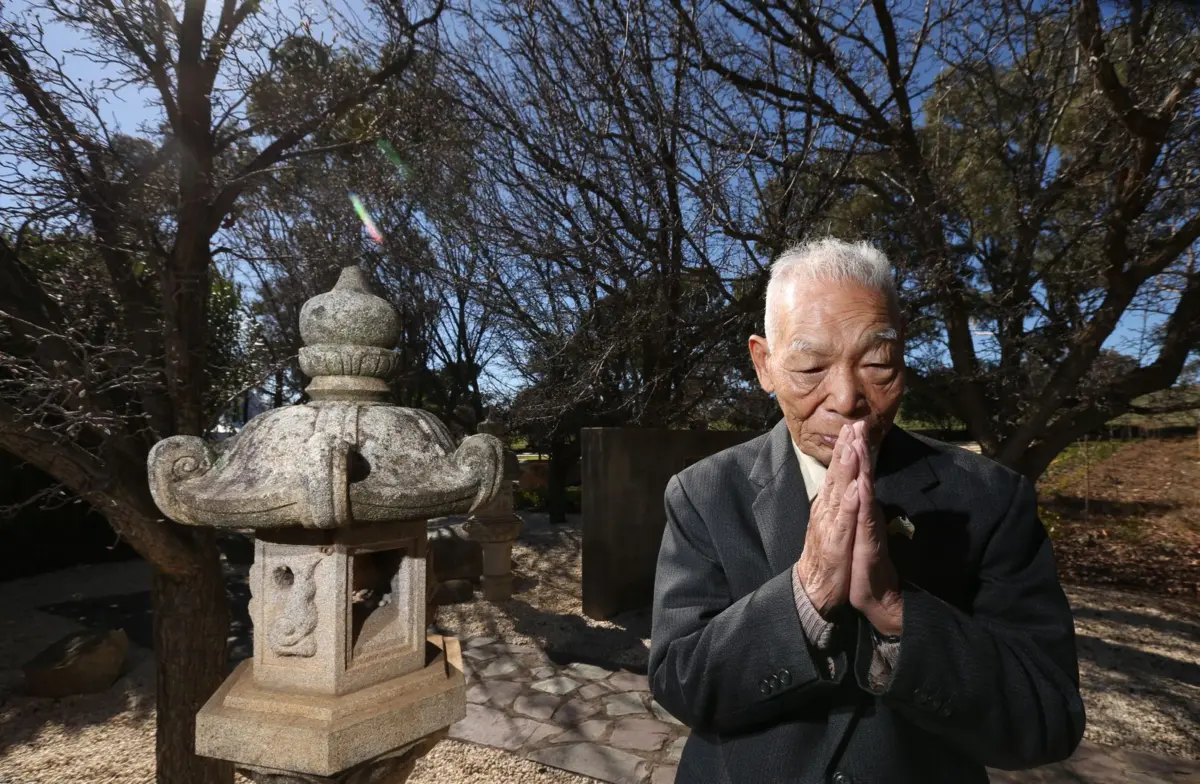
For the Cowra survivors who lived to see the end of the war, repatriation brought a unique brand of anxiety. Fearing execution or severe societal rejection upon returning to a defeated Japan, many anticipated the worst. Yet, the reality of their homecoming was often surprisingly poignant. Teruo Murakami, the last surviving participant of the Cowra breakout who passed away in 2023 at the age of 103, recalled his family’s reaction upon his return: "My family said a ghost had returned from the war."
Future Outlook: Reconciliation and Remembrance
Today, the physical remnants of the Cowra POW camp have transformed from a site of wartime trauma into an international beacon of peace and reconciliation.
/https://tf-cmsv2-smithsonianmag-media.s3.amazonaws.com/filer_public/b2/db/b2dbfc48-0864-4e72-8faa-59661bcd6f70/survivor.png)
The Cowra Japanese War Cemetery—where the fallen Japanese combatants lie buried alongside separate plots for the Australian soldiers killed during the incident—serves as a poignant reminder of the human cost of unyielding ideological conflict. Coupled with the establishment of the expansive Cowra Japanese Gardens and cultural center in the 1970s, the town has forged a deep, enduring diplomatic bridge between Australia and Japan.
As generations pass and the living memory of World War II fades into the annals of history, the Cowra breakout endures as a profound cautionary tale. It underscores the urgent necessity of cultural understanding in times of conflict and demonstrates how historical animosities can, through intentional stewardship, be transmuted into lasting global harmony.

Comments
Facebook App ID not configured. Please add it in the Customizer.