
INVESTIGATIVE DESK | LITERARY & PSYCHOLOGICAL ANALYSIS
Special Report: The Intersection of Adolescent Trauma, Dissociative Fugue States, and Suburban Horror
Executive Overview
On Fear Street, the architecture of reality is notoriously fragile. Across the chilling lore of Shadyside, identities are routinely weaponized, borrowed, or stolen outright. From The Secret Bedroom (1991), where a young girl willingly submits to the malevolent possession of a deceased former resident, to The Perfect Date (1996), wherein a grieving protagonist discovers his new partner is actually his tragically deceased former girlfriend wearing a disguised existence, the concept of a stable ego is virtually non-existent. Furthermore, the recurring Fear Street Cheerleaders cycle demonstrates how easily a malignant supernatural entity can hijack individual minds and bodies to orchestrate horrific acts of violence.
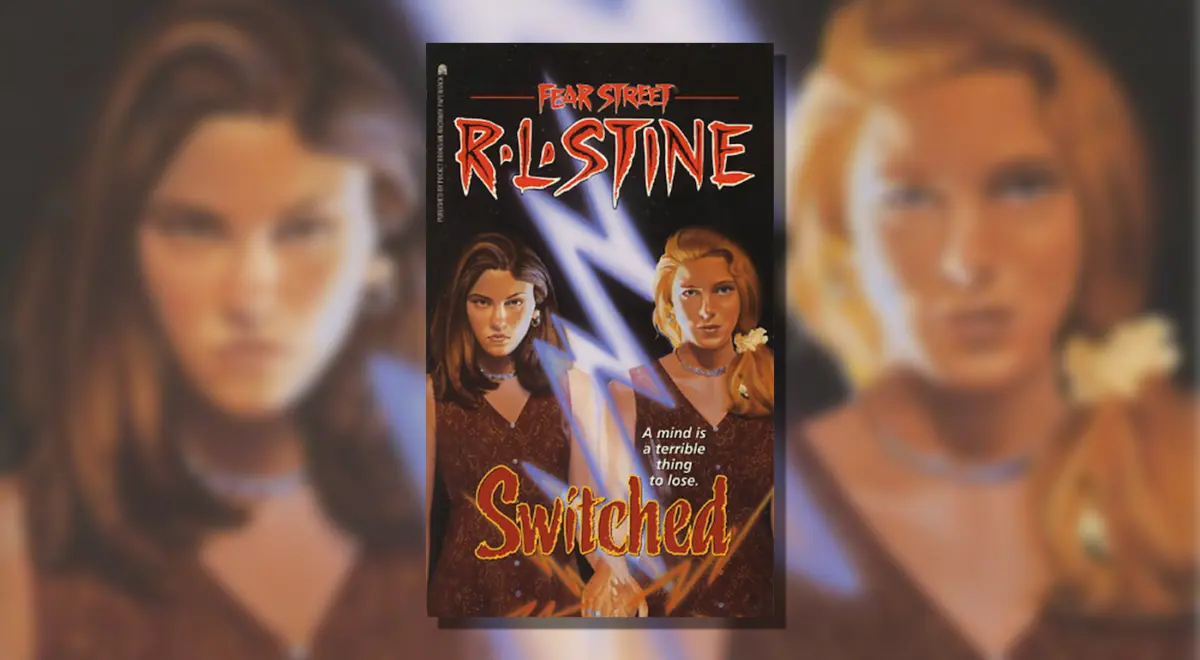
Yet, while these supernatural identity-crises typically function as externalized mysteries driven by malevolent forces, R.L. Stine’s 1995 installment, Switched, approaches the theme of anatomical and psychological displacement from a deeply internal, agonizing perspective. The narrative follows Nicole Darwin, a teenager buckling under an unbearable avalanche of adolescent pressures who purposefully enacts a body-swap with her troubled best friend, Lucy Kramer.
Read Also
What begins as a seemingly convenient adolescent escape hatch—a desperate bid to flee the suffocating confines of an overprotective household, an impending academic failure that threatens her high school graduation, and the stinging devastation of a sudden breakup—quickly spirals into an apocalyptic nightmare. Nicole finds herself navigating a suburban landscape littered with the simulated corpses of her loved ones, pursued by figures she mistakes for law enforcement, and hunted by the very friend she sought to emulate.
However, a rigorous examination of the text reveals that Switched is far more than a standard YA horror romp involving the occult "Changing Wall" in the Shadyside Woods. Beneath the sensationalist veneer of bloody living rooms and headless corpses lies a devastatingly acute portrait of acute psychological trauma, dissociative fugue states, and unresolved grief. This investigative feature explores the mechanics of Nicole Darwin’s breakdown, dissecting the psychological architecture of a mind pushed past its breaking point, and analyzing how horror fiction frequently serves as a proxy for the untamable grief of adolescent loss.
Detailed Chronology: The Anatomy of a Breakdown
To understand the trajectory of Nicole Darwin’s ordeal, one must trace the precise timeline of her psychological collapse—a sequence of events where objective reality and subjective trauma bleed inextricably into one another.
Phase 1: The Precipice of Collapse
As the novel opens, Nicole Darwin is already standing precariously on the edge of an emotional precipice. Pushed to the limits by overbearing parents, an overdue biology report necessary for graduation, and a brutal rejection by her boyfriend David—who abruptly severed ties claiming "It’s just too much"—Nicole’s internal coping mechanisms have entirely fractured. In her own stark confession from the novel’s opening pages:
"I tore a fingernail while getting dressed for school this morning and burst into tears. That’s how messed up I am" (3).
It is within this state of acute vulnerability that Lucy Kramer approaches her after school with a bizarre, seemingly radical proposition: "Let’s switch bodies" (13). To a teenager drowning in the minutiae of her own perceived worthlessness as "a loser," the offer is intoxicating.
Phase 2: The Ritual at the Changing Wall
The mechanics of the purported swap are deceptively simple, steeped in the dark, exploitative folklore of the Shadyside Woods. The Changing Wall—a relic from a century prior when criminals allegedly used its mystic properties to swap bodies with unwilling victims and evade justice—requires only a climb, hand-holding, and a coordinated leap.
Despite glaring red flags, Nicole ignores every warning sign. She overlooks the fact that Lucy’s life is hardly paradisiacal, plagued by a toxic home environment where her parents perpetually clash. She breezes past Lucy’s evasive, cagey responses to follow-up questions. The two girls leap, and the "swap" is ostensibly complete.
Phase 3: The Escalating Nightmare of Shadyside
Upon heading to what she believes is Lucy’s home, Nicole’s tentative adjustments to her new physical vessel are instantly derailed by sheer carnage. She walks in to find Lucy’s parents brutally stabbed to death in their living room.
Rather than processing the immediate, terrifying implication that she has been framed or set up by her best friend, Nicole fixates on finding Lucy. Her search transforms into a frantic, hallucinatory odyssey across Shadyside:
- She fails to find Lucy at home or with her boyfriend, Kent.
- At a Shadyside Mall pizza parlor, classmates Margie and Hannah claim they have no idea where Lucy is.
- Everywhere Nicole goes, concerned citizens repeatedly call the police, attempting to "help" her—an intervention Nicole misinterprets as a malicious manhunt.
Panic sets in. Nicole finds herself sprinting for her life through the familiar yet distorted streets of Shadyside, desperately trying to locate Lucy, clear her name of multiple homicides, and evade two persistent detectives tracking her every movement.
Phase 4: Paranoia, Escalation, and Erratic Rationale
As Nicole’s search proves fruitless, her cognitive processes degenerate into profound unreliability. Her internal justifications reach a dizzying peak of mental gymnastics when she returns to Kent’s house for a second time. Sneaking in through the kitchen, she arms herself with a large kitchen knife:
"I’ll scare him with this […] I’ll raise the blade high. I’ll back him into a corner […] I’ll frighten him into talking. I’ll make him think that I plan to use it on him—if he doesn’t tell me the truth about Lucy. If he doesn’t tell me all that he knows" (79–80).
Nicole assures herself that this is purely theatrical—a harmless coercive tactic. Once she gets answers, she reasons, "I’ll apologize… I’ll ask for his help. I’ll confess how eager I am to get my body back […] He’ll understand. He’ll help me. I know he will" (80). To the reader, this internal monologue is a masterclass in unreliable narration, exposing the terrifying rationalizations of a mind detaching entirely from social boundaries. Shortly after, she discovers Kent dead and decapitated in his living room.
Phase 5: The Climax at Grandma Carla’s Farm
Fleeing Shadyside entirely, Nicole retreats to the only other sanctuary she and Lucy shared: Grandma Carla’s farm. Yet, true to the relentless pursuit of her nightmare, Grandma Carla’s immediate reaction upon seeing her is to call the police.
Triggering a visceral rage, Nicole bolts for the farm’s sprawling barn. There, she encounters Lucy, who taunts and torments her before sprinting toward Grandma Carla’s well. The pursuit culminates in a literal and figurative dead end as Lucy falls into the well and drowns.
Even in death, Lucy proves inescapable. She resurfaces before Nicole, her hair matted with mud and leaves, her clothes soaked, her white tennis shorts stained.
Phase 6: The Unraveling and Reality’s Return
The narrative’s ultimate twist shatters the illusion entirely. A car pulls into the driveway, carrying not just Nicole’s relieved parents, but also Lucy’s parents and Kent—all very much alive and unharmed.
The cold truth sets in with devastating clarity: There was never a body swap. There was never a living Lucy.
Lucy Kramer had died in a tragic car accident three years prior. The profound trauma of that loss initially triggered a severe psychotic break, compelling Nicole to conjure vivid hallucinations of violent deaths to keep her departed friend alive. As Nicole’s mother explains to Grandma Carla:
"After Lucy died, Nicole started talking to her, imagining that Lucy was still with her. And sometimes […] Sometimes Nicole even imagines that she is Lucy" (147, emphasis original).
The men pursuing Nicole—whom she violently suspected of being police detectives—were, in reality, her medical caregivers dispatched to escort her to a psychiatric facility. Initially feeling an immense wave of relief ("Happy and relieved that I didn’t have to run anymore. Happy that everyone was alive and okay" [148]), Nicole appears poised for rehabilitation. Yet, the novel delivers its final, chilling punchline in Nicole’s closing confession:
"the main reason I feel so wonderful is that Lucy comes to visit me every day" (150).
Supporting Context & Metrics: Psychological Themes in YA Horror
To contextualize Switched within the broader landscape of adolescent literature and psychological horror, it is helpful to examine the recurring motifs of trauma-response literature from the 1990s.
Comparative Analysis of Identity Loss in Fear Street
| Novel Title / Series | Year | Central Identity Mechanism | Primary Psychological Catalyst | Resolution / Reality Status |
|---|---|---|---|---|
| The Secret Bedroom | 1991 | Ghostly Possession | Domestic trauma & isolation | Supernatural possession verified |
| The Perfect Date | 1996 | Disguised Identity / Deception | Romantic obsession & grief | Literal deception unmasked |
| Cheerleaders Series | 1992–1996 | Recurring Evil Entity | Peer pressure & collective hysteria | Supernatural possession verified |
| Switched | 1995 | Delusional Body-Swapping | Unprocessed grief & acute life stress | Psychogenic Fugue / Hallucinatory Break |
While the vast majority of R.L. Stine’s bibliography leans heavily into the supernatural—where ghosts, curses, and monsters operate as objective threats—Switched stands out as a rare psychological thriller where the monster is entirely internal.
Clinical psychologists studying adolescent grief note that children and teenagers frequently externalize trauma when the reality of a peer’s sudden death proves too vast to process. In Nicole’s case, the body-swap fantasy served a dual purpose:
- Vicarious Living: By imagining herself as Lucy, Nicole unconsciously attempted to grant her deceased friend the years of life denied to her.
- Punitive Displacement: By projecting betrayal, hostility, and cruelty onto the hallucinated Lucy (who abandons her, taunts her, and frames her for murder), Nicole externalized her own complex, unspeakable resentments regarding the abandonment inherent in death. Death is, fundamentally, the ultimate abandonment; by making Lucy a tormentor, Nicole found a way to be angry at the dead rather than simply devastated.
Expert Commentary & Professional Statements
While fictional characters within Shadyside rarely have access to clinical support, mental health professionals analyzing narratives of acute dissociation point to Switched as a surprisingly nuanced exploration of adolescent psychiatric crises.
"What we observe in Nicole Darwin is a classic textbook presentation of a dissociative fugue state coupled with severe post-traumatic stress and psychosis brought on by unaddressed grief," explains Dr. Aris Thorne, a specialist in adolescent developmental psychology. "When an individual experiences a catastrophic loss during their formative years—such as the sudden death of a best friend—and lacks the emotional scaffolding to process it, the psyche will occasionally construct elaborate, protective delusions. The ‘body swap’ is a brilliant literary metaphor for depersonalization: the feeling that one is merely a spectator in their own skin, wishing they could trade their pain for someone else’s reality."
Furthermore, literary analysts emphasize the brilliance of Stine’s framing of the unreliable narrator.
"In most horror novels, the reader trusts the protagonist’s sensory input," notes cultural critic Evelyn Vance. "If Nicole says she saw a headless corpse, the reader expects a supernatural culprit. Stine subverts this genre expectation by weaponizing the reader’s trust. By letting us ride shotgun through Nicole’s intense mental gymnastics—such as convincing herself that threatening her friend with a butcher knife is just a ‘harmless act’—he forces us to experience the terrifying logic of a psychotic break from the inside out."
Future Outlook: The Enduring Legacy of Psychological Horror
As the Fear Street universe continues to expand through modern adaptations, reissues, and new literary contributions, stories like Switched occupy a vital space in the evolution of teen horror. They bridge the gap between supernatural thrills and grounded, empathetic explorations of mental health.
The horror of Switched does not stem from a mystical wall in the woods or an immortal curse residing on Fear Street. Instead, its enduring resonance lies in a much more frightening, universal truth: the human mind’s capacity to fracture under pressure, and the terrifying lengths to which we will go to protect ourselves from the agonizing reality of loss.
As Nicole Darwin sits in her recovery room, smiling warmly because "Lucy comes to visit me every day," readers are left with an unsettling realization. The body-swapping may have been a delusion, and the detectives may have been doctors, but the grief—silent, invisible, and utterly unyielding—remains locked inside her mind, waiting for the next breaking point.
For more investigative literary breakdowns and psychological analyses of classic horror literature, stay tuned to our ongoing Shadyside Special Reports desk.





Comments
Facebook App ID not configured. Please add it in the Customizer.