

Executive Overview
Adapting acclaimed literature for the silver screen is a notoriously perilous undertaking. When an auteur filmmaker known for balancing eccentric comedy with profound emotional gravity takes the helm of a globally celebrated dystopian novel, expectations are naturally stratospheric. Such was the anticipation surrounding Academy Award-winning filmmaker Taika Waititi’s cinematic interpretation of Kazuo Ishiguro’s 2021 novel, Klara and the Sun. Known for a distinctive cinematic voice that seamlessly integrated the absurdist humor of What We Do in the Shadows with the blockbuster scale and shrewd depth of Thor: Ragnarok, as well as successfully steering delicate, unconventional source material like Barry Crump’s Wild Pork and Watercress (Hunt for the Wilderpeople) and Christine Leunens’s Caging Skies (Jojo Rabbit), Waititi appeared uniquely positioned to translate Ishiguro’s tender, melancholic meditation on artificial intelligence, parental grief, and human stratification into a major motion picture.
Instead, the resulting adaptation has emerged as a baffling creative dead end—a narrative that trades the haunting, quiet introspection of Ishiguro’s dystopian vision for a mechanistic, overly simplistic parable reminiscent of a high-gloss, albeit watery, Velveteen Rabbit.
While the production boasts striking aesthetic choices, visionary production design, and a powerhouse central performance by Jenna Ortega that showcases her formidable physical comedy skills, the film stumbles fundamentally in its narrative architecture. Through heavy-handed rewrites, flattened socio-political themes, and an over-reliance on broad comedic tropes that clash violently with the source material’s dystopian stakes, Klara and the Sun offers a cautionary tale of adaptation gone awry. This comprehensive review and investigative overview explores where Waititi’s cinematic vision derailed, examining the structural miscalculations, thematic oversights, and technical choices that left critics and literary purists alike questioning how such a promising creative alignment yielded such underwhelming results.
Read Also
Detailed Chronology & Narrative Breakdown: From Page to Screen
To understand the scope of the film’s miscalculation, one must trace the trajectory of its narrative from Ishiguro’s measured prose to the frantic pacing of the screen adaptation. In the novel, the narrative unfolds through the optical sensors and synthetic consciousness of Klara, an Artificial Friend (AF) engineered to stave off loneliness in a near-future society defined by genetic engineering, or "lifting."
The Premise and the Players
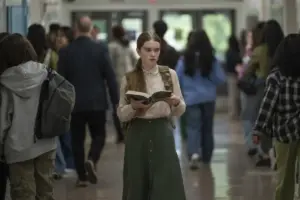
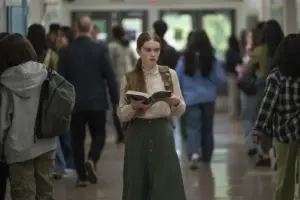
In Waititi’s cinematic iteration, the story opens with a vibrant, highly saturated aesthetic. We are introduced to Klara, brought to life with astonishing physical precision and bodily control by Jenna Ortega. Klara is purchased for a sickly teenager named Josie (Mia Tharia) by her emotionally fractured mother, Chrissie (portrayed with restrained intensity by Amy Adams).
The socio-political context of the universe is established early, though stripped of its subtle literary dread: Josie is one of the "lifted," a member of an elite class of children whose genomes have been computationally altered to enhance cognitive and physical capabilities. This procedure is available only to the affluent, rendering the unlifted—such as Josie’s childhood friend Rick (Aran Murphy)—second-class citizens. Chrissie’s desperation to preserve Josie’s fading health is exacerbated by profound trauma: she has already lost her older daughter, Sal (Sophia Bryant-Taukiri), to natural causes—a tragedy that also shattered her marriage.
Key Divergences in Adaptation
While all adaptations require structural compression and creative liberties, the script adjustments made for Klara and the Sun systematically hollow out the story’s philosophical core:
- The Mother-Daughter Dynamic: The screenplay elevates Chrissie and Josie’s relationship to the forefront, attempting to ruminate on the all-consuming grief of a mother mourning a dying child. However, the film fails to ground this grief in psychological depth; instead, Chrissie’s erratic and potentially harmful choices regarding Josie’s treatment are presented at face value, denying the audience access to her internal perspective.
- The Domestic Tension: Early scenes introduce the household housekeeper, Melania (played by the brilliant Rachel House), who immediately highlights the socio-political hierarchies of the home. In an apparent ad-libbed exchange, Melania accuses Chrissie of purchasing a "Mexican robot" for Josie out of a desire to remain the sole white woman in the household. Yet, this sharp intersectional tension is instantly discarded, swallowed up by subsequent dialogue and dissolved when Melania simply grows accustomed to the robot.
- The Subplots That Go Nowhere: Rick, the unlifted childhood friend, occasionally calls out the reality of Klara’s enslavement, but this thematic seed is never cultivated. Similarly, a brief thread involving Josie’s jealousy—fearing Rick is developing romantic feelings for Klara—serves only to stall the development of the bond between human and AF, reducing Klara’s ultimate sacrifice to mere programmed execution rather than earned emotional devotion.
The most catastrophic narrative misstep occurs when Josie is introduced to her peer group of fellow lifted students. In Ishiguro’s novel, learning is largely solitary and remote. In Waititi’s film, this is transformed into an opulent, garish party scene populated by vacant teenagers styled like Capitol spectators from The Hunger Games, all treating their respective AFs as subhuman chattel. It is within this sequence that the film’s binary framework of capital-G "Good" and capital-B "Bad" thinking completely fractures the narrative engine.
Supporting Context & Metrics: Production Design, Aesthetics, and Casting
Despite its profound narrative shortcomings, Klara and the Sun is not a uniform disaster across all cinematic departments. An analysis of the film’s production metrics, design choices, and performance highlights reveals a stark contrast between its striking visual and physical execution and its intellectual vacuum.
Visual and Architectural Choices
The film’s aesthetic department delivers some of its most compelling work:
- Color and Set Design: The visual palette is fiercely saturated and warm, offset by an eccentric costume design that merges updated retro silhouettes with structured couture nightmares.
- The Family Estate: Chrissie and Josie reside in an expansive, prairie-style architectural masterpiece that anchors the family’s wealth and isolation.
- The AF Showroom: The opening sequence introducing competing AI models parading past windows like early-2000s Abercrombie & Fitch display models offers a sharp, satirical visual commentary on commercialized technology.
However, these achievements are occasionally undermined by peculiar geographical oversights. For instance, the family’s estate is established as being several hours outside of Chicago, yet their property is inexplicably surrounded by lush, rolling wheat farms. In the real agricultural landscape of Illinois, staple crops are overwhelmingly corn and soybeans. While a future dystopian world war and subsequent climate shifts might theoretically alter regional ecology, anchoring a prominent setting in an agricultural impossibility breaks the illusion of grounded realism.
Performance Metrics: A Masterclass in Physical Comedy
If the script struggles to find its intellectual footing, the cast—led by Jenna Ortega—elevates the physical and comedic dimensions of the film:
- Jenna Ortega’s Physicality: Ortega demonstrates extraordinary body awareness, spatial control, and micro-gestural precision, successfully evoking a mechanical entity learning human social cues without resorting to cheap automaton clichés. This performance serves as a distinct showcase of her range, functioning almost as an artistic counter-weight to her iconic work on Wednesday.
- Ensemble Chemistry: Amy Adams and Mia Tharia match Ortega’s physical discipline, resulting in moments of genuinely inspired, sophisticated physical comedy that outshine the surrounding dramatic material.
Official Statements & Industry Reception
The release of Klara and the Sun has sparked considerable debate across literary and cinematic communities. Industry analysts and critics have zeroed in on the friction between Ishiguro’s characteristically bleak, contemplative style and Waititi’s penchant for crowd-pleasing, high-concept stylistic flair.
While production studios and casting agents initially promoted the project as a landmark intersection of high-concept speculative fiction and avant-garde cinematic storytelling, early critical consensus has underscored a distinct disconnect. In statements regarding the adaptation process, industry insiders noted that the production sought to bridge the gap between commercial accessibility and literary prestige. However, reviewers have widely argued that this compromise diluted the very elements that made Ishiguro’s novel a masterwork of modern speculative fiction.
Furthermore, critics have singled out problematic character framing within the peer group sequence. Notably, the primary antagonist among the lifted teenagers—a bully whose behavior crosses into outright malice—is heavily and stereotypically queer-coded, complete with a vocal lisp. Cultural commentators have noted the troubling irony of this characterization, especially when contrasted with Waititi’s progressive work in other projects such as Our Flag Means Death, highlighting a recurring blind spot among male comedy directors who continue to rely on feminized or queer-coded stock traits as shorthand for ridicule.
Future Outlook: Lessons Learned for Literary Adaptations
The commercial and critical trajectory of Klara and the Sun offers vital lessons for Hollywood studios eyeing contemporary literary masterpieces for the screen. As studios increasingly pursue intellectual property that combines high-concept sci-fi with emotional stakes, the missteps of this production illuminate several imperative directives for future adaptations:
- Fidelity to Tone Over Stylistic Imposition: While auteurs must be permitted room for creative interpretation, applying a brightly colored, satirical lens to a narrative built on quiet grief and existential dread creates tonal whiplash that alienates audiences.
- Nuance in Socio-Political Worldbuilding: Complex themes such as genetic stratification and artificial slavery cannot be reduced to simple binary tropes without losing the critical edge that made the source material resonant in the first place.
- Prioritizing Internal Perspective: Streamlining character motivations for brisk pacing risks stripping away the psychological architecture that makes literary characters compelling, reducing human grief and robotic loyalty to programmatic plot devices.
Ultimately, Klara and the Sun demonstrates that star power, stunning production design, and exceptional physical performances cannot salvage a narrative adrift in tonal confusion. As the film industry continues to mine modern classics for cinematic gold, this project will likely be studied as a definitive case study in the perils of mismatched artistic sensibilities—proving that not every beloved book needs a cinematic translation, especially when the translation forgets the soul of the story it aims to tell.


Comments
Facebook App ID not configured. Please add it in the Customizer.