
Executive Overview
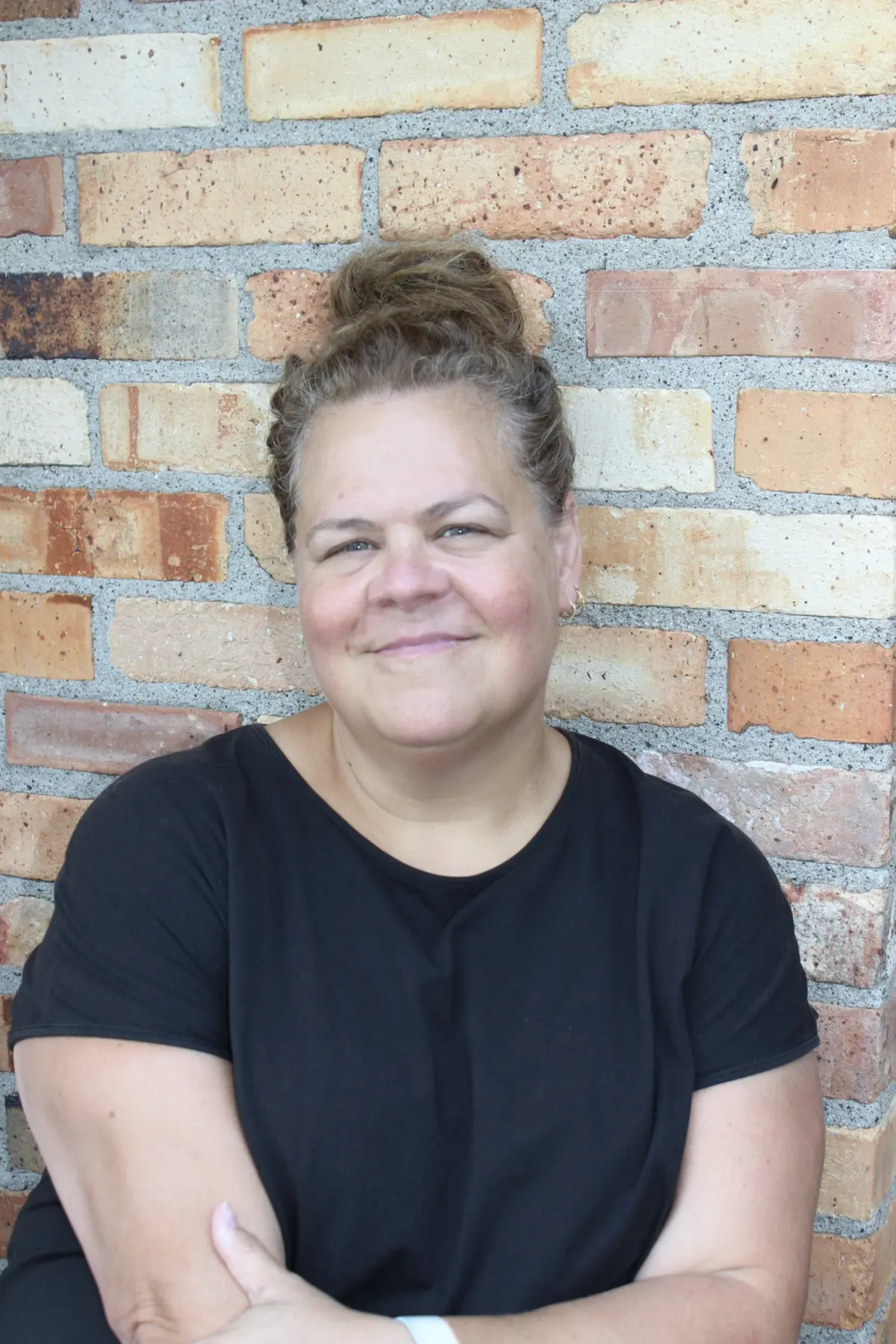
In the contemporary literary landscape, poetry often serves as a mirror reflecting the hidden fractures of cultural memory. This mission is brought into sharp focus with the selection of Catie Rosemurgy’s “Diorama 1871 (while a pie burns, the schoolteacher’s wife keeps going)” as the featured Poem of the Week. Rosemurgy, an acclaimed author known for her distinctive lyricism and unflinching psychological depth, utilizes her verse to interrogate the ways local histories are curated, sanitized, and remembered.
This piece is more than a standalone literary achievement; it is an entry point into a broader, ongoing collection inspired by Rosemurgy’s encounters with upper Midwestern local history museums. Confronted by museum exhibits that whitewashed or entirely omitted the realities of colonial settlement, Rosemurgy embarked on an artistic journey to give voice to the silent, tiny white figures populating a diorama of a once-booming, now-deserted town. Through her work, she investigates a profound modern affliction: the fatal mixture of institutional inability and willful unwillingness to forge an honest, shared public narrative of our shared past.
The resulting poetry forces a confrontation with historical accumulation—cataloging the physical instruments of settlement alongside the quiet, creeping bodily toll of human expansion. By blending meticulous poetic architecture with fierce cultural critique, Rosemurgy invites readers to examine what gets left out of the glass-encased displays of local heritage.
Read Also
Detailed Chronology: From Upper Midwestern Museums to the Page
The genesis of Rosemurgy’s poetic project is rooted in a specific, sensory-rich timeline of personal discovery, institutional observation, and creative excavation. Understanding the weight of her current work requires tracing the chronology of how a museum visit transformed into an expansive poetic endeavor.
Phase One: The Encounter with Historical Silence
The project began when Rosemurgy visited two local history museums nestled in the upper Midwest, not far from the landscape of her upbringing. Museums dedicated to regional pioneer history often lean heavily into nostalgia, celebrating the grit, ingenuity, and perseverance of early settlers. However, during these visits, Rosemurgy noted a glaring, pervasive omission: the curation systematically ignored the complex, often violent realities of colonial settlement and Indigenous displacement.
This absence was not felt as a neutral gap, but rather as something hauntingly malignant—an active erasure disguised as benign heritage preservation. One of these museums featured a meticulously crafted, permanent diorama depicting the boom years of a local town that had since faded into ghost-town obscurity. Standing before the glass case, observing the frozen miniature scenes of daily life, Rosemurgy found herself arrested by the silence of the tiny plastic or wooden figures.
Phase Two: The Birth of the Diorama Poems
Struck by the dissonance between the bustling historical narrative promoted by the museum and the actual, unacknowledged cost of that history, Rosemurgy began drafting poems designed to animate the inanimate. She sought to liberate the miniature white figures trapped inside the diorama, imagining them coming to life and speaking to the sweeping forces of history that claimed them.
Rather than adopting a traditional narrative arc, these poems accumulate details with overwhelming velocity, mirroring the sudden, crushing influx of humanity, tools, and infrastructure that characterized nineteenth-century frontier expansion. In pieces like Diorama 1871, Rosemurgy traces the parallel tracks of external chaos—burning pies, relentless household labor—and internal disintegration, mapping the frontier not just as a geographical space, but as a site of profound physical and psychological wear.
Phase Three: National Recognition and Contemporary Resonance
The selection of “Diorama 1871 (while a pie burns, the schoolteacher’s wife keeps going)” by major literary platforms marks a significant milestone in the reception of Rosemurgy’s current body of work. It brings her ongoing exploration of historical complicity to a broader audience, bridging the gap between localized historical critique and universal conversations about memory, trauma, and representation. As these poems circulate, they invite academic and public discourse on how communities choose to remember their origins, and who bears the burden of historical amnesia.
Supporting Context & Metrics: The Architecture of Diorama 1871
To fully appreciate the impact of Rosemurgy’s work, one must examine the specific mechanics of the featured poem. Diorama 1871 is constructed as a torrential catalog—a breathless inventory of items, actions, and bodily afflictions that captures the overwhelming momentum of colonial settlement.
The Influx of Infrastructure
The poem opens by registering the sheer volume of the arrival:
The newcomers arrived in Gold River in such large numbers. So much sudden. So many
This introductory observation is immediately followed by a relentless, cascading list of nouns that charts the physical materialization of a settlement:
- Domestic & Labor Implements: stools, bunks, bowls, shovels, nails, cleavers, ladders
- Industrial & Frontier Machinery: chutes, pipes, levers, cinches, planks, bolts, shears
- Land & Legal Divisiveness: stakes, plots, parcels, holdings, claims, allotments
- Transportation & Commerce: freighters, schooners, barges, barks, steamers / disputes, interests, debts, ledgers, accounts
This catalogic structure mirrors the way history museums present progress: as a neat accumulation of artifacts, tools, and economic milestones. However, Rosemurgy quickly expands the ledger to include the social and biological reality of human existence within these spaces.
From Artifact to Anatomy
As the poem progresses, the catalog shifts from external objects to the intimate, fragile human body. The inventory transitions seamlessly from societal constructs (names, births, graves, clans, vows, curses, oaths) to external adornments (pins, hats, curls, cuffs, feathers, buttons, tokens) and finally to the stark reality of human anatomy:
elbows, tongues, femurs, arteries, knuckles, spines,
This transition serves a vital thematic purpose. It collapses the distance between the inanimate infrastructure of a frontier town and the living, breathing, and ultimately decaying bodies of the people who built and inhabited it. The items collected in the museum case are shown to be inseparable from the physical cost paid by those caught in the gears of expansion.
The Accumulation of Trauma
In its final movements, the poem descends into a harrowing medicalized litany of bodily wear, tear, and disease. The language becomes tactile, visceral, and uncomfortably intimate:
- Physical Accidents & Mutilations: spills, falls, pops, knocks, gouges, guttings / nicks, cuts, bruises, rots, punctures, sprains / fractures, limps, twists, tears, pulls, knots
- Surgical & Medical Interventions: pithings, pokings, severings, suturings, swellings
- Pathologies & Afflictions: infections, fevers, fugues, visions, airs, aches / contusions, blisters, ruptures, drainings / abrasions, breakings, brandings, bulgings / boils, plaques, rashes, pimples, pustules / scrapes, bumps, gashes, stings, dislocations / oozings, numbness, faintings, blindings, chokings
The poem concludes with a devastating meta-critique of historical record-keeping:
Accurate records could not be maintained. They lost track of what hurt and how much and who felt it.
In these final lines, Rosemurgy identifies the ultimate failure of institutional history: the inability—or refusal—to account for the true magnitude of human suffering and disruption. The museum’s neat display cases and silent dioramas are unmasked as sanitized fictions, incapable of holding the messy, painful realities of the past.
Official Statements & Critical Perspectives
Catie Rosemurgy’s literary footprint is well-established, supported by a distinguished career and recognition from premier cultural institutions. Holding fellowships from the Pew Foundation, the National Endowment for the Arts, and the Rona Jaffe Foundation, Rosemurgy has cultivated a reputation as a daring and innovative voice in contemporary American poetry.
The Author’s Perspective
In her official Author’s Note accompanying the poem, Rosemurgy reflects directly on the psychological impetus behind her latest collection:
"This poem is from a book I began writing after visiting two local history museums in the upper Midwest near where I grew up. Both museums largely ignore the role of colonial settlement in their curation, and that silence felt hauntingly malignant to me in the days after my visit. One of the museums features a diorama of the once-thriving, now-deserted town in which the museum is located. As a way of exploring the fatal mixture of inability and unwillingness that prevents us from developing a shared, public narrative of our history, I began to write poems that imagine the tiny, white figures in the diorama beginning to speak."
This statement illuminates the ethical core of Rosemurgy’s project. She diagnoses the resistance to historical truth not merely as an oversight, but as a dual failure: an inability to confront complex, uncomfortable truths, paired with an unwillingness to disrupt comforting regional myths of innocent pioneering. By giving voice to the silent figures of the diorama, Rosemurgy disrupts the museum’s monologue, transforming a static tourist attraction into an active site of reckoning.
Critical Reception and Academic Context
Literary critics and scholars have long praised Rosemurgy for her ability to blend high lyricism with striking conceptual frameworks. Her previous collections—My Favorite Apocalypse and The Stranger Manual, both published by Graywolf Press—established her knack for examining alienation, interiority, and the strange landscapes of American culture.
With her new work centering on the Midwestern dioramas, reviewers and poetry scholars note an evolution toward public history and collective memory. By interrogating the curated silences of regional museums, Rosemurgy joins a vital cohort of contemporary poets who use archival subversion to rewrite the boundaries of historical verse. Her work asks readers to consider how national myths are constructed on a local scale, and how poetry can serve as a corrective to institutional amnesia.
Future Outlook: The Legacy of the Diorama Project
As Catie Rosemurgy continues to develop her manuscript-in-progress, the implications of her exploration into museum dioramas and historical silences extend far beyond the pages of literary journals.
Reimagining Regional Curation
Rosemurgy’s work arrives at a time of intense national and international debate over how museums, cultural institutions, and public monuments represent history. Across the globe, curators and historians are grappling with the imperative to decolonize exhibits, acknowledge suppressed narratives, and present a more honest, multifaceted accounting of the past. While poetry cannot replace rigorous historical scholarship or institutional reform, works like Diorama 1871 provide an essential cultural catalyst. They challenge the gatekeepers of local history to look past sanitized nostalgia and confront the ghosts haunting their display cases.
The Evolution of Rosemurgy’s Oeuvre
For readers and scholars of contemporary American poetry, the forthcoming publication of Rosemurgy’s complete diorama collection is eagerly anticipated. Building upon the foundation laid by The Stranger Manual and My Favorite Apocalypse, this new body of work promises to cement her status as one of our most imaginative and socially attuned poets.
By continuing to listen to the silent figures frozen behind museum glass, Rosemurgy demonstrates that poetry remains one of our most powerful tools for excavation. In a culture often prone to forgetting what hurt, how much, and who felt it, her verse stands as a vital ledger—a meticulous, compassionate record of the unrecorded, ensuring that the human cost of our shared history is neither ignored nor forgotten.

Comments
Facebook App ID not configured. Please add it in the Customizer.