
Executive Overview
In the realm of modern psychological and historical literature, few intersections are as poignant or intellectually demanding as the convergence of systemic critical theory and the gradual, eroding march of neurodegenerative disease. In a profound and deeply intimate essay recently published in n+1, scholar Leigh Claire La Berge confronts this intersection head-on. She examines the experience of relating to a mother suffering from dementia through the conceptual lens of French philosopher Michel Foucault.
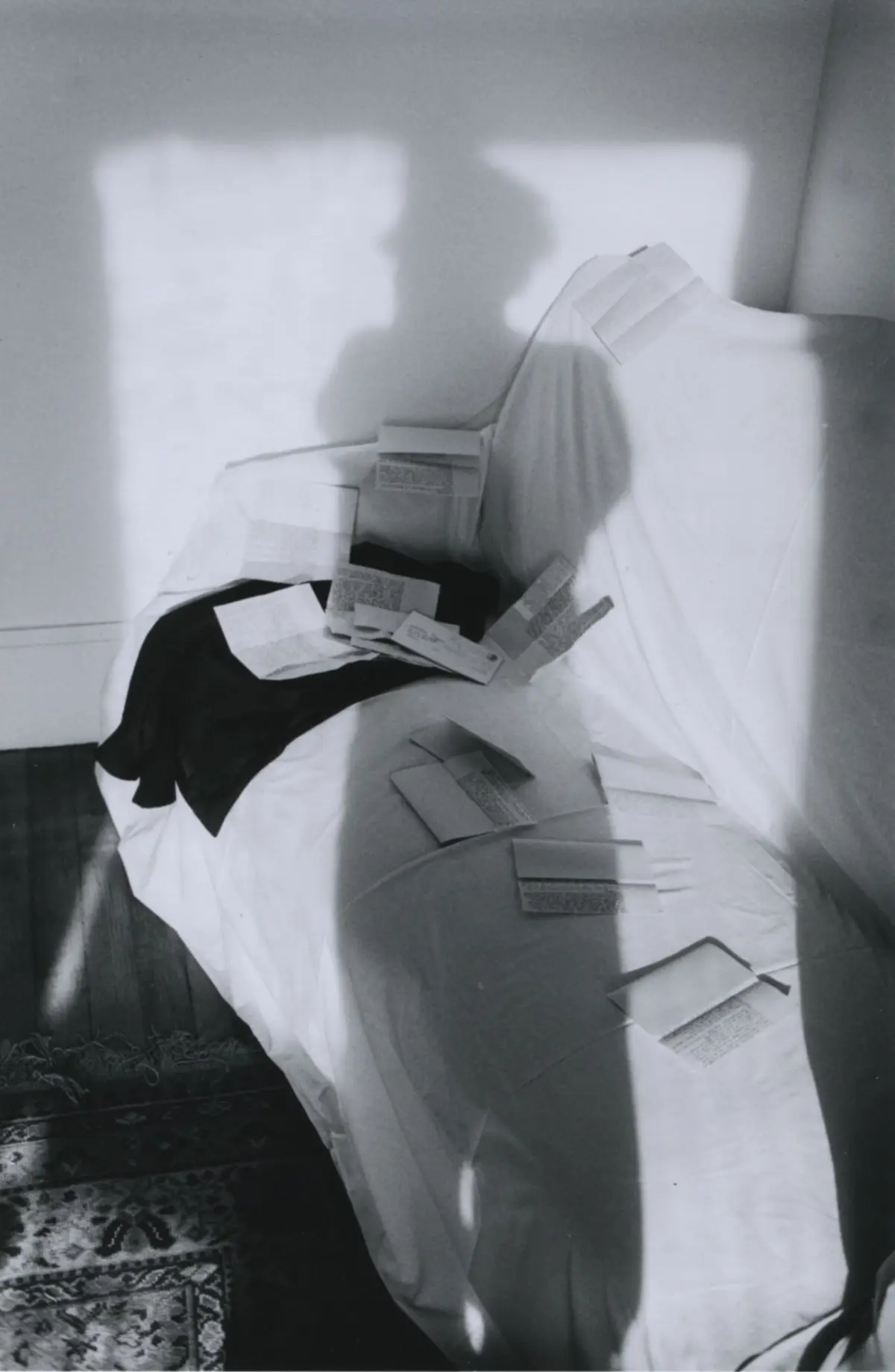
The article details a universal yet singularly specific human tragedy: watching a brilliant, articulate mind slowly yield to memory loss while simultaneously inheriting a towering, multi-decade paper trail left behind by that very mind. For decades, La Berge’s mother—a historian of French public health and 19th-century sanitation—maintained a meticulous, nearly continuous archive of personal journals spanning from 1975 into the 2020s. These forty volumes, nestled for years between heavy academic treatises on Foucault and historical sanitation, form a complex tapestry of self-discipline, professional ambition, intimate crises, and maternal instruction.
This narrative explores how archival preservation functions as both a lifeline and a barrier for families navigating dementia. It investigates the paradoxical nature of memory: while the mother’s internal archive fades in real-time, her daughter is tasked with stepping into the role of a historian, reconstructing a life from a dense thicket of ink, paper, medical discourses, and domestic history.
Read Also
Detailed Chronology: Decades in Ink
To understand the weight of the forty journals is to trace the intellectual and personal evolution of a woman caught between Southern tradition and rigorous academic modernity. La Berge’s chronicle of her mother’s notebooks reveals distinct historical phases, marked by stylistic shifts, life milestones, and psychological turning points.
The Late 1970s: The Intellectual Metamorphosis
During the late 1970s, the journal entries are notably prolific. This era captured a profound personal transformation: the shedding of a traditional Southern belle persona—whose formative literary touchstone was Gone with the Wind—in favor of a polyglot PhD candidate capable of seamlessly quoting Albert Camus. The journals from this period reflect the intense, dizzying velocity of upward academic mobility and the forging of a new intellectual identity.
The 1980s: Professional Despair and Maternal Ambivalence
The record thins noticeably throughout the 1980s. La Berge notes that this decade appears to have been characterized by professional friction, academic despair, and the complex, often unspoken personal ambivalence unique to early child-rearing. Rather than serving as a continuous daily log, the journals from these years capture sporadic, intense bursts of reflection on the friction points between career aspirations and domestic responsibilities.
The 1990s and Early Aughts: Tenure, Books, and Self-Sufficiency
The 1990s and early 2000s marked a resurgence in journaling volume. During these years, the mother secured a coveted tenure-track academic position, published her first major book, and found intellectual delight in the deep study of medical history. The entries from this stretch reflect a sense of stabilization: children growing into self-sufficiency, a settled professional trajectory, and a mature command over her historical and institutional surroundings.
The 2020s: The Lost Decade and the Onset of Dementia
As the calendar turned to the 2020s, the journals entered what La Berge describes as a "lost decade." This period mirrors the onset and acceleration of cognitive decline. The mother has become simultaneously present and absent—physically occupying the room, yet detached from the linear progression of time. The dynamic shifted entirely: instead of the mother recording her daily existence, the daughter was left to read, interpret, and write about her mother’s life without her active participation.
Supporting Context & Metrics: The Mechanics of the Archive
The physical and emotional infrastructure of the mother’s journaling practice reveals a deeply ingrained compulsion toward self-monitoring and documentation. Across forty years and forty distinct volumes, the project of keeping a journal served multiple functions that align strangely—yet fittingly—with Foucauldian theories of self-regulation and discourse.
Physical Manifestation of the Archive
- Total Volume: Approximately 40 personal journals spanning more than four decades (1975–2020s).
- Storage Environment: Originally housed in the home study, wedged directly between an extensive collection of Michel Foucault’s works and specialized volumes on 19th-century French sanitation.
- Mobility: The journals were constant traveling companions—resting on car dashboards during road trips across the American South, pulled from carry-on bags on transatlantic flights, and clutched during waits outside tennis practices.
- Handwriting Profile: Described by the author as uniquely illegible—a volatile hybrid of print, cursive, and characters that "might as well be Cyrillic," requiring a historian’s patience, a flashlight, and a magnifying glass to decode.
The Foucauldian Self-Discipline
In The Birth of the Clinic, Michel Foucault famously wrote:

"We are doomed historically to history, to the patient construction of discourses about discourses, and to the task of hearing what has already been said."
While Foucault applied this methodology to institutional power, medical paradigms, and the evolution of knowledge systems, La Berge applies it directly to the micro-politics of the domestic sphere. The journals were not merely passive repositories of daily events; they were instruments of active self-policing.
Throughout the decades, the notebooks served as vehicles for:
- The Disciplining of the Body: Rigorous, recurring internal accountings regarding weight, dietary habits, and physical standards.
- The Maintenance of Secrets: The codification of sexual histories, private affairs, divorces, and complex marital dynamics.
- Moral and Fiscal Accounting: Annual check-ins timed precisely to birthdays, balancing ethical ledgers alongside practical realities.
- Observations of Deviance: Ruminations on alternative lifestyles, including the non-normative or "deviant" sexualities of those within her immediate familial orbit—most notably, her daughter.
Official Perspectives and Academic Insight
The essay prompts broader questions regarding how families of academics and intellectuals process trauma, aging, and cognitive decline. While families of scientists, artists, or legal professionals might pass down distinct types of cultural capital or practical advice, the legacy of a historian of public health was distinctly text-based.
When La Berge and her sister faced the inevitable trials, heartbreaks, and professional obstacles of young adulthood, their mother’s counsel was immutable and unwavering: "Keep a journal."
This advice was not accidental. For a woman who spent her professional life interrogating archives, libraries, and the sanitized structures of French public health, suffering was not something to be merely endured or ignored; it was something to be systematically documented. If her daughters were going to experience pain, the mother implicitly believed they owed it to themselves—and to history—to maintain a primary-source record of it.
Furthermore, the tension around redaction highlights the complex ethics of familial archives. In a 2018 phone call, the mother casually offered to "blot out the sex scenes with a marker," warning her daughter that the journals were "pretty racy" and would eventually change hands. La Berge’s agnostic response—suggesting that everyone is pornographic in their own way, and prioritizing legibility over moral censorship—underscores a modern shift in how adult children view the private inner lives of their aging parents. Rather than clutching pearls at maternal eroticism, the surviving generation seeks connection through total transparency, accepting the raw, unedited mess of a human life.
Future Outlook: Living with the Ghost of the Archive
As neurodegenerative diseases like dementia continue to affect aging populations worldwide, the burden of narrative stewardship increasingly falls upon the family members left behind. The case of Leigh Claire La Berge and her mother offers a profound template for how we might approach the "lost decades" of our loved ones.
Key Takeaways for the Future of Memory Studies
- The Daughter as Historian: When a loved one loses the capacity for autobiographical memory, family members are thrust into the role of archivists. To remain connected to the person, one must often become a historian of their past discourses.
- The Materiality of Paper in a Digital Age: In an era dominated by transient digital footprints (emails, text messages, cloud-based notes), physical journals represent tactile monuments. The illegible handwriting, the marginalia, and the physical wear and tear of forty paper volumes provide an irreplaceable anchor for grief and remembrance.
- Accepting the Incomplete Narrative: Just as the mother’s journals left gaps—such as the sparse documentation of the 1980s and the total silence of the 2020s—families must learn to navigate the structural voids left by dementia. The story does not end cleanly; it trails off into illegibility, much like the handwriting in the margins of the final notebooks.
In the end, La Berge remains suspended between two realities: her mother is physically alive, yet cognitively untethered from the historical record she spent a lifetime creating. By sitting among the forty journals, reading the medical, sexual, and family discourses of the past, she demonstrates that while memory may fail the individual, the archive preserves the relational architecture of a family—patiently constructing discourses about discourses, and listening once more to what has already been said.





Comments
Facebook App ID not configured. Please add it in the Customizer.