
Executive Overview
The contemporary arts landscape is experiencing a period of profound transformation, marked by structural shifts in institutional leadership, intensifying economic pressures on grassroots creative ecosystems, and high-stakes developments across the international market. From the departure of visionary directors in the United States to existential funding and real estate crises threatening historical hubs in Scotland, the global cultural sector finds itself at a critical crossroads.
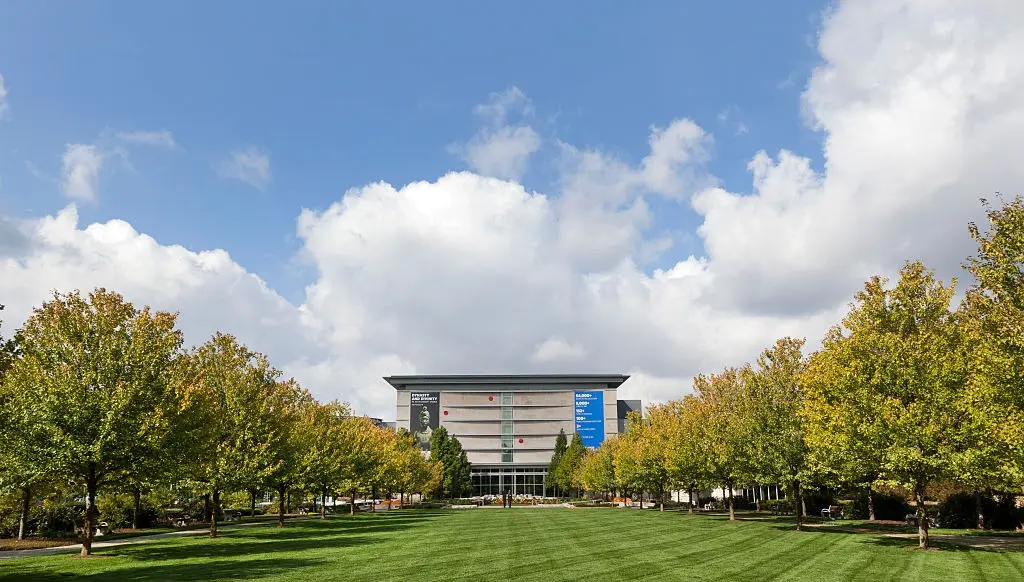
At the Indianapolis Museum of Art, executive director Belinda Tate is stepping down after a transformative three-year tenure defined by a rigorous commitment to amplifying marginalized voices, women, and artists of color. Meanwhile, across the Atlantic, Glasgow’s storied arts community has reached a boiling point. Consecutive disasters—including devastating fires at the Glasgow School of Art and the abrupt closure of the Centre for Contemporary Arts (CCA)—have galvanized artists and activists to launch urgent preservation campaigns amid predatory rent hikes and institutional dismantling.
Beyond these localized structural tremors, the international news cycle has been dominated by a diverse array of cultural developments: legal battles in Virginia challenging federal monuments, a mysterious high-profile museum heist in France, technological ventures capturing Renaissance handwriting, and monumental valuations on the auction circuit. Together, these events underscore an overarching narrative: the modern art world is grappling with the fragile intersection of institutional stewardship, market economics, architectural heritage, and socio-political friction.
Read Also
Detailed Chronology & Structural Shifts
Leadership Transition at the Indianapolis Museum of Art
After guiding the institution through a pivotal three-year chapter, Belinda Tate has announced her departure as executive director of the Indianapolis Museum of Art. Appointed to steer the museum into a more inclusive and contemporary era, Tate established a distinct curatorial and administrative legacy rooted in equity and representation.
During her tenure, Tate prioritized the visibility of women and artists of color through critically acclaimed and culturally resonant programming. Key exhibitions under her leadership included Future Now: Virtual Sneakers to Cutting-Edge Kicks, which explored the intersection of digital culture, fashion, and contemporary design, and The Message is the Medium, a deep dive into the materiality of modern art. Perhaps her most celebrated coup was orchestrating a partnership to bring the formidable collection of Alicia Keys and Swizz Beatz (Kasseem Dean) to Indianapolis. The resulting exhibition, Giants: Art from the Dean Collection, introduced blue-chip contemporary works to the Midwest and drew widespread national acclaim, cementing the museum’s reputation as a dynamic venue for cutting-edge cultural discourse.
Reflecting on her tenure, Tate noted in an official museum statement: "I am proud of the role I have played in advancing the Indianapolis Museum of Art and helping position it for its next chapter." Her departure leaves a significant vacancy, raising questions about the museum’s strategic direction as it searches for leadership capable of maintaining this momentum.
The Fight for Glasgow’s Cultural Heart
In Scotland, Glasgow’s celebrated arts ecosystem is facing an existential crisis, plunging the local creative community into what insiders describe as open uproar. Decades of institutional cultivation are under threat following a series of compounding catastrophes, most notably the catastrophic fires that twice devastated the iconic Glasgow School of Art, followed by the abrupt shuttering of the Centre for Contemporary Arts (CCA) earlier this year.
In response to the dismantling of their infrastructure, local artists, organizers, and community members have mobilized. Grassroots initiatives have given rise to the "Save Our CCA" campaign, alongside a parallel mobilization to protect Trongate 103—a vital creative hub housing seven distinct arts organizations. This collective is currently fighting an aggressive, destabilizing 400 percent rent increase imposed on their building, a financial burden that threatens to evict the organizations entirely.
The dismantling of these institutions threatens the delicate socio-economic fabric that made Glasgow a magnet for international talent. Local artist Mark Leckey articulated the gravity of the situation, observing: "To lose the CCA is to lose part of that core, that heart, from which everything else can be sustained." Leckey’s sentiment recalls a bygone era when Glasgow offered a rare, sustainable ecology for artists. Compounding the community’s distress is the controversial decision to put the CCA’s historical archive up for sale—a prospect a Save Our CCA spokesperson condemned as "sickening," signaling a profound erosion of institutional responsibility toward cultural heritage.
Supporting Context, Metrics & Global Developments
Urban Planning and Legal Confrontations in Virginia
The intersection of politics, monumental architecture, and local governance came to a head in Arlington County, Virginia. The elected county board filed a formal lawsuit against plans advanced under the Trump administration for a controversial triumphal arch. According to legal filings, federal authorities failed to conduct mandatory environmental and community impact reviews, running afoul of federal regulations governing public infrastructure and urban development. The lawsuit highlights municipal resistance against federally imposed architectural projects that bypass local environmental and zoning considerations.
The "Gallery Exodus" in Vienna
The commercial art market in the Austrian capital is undergoing a structural contraction. Industry analysts and dealers point to a multifaceted "gallery exodus" out of Vienna. Interviews with four prominent local art dealers reveal divergent catalysts for the migration—ranging from rising operating overhead and shifting collector demographics to a perceived lack of institutional backing. However, a unifying consensus has emerged from the crisis: a thriving commercial art market cannot exist in a vacuum. It requires a robust, symbiotic ecosystem supported by dynamic institutions, engaged private collectors, and sustained governmental subsidies.
High-Profile Museum Heist in France
Security vulnerabilities in private cultural institutions were underscored dramatically in France, where thieves executed a sophisticated heist. According to the museum’s owner, the perpetrators systematically disconnected video surveillance cameras and disabled the security alarm system before absconding with a high-value artifact: a giant bronze book cover designed by Salvador Dalí, titled Livre de l’Apocalypse. The precision of the break-in has sparked renewed concern regarding the security standards of smaller, private museums housing priceless cultural property.
Technological Innovation: The Digital Renaissance
In the realm of digital culture, Microsoft announced the launch of a free, contemporary digital typeface designed to mimic the distinct handwriting of High Renaissance master Michelangelo. Fittingly titled "Michelangelus," the project bridges historical paleography with modern software engineering, offering designers and digital creators access to historical aesthetics translated into binary code.
The Luxury Market: The "Bulgari Pink" Diamond
On the high-end auction front, the luxury market continues to command astronomical figures. Christie’s announced its upcoming Geneva auction featuring a rare, 24-carat, emerald-cut diamond known as the "Bulgari Pink." Estimated to fetch upwards of $18 million, the gem represents the ongoing resilience and appetite of the ultra-high-net-worth collector base for world-class gemstones.
Official Statements and Institutional Perspectives
The fragility of institutional leadership and the friction between grassroots preservation and corporate or municipal pressures have generated a wealth of official commentary from key stakeholders.
- Belinda Tate, Outgoing Executive Director, Indianapolis Museum of Art:
"I am proud of the role I have played in advancing the Indianapolis Museum of Art and helping position it for its next chapter. Our focus was always on ensuring that the museum reflected the breadth and depth of contemporary creativity, making space for voices that have historically been sidelined."
- Mark Leckey, Artist, on the Glasgow Arts Crisis:
"To lose the CCA is to lose part of that core, that heart, from which everything else can be sustained. Glasgow worked because there was an ecology and an economy that supported artists from the ground up. Take that away, and the foundation collapses."
- Kadie Ross, Gallery Director at Rosenberg & Co (reflecting on Esphyr Slobodkina):
"She didn’t shy away from new development. Her work moves fluidly between children’s illustration, abstract painting, and mixed-media sculpture with a singular sense of freedom that defied categorical limitations." (This sentiment mirrors the broader ethos required of contemporary cultural institutions navigating rapid industrial shifts).
Future Outlook
As the global arts sector looks toward the remainder of the decade, several critical trajectories are emerging from the week’s developments.
First, the departure of leadership figures like Belinda Tate signals an ongoing generational and ideological handover within major American museums. Institutions are increasingly expected to maintain diversity, equity, and inclusion commitments not as temporary initiatives, but as permanent structural imperatives. The incoming leadership in Indianapolis will face the rigorous task of sustaining the high-profile programming and community engagement established over the past three years.
Second, the crisis in Glasgow serves as an urgent cautionary tale for municipalities worldwide. As real estate pressures, inflation, and public funding cuts converge, historic grassroots arts scenes face unprecedented threats of displacement. Whether campaigns like "Save Our CCA" and the pushback against Trongate 103’s rent hikes can successfully force structural concessions remains uncertain. However, the fierce resistance mounted by Glasgow’s creative community highlights an unwillingness to quietly surrender cultural infrastructure to economic expediency.
Finally, the juxtaposition of high-end commercial market activity—such as Christie’s multi-million-dollar diamond auctions and Microsoft’s technological homages to Michelangelo—with localized preservation battles illustrates the bifurcated reality of the modern art world. While the upper echelons of the market and tech sector continue to innovate and capitalize on prestige, the foundational ecosystem of community spaces, regional museums, and independent galleries demands urgent structural defense to ensure that the broader cultural landscape remains vibrant, accessible, and resilient.




Comments
Facebook App ID not configured. Please add it in the Customizer.