
November 20, 2026
By the Cultural Economics Desk
Executive Overview
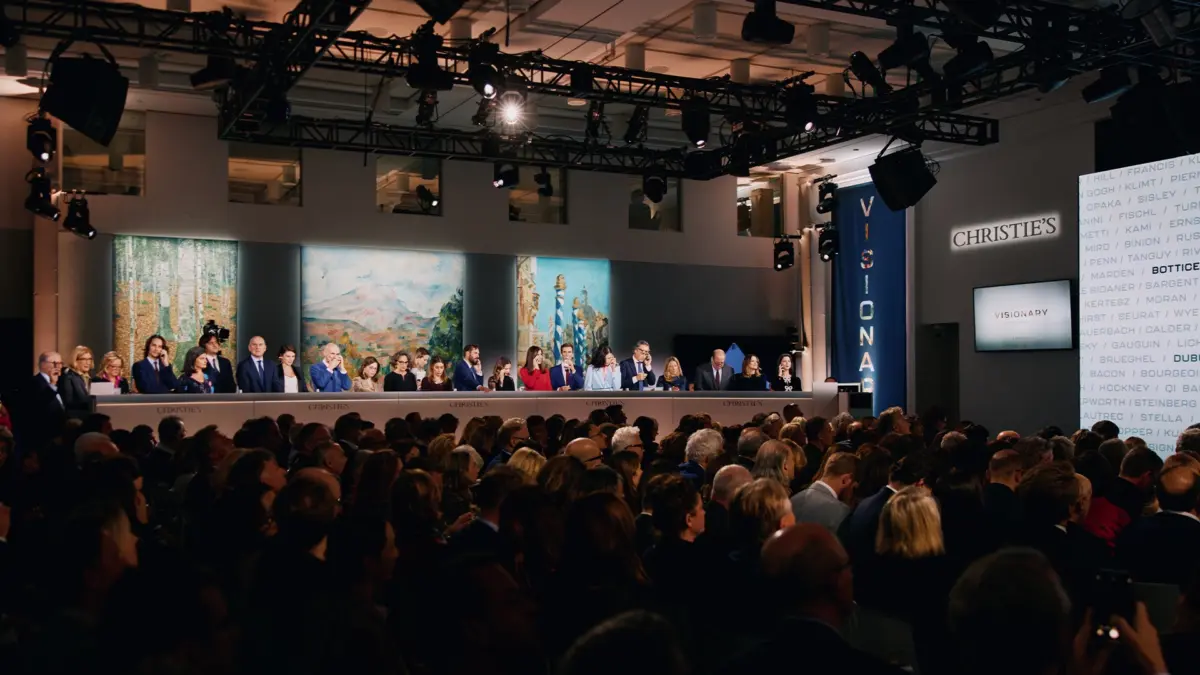
In the high-stakes arena of the global art market, nine-figure price tags have ceased to be anomalies and have instead become the expected baseline for masterworks. When Gustav Klimt’s shimmering Portrait of Elisabeth Lederer (1914–16) shattered expectations at Sotheby’s, commanding an astonishing $236.4 million, it was merely the latest chapter in a runaway economic phenomenon. Month after month, auction houses in New York, London, and Hong Kong stage theatrical evening sales where speculative capital, institutional ambition, and dynastic wealth collide.

From Leonardo da Vinci’s disputed, record-shattering $450 million Salvator Mundi to Jackson Pollock’s Number 7A, 1948, which obliterated its pre-sale estimates during a landmark May 2026 auction of the S.I. Newhouse collection at Christie’s, these transactions generate staggering headlines. Yet, they also provoke an urgent, perennial question: What is the true relationship between a painting’s market valuation and its cultural resonance?
Read Also
This report investigates the architecture of the modern mega-sale. It examines how auction houses have transformed from modest clearinghouses into global stages of spectacle, how the super-wealthy use masterpieces as liquid financial instruments and prestige trophies, and why the true value of art continues to exist in a space that cold cash can never truly touch.

Detailed Chronology: The Escalation of the Nine-Figure Market
To understand how the art market arrived at its current plateau, one must chart the acceleration of valuations over the past three decades. The modern era of stratospheric pricing did not happen overnight; it was engineered by shifting global wealth distributions, financial deregulation, and the rise of contemporary art as an asset class.
1. The Turn of the Century and the Private Market Baseline
Prior to the mid-2000s, transactions exceeding $100 million were almost exclusively handled via private treaties, away from the public gaze. Works like Pablo Picasso’s Garçon à la pipe (1905), which sold for $104.2 million at Sotheby’s in 2004, signaled that public auction rooms could successfully absorb nine-figure valuations. However, these sales were viewed as historical exceptions rather than systemic trends.

2. The Decade of the S.I. Newhouse and Rockefeller Windfalls
The 2010s and early 2020s witnessed an unprecedented wave of single-owner collections coming to market. Estates accumulated by media moguls, industrialists, and old-guard philanthropists flooded the auction ecosystem with museum-quality pieces.
- 2017: Leonardo da Vinci’s Salvator Mundi sold at Christie’s New York for $450 million, instantly establishing a new, seemingly untouchable ceiling for a single artwork—while simultaneously sparking fierce art-historical debates regarding attribution and conservation.
- 2015: Picasso’s vibrant Les Femmes d’Alger (“Version O”) achieved $179.4 million at Christie’s, demonstrating the insatiable global demand for canonical Modernism.
- 2022: The historic sale of the Peggy and David Rockefeller Collection, alongside subsequent offerings like the Paul G. Allen collection, proved that the supply of ultra-high-net-worth capital was deep enough to absorb billions of dollars in blue-chip art within a single auction cycle.
3. The 2026 Landscape: Klimt, Pollock, and Beyond
The art market landscape of 2026 is defined by unprecedented velocity. The sale of Klimt’s Portrait of Elisabeth Lederer for $236.4 million at Sotheby’s highlighted the enduring appeal of the Vienna Secession. Meanwhile, the May 2026 Christie’s sale of works from the S.I. Newhouse collection saw Jackson Pollock’s Number 7A, 1948 smash its initial $100 million estimate, propelled by aggressive bidding from international collectors. With each milestone, the psychological barrier to the next pricing tier—potentially the half-billion-dollar mark—grows increasingly fragile.

[2004: Picasso's 'Garçon à la pipe' - $104M]
       │
       ▼
[2015: Picasso's 'Les Femmes d’Alger' - $179.4M]
       │
       ▼
[2017: Da Vinci's 'Salvator Mundi' - $450M]
       │
       ▼
[2026: Klimt's 'Portrait of Elisabeth Lederer' - $236.4M]
Supporting Context & Metrics: The Mechanics of the Speculative Spiral
The mechanics driving these astronomical figures extend far beyond aesthetic appreciation. Modern art collecting operates at the intersection of wealth preservation, status signaling, and financial engineering.
The Financialization of Culture
In an era marked by economic volatility, inflation, and shifting geopolitical landscapes, blue-chip art functions as an alternative asset class. Paintings by Warhol, Pollock, Rothko, and Picasso are treated as highly portable, internationally recognized stores of value. Works like Andy Warhol’s Shot Sage Blue Marilyn (1964), which sold for $195 million in 2022, demonstrate how iconic imagery can be monetized with the predictability of blue-chip equities.

The Auction House as Theater
Today’s major evening sales—broadcast live to digital audiences numbering in the millions—are meticulously choreographed theatrical productions. Auctioneers function as master showmen, managing tension in rooms filled with billionaires, advisors, and journalists.
This environment fosters a feedback loop of price inflation:

- The Halo Effect: A record-breaking price elevates the entire category of an artist’s work, revaluing pieces held in private collections and museums alike.
- The Trophy Asset Dynamic: For ultra-high-net-worth individuals, owning a recognized masterpiece serves as an unmistakable signal of elite status, cultural capital, and financial invulnerability.
- The Multiplier Effect: Once a psychological barrier (such as $200 million or $400 million) is breached, the market treats the former ceiling as the new floor, emboldening consignors and auction houses to test ever-higher estimates.
Official Statements and Industry Perspectives
The tension between commercial valuation and artistic integrity has elicited robust debate among curators, market analysts, and cultural historians.
Leading Art Market Analyst on the Psychology of the Reserve:

"When you watch bids climb past the quarter-billion-dollar mark, you are no longer witnessing a transaction based on supply and demand fundamentals. You are watching a live auction of prestige. The numbers multiply faster than the logic behind them because the currency being traded is cultural dominance, not canvas and oil."
Museum Director on the Disconnect Between Price and Power:

"High prices create a dangerous illusion. They trick the public into believing that financial worth equates to cultural transcendence. But a price tag cannot measure the quiet, subversive power of a painting that shifts how humanity perceives itself. The best art exists in a space that money simply cannot touch."
Senior Auction House Executive on the Evolution of Demand:

"The global pool of collectors has expanded dramatically over the past two decades. We are seeing generational wealth transfers intersecting with newly minted fortunes from the technology and finance sectors. These buyers are not merely purchasing decoration; they are acquiring fragments of art history. Our role is to provide the secure, transparent platform where history and capital meet."
Future Outlook: Where Does the Art Market Go From Here?
As the industry looks toward the remainder of the decade and beyond, several structural trends will dictate the trajectory of the high-end art market:
- The Half-Billion Threshold: With works like Salvator Mundi establishing that $450 million is attainable, market insiders speculate openly on which masterpiece will be the first to breach the $500 million barrier. Likely candidates include rare canonical works by Leonardo, Michelangelo, or select undisputed icons of Impressionism and Post-Impressionism.
- Shifting Geographies of Wealth: While New York and London remain the traditional capitals of the auction trade, increasing capital concentration in Asia (particularly Hong Kong, Seoul, and Singapore) and the Middle East (specifically Dubai and Doha) is reshaping consignments and buyer demographics.
- The Divergence of Price and Scholarship: A widening chasm is emerging between the speculative market for blue-chip trophies and the broader ecosystem of emerging and historical art. While headline-grabbing sales routinely break records, regional galleries and institutional museums face mounting pressures, highlighting an increasingly bifurcated art world.
- The Enduring Power of the Object: Ultimately, despite the financialization, the algorithmic pricing models, and the media spectacles, the core of the art market remains anchored by physical objects. As prices drift further into the stratosphere, the fundamental challenge for collectors, institutions, and critics will be to ensure that the noise of the auction room never completely drowns out the silent, enduring voice of the art itself.



Comments
Facebook App ID not configured. Please add it in the Customizer.