
Executive Overview
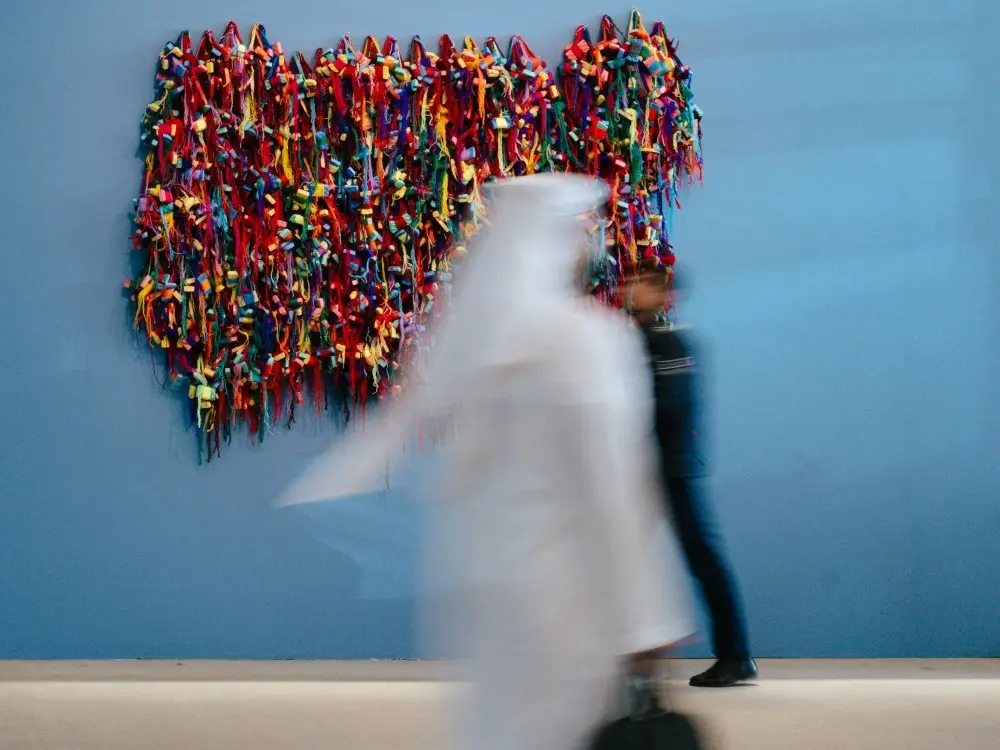
Against a tense backdrop of regional volatility, the international art world converged on the United Arab Emirates for the inaugural edition of Frieze Abu Dhabi. On the very morning the doors opened to collectors, dignitaries, and celebrities, reports surfaced of an attack by Yemen’s Iran-backed Houthi rebels targeting Saudi Arabia’s financial hub in Riyadh. Yet, within the sleek, climate-controlled confines of the Abu Dhabi exhibition halls, the atmosphere was defined not by geopolitical anxiety, but by a frenetic wave of high-stakes commerce, critical acclaim, and cultural milestone-marking.
Rebranded from the long-standing Abu Dhabi Art fair and now operating under the prestigious Frieze umbrella, the fair’s debut signals a tectonic shift in the global art market. By streamlining its exhibitor list down from 142 to a more rigorous 89 galleries, Frieze has injected an unprecedented level of curatorial curation and market velocity into the region. Within hours of the VIP opening, millions of dollars in contemporary and historical works changed hands, cementing Abu Dhabi’s status as a vital, unmissable nexus on the international cultural calendar.
This comprehensive report examines the explosive launch of Frieze Abu Dhabi 2026, breaking down the market dynamics, major sales figures, institutional catalysts, and the broader geopolitical and cultural currents shaping the Gulf’s burgeoning art ecosystem.
Read Also
Detailed Chronology: The Opening Day Rush
The morning of the VIP preview set a breakneck pace that defied the traditional, leisurely rhythm often associated with art fairs in the Middle East. While news alerts broadcasted security concerns echoing from neighboring Saudi Arabia, elite collectors, royal family members, and international luminaries—including tennis icon Venus Williams and renowned architect Kulapat Yantrasast—streamed through the newly designed entrances.
By the time dealers finished their morning coffees, the aisles were choked with prospective buyers. The structural transformation of the fair was immediately palpable. Exhibitors noted that the physical layout and curatorial rigor closely mirrored the prestige of Frieze London, instantly instilling confidence among seasoned buyers.
Early Acquisitions and Blockbuster Sales
The marketplace moved with lightning speed:
- Thaddaeus Ropac: Within the first hour, the gallery parted with three of Imran Qureshi’s evocative Water Bodies paintings for $60,000 each, securing placements in a major UAE-based collection.
- Sundaram Tagore Gallery: High-demand works by Hiroshi Senju and Chun Kwang Young were placed on hold within the first sixty minutes, with price tags ranging dynamically from $40,000 to $400,000.
- Timothy Taylor: By late afternoon, the London-based gallery had completely sold out its solo presentation of vibrant paintings by Hilary Pecis. The pieces, priced between $65,000 and $205,000, were absorbed by a mix of regional and international institutional and private collections.
- David Aaron: Antiquities commanded seven-figure sums, highlighted by the sale of a rare, 2,000-year-old funerary stele to a private collector.
- Taymour Grahne Projects: The Dubai-based gallery matched Timothy Taylor’s success, completely selling out its booth dedicated to striking mosaic works celebrating 1970s-era architectural design in Abu Dhabi.
As the afternoon progressed, steady streams of acquisitions flowed across booths representing both regional powerhouses and international blue-chip galleries. Iris Projects reported strong sales, including a sculpture by Shamsa Al Omaira acquired by a newly established UAE foundation for $32,000, alongside an acrylic-on-canvas by Juma Al Haj for $20,400. Lawrie Shabibi placed seven works by Hamra Abbas and Shaikha Al Mazrou, fetching between $10,000 and $120,000.

Meanwhile, high-profile mega-galleries like Gagosian—anchoring its presence with a museum-quality, heavily photographed Roy Lichtenstein solo booth—reported brisk interest and numerous primary-market placements, though specifics remained strictly confidential.
Supporting Context & Metrics: A Shift in Global Collecting Habits
Frieze Abu Dhabi’s inaugural success is not an isolated event; it is the culmination of years of targeted infrastructural investment by the UAE to position itself as a global intellectual and cultural superpower. The fair’s metrics illustrate a sophisticated, rapidly maturing market that transcends mere transactional wealth.
Market Streamlining and Curatorial Elevation
- Exhibitor Reduction: Downsizing from 142 exhibitors to 89 forced galleries to bring their absolute finest inventory. This intentional curation eliminated filler and concentrated buyer attention.
- Geographic Diversification: While regional collectors from Abu Dhabi, Dubai, Qatar, and Bahrain formed the backbone of the buyer demographic, European and Western collectors increasingly diversified their holdings by purchasing modern and contemporary works from the SWANA (South West Asia and North Africa) region.
- Expanding Horizons: Galleries reported notable collector appetite extending beyond traditional markets into the African continent, its diaspora, and Latin America. Efie Gallery, specializing in artists of African descent, placed works by Malian master Abdoulaye Konaté (priced $45,000–$65,000) and Cuban-American artist Maria Magdalena Campos-Pons ($27,500–$55,000) on reserve within the first hour.
- Historical Deepening: Local collectors, who historically built their portfolios around Western masterpieces, are increasingly anchoring their collections in historical and modern regional art, signaling a profound cultural self-awareness and market maturation.
Official Statements and Insider Perspectives
The sentiment on the ground was overwhelmingly enthusiastic, with gallerists, advisors, and architects praising the strategic vision behind Frieze’s Middle Eastern expansion.
-
Kulapat Yantrasast (Architect):
"It’s about time. Frieze is bringing its A-game to Abu Dhabi, where they have the best museums." Yantrasast added cheekily that he had already been "putting dots on artworks" across booths from prominent regional spaces including The Third Line, Taymour Grahne Projects, Experimenter, and Pearl Lam Projects.
-
Xenia Geroulanos (Director, Thaddaeus Ropac):
"There is a great energy around the fair in Abu Dhabi this week. We’re having good conversations with collectors who are well-informed about the artists we are presenting, and you can feel the impact of the institutional scene here."

-
Asmaa Al-Shabibi (Cofounder, Lawrie Shabibi):
Walking through the redesigned entrance, Al-Shabibi noted that the fair felt "a little bit like going into Frieze London, and it feels like a different fair." Commenting on local engagement, she added, "People are recognizing the work when they’re coming here."
-
Samy Ghiyati (Co-founder, NG Partners Art Advisory):
"The quality is definitely higher, and galleries made an effort to bring very good inventory. Usually fairs in the region are slower and sales happen over the course of several days… We’ve been seeing European collectors diversifying their collections, too."
-
Kwame Mintah (Cofounder, Efie Gallery):
"One of the more encouraging developments across the Gulf has been the gradual maturation of its collecting community, accompanied by a growing appreciation for artistic practices beyond established geographical and institutional frameworks."
-
Daniel Crouch (Rare Book and Map Dealer):

Praising Abu Dhabi’s rapid rise as a cultural powerhouse, Crouch—whose gallery sold the first map to ever name Abu Dhabi, dated 1832—remarked, "Abu Dhabi is becoming a cultural hub in the region with a lot of development. It’s the logical place to come to for dealing in the larger Indian Ocean region."
Future Outlook: Abu Dhabi as the New Epicenter of the Art World
Frieze Abu Dhabi’s triumphant debut has fundamentally rewritten the autumn art calendar. Rather than competing with established Western fairs, the event acts as a vital bridge, capitalizing on the UAE’s unique geographical position as a connective tissue between East and West, the Global South and established Western markets.
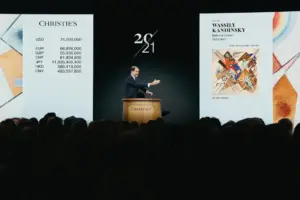
The timing of the fair is intricately linked to a wider matrix of elite cultural and economic events unfolding across the emirate. Earlier this month, Christie’s hosted its inaugural fine art auction in Abu Dhabi, with Sotheby’s scheduled to follow suit next month. These milestones coincide seamlessly with high-profile fixtures such as the Formula 1 Abu Dhabi Grand Prix, Abu Dhabi Finance Week, and the Culture Summit Abu Dhabi.
However, the ultimate catalyst for the art market’s long-term confidence in Abu Dhabi lies in its institutional infrastructure. The impending December opening of the Guggenheim Abu Dhabi—joining the architectural marvel of the Louvre Abu Dhabi—has created an irresistible gravitational pull for international galleries and collectors alike.
As Milo Gatti, fair coordinator at Galleria Continua, aptly summarized:
"The Guggenheim is going to open now in the next few weeks; it’s literally where contemporary art gets space to breathe and to grow."
With world-class museums anchoring the city, robust institutional backing, and an increasingly sophisticated collector base eager to invest in both historical roots and avant-garde experimentation, Frieze Abu Dhabi has proven that it is far more than a regional offshoot. It has established itself as an indispensable powerhouse in the global architecture of contemporary art.

Comments
Facebook App ID not configured. Please add it in the Customizer.