
Executive Overview
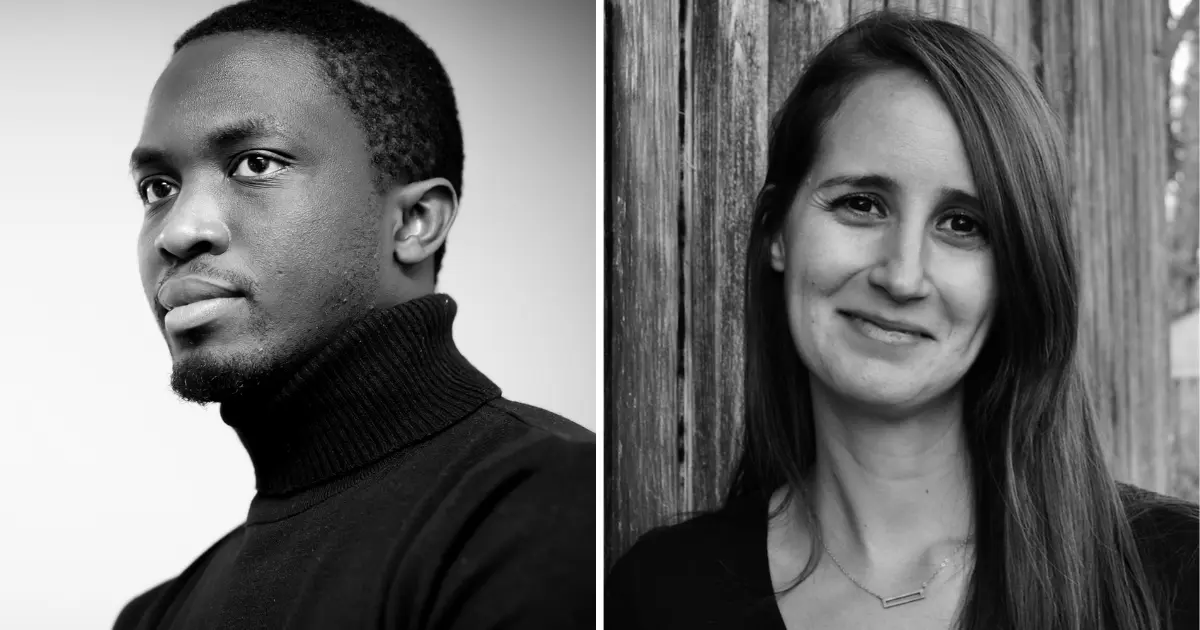
Literary translation is rarely a mechanical exercise in word-for-word substitution; at its highest level, it is a harrowing act of cultural transposition, an artistic rebirth that demands both technical mastery and profound empathy. Few works in recent years illustrate this truth as acutely as Pure Men, the searing third novel by the celebrated Senegalese author Mohamed Mbougar Sarr, which has been meticulously rendered into English by acclaimed translator Lara Vergnaud.
Written when Sarr was a young man in France following the initial publication of his breakout works, Pure Men predates in its composition Sarr’s triumphant, Goncourt-winning masterpiece, The Most Secret Memory of Men—which Vergnaud also translated for Other Press. Yet, because of the complex pathways of international publishing, Pure Men arrives in the English-speaking world as a companion piece and a prequel of sorts to his later triumph. The novel is rooted in a harrowing, real-life atrocity: a 2008 incident in Senegal where a raging mob desecrated and exhumed the corpse of a man suspected of homosexuality.
In a wide-ranging, exclusive dialogue, Sarr and Vergnaud reflect on the decade-long shadow cast by that foundational trauma, the unique linguistic hurdles of capturing Sarr’s polyphonic prose, and the delicate dance of authorial trust and translator autonomy. Their collaboration offers an illuminating masterclass in contemporary transnational literature, demonstrating how the crucible of political violence and social taboos can be transformed, through linguistic architecture, into a resonant universal inquiry into love, hatred, and human dignity.
Read Also
Detailed Chronology: From a Senegalese Mobile Screen to the Global Anglophone Stage
To understand the emotional and structural weight of Pure Men, one must retrace its genesis across more than a decade of socio-political reckoning and artistic evolution.
The Germ: 2008, Senegal
In 2008, Mohamed Mbougar Sarr was an 18-year-old student at a military high school in Senegal. It was an era defined by the rapid expansion of mobile technology—specifically, the peer-to-peer sharing of video files via infrared and early Bluetooth protocols. Among the digital detritus circulating between phones was a piece of footage that would permanently scar the young writer’s consciousness: a frenzied mob violently exhuming the corpse of a man suspected of having been homosexual during his lifetime.
The visceral cruelty of the images, and the terrifying mob mentality they exposed, refused to dissipate. For nearly ten years, the memory of that desecration haunted Sarr, serving as an unresolved artistic and moral debt. When he finally set out to write his third novel, Pure Men, those horrifying digital fragments naturally coalesced into the book’s opening scene.
The Compositional Timeline vs. Publication Order
Chronologically, Pure Men was conceived and written before The Most Secret Memory of Men. However, the French publishing apparatus brought The Most Secret Memory of Men to the fore first, culminating in Sarr winning the prestigious Prix Goncourt in 2021—making him the first sub-Saharan African author to receive France’s highest literary honor.
When The Most Secret Memory of Men was translated into English by Lara Vergnaud for Other Press, it introduced Anglophone readers to Sarr’s dazzling, intellectually restless style. The critical and commercial success of that collaboration paved the way for Vergnaud to turn her attention back to Sarr’s earlier manuscript, Pure Men. This inverted publication timeline provided a fascinating retrospective lens for both author and translator: Vergnaud was tasked with moving backward in Sarr’s artistic evolution, encountering a younger, rawer, and perhaps more hesitant literary voice, while still maintaining the stylistic continuity expected by readers of his later work.
Supporting Context & Metrics: Navigating Linguistic Multiplicity
Translating Mohamed Mbougar Sarr is an exercise in managing stylistic plurality. Sarr is known for a prose style that effortlessly shifts between registers—incorporating street vernacular, rhythmic ancestral oral traditions, biting irony, and soaring lyrical passages.
The Translator’s Labyrinth: Specific Challenges in Pure Men
For Lara Vergnaud, approaching Pure Men meant confronting a labyrinth of cultural, historical, and linguistic choices. Sarr’s text resists flattening; it demands a translation that can breathe in multiple directions at once.
- The Problem of Terminology and Periodization: One of the most delicate decisions Vergnaud faced was how to translate the French term “travesti”. After careful deliberation, she opted for the intentionally outdated English term “transvestite”. This was not a casual choice, but a precise historical and cultural calibration designed to capture the specific sociological framing of the text’s setting and time period. The decision did not go unnoticed; a review in Words Without Borders specifically highlighted and commended this nuanced lexical choice, validating Vergnaud’s rigorous approach to historical fidelity.
- Cultural Signposts (Sabar and Jotalikat): The novel is dense with specific cultural references native to its West African setting, including the kinetic, rhythmic energy of the sabar drum scenes and the complex cultural figure of the jotalikat. For Sarr, reading Vergnaud’s handling of these culturally loaded moments was an act of rediscovery. "I couldn’t wait to see Lara’s choices for the last sentence of the novel as well," Sarr notes, emphasizing that a great translation should feel to the original author like finding a lost, beautiful echo of their own mind.
- The Deceptively Simple Final Line: As is often the case in masterworks of modern fiction, the final sentence of Pure Men carried an immense thematic burden. It was deceptively simple on the page, yet structurally critical to the emotional resolution of the book. Vergnaud spent agonizing hours ensuring the cadence, tone, and emotional resonance landed with absolute precision. Her relief was palpable when Sarr messaged her post-publication to confirm she had hit the exact stylistic and emotional mark.
Quantifying the Partnership: Collaboration Metrics
| Phase of Collaboration | Method of Communication | Primary Objective |
|---|---|---|
| Early Stages | Asynchronous / Independent | Establishing initial stylistic parameters and structural mapping. |
| Mid-Process | Direct Dialogue (Phone / Café meetings) | Resolving cultural idioms, historical context, and tonal shifts. |
| Final Review | Targeted Messaging | Fine-tuning high-stakes transitions and the novel’s closing lines. |
Official Statements: Perspectives from Author and Translator
The dynamic between Sarr and Vergnaud represents an ideal model of transnational literary collaboration—one defined by mutual respect, intellectual generosity, and professional boundaries that foster creativity rather than stifle it.
Mohamed Mbougar Sarr on the Art of Letting Go
Reflecting on his relationship with his translator, Sarr describes his role with characteristic humility:
"I try to act like a shadow, always present but silent. However, I am curious about the work-in-progress, and I try to be available if needed, to specify, clarify, give some helpful elements (for historical or social context, for example). Lara and I usually organize a call or—even better—meet in a café, to talk very freely about the book."
Sarr views translation not as a betrayal or a derivative copy, but as an autonomous artistic creation. This philosophical stance frees the translator to make bold, intuitive leaps, knowing that the author trusts the integrity of the interpretive act. When asked to distill the essence of Pure Men into a metaphor or a piece of music, Sarr bypassed literary comparisons altogether, pointing instead to the sonic and moral philosophy of Wasis Diop’s song:
“‘Xoolal bu baax’ by Wasis Diop, a song about not judging before knowing the truth.”
Lara Vergnaud on Time Travel and Linguistic "Unlocking"
For Vergnaud, translating Sarr is both a high-wire linguistic act and a journey through time. Describing the experience of moving from his most recent works back to Pure Men, she offers a striking metaphor:
"A time machine? Translating this book felt like traveling back in time to meet a different, younger version of Sarr. His style is there, but perhaps a bit more hesitant; his humor, too, and his authorial quirks. I loved finding these, and then trying to make that same subtle timeline present in my translation as well."
Vergnaud praises Sarr’s unique positioning during the translation process—what she terms a "distant benevolent presence." While she enjoyed total autonomy over her artistic choices, she emphasizes that direct human conversation remained her most potent tool for cracking the text’s toughest puzzles:
"In the case of Pure Men, while also clarifying a few terms and phrases, simply hearing him talk through a passage or scene was all I needed to ‘unlock’ the English meaning."
Future Outlook: The Global Trajectory of Francophone Literature
The publication of Pure Men in English arrives at a critical juncture for contemporary global letters. As translation grants, international literary prizes, and cross-cultural platforms continue to break down long-standing linguistic silos, the appetite for complex, politically courageous African literature in translation has never been higher.
Mohamed Mbougar Sarr, armed with a growing corpus that bridges Dakar, Paris, and the wider world, stands at the vanguard of this movement. His willingness to confront the darkest corners of human behavior—mob violence, societal hypocrisy, homophobia, and the fragility of empathy—ensures that his work will continue to provoke urgent conversations across linguistic borders.
Meanwhile, translators like Lara Vergnaud—whose upcoming memoir Untranslatable is slated for publication in early 2027—are increasingly recognized not merely as invisible conduits, but as vital literary artists in their own right. Their work ensures that texts forged in specific historical and cultural crucibles can detonate with equal force in new languages, reminding readers everywhere of the shared, complicated, and ultimately fragile project of human understanding.




Comments
Facebook App ID not configured. Please add it in the Customizer.