
Executive Overview
In the pre-dawn hours of August 5, 1944, a shattering bugle call pierced the quiet rural landscape of New South Wales, Australia. Instantly, more than 900 Japanese prisoners of war erupted from their barracks at the Cowra POW camp, armed with baseball bats, gardening tools, and improvised blades. What followed was the largest and bloodiest prison breakout of World War II—an orchestrated mass uprising that eclipsed Nazi Germany’s famous "Great Escape" in sheer scale, yet remains largely relegated to the margins of Western historical memory.
By the time the gunfire ceased at sunrise, 231 Japanese prisoners lay dead, with another three succumbing to their injuries shortly thereafter. Five Australian servicemen were also killed during the melee and subsequent manhunt. Every single prisoner who managed to break through the perimeter fence was recaptured within nine days.
/https://tf-cmsv2-smithsonianmag-media.s3.amazonaws.com/filer_public/93/b2/93b2606a-1623-4018-8a40-5857fe0dd865/gettyimages-453574876.jpg)
Eighty-two years later, the Cowra breakout stands not merely as a desperate tactical event, but as a profound historical collision of two irreconcilable worldviews. Driven by Japan’s strict military code of honor—which regarded surrender as an unforgivable act of ultimate disgrace—the prisoners chose a violent, suicidal bid for freedom over the indignity of captivity. Today, Cowra is remembered through a lens of reconciliation, transforming a site of horrific wartime bloodshed into a poignant monument of international peace and goodwill.
Read Also
Detailed Chronology: The Anatomy of the Cowra Uprising
The Setting and the Catalyst
Established initially to house Italian internees, the Cowra POW camp by 1944 held roughly 1,104 Japanese prisoners of war, including naval personnel, enlisted men, and conscripted laborers from Korea and Taiwan. Contrary to the brutal conditions endured by Allied prisoners in the Pacific theater, Cowra offered remarkably humane conditions. Operating under the broad tenets of the 1929 Geneva Convention—which Australia strictly observed—prisoners enjoyed recreational facilities, gardens, baseball diamonds, and standard medical care.
/https://tf-cmsv2-smithsonianmag-media.s3.amazonaws.com/accounts/headshot/meilan_headshot2.png)
Yet, beneath the surface of relative material comfort, severe ideological pressures were building. On August 4, 1944, camp authorities informed the Japanese leadership that lower-ranking enlisted men—specifically those below the rank of lance corporal—would soon be transferred to another facility to alleviate overcrowding. The camp’s hard-liners fiercely protested, arguing that younger soldiers relied on senior officers for emotional and cultural stability. Camp officials, however, proceeded with the transfer plans.
The Midnight Revolt
That evening, Compound B held a turbulent general meeting. Radical elements within the prisoner population framed the transfer and their ongoing captivity as an intolerable loss of face. An estimated 80 percent of the prisoners voted in favor of a mass uprising. The goal was not realistic escape, but honorable redemption through death or a final, defiant strike against their captors.
:focal(2492x1638:2493x1639)/https://tf-cmsv2-smithsonianmag-media.s3.amazonaws.com/filer_public/93/b2/93b2606a-1623-4018-8a40-5857fe0dd865/gettyimages-453574876.jpg)
At approximately 2:00 a.m. on August 5, a panicked Japanese prisoner climbed the perimeter fence to alert guards of the impending chaos, shouting in distress before a warning shot was fired. Instantly, naval pilot Hajime Toyoshima sounded a bugle.
Flames erupted as the prisoners set fire to their own huts. Armed with baseball bats, sharpened cutlery, and heavy blankets and baseball gloves draped over the barbed wire to prevent severe lacerations, the waves of men surged toward the fences.
/https://tf-cmsv2-smithsonianmag-media.s3.amazonaws.com/filer_public/14/29/1429fe5b-958d-477f-ac5c-ca00faa46df6/baseball.png)
The assault targeted key strategic points, including machine-gun posts. Australian privates Benjamin Gower Hardy and Ralph Jones rushed to man a Vickers machine gun in their pajamas. Though swiftly overwhelmed and killed—with Jones stabbed and Hardy clubbed—Hardy managed to remove a vital piece of the mechanism, rendering the gun useless to the charging prisoners and saving countless lives.
The Aftermath and Recapture
As hundreds of prisoners flooded into the surrounding countryside, a massive search-and-capture operation was immediately launched by the Australian military and local volunteers. Over the next nine days, all 334 escaped prisoners were accounted for.
/https://tf-cmsv2-smithsonianmag-media.s3.amazonaws.com/filer_public/b3/5e/b35e1338-7998-4cdd-abd9-6ffb122a1be8/bats.png)
However, the human cost was staggering:
- Japanese Casualties: 234 men died during the breakout and its immediate aftermath. Roughly 183 died from gunshot wounds, 31 died from self-inflicted violence or injuries inflicted by fellow prisoners, 12 perished in the fires of the burning huts, and others succumbed in the days following recapture.
- Australian Casualties: Five servicemen lost their lives. Privates Benjamin Hardy, Ralph Jones, and Charles Henry Shepherd were killed during the initial outbreak; Lieutenant Harry Doncaster was ambushed and killed later that day; and Thomas Roy Hancock was accidentally shot by a friendly volunteer during the manhunt.
Supporting Context & Metrics: Ideology, Culture, and Statistics
To comprehend why Japanese soldiers chose self-destruction over survival at Cowra, historians must examine the rigid militaristic culture that dominated Imperial Japan during World War II.
/https://tf-cmsv2-smithsonianmag-media.s3.amazonaws.com/filer_public/9d/9d/9d9d2c0e-3274-4a17-9268-52ea4284eef8/statelibqld_1_80019_japanese_prisoners_arriving_at_brisbane_from_new_guinea_ca_1945.jpg)
The Doctrine of Senjinkun
The behavior of the Cowra prisoners was heavily dictated by the Senjinkun (Field Service Code), a pocket-sized manual issued to Japanese soldiers in 1941. The code explicitly instructed troops to embrace self-sacrifice for their army unit without a second thought for personal survival. Most famously, it commanded: "If alive, do not suffer the disgrace of becoming a prisoner; in death, do not leave behind a name soiled by misdeeds."
Surrender was viewed as a profound betrayal of family, emperor, and country. Consequently, the statistical disparity in prisoners of war is stark:
/https://tf-cmsv2-smithsonianmag-media.s3.amazonaws.com/filer_public/66/24/6624772d-17c7-44a5-9afe-c87dc664c2a2/japanese_pows_guam_aug_1945.jpeg)
- Western Allies: Captured approximately 35,000 Japanese service members throughout the entire war.
- Axis Counterparts: By contrast, nearly 8 million German soldiers surrendered to Allied forces, including hundreds of thousands held in camps across the United States.
World War II Prisoner Statistics (Approximate):
| Nation / Force          | Estimated Prisoners Captured |
|-------------------------|------------------------------|
| German Troops (Allied)  | ~8,000,000                   |
| Japanese Troops (Allied)| ~35,000                      |
The Stigma of Survival
For the few Japanese service members who did survive capture, the psychological burden was immense. Many were taken prisoner while unconscious, severely wounded, or incapacitated, leaving them no physical means to resist. Yet, returning home carried the agonizing stigma of perceived cowardice. Official Japanese government policy often classified captured soldiers as legally dead, prompting families to receive death notices rather than knowledge of imprisonment.
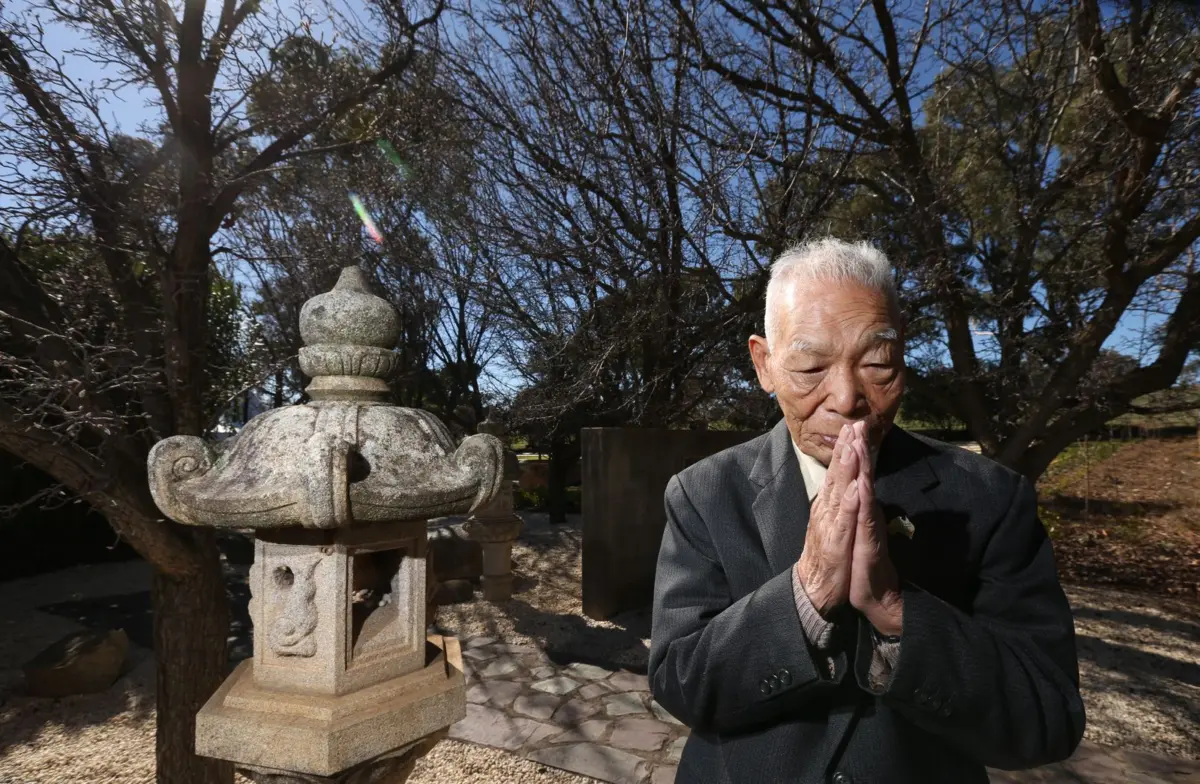
Former Cowra prisoner Teruo Murakami recalled the profound shock of his homecoming after the war, noting that his family greeted him as if "a ghost had returned from the war."
/https://tf-cmsv2-smithsonianmag-media.s3.amazonaws.com/filer_public/0d/2e/0d2ebc7e-5e5a-4451-9732-65d655352ef0/hajime.png)
Official Statements and Archival Insights
Historical evaluations of the Cowra breakout emphasize the stark psychological divide separating Allied captors from Japanese prisoners.
Reflecting on the Australian misjudgment of the camp dynamic, historian and author Mat McLachlan notes:
/https://tf-cmsv2-smithsonianmag-media.s3.amazonaws.com/filer_public/53/c2/53c2bf20-3a22-4f67-8730-68cb9d67a094/japanese-pows.png)
"The Australians simply couldn’t get their heads around the fundamental concept that Japanese prisoners preferred death to imprisonment. They could only view the Japanese through their own lens, and that distorted perspective bred a dangerous complacency."
Similarly, documentary filmmaker Yasuhiro Mitsuda emphasized the fatalistic mindset of the participants:
/https://tf-cmsv2-smithsonianmag-media.s3.amazonaws.com/filer_public/82/c2/82c2344c-9b4f-4f81-bc1c-db9141287768/blankets.jpg)
"It was preferable to die. The Japanese prisoners believed their own lives were worthless and that they had nowhere to return. They took part in the breakout expecting to be shot."
Archival documents from the Australian War Memorial and National Archives of Australia underline the meticulous planning behind the prisoners’ improvised armaments, illustrating that the uprising was an expression of collective cultural desperation rather than an impulsive riot.
/https://tf-cmsv2-smithsonianmag-media.s3.amazonaws.com/filer_public/b2/db/b2dbfc48-0864-4e72-8faa-59661bcd6f70/survivor.png)
Future Outlook: From Conflict to Reconciliation
Today, the legacy of the Cowra breakout has undergone a profound transformation. Rather than standing as a monument to mutual hostility, the site serves as an international beacon of peace, diplomacy, and historical education.
- The Cowra Japanese War Cemetery: The prisoners who died during the breakout are laid to rest alongside other Japanese service members in a meticulously maintained war cemetery. Australian soldiers who lost their lives are honored in a nearby, separate cemetery.
- Cultural Bridges: Established in the 1970s, the Cowra Japanese Garden and Cultural Centre, alongside local peace-bell initiatives, draw international visitors annually.
As noted by Kerry Neale, a curator at the Australian War Memorial:
/https://tf-cmsv2-smithsonianmag-media.s3.amazonaws.com/filer_public/57/8e/578e750f-63e3-486d-bd84-2a07fa09f9d3/burial.png)
"In many ways, the cemetery is a place which links the violence of the past with the restoration of the present. The Japanese gardens and the peace bell are symbols of hope and harmony set against the reality of the violence of the past."
As decades pass and the last direct witnesses—such as the late Teruo Murakami, who passed away in 2023 at the age of 103—leave us, the responsibility falls to modern institutions to preserve the memory of Cowra. By examining both the tragic military dogmatism that fueled the 1944 uprising and the enduring reconciliation that followed, historians ensure that the lessons of the Cowra breakout continue to guide future generations toward international understanding.


Comments
Facebook App ID not configured. Please add it in the Customizer.