
Executive Overview
In a striking manifestation of shifting geopolitical currents and domestic cultural policies, the United States Embassy in the Dominican Republic has removed a prominent work of contemporary art by renowned artist Kehinde Wiley. The piece, Young Artists After Siamesas 1960 (2013)—which depicts four Dominican models positioned against an intricate blue floral backdrop—was unceremoniously taken down and replaced by a traditional display of the American flag.
The move was officially heralded by U.S. Ambassador to the Dominican Republic Leah Campos in an August 11 Instagram post. Accompanied by the defiant anthem “We’re Not Gonna Take It” by Twisted Sister, Campos’s announcement framed the swap as a triumphant reclamation of "American patriotism and the beauty of our great country." Furthermore, the ambassador explicitly aligned the decision with broader political movements, stating that under her leadership and the current administration, the embassy is actively "turning away from globalist and woke ideologies."
Subsequent investigative reporting by The New York Times revealed that the U.S. Department of State is actively exploring avenues to sell the valuable piece. This development marks a dramatic escalation in the ideological policing of federally owned art collections. It underscores a fundamental re-evaluation of the long-standing "Art in Embassies" program, transitioning its mandate from cultural bridge-building and aesthetic dialogue to a strict litmus test of ideological and political conformity under the banner of an "America First" foreign policy.
Read Also
As arts administrators, diplomats, and legal scholars grapple with the implications of this decision, the controversy has ignited a fierce national debate over the autonomy of publicly funded art, the weaponization of cultural institutions in partisan politics, and the shifting criteria for what constitutes acceptable American representation on the global stage.
Detailed Chronology of Events
August 11: The Social Media Announcement
The public phase of the controversy began when Ambassador Leah Campos took to social media to broadcast the removal of Wiley’s painting from the walls of the embassy in Santo Domingo. Her Instagram post featured a dynamic visual sequence showing Young Artists After Siamesas 1960 being physically uninstalled and replaced with an American flag.
The use of Twisted Sister’s 1984 glam-metal protest anthem served as an aggressive, populist audio backdrop, signaling to observers that the diplomatic mission was explicitly engaging in domestic culture-war rhetoric. Ambassador Campos’s accompanying caption left no room for ambiguity, positioning the aesthetic pivot as a direct strike against progressive governance and globalist frameworks, directly echoing the ethos of the administration’s "America First" agenda.
Mid-August: State Department Confirms Sale Intentions
Following the viral social media post, inquiries from journalistic outlets forced the Department of State to clarify the administrative status of the removed artwork. A State Department spokeswoman confirmed to The New York Times that the federal agency is actively investigating the legal mechanisms required to divest from the painting entirely.
If the sale is deemed legally feasible under federal property disposal guidelines, the Art in Embassies program intends to auction or otherwise liquidate the piece. This marks a rare, if not unprecedented, instance of a diplomatic post seeking to permanently strip a commissioned contemporary artwork from the federal inventory due to ideological objections, setting a potentially explosive precedent for thousands of other works currently on display in U.S. embassies worldwide.
Historical Roots: The 2013 Commission
To understand the gravity of the current removal, one must look back to its origins in 2013, during the Obama administration. Kehinde Wiley was commissioned by the State Department’s Art in Embassies program to create a piece that resonated with the local culture of the Dominican Republic.
To prepare for the commission, Wiley spent two years deeply immersed in the local artistic canon. He meticulously studied the works of iconic Dominican modernist painters Celeste Woss y Gil and Gilberto Hernández Ortega. The resulting canvas, Young Artists After Siamesas 1960, was designed as a transnational homage, blending Wiley’s signature hyper-vibrant, patterned portraiture with a direct nod to Dominican art history. Featuring two young Dominican men sitting and two women standing, the painting was initially celebrated as an exercise in mutual respect and cultural exchange between the United States and its Caribbean neighbor.
Supporting Context & Metrics: The Anatomy of a Culture War
The Evolution of the Art in Embassies Program
Established formally in 1963 by the Kennedy administration—though with informal roots dating back to the mid-1950s under the Museum of Modern Art (MoMA) and President Dwight D. Eisenhower—the Art in Embassies program was conceived as a vital instrument of soft power. The core philosophy of the program has historically relied on the premise that visual art transcends linguistic and political barriers, fostering empathy, mutual understanding, and cross-cultural trust.
For decades, the program operated largely above the fray of partisan politics, curating spaces that reflected the diverse, pluralistic nature of American society while honoring the host nations. Administrations from both sides of the aisle utilized the program to showcase groundbreaking American artists representing myriad backgrounds, ethnicities, and aesthetic viewpoints.
However, the modern political climate has transformed these sanctuaries of soft diplomacy into ideological battlegrounds. The characterization of Wiley’s work as "aesthetically terrifying" by current institutional leadership signals a profound ideological rupture in how federal cultural programs are valued and administered.
Kehinde Wiley’s Prominence and Controversies
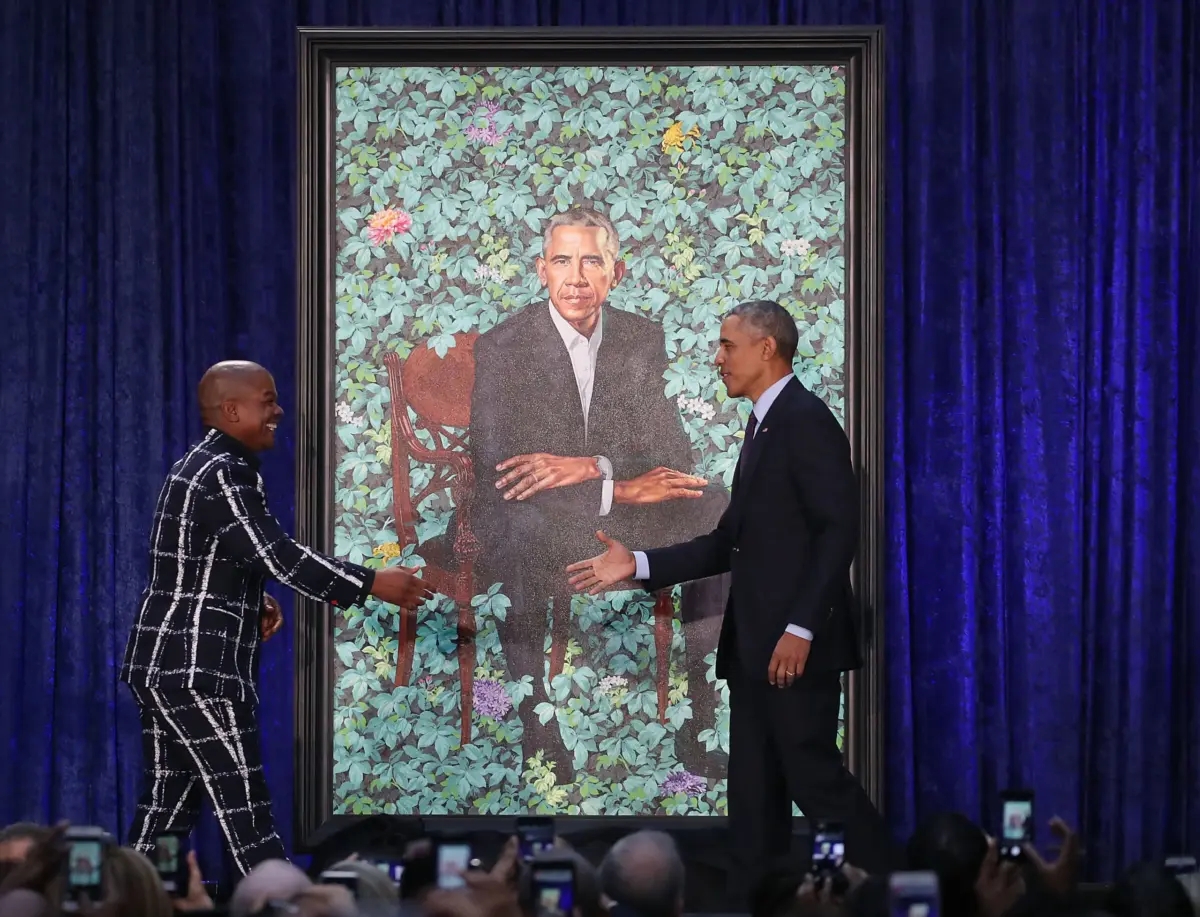
Kehinde Wiley occupies a singular, towering space in contemporary art. Internationally celebrated for his heroic, large-scale portraits of Black subjects posed in the grand traditions of European master painters, Wiley achieved mainstream historic prominence when he was commissioned to paint the official portrait of President Barack Obama in 2018, becoming the first African American artist to paint a presidential portrait for the Smithsonian National Portrait Gallery.
Despite his immense art-market success and critical acclaim, Wiley has increasingly found himself at the center of cultural and legal controversies that have been seized upon by his critics:
- The 2023 Interview Controversy: In a 2023 interview with The Guardian, discussing his artistic engagement with violence and art history—specifically referencing a painting depicting the biblical scene of Judith beheading Holofernes—Wiley characterized the composition as a "play on the ‘kill whitey’ thing." This remark was heavily criticized in conservative media circles as racially inflammatory.
- The 2025 Legal Battle: In February 2025, a civil sexual assault lawsuit was filed against Wiley by artist Ogechi Chieke. While Wiley and his legal representatives have strenuously denied the allegations, the lawsuit provided federal critics with additional ammunition to question his continued representation in official U.S. government spaces.
State Department officials weaponized these controversies to justify the expedited removal of his work. A spokeswoman explicitly stated to the press that "the work of an individual with such violent and racist words and depictions has no place in the America First State Department," knitting together his personal legal challenges, controversial interview statements, and stylistic choices into a singular rationale for administrative expulsion.
Official Statements and Stakeholder Perspectives
The removal of the Wiley painting and the subsequent plans to liquidate it have triggered a sharp divergence of opinions among current political appointees, arts professionals, and former diplomatic curators.
The Administration’s Stance
Current leadership within the State Department and the Art in Embassies program has made no apologies for the pivot. Erin Scavino, the director of Art in Embassies, offered a blunt assessment during a podcast interview with conservative commentator Sean Spicer.
"We worked very hard to get [it] taken down," Scavino remarked. "It was very woke. It was by the gentleman who did Obama’s portrait and it was aesthetically terrifying."
This sentiment was echoed and formalized by the agency’s spokesperson in statements to The New York Times, emphasizing that the aesthetic and moral alignment of embassy artwork must strictly mirror the populist, nationalist parameters of the current executive branch. By framing public art through the lens of political purity, the administration is actively redefining the mission of cultural diplomacy from inclusive dialogue to unyielding nationalist signaling.
The Defense of Cultural Diplomacy
Conversely, veteran arts administrators and historical curators have voiced profound alarm over the politicization of federal art collections. Virginia Shore, who served with distinction as the director of acquisitions and chief curator for the Art in Embassies program from 2000 to 2017—spanning both Republican and Democratic administrations—pushed back vehemently against the narrative being advanced by current officials.
"Calling this woke is difficult for me to understand," Shore told The New York Times. "This is a program validated and financially backed under Bush. There is a science of building trust and empathy across borders."
Shore’s commentary highlights the traditional bipartisan consensus that once insulated federal cultural diplomacy from the shifting whims of partisan politics. By framing the acquisition and display of diverse American art as an essential long-term investment in international relations, institutional veterans argue that purging works based on ideological grievances inflicts lasting damage on America’s global standing and soft power capabilities.
Furthermore, representatives for Kehinde Wiley—including his primary New York gallery, Sean Kelly—have maintained a guarded silence, choosing not to immediately return requests for comment regarding the potential sale of the painting or the defamatory nature of the accusations leveled against the artist by federal spokespersons.
Future Outlook: Precedents, Legal Hurdles, and Global Repercussions
As the State Department continues its legal review to determine whether it can successfully divest from Young Artists After Siamesas 1960, the fallout from this decision extends far beyond a single diplomatic outpost in Santo Domingo.
Legal and Logistical Obstacles
Selling federal property acquired for diplomatic missions is not a straightforward administrative task. Federal art collections are subject to strict regulations governing asset disposal, museum-standard deaccessioning ethics, and government property laws. If the Art in Embassies program moves forward with its stated goal of auctioning the painting, it could face legal challenges from heritage preservationists, ethics watchdogs, and arts advocacy groups who view the sale as an improper liquidation of public cultural assets for purely political motivations.
Implications for Global Soft Power
For decades, the United States maintained a distinct advantage in international relations through its projection of cultural freedom, pluralism, and artistic autonomy. By signaling that federal art is subject to ideological purging—where the political affiliations of past patrons, the personal controversies of living creators, and partisan definitions of "wokeism" dictate what hangs on embassy walls—the United States risks signaling intellectual fragility to its international partners.
In the Dominican Republic, a nation with a rich, complex artistic heritage of its own, the sudden removal of a painting that directly honored local modernist painters risks being interpreted not as an assertion of American patriotism, but as an act of cultural disrespect. Local artists and cultural critics in Santo Domingo have privately and publicly questioned the diplomatic tact of replacing a nuanced, locally inspired portrait with a unilateral display of the American flag accompanied by anti-establishment rock music.
The Broader Cultural Landscape
Ultimately, the controversy surrounding Kehinde Wiley’s embassy painting serves as a case study in the weaponization of public space. As political polarization continues to seep into institutions traditionally shielded from partisan warfare, the future of federally funded art hangs in the balance.
Whether the State Department succeeds in selling Young Artists After Siamesas 1960 or not, the message has been indelibly stamped upon the apparatus of American diplomacy: the walls of U.S. embassies are no longer envisioned as mirrors reflecting the complex, diverse, and often contradictory tapestry of American society, but rather as ideological billboards for the prevailing political wind.

Comments
Facebook App ID not configured. Please add it in the Customizer.