
Executive Overview
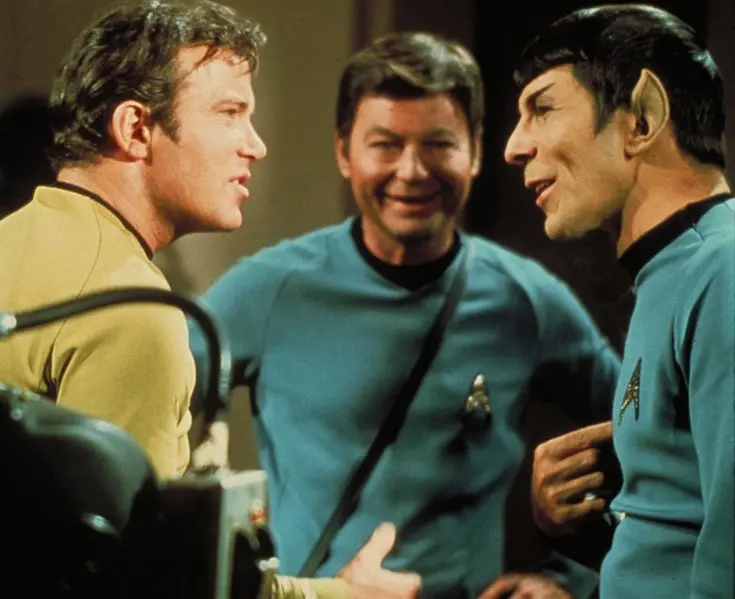
As the fourth season of Paramount+’s critically acclaimed sci-fi flagship Star Trek: Strange New Worlds reaches its dramatic denouement, the creative minds behind the bridge of the USS Enterprise are beginning to open the vault of unproduced stories. Among the most ambitious, high-risk proposals to emerge from the writers’ room is an idea that would have sent shockwaves through the global fandom: a direct narrative and thematic sequel to Star Trek: The Original Series‘ legendary episode "The City on the Edge of Forever," utilizing an animated format to facilitate the triumphant return of none other than William Shatner as Captain James T. Kirk.
In an exclusive interview with TrekMovie.com, co-showrunner Henry Alonso Myers detailed the intricate plan hatched by the production team. Rather than attempting a standard, nostalgic cameo or a live-action de-aging experiment fraught with uncanny-valley risks, the showrunners envisioned a profound, serialized homage. The production would have cast Shatner—now in his nineties—to voice a younger iteration of the iconic Starfleet commander in a narrative continuing the tragic emotional fallout of his encounter with Edith Keeler.
Although the conceptual stars ultimately failed to align to bring the legendary nonagenarian back into the Starfleet fold, the revelation offers a fascinating glimpse into the ambitions of the Strange New Worlds creative team. It underscores their willingness to lean into the franchise’s rich, complex mythology while experimenting with genre and medium. This report investigates the mechanics of the abandoned project, the legacy of the source material, the broader strategic shifts within the Star Trek television universe, and the relentlessly eclectic post-franchise life of William Shatner.
Read Also
Detailed Chronology: The Genesis and Demise of the Kirk-Keeler Follow-Up
The conceptualization of the Shatner-led animated episode began during the long-term strategic plotting for Strange New Worlds‘ middle-to-late seasons. As the series successfully established Paul Wesley as an alternate-timeline iteration of James T. Kirk, the writers’ room simultaneously explored how the older continuity could intersect with the formative years of Christopher Pike’s command crew.
The Pitch: Returning to the Guardian of Forever
According to Alonso Myers, the team wanted to craft "a very serious one"—an episode that completely bypassed cheap fan service in favor of heavy dramatic weight. The centerpiece of the pitch was a narrative continuation of Harlan Ellison’s masterwork, "The City on the Edge of Forever."
[Original Episode: 1967]
  └── Kirk & Spock enter Guardian of Forever
      └── McCoy alters timeline; Keeler lives
          └── Kirk falls in love, then lets her die to save the future

[Proposed Strange New Worlds Sequels: Developed 2024-2025]
  └── Animated medium chosen to preserve character age/visual fidelity
      └── William Shatner signed/approached to voice young James T. Kirk
          └── Narrative exploration of the lingering trauma of Edith Keeler's death
In the 1967 classic, Kirk and his landing party travel backward in time to 1930s New York during the Great Depression. Kirk falls deeply in love with social worker Edith Keeler (played by Joan Collins), only to discover that she must die in a traffic accident to prevent a Nazi-dominated future. Kirk physically restrains Dr. McCoy from saving her, bearing the crushing psychological weight of her death.
The Strange New Worlds iteration would not have been a direct remake, but rather a "part two kind of thing"—an intimate, psychological deep dive into the long-term temporal and emotional scars left on Kirk by that singular moment.
Why Animation?
The logistical and artistic hurdles of bringing back an actor in his nineties to play a character in his thirties are monumental. Live-action de-aging via CGI, while increasingly prevalent in modern Hollywood, often invites viewer skepticism and can strip away subtle organic performances.
By pivoting to animation, the showrunners devised an elegant workaround. Animation would allow Shatner to deliver a deeply resonant vocal performance untethered from the physical constraints of age, while preserving the visual continuity of the character’s canonical prime. It was designed to mirror the tone of prestigious adult-animation experiments within modern franchises, bridging the gap between serialized television and classic literary science fiction.
The Breakdown of Negotiations
Despite enthusiastic preliminary discussions within the production offices, the initiative ultimately dissolved. Industry insiders point to a confluence of scheduling conflicts, contractual complexities, and the notoriously fast-paced production pipelines of modern streaming television. Bringing a living legend of Shatner’s stature into a complex animation pipeline requires a synchronization of talent that, in this instance, proved impossible to achieve before production windows closed.
Supporting Context & Metrics: The Strange New Worlds Strategy
To understand why the showrunners pursued such a daring creative gamble, one must examine the metrics and cultural positioning of Star Trek: Strange New Worlds within the broader media landscape.
Critical Reception and Audience Engagement
Since its premiere in 2022, Strange New Worlds has consistently ranked as one of Paramount+’s most critical darlings. The series successfully captures the episodic, planet-of-the-week adventurous spirit of The Original Series while updating its cinematic language, character depth, and inclusivity for modern audiences.
| Metric / Indicator | Strange New Worlds Status | Franchise Impact |
|---|---|---|
| Rotten Tomatoes Score | Consistently >97% Critical Approval | Highest-rated live-action Trek series of the modern era |
| Fandom Index | High retention across legacy and new viewers | Bridges the gap between 1960s purists and 21st-century streamers |
| Narrative Risk Tolerance | High (e.g., Musical Episode "Subspace Rhapsody") | Proven willingness to experiment with format and genre |
The show’s willingness to step outside traditional sci-fi boundaries—most notably demonstrated by the critically lauded Season 2 musical episode, "Subspace Rhapsody"—proved that the writers’ room operates with an uncommon creative license. Pitching an animated continuation of "The City on the Edge of Forever" starring William Shatner was a natural extension of this boundary-pushing philosophy.
The Legacy of "The City on the Edge of Forever"
Widely regarded not only as the finest hour of Star Trek, but as one of the greatest television scripts in science fiction history, Harlan Ellison’s original episode remains a sacred text among cinephiles and trekkies alike.
+--------------------------------------------------------------------------+
|                     CRITICAL ACCLAIM METRICS                             |
|                                                                          |
|  * Writers Guild of America: Voted #10 on list of 101 Best Written TV    |
|    Series of All Time.                                                   |
|  * Hugo Award: Winner for Best Dramatic Presentation (1968).             |
|  * Fan Polls: Consistently ranks #1 in global retrospective countdowns.  |
+--------------------------------------------------------------------------+
Attempting to touch this narrative architecture represents a high-wire act. Had the Shatner-voiced animated sequence made it to air, it would have been scrutinized under an unprecedented microscope. The decision to walk away, while disappointing to fans, speaks to a mutual reverence for the source material; if the conditions weren’t absolute perfection, the creators opted to leave the masterpiece undisturbed.
Official Statements and Industry Perspectives
The revelation regarding the unproduced episode arrived via Henry Alonso Myers during his post-season review with TrekMovie.com. The interview shed light on the collaborative, blue-sky nature of the Strange New Worlds writers’ room, where no historical boundary of the franchise is treated as permanently off-limits.
"We wanted to do like a very serious one," Myers explained. "We had a whole plan to do it around him and to redo ‘City on the Edge of Forever’ and do a retelling—not a retelling, like a part two kind of thing."
While the project did not materialize, the transparency from the showrunners has been welcomed by the fandom. It demonstrates a profound respect for the actors who built the foundation of the multi-billion-dollar franchise. The acknowledgment that the production actively pursued Shatner—despite his well-documented, complex relationship with various factions of the franchise and its leadership over the decades—signals a unifying desire among modern creators to honor living history.
Future Outlook: The Expanding Horizon of Star Trek
As Star Trek: Strange New Worlds looks toward its fifth season and beyond, the legacy of this abandoned pitch serves as an indicator of where the franchise’s creative philosophy is heading.
1. Embracing Multimedia Storytelling
The consideration of an animated standalone special within a live-action show’s release schedule highlights the fluid boundaries of contemporary television. Following the massive success of animated entries like Star Trek: Lower Decks and Star Trek: Prodigy, live-action showrunners are increasingly willing to cross-pollinate mediums to achieve narrative goals that physical sets and live-action budgets cannot easily accommodate.
2. Navigating Legacy Characters
The franchise will continue to grapple with the aging of its founding generation. While legacy cameos can occasionally slip into self-parody, the Strange New Worlds approach—utilizing voice acting and animation to capture characters at their historical prime—provides a blueprint for future storytellers wishing to honor icons without the limitations of biological aging.
3. William Shatner’s Enduring Vitality
Meanwhile, the man who brought James T. Kirk to life shows no signs of slowing down, even as he enters his tenth decade. Far from resting on his Starfleet laurels, Shatner’s recent cultural footprint remains aggressively eclectic. This month alone, the nonagenarian made headlines by taking the stage at Chicago’s Riot Fest alongside his metal band, The F—s, delivering thunderous covers of heavy metal canon including Metallica’s "Enter Sandman," Ozzy Osbourne’s "Crazy Train," and Motörhead’s "Ace of Spades."
WILLIAM SHATNER: A CONTINUING MISSION
---------------------------------------------------------------------
[1966] Commands the USS Enterprise on television.
[1994] Makes his final live-action appearance as Kirk in Generations.
[2021] Becomes the oldest person to travel to space aboard Blue Origin.
[2026] Fronts a heavy metal band at Riot Fest, covering Metallica.
Whether he is belting out heavy metal anthems in Chicago or contemplating a return to the temporal anomalies of the 23rd century, William Shatner remains an inimitable force in global pop culture.
Conclusion
The unmade Strange New Worlds episode centering on James T. Kirk and "The City on the Edge of Forever" will undoubtedly enter the annals of science fiction lore as one of the great "what-ifs" of modern television. Yet, its public disclosure does more than reveal a missed opportunity; it reaffirms the boundless ambition of a creative team determined to push the boundaries of the Star Trek universe, proving that even after nearly six decades, the final frontier still holds room for bold, unexpected horizons.

Comments
Facebook App ID not configured. Please add it in the Customizer.