
Executive Overview
In the contemporary literary landscape, few creative exercises are as delicate—or as frequently misunderstood—as the intersection of esotericism and everyday domestic life. When authors attempt to channel the grand, immutable archetypes of Tarot, classical mythology, and folklore into modern verse, the project often buckles under the weight of its own pretension. Yet, poetry collections that successfully navigate this tightrope walk do something extraordinary: they render the archaic urgently intimate.
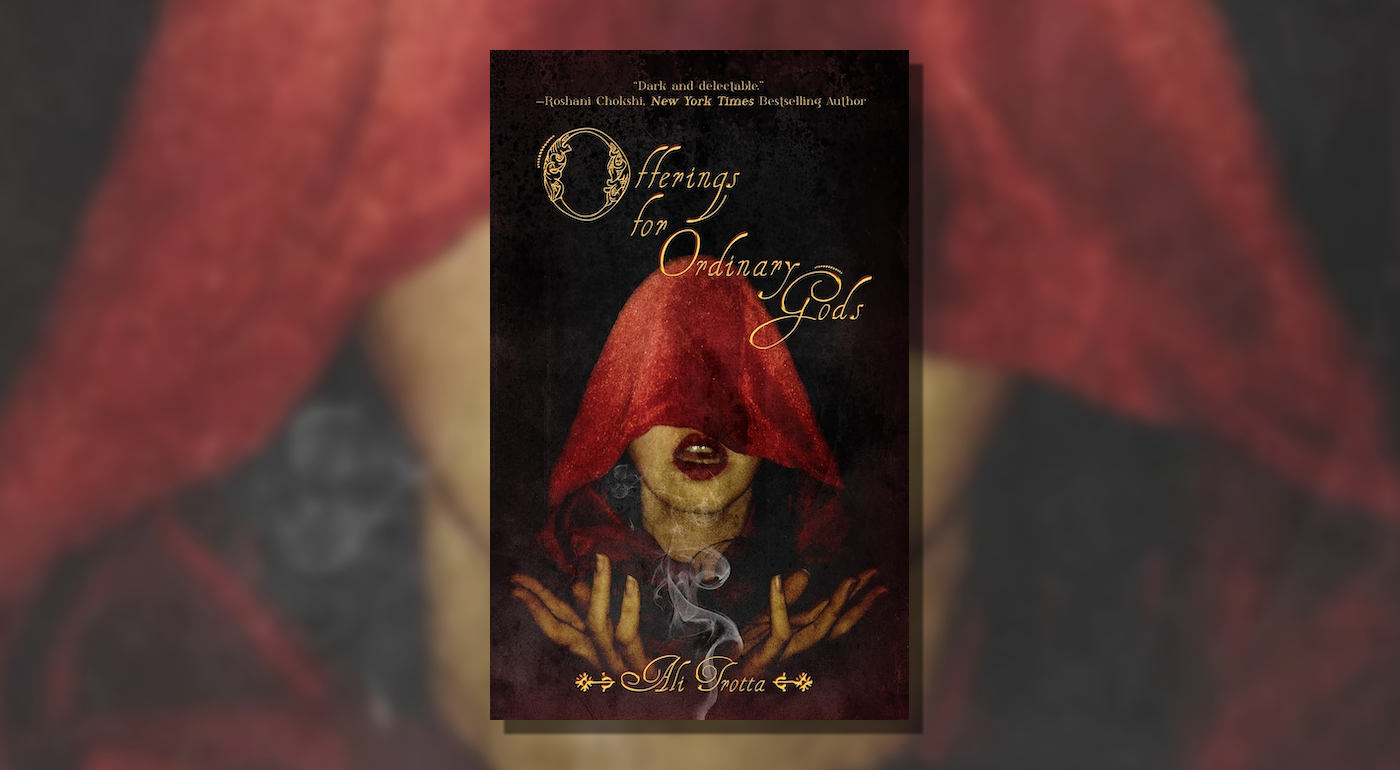
Enter Ali Trotta’s Offerings for Ordinary Gods, published by CLASH Books. Trotta’s collection does not merely nod to the occult; it weaponizes the incantatory power of verse to explore where rituals, myths, and mundane human weariness converge. By invoking the Major and Minor Arcana of the Tarot alongside figures such as Athena, Rumplestiltskin, and Circe, Trotta crafts a poetic taxonomy for contemporary existence.
This review-essay investigates the structural mechanics of Trotta’s collection, examining how her work enters into a long, storied tradition of mythic-poetic reclamation. Drawing on historical frameworks of Tarot interpretation—exemplified by the work of visionary creators like Rachel Pollack and Pamela Colman Smith—we explore how Offerings for Ordinary Gods transforms the timeless iconography of divination into an accessible, mirror-like reflection of modern psychological states.
Read Also
Detailed Chronology: The Evolution of Tarot and Myth in Modern Literature
To understand the weight and resonance of Trotta’s poetic project, one must trace the historical lineage connecting esoteric divination to narrative art. For centuries, cartomancy was segregated from high literature, viewed primarily as a parlor trick or a tool for fortune-telling. However, the 20th and 21st centuries witnessed a profound reclamation of the Tarot, spearheaded by artists and writers who recognized the cards not as instruments of prophecy, but as narrative engines.
[1909: Rider-Waite-Smith Deck Released]
       │
       ▼ (Pamela Colman Smith’s evocative illustrations redefine Tarot as narrative art)
[Late 20th Century: Rachel Pollack’s Critical Work]
       │
       ▼ (Redefining Tarot: "Each card seemed a frozen moment in a story")
[Mid-Century Literary Tradition: Cesare Pavese]
       │
       ▼ (Using classical myth to address contemporary socio-political/personal anxieties)
[Contemporary Era: Ali Trotta’s "Offerings for Ordinary Gods"]
       ▼ (Synthesizing Tarot archetypes, folklore, and modern mundane domesticity)
In her seminal writings on Tarot and storytelling, the late author and esoteric scholar Rachel Pollack articulated this shift with crystalline clarity. Reflecting on her own fascination with the practice, Pollack wrote:
“I found I had no interest in any predictions, it was the Tarot itself that fascinated me. Each card seemed a frozen moment in a story.”
Pollack, who seamlessly balanced writing compelling speculative fiction with authoritatively mapping the philosophical depths of the Tarot, understood that every card holds an entire narrative arc frozen in amber. This philosophy paved the way for modern writers to utilize the deck as a structural blueprint for poetry and prose.
Ali Trotta’s Offerings for Ordinary Gods represents the next logical evolution in this literary lineage. Rather than treating Tarot as a static system of divination, Trotta treats the cards as dynamic, flawed characters engaging in interpersonal drama. Titles within the collection—such as “The Magician Courts the Hierophant,” “The Page of Wands Is Fickle at Best,” and “The Hanged Man Passes Judgment”—reposition the Major Arcana not as distant deities, but as actors navigating love, betrayal, exhaustion, and petty emotional conflicts.
This integration mirrors a broader cultural renaissance surrounding the history and artistic legacy of cartomancy. In a recent exhibition at the Morgan Library chronicling the history of Tarot, curator Claire Gilman highlighted the profound impact of Pamela Colman Smith, the artist behind the legendary Rider-Waite-Smith deck. As journalist Nina Siegal noted in The New York Times, Gilman pointed out that it was likely Smith’s evocative illustrations—imbued with an enchanting, open-ended range of narrative interpretations—that cemented the Tarot’s enduring psychological appeal in the modern era. Trotta builds directly upon this foundation, using Smith’s visual grammar to construct poems that double as emotional divinations.
Supporting Context & Thematic Analysis: The "Ordinary God" Paradox
At the heart of Trotta’s collection lies a delicious and deliberate paradox: the very concept of a god implies divinity, transcendence, and untouchable power. But what happens when you prefix that divinity with the word ordinary? Is an ordinary god truly a god at all?
This philosophical tightrope has long fascinated speculative creators. Terry Pratchett famously wrestled with the mechanics of belief and diminutive divinity in his celebrated Discworld novel Small Gods, while comic creators Si Spurrier and Jonas Goonface explored the commercialization and fragility of localized deities in their series Godshaper. Trotta resolves this dilemma by dragging the divine out of the heavens and into the kitchen, the bedroom, and the mundane crossfire of human relationships.
The Domesticating of Myth
Consider “The Queen of Cups Considers the Magician,” where the intersection of high esotericism and everyday heartbreak produces a striking intimacy. The poem’s narrator recalls a parting of ways that is freighted with supernatural imagery, yet deeply rooted in romantic fatigue:
“At the crossroads,
you kissed me goodbye
but left a secret in my mouth,
salt and ash, honey and apples—
the way you said my name
always felt like a ceasefire.”
While the ingredients of the memory carry alchemical weight, the overwhelming emotional register is not one of awe, but of exhaustion. The narrator is simply tired of the endless friction, the unfulfilled promises, and the quiet betrayals of a one-time paramour.
This deflation of the grand and terrible into the achingly familiar runs throughout the collection. In “Circe Meditates On Betrayal,” Trotta invokes a sorceress from ancient Greek myth—a figure legendary for turning men into swine and ruling over desolate islands. Yet, Circe’s internal monologue addresses a profoundly mundane domestic slight:

“You pretend you slept well.
You hit the snooze button twice.
You make stronger coffee.
You wear your favorite shoes.
You laugh louder than you should.”
By juxtaposing the mythic scale of Circe with the petty, defensive maneuvers of a modern partner avoiding accountability, Trotta bridges thousands of years of human history. The betrayal hurts no less whether it happens in a stone palace on Aeaea or a cramped apartment with a blaring alarm clock.
The Tradition of Mythic Reclamation
Trotta’s methodology places Offerings for Ordinary Gods within a rich, transnational tradition of mythic reclamation. Her work shares spiritual DNA with mid-century Italian author Cesare Pavese’s The Leucothea Dialogues (Dialoghi con Leucò), in which classical deities and mortals conversed on lonely hillsides to parse out contemporary anxieties surrounding mortality, war, and political alienation.
In an era defined by digital hyper-connectivity and concurrent feelings of profound isolation, Trotta reminds her readers that their private griefs, small joys, and domestic rifts are not isolated blips. They are echoes of the very conflicts that populated ancient epics and medieval woodcuts.
Official Statements, Philosophy, and Poetic Mechanics
To fully grasp the architecture of Offerings for Ordinary Gods, one must examine Trotta’s own stated philosophy regarding the nature of poetry and spellcraft. In several prose reflections accompanying her work, Trotta argues that the act of storytelling is fundamentally an incantatory act.
“There is no better love spell than a poem,” Trotta writes. “An effective poem is a hand held out into the darkness, a reminder that we are not alone, even when we feel that way.”
This philosophy reframes poetry away from academic exercise and positions it as a practical, empathetic form of magic. In poems like “Love Spell,” Trotta deliberately blurs the lines between psychological desperation and ritualistic intent:
| Poem | Thematic Elements | Core Resolution / Takeaway |
|---|---|---|
| "The Magician Courts the Hierophant" | Institutional dogma vs. raw, unstructured creation | Exposing the transactional nature of authority and romance. |
| "Hephaestus Councils Rumplestiltskin" | Unwanted gifts, labor, and expectations | “Just because you are given straw / doesn’t mean you have to turn it into gold.” |
| "Nimue Speaks to Merlin" | Dark fantasy, betrayal, inescapable debt | The cave of secrets is full of echoes; magic is unforgiving. |
| "Love Spell" | Madness, ritual, emotional survival | Reclaiming emotional survival as a legitimate form of modern magick. |
In “Hephaestus Councils Rumplestiltskin,” two heavyweights of myth and fairy tale sit down to share a weary conversation about impossible expectations. The poem opens with a piece of hard-earned advice that serves as a thesis statement for anyone suffering under the weight of perfectionism:
“Just because you are given straw / doesn’t mean you have to turn it into gold.”
Through moments like this, Trotta strips away the extractive nature of modern productivity culture. She uses the mythological figures not as moral exemplars, but as fellow travelers who are equally tired of performing their designated miracles.
Future Outlook: The Ongoing Legacy of Trotta’s Vision
As Offerings for Ordinary Gods finds its audience through CLASH Books, its publication marks an important moment for contemporary hybrid poetry—collections that refuse to choose between the intellectual rigor of classical scholarship and the emotional immediacy of confessional verse.
The ongoing fascination with Tarot, folklore, and mythological retellings shows no signs of abating. Readers today are actively searching for spiritual frameworks that reject dogmatic orthodoxy in favor of personal, narrative-driven exploration. By treating the Tarot deck and the pantheon of world mythology as a vast, malleable community theater, Trotta demonstrates how these ancient systems can be continuously reinvented to speak to the fractures of modern life.
Just as Pamela Colman Smith’s 1909 illustrations continue to inspire generations of artists, and Rachel Pollack’s essays continue to illuminate the storytelling potential of the cards, Ali Trotta’s collection is poised to leave a lasting footprint. Years from now, when new writers pick up the threads of myth and cartomancy to parse out their own contemporary anxieties, they will likely look back at Offerings for Ordinary Gods as a vital signpost. It is a work that proves, definitively, that our most mundane heartbreaks are nothing less than legendary.
“Offerings for Ordinary Gods” by Ali Trotta is officially available now through CLASH Books.





Comments
Facebook App ID not configured. Please add it in the Customizer.