
DATELINE: Sitio Riverside, Philippines
Executive Overview
In rural isolation, the architecture of an education is often built on improvisations. For Bernard, a graduating high school senior in a remote Philippine sitio, his daily commute for four years was not defined by yellow school buses or transit passes, but by the wheezing, rusty engine of a livestock transport truck and the pungent odor of swine. Driven by “Nong Boyet,” an aging, weathered employee of a local Chinese-owned piggery, this improvised vehicle became an unlikely vessel of academic survival in a landscape where formal public transit routinely fails marginalized youth.
This feature-length journalistic inquiry examines the socioeconomic realities of rural student commutes, the intergenerational friction of traditional gender expectations, and the silent sanctuaries found in unlikely mentors. Through the lens of Bernard’s graduation day—a milestone achieved despite domestic violence, economic destitution, and systemic infrastructural failure—we explore how informal networks of solidarity sustain rural communities when the state falls short.
Read Also
Detailed Chronology: The Final Route to the Stage
The morning of Bernard’s high school graduation began with a familiar acoustic marker: the approach of Nong Boyet’s truck. For the past four years, the wheezing engine, uphill tire groans, and the frantic squealing of pigs in the cargo bed had served as Bernard’s alarm clock. In previous years, this auditory cue signaled a rush to gather a standard inventory of student supplies: notebooks, student identification cards, lunchboxes, mobile phones, and the mandatory agricultural gardening blades required by Technology and Livelihood Education (TLE) instructors.
On this particular morning, however, the routine shifted. Bernard carried no backpack. Instead, his hands clutched a neatly folded academic toga, a mortarboard graduation cap, and a single sheet of paper containing the lyrics to the institution’s graduation hymn. His attire was immaculate: crisply ironed slacks, a pristine white uniform shirt, and a borrowed pair of leather shoes. Because the footwear belonged to someone else and did not quite match his measurements, Bernard had stuffed the toes with crumpled newspaper pages to secure a passable fit.
When the truck pulled to a halt, the physical toll of decades of labor was evident on Nong Boyet. Wracked by a persistent cough, suffering from failing eyesight that required constant squinting, and with hands that trembled over the steering wheel, the driver mirrored the mechanical exhaustion of his vehicle. Formally belonging to the sitio’s piggery owner, the truck had long since been integrated into Nong Boyet’s domestic life, serving as his primary mode of survival and connection.
"Oy, Bernard!" Nong Boyet called out, pushing open the passenger-side door. "Dust off the seat first. We don’t want your uniform to get dirty. Look how spotless you are."
"Morning to you, ‘kol," Bernard replied, beaming as he climbed into the cabin. "This is finally it."
"This is finally it, ‘dong."
The Economics of Rural Transit
The conversation lightened as the vehicle ground into gear, with Nong Boyet jokingly asking if Bernard had remembered to apply perfume to mask the lingering scent of livestock. The humor underscored a grim reality that Bernard had navigated for years. Initially, the overwhelming stench of the piggery had driven Bernard to reject rides, preferring to risk tardiness over arriving at school smelling of manure.
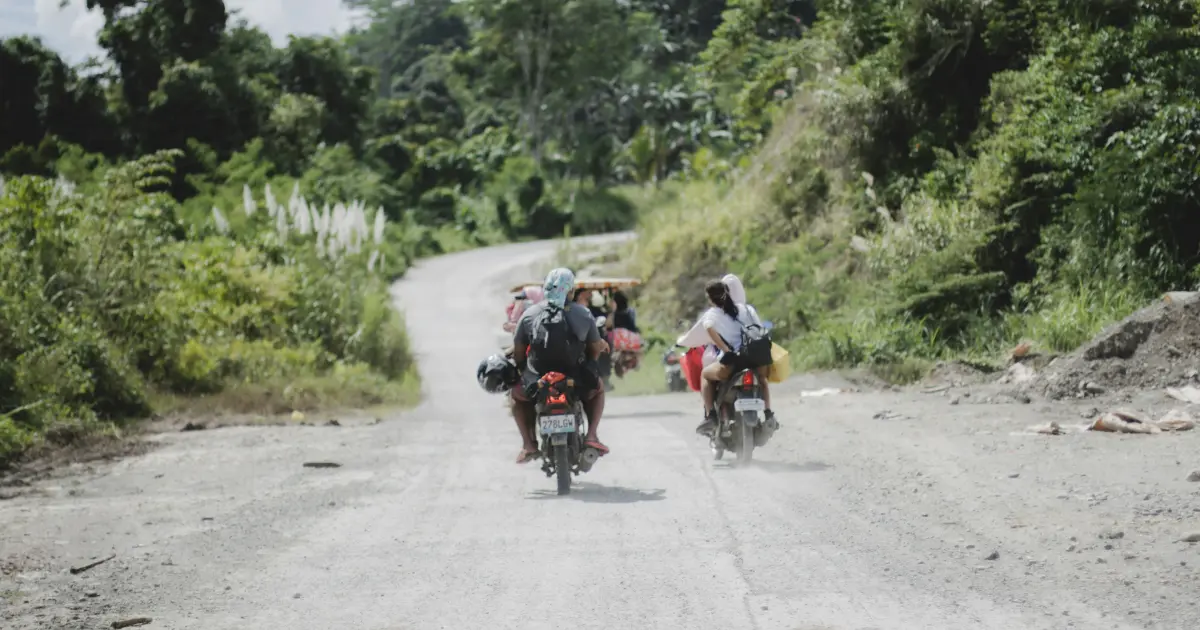
However, the infrastructural deficits of Sitio Riverside left few viable alternatives:
- The Passenger Jeepney: Public jeepneys made frequent, erratic stops—pausing for extended periods at arbitrary landmarks like trees until every square inch of seating was saturated.
- The Habal-Habal (Motorcycle Taxi): These informal motorcycles operated on a maximization model, refusing to depart until passenger density forced riders into precarious, half-seated positions.
- Financial Constraints: Paying the full charter tariff for individual transport was entirely out of reach for Bernard’s household.
Resignation eventually turned the pig truck into a daily necessity. Out of adolescent embarrassment, Bernard initially requested that Nong Boyet drop him off a discrete distance from the school gates to avoid peer scrutiny. Over time, as the routine cemented itself, the drop-off points crept closer and closer to the campus until the stigma dissolved entirely into mutual survival.
Supporting Context & Metrics: Infrastructure, Isolation, and Domestic Friction
The journey to Bernard’s graduation was fraught with psychological and physical barriers that highlight the fragile safety nets underpinning rural education in developing regions.
The Cost of Non-Conformity
Inside the cabin, conversation turned to Bernard’s classmate and closest confidant, Wilfred. Unlike Bernard, Wilfred was barred from walking the graduation stage. His offense? Maintaining long hair that violated the institution’s strict grooming codes—codes that demanded immediate compliance at the expense of student retention.
Wilfred’s artistic and social aspirations—such as participating in the town fiesta’s Miss Gay beauty pageant dressed as a mermaid—frequently clashed with the conservative, patriarchal expectations of the community. Bernard’s association with Wilfred had already incurred severe domestic penalties. On one occasion, after Bernard was caught watching Wilfred’s pageant preparations, Bernard returned home to face physical abuse from his father.
Bernard’s father operated under a rigid behavioral rubric: any boy who displayed non-conforming gender expressions or associated with effeminate peers risked severe social ostracization. This philosophy was mirrored in the tragic history of Nong Boyet’s late son, Alvin.
The Ghost of Alvin
Alvin, who had died years prior under murky circumstances after drowning in a local stream, had similarly defied local gender norms. Described by villagers as a boy who preferred sewing, crafting necklaces out of santan flowers, and sketching over traditional masculine labor, Alvin had faced similar community condemnation. Bernard’s father had frequently blamed Nong Boyet’s permissive parenting for Alvin’s death, articulating a harsh rural dogma: "What kills a man is his curiosity."
While local folklore persisted—whispering that the body recovered by village watchmen was merely a banana stem left behind by an engkanto (mythical forest spirit) rather than Alvin’s actual corpse—Nong Boyet’s grief remained relentlessly anchored in reality. For years, the aging driver had made weekly pilgrimages to the stream, carrying a pristine, fancy pencil intended for a birthday celebration that never arrived.
Official Statements and Intergenerational Dialogue
As the truck approached the highway, the dialogue between the elder driver and the young graduate shifted toward the future.
"How is your scholarship?" Nong Boyet inquired, breaking the rhythmic clatter of the engine.
"I’m taking care of the papers, ‘kol," Bernard responded. "Almost done with them."
"So, you’re really going to be an engineer."
"Puhon, in good time," Bernard said, utilizing the Visayan term for divine providence.
The realization of upward mobility carried a bittersweet undertone for the older man. "This means I won’t have anyone to take to school every day," Nong Boyet murmured, gazing into the distance.
Bernard offered a reassuring smile, clapping the driver’s shoulder. "Of course you do, ‘kol. You got the pigs."
The shared laughter was punctuated by the coughing fits of the driver, whose declining health had finally forced him to confront the limits of his labor. Nong Boyet revealed a critical decision: "I think I’m giving up driving… It’s what the doctor ordered. I should have quit a long time ago so that I wouldn’t get too tired. But what am I supposed to do? Just sit around the house all day?"
When asked about his employer’s response, Nong Boyet offered a pragmatic shrug: "He can’t do anything about it. He won’t be paying the hospital bills, anyway."
Future Outlook: Breaking the Cycle
Arriving at the school perimeter, the truck passed crowds of graduating students clad in fresh togas, carrying decorative garlands, and accompanied by proud parents. The contrast between Bernard’s arrival in a livestock transport and his peers’ standard entries crystallized the socio-economic gulf he had bridged.
Before stepping down, Nong Boyet reached into the glove compartment—the repository of his weekly pilgrimages—and retrieved the fancy pencil he had saved for Alvin.
"I don’t have a garland to give you, ‘dong," Nong Boyet said, extending the instrument. "लेकिन (But) I have this. You might find it useful."
Overcome with emotion, Bernard bypassed formal farewells and wrapped his arms around the driver, who fought back visible tears. "Sige na. You’ll be late," the old man urged gently.
Stepping onto the asphalt, Bernard walked toward the campus gates where Wilfred—now sporting a ponytail and a skirt—awaited him. In a final act of solidarity, Bernard handed Wilfred his extra "parent" ribbon, ensuring that both friends could cross the administrative barriers and march onto the stage together.
From the front seat of the rusted truck, Nong Boyet watched until the boys cleared the gates. Only then did he turn the ignition, signaling the end of an era of transit, and the beginning of a hard-won engineering future forged in the unlikeliest of classrooms.




Comments
Facebook App ID not configured. Please add it in the Customizer.