
Executive Overview
For over a decade and a half, the digital reading landscape has operated under a monolithic paradigm. If you owned an Amazon Kindle, your reading data—your bookmarks, progress logs, and reading streaks—lived and breathed within Amazon’s walled garden, funneling inevitably into Goodreads. For users committed to independent book tracking platforms like The StoryGraph, bridging the gap between hardware and community apps required tedious manual data entry, third-party browser extensions, or laborious workarounds.
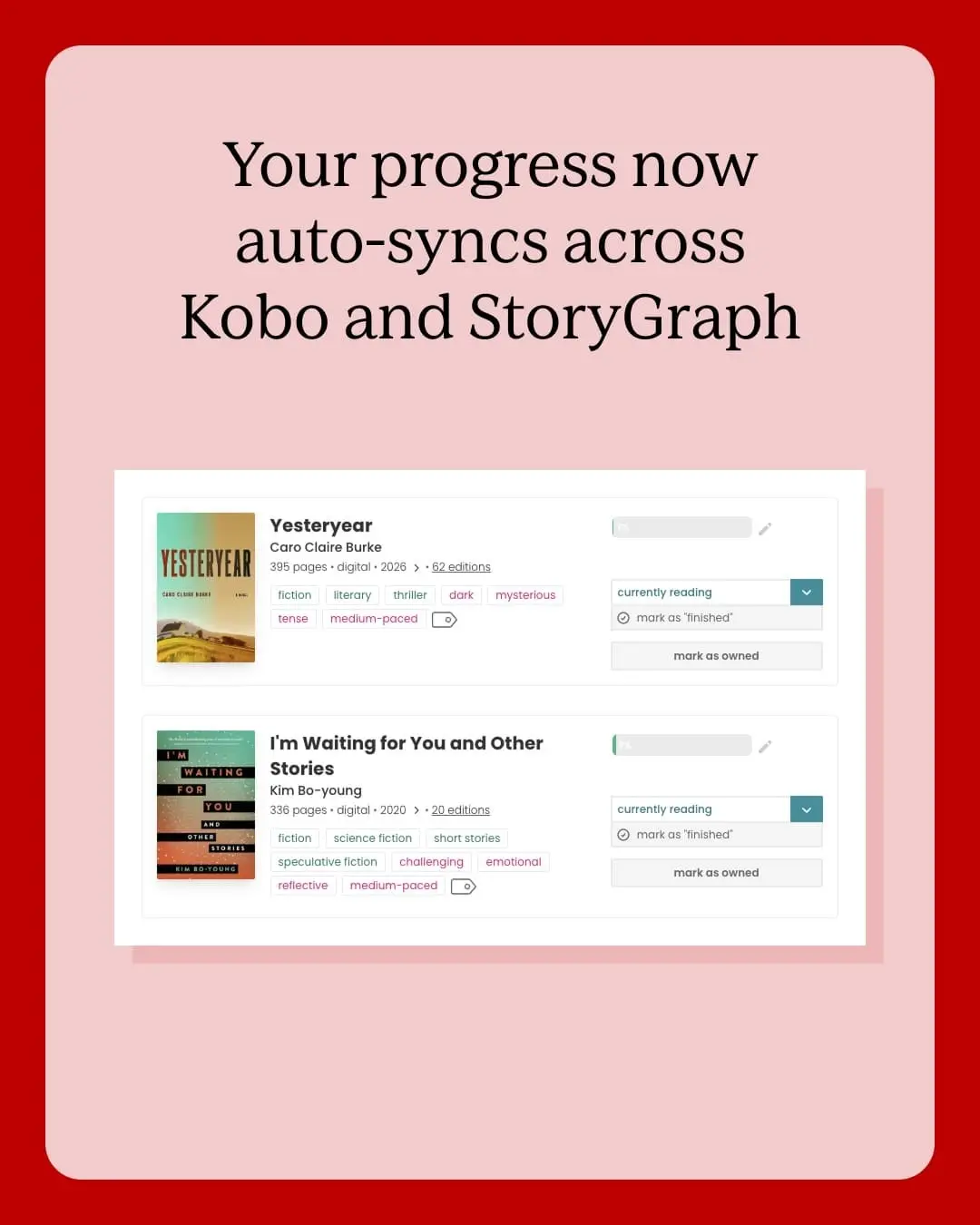
That paradigm shifted dramatically on June 29, 2026, when Rakuten Kobo officially rolled out a native, automated integration with The StoryGraph. This landmark partnership allows Kobo e-reader users to seamlessly sync their reading progress, digital libraries, and habit metrics directly to their StoryGraph accounts at no additional cost.
By offering a native alternative to Amazon’s Goodreads monopoly, Kobo has scored a monumental strategic victory in the e-reader market. It appeals directly to modern digital bibliophiles who crave robust, ad-free, data-rich reading analytics without sacrificing device independence. However, as the dust settles on this initial rollout, the reading community’s reaction is a nuanced mix of euphoria over the breakthrough and frustration regarding current technical limitations—most notably, the exclusion of sideloaded books and a strict one-way synchronization flow.
Read Also
Detailed Chronology: The Road to Native Integration
June 2026: The Announcement and Launch
The tech and publishing worlds caught wind of the collaboration earlier in June 2026, when Rakuten Kobo teased a feature designed to bridge hardware and indie software. On June 29, 2026, the integration went live globally.
The launch immediately captured the attention of the e-reader community. For years, users had begged major hardware manufacturers to open up their telemetry. While Amazon remained firmly entrenched in its proprietary Goodreads ecosystem—ignoring calls for open-API integrations with competitors—Kobo took a progressive stance. Recognizing that a significant portion of its user base preferred alternative tracking communities, Kobo engineered a direct pipeline.
Within days of the rollout, thousands of users began linking their Kobo accounts to StoryGraph. The setup process was designed to be friction-free: users could toggle the synchronization option within their device settings or user dashboard, allowing their reading progress to quietly transmit in the background whenever the e-reader connected to Wi-Fi.
Immediate Community Reception
The initial weeks following the June 29 launch were marked by an outpouring of positive sentiment across Reddit, BookTok, and dedicated reading forums. Readers who had spent years manually logging pages read, timestamps, and completion dates on StoryGraph suddenly found themselves saving hours of administrative upkeep.
Crucially, the integration was not limited to books purchased directly through the Kobo Store or read via the Kobo Plus subscription service. In a massive win for public library patrons, the automated sync extended fully to library books borrowed digitally through Libby via OverDrive. For the vast majority of readers who rely on public libraries for their literary consumption, this meant their borrowed library reads were finally tracked with zero manual intervention.
Supporting Context & Metrics: The Players Involved
To understand the magnitude of this integration, one must examine the distinct growth trajectories and philosophies of both Rakuten Kobo and The StoryGraph.
Rakuten Kobo: The Challenger Brand
Rakuten Kobo Inc., headquartered in Toronto, Canada, has long positioned itself as the premier open-ecosystem alternative to Amazon. Unlike Kindle devices, which prioritize Kindle Unlimited and Amazon-exclusive formats, Kobo e-readers natively support open standards like EPUB, Adobe Digital Editions, and extensive library integration through OverDrive. By consistently championing user choice, Kobo has carved out a fiercely loyal global market share, particularly in Canada, Europe, and parts of Asia.
The StoryGraph: The Anti-Goodreads Rise
Founded in 2019 by Nadia Odunayo, The StoryGraph emerged as a direct response to user dissatisfaction with Goodreads—criticized by many for its outdated interface, sluggish modernization, and heavy integration with Amazon’s commercial machine.
StoryGraph carved out a distinct niche by offering:
- Algorithmic Recommendations: Moving beyond simplistic star ratings, StoryGraph matches readers based on mood (e.g., adventurous, dark, emotional), pacing (fast vs. slow-paced), and specific thematic tags.
- Deep Reading Analytics: Comprehensive, visually rich charts tracking genres, page counts, fiction-to-non-fiction ratios, and reading habits over time.
- Community Features: Vibrant buddy reads, book clubs, targeted reading challenges, and custom giveaways.
- Ad-Free, User-Centric Philosophy: Built with a focus on data privacy and community engagement, culminating in its recognition with a prestigious 2025 Apple App Store Award.
By 2026, StoryGraph had exploded into a global community of over 5 million readers. The synergy between Kobo’s open-hardware philosophy and StoryGraph’s community-driven data analytics made this integration an organic fit.

The Friction Points: What Users Are Saying
Despite the celebratory atmosphere surrounding the launch, user feedback quickly highlighted several architectural limitations that temper the achievement.
1. The Sideloading Blindspot (Calibre & Third-Party Files)
The single most prevalent complaint across forums and tech blogs is the complete lack of support for sideloaded books. If a user manages their digital library via Calibre—transferring custom-formatted EPUBs, PDFs, or DRM-free files acquired outside official stores—those books do not sync to StoryGraph.
For many power users, sideloading is the primary reason they chose a Kobo over a Kindle in the first place. The inability to track progress on indie titles, out-of-print books, or personal documents transferred via USB remains a glaring omission that fans hope future firmware updates will address.
2. One-Way Street: Kobo to StoryGraph Only
Currently, data flow is strictly unidirectional. Progress streams from your Kobo e-reader to your StoryGraph account. However, if a user updates their reading progress manually within the StoryGraph mobile app or web portal—perhaps because they read a physical book or listened to an audiobook version—that updated progress does not push back to the Kobo e-reader.
While less critical than the sideloading issue, this limitation disrupts multi-format readers who bounce between physical books, audiobooks, and e-ink devices.
Official Statements and Industry Impact
Industry analysts view the Kobo-StoryGraph partnership as a watershed moment for e-reader interoperability.
"For too long, hardware manufacturers have treated reading data as a proprietary lock-in mechanism," notes consumer tech analyst Sarah Lin. "By opening their telemetry to an independent, community-loved platform like StoryGraph, Kobo is proving that hardware can compete on quality, openness, and user-centric features rather than artificial software silos."
While neither Rakuten Kobo nor StoryGraph executives have released official subscriber-conversion metrics following the June launch, internal telemetry updates suggest that account-linking rates have far exceeded initial internal projections. Industry observers are now watching Amazon closely to see if consumer pressure will force a softening of Goodreads’ notoriously closed ecosystem.
Future Outlook: Where Do We Go From Here?
As the initial excitement matures into everyday usage, the burning question remains: Do Rakuten Kobo e-reader owners actually use StoryGraph?
The empirical answer is a resounding yes, albeit with qualifications. For the millions of users who rely on Kobo Store purchases, Kobo Plus subscriptions, and Libby library loans, the integration has transformed passive reading into effortless data tracking. It has eliminated the administrative friction that traditionally kept casual readers from maintaining accurate reading logs.
Looking ahead, the success of this integration will depend on how responsively Rakuten Kobo and The StoryGraph address community feedback. If upcoming firmware updates and API expansions can resolve the sideloading dilemma and introduce bidirectional syncing, this partnership could well become the gold standard for digital reading ecosystems.
Until then, Kobo’s bold gamble has successfully signaled to the literary world that the future of digital reading belongs to openness, interoperability, and—above all—respect for the reader’s choice.




Comments
Facebook App ID not configured. Please add it in the Customizer.