
Executive Overview
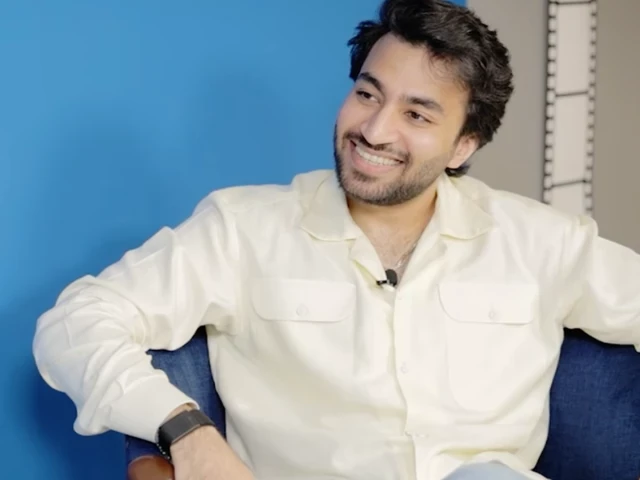
In the hyper-accelerated landscape of the contemporary music industry, where digital metrics dictate momentum and the shelf-life of a viral track can be fleeting, maintaining artistic integrity and personal equilibrium is an extraordinary feat. Pakistani singer-songwriter Abdul Hannan has emerged as a compelling counter-narrative to the modern hustle culture that so often consumes rising stars. In a recent, wide-ranging interview with Fuchsia Magazine, Hannan peeled back the layers of his public persona to discuss the transient nature of fame, the harrowing reality of live stage pressures, his idiosyncratic creative process, and the philosophical underpinnings of his personal growth.
Far from the glossy, unblemished image typically manufactured for pop idols, Hannan’s reflections are marked by a rare candor. He addresses the psychological toll of public scrutiny, the widespread misunderstandings surrounding vocal production technologies like autotune, and the rigorous boundaries he has drawn between his professional output and his fundamental well-being. Furthermore, Hannan’s ambitions extend far beyond the recording studio and concert stage. As a technologist and entrepreneur, he continues to navigate the intersections of software development, digital infrastructure, and audio engineering.
This comprehensive profile examines Hannan’s trajectory—not merely as a chronicle of musical milestones, but as an investigative look into the psyche of an artist attempting to master the delicate art of staying grounded while scaling new heights. Through an analysis of his creative methodologies, his perspectives on mental health and societal expectations, and his technical ventures, this article explores how Hannan is constructing a sustainable, multi-faceted career insulated from the volatile swings of modern celebrity.
Read Also
Detailed Chronology: From Code to Melodies and Mainstream Acclaim
Abdul Hannan’s journey to becoming one of the most resonant voices in South Asian independent music was neither linear nor accidental. While his breakthrough tracks have accumulated millions of streams, his professional roots trace back to the technology sector—a background that continues to inform his pragmatic approach to the creative arts.
The Dual Identity: Tech and Tunes
Long before sold-out venues and heavy rotation on streaming platforms defined his days, Hannan was deeply immersed in the world of technology. Even as his musical career gained traction, he maintained a foot in both worlds, utilizing his technical acumen to solve structural problems within the entertainment industry. Unlike many artists who remain entirely detached from the business and logistical mechanics of their shows, Hannan’s engineering mindset led him to conceptualize and build proprietary solutions.
Reflecting on this unique synthesis of skills, Hannan noted how he stepped away from demanding full-time corporate roles while retaining his technical edge: "I do tech things on the side and do not lose touch, but my full-time work is off. I have created a ticketing platform we use for our own tickets and shows too, which is basically a whole ecosystem. We are also working on audio functions and training people in engineering aspects." This entrepreneurial pivot underscores a rare self-sufficiency among modern musicians, allowing him to bypass traditional industry gatekeepers and control the direct-to-consumer pipeline of his live performances.
Musical Evolution: Anatomy of a Hit
Hannan’s entry into the collective consciousness of music lovers was defined by a quiet, atmospheric brand of storytelling that prioritized mood and melodic resonance over high-tempo commercial pandering. Yet, the creation of his most celebrated works reveals an organic, often unpredictable collaborative ecosystem.
Take, for instance, the genesis of his track Khasara. Rather than beginning with a rigid lyrical theme or a pre-written poem, Hannan’s compositional philosophy relies heavily on the emotive power of pure melody. "When I write, the melodies come first, not the lyrics. Then the melodies guide the song, but not always," he explained. As Khasara began to take shape, the track evolved dynamically through collaboration. The addition of artist Samar Jafri injected a fresh perspective into the project. Hannan recalled how Jafri’s spontaneous attachment to the work elevated the final product, validating Hannan’s intuition that the track required a multi-layered vocal dynamic.
Similarly, the track O’Yaara holds a profound, almost visceral emotional weight in Hannan’s catalog. Describing the collaborative environment that birthed the song, Hannan admitted that the creative process left him genuinely shaken. "I still get goosebumps thinking about the story behind this song. I remember I was shaken and emotional, and they really gave the song a meaning and made my thoughts more beautiful," he shared. To this day, O’Yaara remains a staple request among Gen Z audiences at his live shows, proving that raw, emotionally vulnerable songwriting transcends demographic shifts.
However, Hannan maintains a distinct boundary between critical acclaim, commercial performance, and personal preference. While tracks like Muntazir occupy a special place in his own artistic heart, he acknowledges that an artist’s personal favorites rarely align with mass market consumption. This philosophical detachment allows him to create freely, unfettered by the pressure of replicating past chart successes.
Supporting Context & Metrics: Navigating Fame, Scrutiny, and the Stage
The modern music economy operates on a relentless loop of content creation, social media engagement, and live performance metrics. For an artist who values introspection, the transition from private creator to public commodity can trigger severe psychological friction. Hannan’s insights into the mechanics of fame offer a sobering look at the realities behind the glamour.
The Transience of Celebrity
In an era where digital footprints are permanent, Hannan preaches impermanence. Having witnessed the rapid rise and fall of internet personalities and overnight sensations, he consciously cultivates a mindset of radical humility.
- "No matter how high you get, the fact that you can lose this fame means you need to be prepared," Hannan asserted during his interview. "Be grateful for what you have. Do not have an ego and remember that this is temporary and eventually this will end."
This existential awareness directly impacts his relationship with his craft. By internalizing the temporary nature of success, he strips away the paralyzing fear of failure, viewing his career as an evolving chapter rather than a permanent identity.
The Brutal Realities of Live Performance
Despite his seasoned stage presence, Hannan confesses to an enduring vulnerability that catches many fans by surprise: chronic stage fright. No matter how many venues he sells out, the psychological weight of stepping in front of a live audience remains undiminished.
- "I always get nervous before getting on stage, even after doing so many shows. I always have stress, but obviously, when you love the crowd, you start to understand that things can go wrong in different scenarios. I always tell myself never to take this for granted. This will not last forever."
This performance anxiety is compounded by what Hannan describes as an increasingly unforgiving modern concert culture. The democratization of recording devices means that every minor vocal crack, technical glitch, or off-key moment is instantly captured, uploaded, and dissected across social media platforms.
- "Our audience nowadays can be brutal. If one thing happens where maybe you weren’t responsible enough, people take that very seriously, even if the voice in the microphone wasn’t right," he observed. While acknowledging that artists must maintain rigorous standards of accountability, he calls for a more nuanced understanding between performers and their audiences regarding the technical variables inherent to live audio.
Demystifying Vocal Production and Autotune
Few subjects in modern music discourse are as contentious or misunderstood as the use of pitch-correction software, commonly known as autotune. Audiences frequently weaponize the term to discredit the raw talent of live performers. Hannan stepped into this debate to clear up pervasive misconceptions, explaining the software not as a magical transformation tool, but as a subtle calibrator.
- "People think it automatically transforms your voice and makes you sound like an angel. But it is basically a tone that makes a normal person’s sound a bit more perfect because you can’t be absolutely perfect," he clarified.
By demystifying the production process, Hannan advocates for a mature dialogue between creators and consumers—one where constructive criticism is welcomed, but grounded in an accurate technical comprehension of modern audio engineering.
Official Statements & Direct Perspectives
The narrative of Abdul Hannan’s career is best understood through his own philosophy on life, love, and mental health. His public statements reflect a man actively attempting to reconcile the demands of professional ambition with the quiet necessities of personal peace.
Redefining Hustle Culture and Prioritizing Well-being
For years, the global workforce—and the creative sectors in particular—has championed "hustle culture," romanticizing sleep deprivation, relentless overwork, and the continuous commodification of every waking hour. Hannan experienced this trap firsthand, particularly during the close of 2024, when he attempted to balance high-pressure professional responsibilities with his soaring musical ambitions. The experience taught him a stark lesson in boundaries.
- "People try to normalise hustle culture, but over time that has changed. You need to know your priorities, which are health, family and relationships with people. That stuff comes first," he stated firmly.
This realization prompted a radical restructuring of his daily routine. Recognizing that art cannot flow from an exhausted, depleted vessel, Hannan made deliberate room for physical health and mental decompression. "The chaos is that your life will always be at number two and not everything is just about work. In the last month, I really prioritised my health and gym," he shared.
The Evolution of Love and Human Connection
Hannan’s songwriting frequently explores the complex topography of human emotion and romance. However, his personal perspective on love has matured significantly since his youth. Where adolescence often frames romance through idealized, unsustainable narratives, adult experience has taught him the value of pragmatism and emotional stamina.
- "For me, love and relationships work and are practical when they are sustainable and the foundations are strong enough for them to last," he explained.
This philosophy extends well beyond romantic entanglements into familial and platonic bonds. According to Hannan, the most enduring relationships are anchored by an unspoken, intuitive level of mutual understanding that requires no constant validation.
Gender, Mental Health, and Societal Empathy
Addressing the broader cultural conversation surrounding mental health, Hannan offered a thoughtful perspective on the unique pressures faced by men in contemporary society, emphasizing that genuine empathy must be universally distributed.
- "I feel like kindness is important for men’s mental health. It is the fear of not sharing in our society. Kindness should generally be given overall to men and women. Both are suffering. It is not that one gender is being judged more than the other."
This balanced view highlights his awareness of societal blind spots, advocating for a culture of openness where emotional vulnerability is not penalized by traditional masculine archetypes. Looking back at the adversities of his youth and early career as he enters his thirties, Hannan expresses profound gratitude: "Today, when I am 30, I am grateful for things that happened because they shaped me into what I am today."
Future Outlook: The Intersection of Music, Technology, and Longevity
As Abdul Hannan
looks toward the horizon, his trajectory points toward a sustainable, self-directed career model that defies standard industry expectations. By refusing to let the external validation of fame dictate his self-worth, he has established a psychological fortress against the burnout that claims so many talented creators.
Scaling the Technical Ecosystem
Hannan’s foray into technical infrastructure—specifically his proprietary ticketing platform and audio engineering training initiatives—signals a long-term commitment to reshaping how independent artists operate. By cutting out extractive middlemen and building direct logistical pipelines for live events, Hannan is future-proofing his career. This infrastructure not only supports his own musical tours but provides a scalable blueprint for other independent acts seeking financial autonomy in a shifting market.
Artistic Longevity Over Virality
In the studio, Hannan remains committed to organic storytelling. Unbothered by the pressure to manufacture viral TikTok moments, his creative process continues to prioritize atmospheric melodies and deeply collaborative songwriting. Whether he is revisiting the emotional resonance of past tracks like O’Yaara or experimenting with fresh sonic textures, his North Star remains artistic integrity rather than commercial saturation.
Conclusion: Grounded at New Heights
The ultimate takeaway from Abdul Hannan’s journey is the powerful realization that creative brilliance and personal stability are not mutually exclusive. By maintaining a clear-eyed view of fame’s temporary nature, prioritizing physical and mental well-being over the empty promises of hustle culture, and diversifying his skill set into the realm of technology, Hannan has mapped out a blueprint for modern artistic longevity. For an artist whose work continues to capture the hearts of a diverse listenership, staying grounded is not merely a strategy—it is the very foundation upon which his enduring legacy will be built.




Comments
Facebook App ID not configured. Please add it in the Customizer.