
Executive Overview
The global art market and the broader cultural heritage sector are currently experiencing a period of profound transformation, characterized by aggressive high-end market maneuvers, the generational passing of master practitioners, institutional leadership restructuring, and complex ethical debates regarding the circulation of historical artifacts.
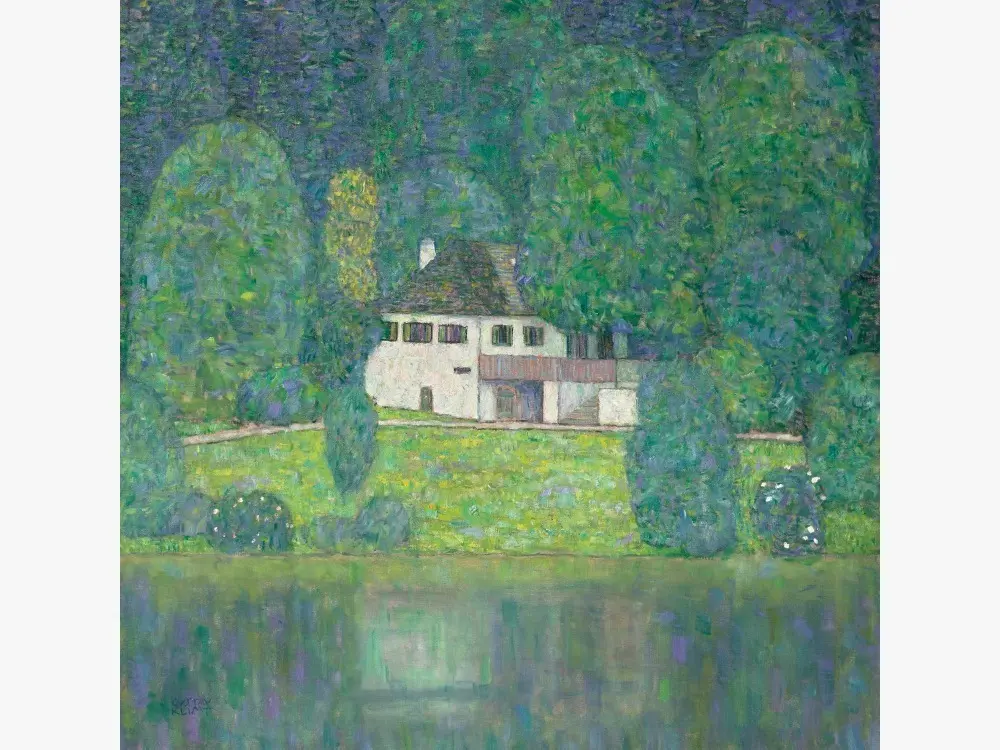
At the apex of the commercial art market, blue-chip masterpieces continue to command astronomical sums, illustrated most recently by Christie’s securing a fully guaranteed, multi-million-dollar Gustav Klimt landscape for its upcoming New York sales. Simultaneously, the geopolitical center of the art market continues to expand eastward, with major auction houses such as Christie’s and Sotheby’s establishing permanent footholds in the United Arab Emirates.
Yet, this commercial dynamism exists in sharp contrast to the somber reality of cultural loss. The international art community is mourning the passing of pivotal postcolonial and documentary visionaries, including celebrated Indian figurative expressionist Jogen Chowdhury and Spanish-born ethnographic photographer Miguel Bergasa. Furthermore, institutional shifts are shaking up major museums across Asia, while European regulatory bodies face mounting pressure to reform the ethical handling, exhibition, and repatriation of sensitive historical and wartime archives.
Read Also
This report provides a comprehensive, multi-layered analysis of these critical developments, examining the financial mechanisms driving the auction houses, the institutional transitions shaping museum leadership, the conservation breakthroughs redefining maritime archaeology, and the ethical imperatives guiding the stewardship of cultural heritage.
Detailed Chronology
The High-Stakes Auction Market: Klimt’s Litzlbergkeller Set for New York
In the upper echelons of the fine art market, liquidity remains robust for authenticated, museum-quality works by 19th- and 20th-century masters. Next month, Christie’s New York will bring a major masterpiece by Gustav Klimt to the auction block, carrying a pre-sale estimate of $60 million to $80 million. Crucially for the consignor and the auction house, the lot is fully guaranteed, ensuring a successful sale regardless of market fluctuations during the live event scheduled for November 17.
The painting in question is Litzlbergkeller (1915–1916), a lush, vibrant green landscape that captures the scenic Austrian countryside bordering Lake Attersee. For nearly three decades, the painting has resided within the same private collection. Its current, anonymous owner originally acquired the work at Sotheby’s in 1997 for $14.7 million—a sum that translates to approximately $30.9 million when adjusted for inflation today.
Max Carter, Christie’s global chairman of 20th- and 21st-century art, contextualized the painting’s unique art-historical position: “The inn of Litzlbergkeller sits at the water’s edge, between Klimt’s allover technique and abstraction, form and dissolution, prewar certainties and the unknown.”
Should the work achieve its estimated price range, it will rank among the highest prices ever realized for a Klimt landscape at public auction. It also follows closely on the heels of historic highs for the Austrian symbolist; Klimt’s current auction record stands at $236.4 million, achieved in November 2025 when his exquisite Portrait of Elisabeth Lederer (1914–1916) sold at Sotheby’s in New York.
Institutional Transitions: National Gallery Singapore Faces Leadership Exodus
In the museum sector, institutional stability is facing a significant test in Southeast Asia. The National Gallery Singapore is bracing for a sweeping leadership transition following the announcement that chief curator Patrick Flores and assistant chief executive Chris Lee are stepping down from their respective posts in December.
Their departures coincide with the pre-announced exit of the gallery’s chief executive and director, Eugene Tan. The simultaneous departure of three top-tier executives marks the end of an era for the institution, which has grown under their tenure into one of the preeminent repositories of modern Southeast Asian art. Cultural policy analysts are closely monitoring the museum to see how it navigates this leadership vacuum and how the incoming director will shape its curatorial vision moving forward.
Middle Eastern Market Expansion: Sotheby’s Inaugural Abu Dhabi Auction
The strategic pivot of the international art market toward the Middle East continues to accelerate. Following Christie’s inaugural fine art auction on November 1 at the newly opened Saadiyat Grove Experience Centre on Saadiyat Island, rival house Sotheby’s has announced its own milestone entry into the region.
Sotheby’s will hold its very first live auction in Abu Dhabi on December 10, titled Breaking Ground. This dual expansion by the world’s leading auction houses underscores Abu Dhabi’s ambition to solidify its status as a global hub for art, culture, and high-net-worth commerce, bridging Western market frameworks with rapidly growing collector bases across the Gulf, South Asia, and beyond.
Supporting Context & Metrics
The Passing of Jogen Chowdhury: A Pillar of Modern Indian Art
The global cultural landscape suffered a profound loss with the death of Jogen Chowdhury in Kolkata at the age of 87. Chowdhury, who had been battling a rare form of blood cancer according to family statements, was widely recognized as one of India’s most celebrated and influential modern artists.
Born in 1939, Chowdhury’s artistic education laid the foundation for a career that would bridge traditional Indian aesthetics with international modernist movements. He trained at the Government College of Art & Craft in Kolkata from 1955 to 1960 before undertaking advanced studies at the École Nationale Supérieure des Beaux-Arts in Paris during the 1960s. He emerged as a central figure in the second generation of postcolonial artists who fundamentally reshaped the trajectory of contemporary art in India.
Chowdhury was best known for his deeply evocative figurative expressionist works. His distinctive style frequently employed meticulous cross-hatching techniques and organic distortions of the human body to convey psychological tension, vulnerability, and resilience.
Reflecting on the artistic climate of his formative decades, Chowdhury remarked in a late 2020 interview with The Punch Magazine: “In the 1960s and 1970s, many of our major artists were fond of doing abstract art, thinking that it was ‘Modern’ and the ultimate expression of art.” Despite the prevailing winds of pure abstraction, Chowdhury maintained a steadfast commitment to figuration infused with native Indian iconography.
Ethical Reform in Germany: Halting the Auction of Nazi-Era Artifacts
In Europe, the intersection of commerce, history, and ethics has prompted a major policy victory for restitution advocates and historians. Following intense international outcry and widespread media scrutiny, an impending German auction featuring approximately 600 Nazi-era artifacts has been canceled.
The collection included highly sensitive historical materials, such as personal letters originating from concentration camps and index cards maintained by the Gestapo. Rather than being subjected to commercial exploitation on the open art and memorabilia market, these primary-source documents are slated for transfer to accredited public museums and archives, ensuring they are preserved for educational and research purposes rather than private speculation.
Philanthropic Enrichment: Charles Greig Donates Indian Art to the Tate
In a significant boost to British public collections, British Indian art expert Charles Greig has generously donated a collection of 50 rare 18th- and 19th-century artworks created in India to the Tate. The acquisition significantly enhances the museum’s holdings of historic South Asian art, offering British audiences deeper insight into the sophisticated visual traditions of the Indian subcontinent prior to and during the colonial period.
Maritime Archaeology: Discovery of the Oldest Swedish Warship
In the realm of maritime heritage, marine archaeologists have announced the discovery of an exceptionally rare 15th-century shipwreck in European waters. Believed to be the oldest known Swedish warship ever identified, the wreck offers unprecedented insights into medieval naval architecture, shipbuilding techniques, and military logistics in the Baltic region during the late Middle Ages.
Official Statements
The profound cultural impact of these events has drawn public commentary from civic leaders, museum authorities, and international experts:
-
On the Cultural Legacy of Jogen Chowdhury:
West Bengal Chief Minister Suvendu Adhikari paid tribute to the late artist, stating:"Chowdhury’s rich contributions in the field of art are evident in numerous government buildings… The works he left behind will remain for centuries."
-
On the Market Dynamics of Gustav Klimt:
Max Carter, Christie’s Global Chairman of 20th and 21st-Century Art, analyzed the structural appeal of Litzlbergkeller:"The inn of Litzlbergkeller sits at the water’s edge, between Klimt’s allover technique and abstraction, form and dissolution, prewar certainties and the unknown."
-
On the Ephemeral Nature of Documentary Photography:
The late Spanish-born photographer Miguel Bergasa, whose poignant black-and-white documentation of Paraguay’s religious Mennonite communities and rural European festivals earned him international acclaim, famously summarized his artistic motivation:"I like to capture images of things you know time will erase. There’s a sense of longing."
Future Outlook
As the art world looks ahead to the close of the calendar year, several critical trends and trajectories are poised to dictate the pulse of the international cultural economy:
- Market Resilience at the Top End: The performance of Christie’s November 17 auction featuring Klimt’s Litzlbergkeller, alongside Sotheby’s upcoming Abu Dhabi debut, will serve as definitive barometers for high-end market liquidity. Observers will monitor whether guaranteed lots successfully stimulate buyer confidence amidst macroeconomic uncertainties.
- Institutional Restructuring in Asia: With the departure of the National Gallery Singapore’s executive director Eugene Tan, chief curator Patrick Flores, and assistant chief executive Chris Lee, the institution’s strategic direction will enter a pivotal transition phase. The ability of the gallery to attract visionary leadership will determine its capacity to maintain its prominent role in global contemporary discourse.
- Stricter Ethical Oversight for Historical Relics: The successful redirection of Nazi-era artifacts from commercial auction houses to public museums signals a growing intolerance for the commercialization of trauma-adjacent history. This precedent is likely to spur tighter legislative frameworks across Europe regarding the trade in wartime memorabilia.
- Preservation of Endangered Heritage: The passing of master documentary makers like Miguel Bergasa underscores the urgent need to archive vanishing rural and indigenous traditions. Cultural institutions are increasingly prioritizing the acquisition and digitization of ethnographic archives before globalization and climate pressures erase them permanently from the historical record.





Comments
Facebook App ID not configured. Please add it in the Customizer.