
Executive Overview
In the subterranean heat of New York City’s transit network, a new form of corporate satire has taken root. Amid the ambient noise of screeching steel and sweltering platform heat, transit commuters at the West Fourth Street station recently encountered an unconventional disruption: slick, high-gloss advertisements promoting absurd, non-existent artificial intelligence enterprises.
Promoting conceptual products ranging from "UnderwAIr: Panties that think" to "WakeMarket," a platform inviting the bereaved to trade on grief beneath the image of a gold, dollar-sign-engraved coffin, the posters mimic the messianic marketing language of Silicon Valley with uncanny precision.
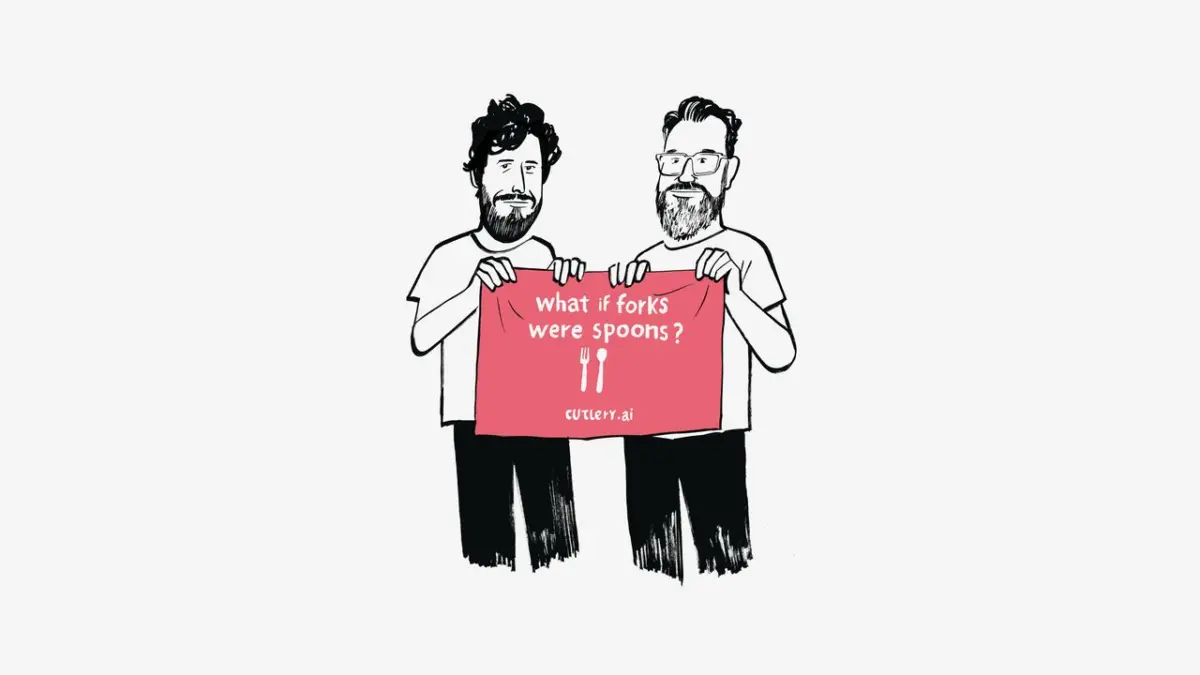
The guerrilla intervention is the brain-child of comedians Harris Alterman, 34, and Dave Ross, 43. Operating under the fictitious parent company moniker AI.CONGLOMERATE, the duo manufactures and temporarily installs high-finish vinyl banners across abandoned transit spaces. By appropriating the visual language and hyper-optimized jargon of venture-backed startups, Alterman and Ross have tapped into a widespread cultural fatigue surrounding the relentless integration of AI into daily life.
Read Also
What began as an informal observation of pervasive public transit advertising has evolved into a viral sensation, generating over five million views across digital platforms and sparking a broader conversation about tech-industry absurdism, public space utilization, and the encroaching boundary between genuine technological innovation and performance art.
+-----------------------------------------------------------------------------------+
|                                 AI.CONGLOMERATE                                   |
|                      "Frictionless Living Through Satire"                          |
+-----------------------------------------------------------------------------------+
|   campaign highlights:                                                            |
|  • "UnderwAIr: Panties that think."                                               |
|  • "Grieving? Trade on it. WakeMarket."                                           |
|  • "What if forks were spoons? Cutlery.ai"                                        |
|  • "We put the Q in QR1777. FiveTable."                                           |
|  • "The World's First Wearable AI Grandfather"                                    |
+-----------------------------------------------------------------------------------+
|  IMPACT: >5.0 Million Digital Views | MTA-Approved Art Installation Partner     |
+-----------------------------------------------------------------------------------+
Detailed Chronology
Phase I: Ideation and Conceptual Framework (Mid-2023)
The origin of the campaign dates back roughly one year, born from routine commutes through the Metropolitan Transportation Authority (MTA) network. Alterman, a former social-media manager, began documenting an influx of real-world transit advertisements fielded by artificial intelligence firms. These campaigns routinely promised an existence stripped of friction, offering automated solutions for basic human activities.
Alterman identified a recurring pattern in the marketing copy: a homogenizing tone he designated as "slop voice." Characterized by an over-reliance on buzzwords—such as prompt, next gen, merging, deck, and one click—the campaigns projected a worldview wherein human agency was systematically minimized in favor of automated convenience. Alterman partnered with Ross, a comedian and veteran website designer, to systematically dissect this corporate lexicon.
The duo compiled an extensive database of industry terminology, developing a algorithmic framework for joke writing that mirrored the automated tools they sought to parodize. By applying basic structural templates—such as "Blank plus blank equals blank" or "From blank to blank in just one blank"—they generated dozens of plausible-sounding startup concepts within hours.
   [ COMMUTER DISCONTENT ]
              │
              ▼
   [ IDENTIFICATION OF "SLOP VOICE" ] ──► (Jargon: Prompt, Deck, Next Gen)
              │
              ▼
   [ FORMULAIC COPYWRITING ] ──────────► ("Blank + Blank = Blank")
              │
              ▼
   [ GUERRILLA DEPLOYMENT ] ───────────► (NYC Transit Platforms)
              │
              ▼
   [ DIGITAL AMPLIFICATION ] ──────────► (>5M Impressions)
Phase II: The Initial Wave and Viral Breakthrough (June)
In June, Alterman and Ross executed their first covert installation on an abandoned subway platform frame. The initial wave focused on hyper-literal absurdities:
- Cutlery.ai: Featuring the tagline, "What if forks were spoons?"
- FiveTable: Accompanied by the inscrutable slogan, "We put the Q in QR1777."
The visual execution was deliberate. Designed by Ross to replicate the minimal aesthetics, sans-serif typography, and muted pastel palettes favored by direct-to-consumer tech brands, the posters blended seamlessly into the subway infrastructure.
A video documenting the installation was uploaded to Instagram, quickly gaining traction across digital networks. Within weeks, the footage logged over five million views, proving that audiences were primed to consume sharp commentary on Silicon Valley’s pervasive presence.
Phase III: The West Fourth Street Deployment
Building on their initial online traction, the creators executed a secondary installation on a sweltering afternoon at the West Fourth Street subway station in Manhattan. Operating three flights subterranean on the Brooklyn-bound B-D-F-M platform, the duo targeted a disused newsstand structure.
Dressed in matching attire—black shorts and white T-shirts emblazoned with the AI.CONGLOMERATE logo—Alterman and Ross affixed large-format vinyl banners using rolls of duct tape. Despite intense heat conditions on the platform that compromised adhesive durability, the pair successfully installed and documented several new conceptual pieces:
- UnderwAIr: A bold typographic piece advertising "Panties that think."
- WakeMarket: A financial-tech parody displaying a gilded coffin marked with currency symbols, anchored by the copy: "Grieving? Trade on it."
- Wearable AI Grandfather: A direct spoof of recent hardware trends, positioning an artificial elder as a necessary personal accessory.
Each piece was removed immediately following content capture, preserving the ephemeral nature of the physical prank while ensuring its permanent distribution online.
Supporting Context & Metrics
The Economics of Tech Fatigue and Transit Advertising
Public transportation systems in major metropolitan centers have long served as primary advertising vectors for venture-backed startups looking to capture young, educated urban professionals. However, the pivot from consumer software (e.g., meal delivery, mattress subscriptions) to generative artificial intelligence has fundamentally shifted the tone of these campaigns.
Where previous generations of tech ads emphasized service delivery, contemporary AI marketing frequently emphasizes full-spectrum existential delegation—the notion that algorithmic processes should manage administrative, creative, and interpersonal obligations.
+-------------------------------------------------------------------+
|                 THE EVOLUTION OF TRANSIT MARKETING                |
+-------------------------------------------------------------------+
| ERA             | CORE VALUE PROPOSITION  | TARGET OUTCOME        |
+-----------------+-------------------------+-----------------------+
| 2010s (Web 2.0) | Service Logistics       | "Outsource errands"   |
| 2020s (AI Boom) | Existential Delegation  | "Your life lives      |
|                 |                         |  itself"              |
+-------------------------------------------------------------------+
Alterman notes that the underlying philosophy of these campaigns implies a destination where "eventually you do nothing… your life lives itself." The parody works precisely because real-world products have crept strikingly close to satire.
For instance, the pair’s "Wearable AI Grandfather" directly parodies physical hardware entrants currently entering the consumer marketplace, such as the Friend AI pendant—a $249 hardware device designed to hang around a user’s neck and provide continuous, conversational companionship.
Quantitative Campaign Reach
| Metric | Measurement / Value | Context |
|---|---|---|
| Primary Video Views | 5.0+ Million | Single Instagram reel deployment (June campaign) |
| Production Cost Per Unit | Negligible | Low-cost vinyl printing and industrial duct tape |
| Physical Display Duration | Temporary (< 1 hour per drop) | Designed to prevent physical vandalism charges |
| Target Platforms | MTA B-D-F-M Network | High-footfall urban transit hubs |
| Core Creators | 2 Principal Collaborators | Supported by local arts grant ecosystem |
Official Statements & Public Reaction
Commuter Reception on the Platform
Street-level reactions to the West Fourth Street installation illuminated the fine line between contemporary tech marketing and absurdism. Navigating the ambiguous space between real corporate outreach and satire, commuters frequently paused to evaluate the banners.
When approached regarding the "wearable AI grandfather" advertisement, one commuter featuring dreadlocks carefully inspected the poster before delivering a blunt assessment of the product premise:
"Get the fuck out," he stated, reflecting a broader public discomfort with the commercialization of intimate personal relationships via technology.
Creative Methodology & Perspectives
Reflecting on their process, the creators underscored that the speed of their production pipeline directly critiques the formulaic nature of current tech branding.
+-----------------------------------------------------------------------+
| CREATOR PERSPECTIVES                                                  |
+-----------------------------------------------------------------------+
| "They all use the same words. It’s the same voice, which I’ve called  |
|  slop voice... we basically just do Mad Libs, where we put different   |
|  words in different orders until it makes us laugh."                  |
|                                                                       |
|  — Harris Alterman, Co-Creator, AI.CONGLOMERATE                       |
+-----------------------------------------------------------------------+
| "It was fast, for sure. But we’ve been thinking about it for a long   |
|  time. Blank plus blank equals blank—that’s one of our favorites."    |
|                                                                       |
|  — Dave Ross, Co-Creator, AI.CONGLOMERATE                             |
+-----------------------------------------------------------------------+
Institutional Integration: The MTA and Local Grants
Unlike conventional unsanctioned graffiti or vandalism, the AI.CONGLOMERATE project operates within an intriguing legal and institutional envelope. While the specific installation of duct-taped banners remains an unauthorized, transient act, the underlying site of the West Fourth Street deployment is part of an official urban revitalization effort.
The abandoned newsstand structure is being transformed into an art installation managed by Al Mullen, a comedian, artist, and associate of Alterman and Ross. Mullen secured official approval from the Metropolitan Transportation Authority (MTA), supported by a civic grant program dedicated to funding small-scale urban micro-projects designed to enrich public infrastructure.
Through this partnership, the MTA tacitly enables a controlled space for creative experimentation, permitting brief installations that critique the very commercial ecosystem operating within its transit system.
Future Outlook
The trajectory of the AI.CONGLOMERATE initiative signals a growing convergence between street art, digital comedy, and tech critique. As tech firms continue to deploy substantial capital into out-of-home advertising across major metropolitan areas, public pushback through guerrilla satire is projected to intensify.
+-------------------------------------------------------------------+
|                        UPCOMING MILESTONES                        |
+-------------------------------------------------------------------+
| EVENT                   | VENUE           | OBJECTIVE             |
+-------------------------+-----------------+-----------------------+
| Newsstand Transformation| West 4th Street | Convert disused stand |
|                         | Station         | to art installation   |
| "Fake-A.I.-Palooza"     | Concourse Level | Live, immersive fake  |
|                         |                 | startup convention    |
+-------------------------------------------------------------------+
Upcoming Projects and Expansion
The collaborators are actively preparing for their next major phase: a comprehensive site takeover dubbed "fake-A.I.-palooza."
- Physical Takeover: Transforming the West Fourth Street newsstand into an interactive, multi-sensory parody of a Silicon Valley product launch event.
- Expanded Corporate Roster: Introducing new fictitious child entities under the AI.CONGLOMERATE umbrella, broadening the critique to encompass biotech, automated defense, and speculative real estate.
- Cross-Platform Media: Translating subterranean physical installations into short-form serialized video content, targeting digital audiences who consume both tech news and viral satire.
As real-world artificial intelligence concepts become increasingly bizarre and abstracted from practical utility, creators like Alterman and Ross face a unique challenge: the narrowing gap between deliberate parody and actual corporate strategy. Nevertheless, their subterranean interventions offer transit riders a brief moment of comedic clarity in an increasingly automated world.



Comments
Facebook App ID not configured. Please add it in the Customizer.