
Executive Overview
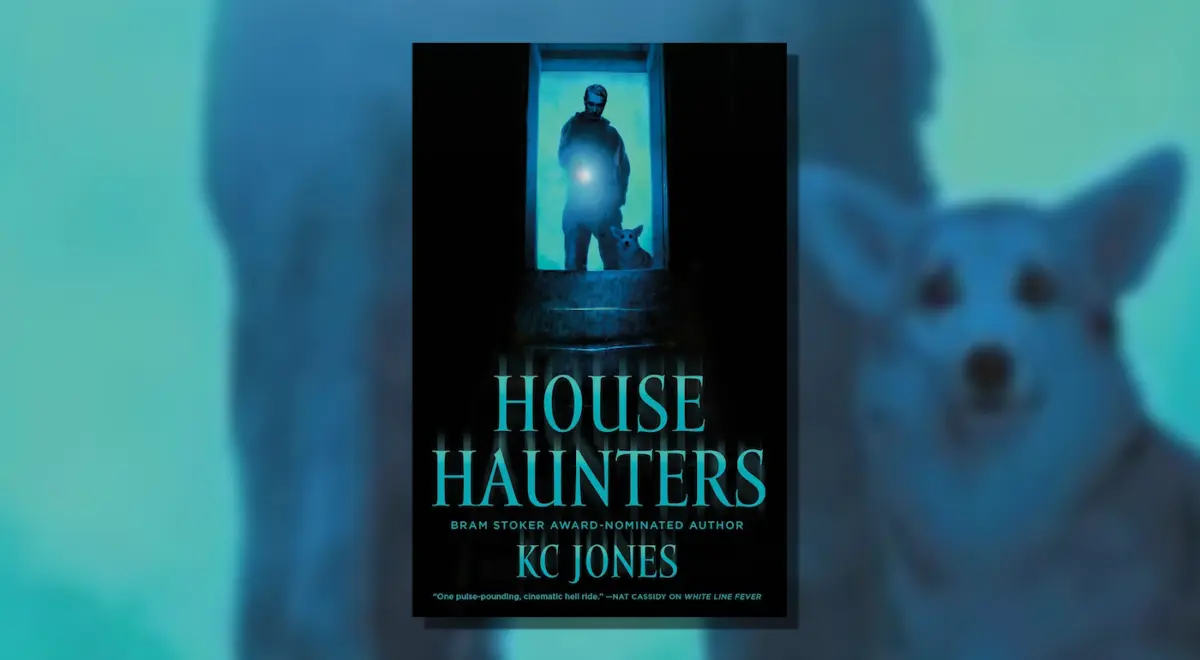
The intersection of modern corporate algorithmic oversight and ancient, unexplained terrors forms the chilling premise of House Haunters, the fast-paced upcoming horror novel by acclaimed author KC Jones. Set to publish under the Nightfire imprint on October 6, the novel arrives at a cultural crossroads where creative industries increasingly rely on artificial intelligence to dictate cultural value, greenlight projects, and streamline artistic output. Against this sterile, corporate backdrop, Jones crafts a deeply human story about desperation, career survival, and the unavoidable reality of the unknown.
At the heart of the narrative is Grace, a beleaguered studio executive whose professional survival hinges entirely on finding the next breakout television series. With her department relying on cold, calculated AI metrics to evaluate new pitches, Grace is pushed to her psychological breaking point. Her high-stakes gamble comes in the form of Frank Pendleton—a brilliant, abrasive, and strikingly unconventional ghost hunter. Pendleton possesses a rare, unsettling trait: he claims he cannot feel fear. This absolute lack of a standard autonomic terror response allegedly makes him uniquely attuned to paranormal phenomena, leaving observers to wonder whether he is an elaborate fraud or a genuine psychic conduit.
Driven by a desperate need for television gold, Grace assembles a production crew to shoot a high-stakes proof-of-concept pilot centered on Pendleton’s investigations. However, as the production team steps across the threshold of their latest haunted assignment, the boundary between contrived reality television and genuine nightmare dissolves entirely. The ensuing descent into the impossible confirms a terrifying reality: ghosts are real, and Frank Pendleton—with his cold, distant, and unemotional demeanor—may be the only thing standing between the crew and a gruesome demise. This exclusive feature explores the thematic depth, cultural relevance, and narrative mechanics of House Haunters, accompanied by a special extended literary excerpt.
Read Also
Detailed Chronology: The Anatomy of a Paranormal Pitch
The events of House Haunters unfold with a breathless, cinematic pacing that mirrors the high-pressure environment of contemporary television production. The narrative trajectory can be broken down into distinct phases of escalation, moving from corporate desperation to chilling physical realization.
Phase One: The Corporate Imperative
The story opens in the fluorescent-lit offices of a modern entertainment studio, where Grace faces imminent termination. In an era where creative intuition has been systematically replaced by AI greenlight matrices, Grace realizes that traditional pitches are dead on arrival. To save her career and maintain her fading sanity, she needs a concept that defies algorithmic prediction—something raw, unpredictable, and undeniably magnetic.
Phase Two: The Enigma of Frank Pendleton
Grace’s search leads her to Frank Pendleton, an investigator who operates entirely outside the polished, theatrical norms of modern ghost-hunting media. Aided by his steadfast corgi companion, Fish Stick—an animal uniquely trained to sniff out supernatural disturbances—Pendleton treats paranormal investigation less like a séance and more like a structural home inspection. His deadpan, clinical approach to spectral entities immediately catches Grace’s attention. Recognizing the potential for television gold, she negotiates to document his next case, hoping to capture a groundbreaking proof of concept.
Phase Three: Arrival at the Site
The narrative’s core tension crystallizes as Grace and Frank arrive at a newly purchased suburban home. The current occupants—a mother and her young son—have been terrorized by a series of inexplicable events, most notably forty-year-old double-paned windows sliding open entirely on their own. As Grace captures the exterior approach on her camera, the atmospheric chill of the evening sets the tone. The house itself exhales a stale mixture of mothballs, floral air fresheners, and damp building materials—a sensory reminder of the decay festering beneath the surface.
Phase Four: Crossing the Threshold
Standing at the front door, Frank refuses to indulge in theatrical posturing. Instead, he diagnoses the home’s mundane flaws—improper patio grading, poor insulation against impending freezes—before turning his attention to the alleged spirit residing within: "The Gray Lady." As Fish Stick signals her approval, confirming the absence of immediate mortal threats, Frank steps across the threshold into the unlit interior. By following Frank into the dark, Grace transitions from a detached executive orchestrating content to an active participant in a living nightmare, bound to a journey where ratings and career goals pale in comparison to simple survival.

Supporting Context & Metrics: The Cultural Landscape of Horror
To fully appreciate House Haunters, one must examine the broader cultural and literary trends informing KC Jones’s work. The novel operates on multiple satirical and thematic levels, critiquing both the modern entertainment landscape and our collective obsession with domestic spaces.
The Rise of Algorithmic Media Production
In the real world, the entertainment industry faces an ongoing debate regarding the integration of generative AI and automated decision-making tools in writers’ rooms and executive suites. Jones captures this anxieties through Grace’s desperate reliance on AI-driven greenlighting systems. By positioning the supernatural as something that algorithms cannot parse or monetize safely, the novel offers a clever meta-commentary: art, terror, and the human spirit cannot be reduced to data points.
The Evolution of the Paranormal Procedural
Ghost hunting as a subgenre has evolved dramatically over the last three decades, moving from late-night cable pseudo-documentaries to slick, highly polished streaming franchises. House Haunters subverts this television trope by introducing a protagonist who treats ghost hunting not as a spiritual quest, but as an engineering abatement. Frank Pendleton’s lack of fear strips away the melodrama typically associated with hauntings, framing hauntings as material defects of a property—akin to mold, asbestos, or faulty wiring. This deadpan normalization of the paranormal makes the eventual terror all the more jarring when the supernatural forces back.
| Narrative Element | Traditional Horror Trope | House Haunters Subversion |
|---|---|---|
| The Investigator | Charismatic, theatrical, easily frightened | Abrasive, clinically detached, incapable of fear |
| The Supernatural | Malevolent forces demanding epic exorcisms | Treated as structural defects and property management issues |
| The Catalyst | Personal curiosity or tragic backstory | Corporate desperation and AI-driven career survival |
| The Animal Companion | Typically absent or imperiled | Fish Stick the corgi, an active, professional detector |
Official Statements & Authorial Insight
While full promotional interviews for House Haunters roll out ahead of its October 6 release, early publisher statements from Nightfire highlight the novel’s unique blend of fast-paced horror, sharp workplace satire, and character-driven suspense.
Editors at Nightfire emphasize that KC Jones has carved out a distinct niche by blending high-concept speculative elements with deeply relatable human frustrations. "In House Haunters, KC Jones takes the mundane horrors of modern employment—job insecurity, corporate oversight, and burnout—and literalizes them by locking his characters in a house with genuine, uncompromised evil," notes the publishing house in early promotional briefs.
Furthermore, early reviewers have praised the dynamic between Grace and Frank, noting that their contrasting worldviews provide a strong emotional anchor amidst the escalating terror. While Grace views the situation through the lens of a producer seeking a marketable narrative arc, Frank approaches each haunted home with the pragmatic detachment of a blue-collar tradesman. This friction generates both sharp comedic beats and palpable tension as the environment around them grows increasingly hostile.
Future Outlook: What to Expect on October 6
As the publishing date for House Haunters approaches, anticipation within the horror community continues to build. The novel represents a significant milestone in KC Jones’s bibliography, promising readers a relentless blend of supernatural suspense and incisive cultural critique.
For fans of fast-paced, high-concept horror that challenges genre conventions while delivering visceral scares, House Haunters is poised to be one of the standout literary releases of the autumn season. Whether Grace manages to save her job, secure her television series, or simply escape the grasp of the Gray Lady remains to be seen when Nightfire releases the novel on October 6. Until then, readers are left to ponder a chilling question: if the person investigating the supernatural cannot feel fear, what happens when they finally encounter something that terrifies even them?



Comments
Facebook App ID not configured. Please add it in the Customizer.