
Executive Overview
Linear narrative operates on an implicit promise: that human experience can be neatly organized chronologically, bounded by cause and effect, and reconciled through sequential exposition. However, neurobiological and psychological research into extreme stress reveals that traumatic memory operates under fundamentally different laws. Trauma does not register as a smooth, continuous film; it arrives as jagged fragments, sensory flashes, somatic disruptions, and haunting omissions. When writers attempt to fit these destabilizing events into conventional storytelling frameworks, the narrative often fractures under the weight of an unnatural structure.
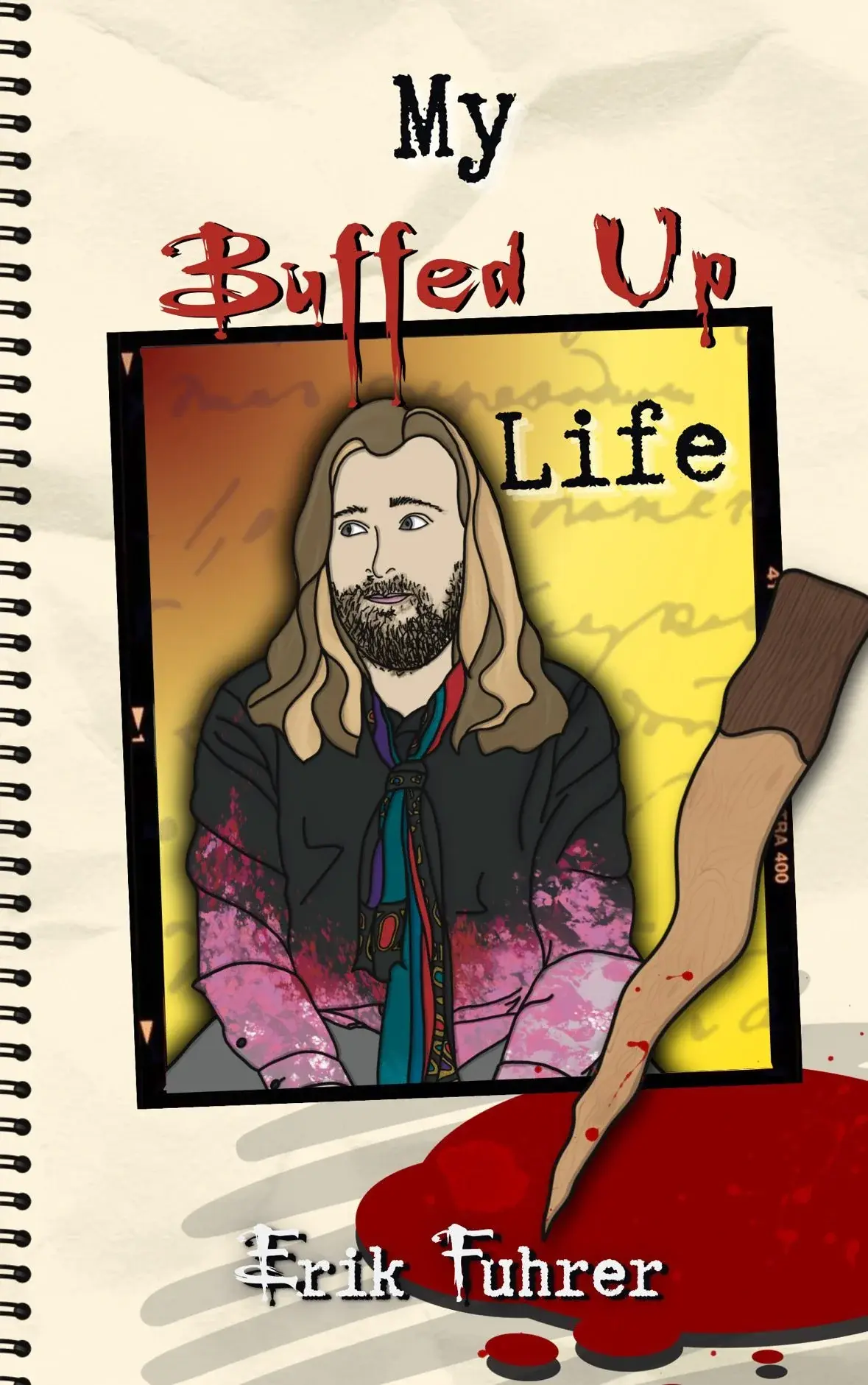
In response to these representational limits, a growing canon of contemporary writers is abandoning traditional narrative architecture in favor of experimental forms. As author and educator Erik Fuhrer demonstrates in their work and forthcoming memoir, My Buffed Up Life, experimental literature does not merely describe trauma—it physically enacts its disorienting mechanics upon the page. By employing structural fractures, erasure techniques, accordion bindings, pop-culture templates, and multi-genre hybrids, these texts create formal registers capable of housing physical, sensory, and historical disruptions.
This investigative analysis examines how groundbreaking writers—including Maxine Hong Kingston, Anne Carson, M. NourbeSe Philip, Carmen Maria Machado, Eileen Myles, Elissa Washuta, and Joyelle McSweeney—leverage formal experimentation to capture the unspeakable realities of psychological, systemic, and generational injury.
Read Also
Detailed Chronology of Form and Trauma in Contemporary Literature
The evolution of experimental trauma literature reveals a continuous push to expand the boundaries of life-writing. Over the past five decades, authors have increasingly rejected traditional narrative conventions, refining formal innovations to capture distinct facets of personal and collective grief.
       1976                     2008                   2010                  2014                   2017                   2019                   2020                  Present
   ┌──────────┐             ┌──────────┐           ┌──────────┐          ┌──────────┐           ┌──────────┐           ┌──────────┐           ┌──────────┐          ┌──────────┐
   │ Kingston │             │  Philip  │           │  Carson  │          │ Washuta  │           │  Myles   │           │ Machado  │           │McSweeney │          │  Fuhrer  │
   │  (Myth & │ ──────────> │ (Erasure │ ────────> │(Material │ ───────> │  (Hermit │ ────────> │ (Hybrid  │ ────────> │  (Genre  │ ────────> │  (Dual   │ ───────> │ (Multi-  │
   │ Silence) │             │ Archive) │           │ Accordion│          │  Crab)   │           │ Absurdity│           │ Tropes)  │           │ Collection│         │ Form)    │
   └──────────┘             └──────────┘           └──────────┘          └──────────┘           └──────────┘           └──────────┘           └──────────┘          └──────────┘
1976: The Mythic Reclamation of Silenced History
- Key Work: The Woman Warrior: Memoirs of a Girlhood Among Ghosts by Maxine Hong Kingston
- Formal Innovation: Mythic projection, oral history integration, and speculative biography.
- Impact: Kingston confronts generational trauma and familial erasure by filling narrative voids created by enforced silence. Subjected to her father’s silence regarding an aunt who died by suicide after bearing an illegitimate child, Kingston constructs multiple plausible biographies for her ancestor. Rather than offering a singular, verified truth, Kingston uses speculative myth-making to restore presence to a life deliberately erased from family history.
2008: Deconstructing Colonial Documents Through Erasure
- Key Work: Zong! by M. NourbeSe Philip
- Formal Innovation: Conceptual poetry, textual erasure, spatial scatter, and constrained language.
- Impact: Philip targets the legal text of Gregson v. Gilbert, a 1781 court case concerning the massacre of more than 150 enslaved Africans thrown overboard from the slave ship Zong so its owners could collect insurance payout. By physically fragmenting, erasing, and redistributing the words of the legal decision across the page, Philip strips the colonial text of its authority, allowing the muted voices of the victims to emerge from the linguistic ruins.
2010: The Materialization of Unfolding Grief
- Key Work: Nox by Anne Carson
- Formal Innovation: Accordion-bound scroll format, photographic collage, and lexical entry structures.
- Impact: Created as an elegy for her estranged brother, Carson’s work replicates a physical artifact housed in a grey box. The text unfolds as a single continuous accordion sheet, mirroring an ancient scroll. Combining dictionary definitions of Catullus’s Poem 101 with family photos, fragmented letters, and sketches, Carson’s physical design demonstrates that grief cannot be experienced all at once, requiring readers to physically unfold its spatiotemporal dimensions.
2014: The Hermit Crab Form as Psychological Container
- Key Work: My Body Is a Book of Rules by Elissa Washuta
- Formal Innovation: "Hermit crab" essays utilizing non-literary formats (medication lists, bibliographies, scripts).
- Impact: Washuta explores the intersecting pressures of sexual assault, bipolar disorder, and Indigenous identity by adopting functional, everyday textual formats. Experiencing traditional narrative structures as inadequate for processing trauma, she channels her experiences into a custom Law & Order television script, an annotated personal reading list, and psychiatric medication logs, using existing cultural forms to containerize destabilizing personal memories.
2017: Absurdist Hybridity and the Dynamics of Power
- Key Work: Afterglow by Eileen Myles
- Formal Innovation: Fictionalized memoir, puppet talk shows, and animal prosopopoeia.
- Impact: Myles processes the death of their pit bull, Rosie, through a blend of memoir, fantasy, and philosophical inquiry. By scripting fictional legal letters written on behalf of the deceased pet and imagining a Mister Rogers-inspired puppet show, Myles uses absurdity to investigate power imbalances, domestic codependency, and the guilt that shadows intimacy.
2019: Genre Tropes as Modular Architecture
- Key Work: In the Dream House by Carmen Maria Machado
- Formal Innovation: Micro-memoirs mapped onto narrative tropes, folklore classifications, and second-person address.
- Impact: Addressing the historical lack of documentation surrounding domestic abuse in queer relationships, Machado structures her memoir as a series of short vignettes. Each entry engages a different literary genre—ranging from Gothic horror and film noir to Choose Your Own Adventure games. Using second-person perspective ("you"), Machado forces the reader into the subject position, mirroring the disorientation and hypervigilance characteristic of toxic relationships.
2020: Dual-Collection Architecture and Somatic Poison
- Key Work: Toxicon and Arachne by Joyelle McSweeney
- Formal Innovation: Bifurcated poetry collection reflecting pre- and post-trauma states.
- Impact: Written before and immediately following the death of her newborn daughter, McSweeney’s twin collection contrasts the anticipatory terror of pregnancy (Toxicon) with stark, feral elegies (Arachne). The transition from elaborate linguistic webs to raw, uncompromising declarations exposes how deep grief breaks down poetic ornament into elemental pain.
Present: Multi-Form Assembly and Narrative Alchemy
- Key Work: My Buffed Up Life by Erik Fuhrer
- Formal Innovation: Integration of film scripts, spell-casting formulas, and void-directed epistolary forms.
- Impact: Fuhrer addresses complex trauma by abandoning linear prose in favor of multi-modal structural assembly. Recognizing that memories warzone and flicker unpredictably, Fuhrer deploys screenplays to visualize isolated scenes, spells to transform emotional weight, and letters addressed to fictional figures to establish dialogue across psychological voids.
Supporting Context & Metrics: Structural Methodologies and Psychological Refraction
To understand why experimental texts succeed where traditional narrative structures struggle, literary scholars and trauma theorists examine the precise structural mechanisms deployed by these authors.
┌────────────────────────────────────────────────────────────────────────┐
│                        MECHANICS OF FORMAL REFRACTION                  │
├──────────────────────────────┬─────────────────────────────────────────┤
│ FORMAL METHODOLOGY           │ PSYCHOLOGICAL / NEUROLOGICAL FUNCTION   │
├──────────────────────────────┼─────────────────────────────────────────┤
│ Hermit Crab Architecture     │ Creates emotional safety through distance│
│ Textual Erasure & Redaction  │ Exposes institutional violence & silence│
│ Material / Tactile Objects   │ Enacts spatial/physical grief           │
│ Multi-Genre Bifurcation      │ Mirrors dissociative & fractured states │
└──────────────────────────────┴─────────────────────────────────────────┘
1. Hermit Crab Architecture and Borrowed Containers
Coined by Brenda Miller and Suzanne Paola, the term "hermit crab essay" refers to a text that adopts an existing structural shell—such as a syllabus, recipe, real estate listing, or medical chart—to contain vulnerable material.
- Clinical Parallel: Under high stress, the brain’s Broca’s area (responsible for speech production) often exhibits reduced activity, making direct articulation difficult.
- Structural Solution: By adopting an external form, authors like Elissa Washuta establish a pre-built logical system. Utilizing a Law & Order script template, for example, allows the author to externalize memories of assault through the clinical lens of cross-examination, protecting the narrator while laying bare the cold scrutiny faced by survivors.
2. Erasure and Textual Redaction
Erasure literature systematically removes text from pre-existing documents to reveal alternate meanings concealed beneath the surface prose.
[ ORIGINAL LEGAL / INSTITUTIONAL DOCUMENT ]
  ├── Systematic Redaction / Erasure
└── [ RESIDUAL POETIC VOICES / SUBORDINATED TRUTHS ]- Historical Mechanics: In Zong!, M. NourbeSe Philip restricts her vocabulary exclusively to the words found in the two-page legal ruling of Gregson v. Gilbert.
- Refraction Metric: By fracturing sentences, separating syllables across white space, and forcing the text to falter on the page, Philip creates a visual and auditory environment that mimics breathlessness and drowning. The spatial layout reflects the historical reality that colonial archives documented property values while ignoring human loss.
3. Spatial and Material Realization
When narrative text escapes the boundaries of traditional codex formatting, reading becomes an active physical engagement.
- Dimensionality in Nox: Anne Carson’s decision to publish Nox as a continuous accordion fold fundamentally alters the reading experience.
- Spatial Metric:
$$textReading Time propto textSpatial Unfolding of Physical Artifact$$
Because the text cannot be read through conventional page-turning, the physical act of unrolling the document mirrors the lingering, cumbersome weight of processing an estranged family member’s death.
Critical Commentary and Analytical Perspectives
Literary critics and authors alike stress that structural experimentation is driven by necessity, serving as an authentic reflection of fractured psychological states.

In discussing the formal fragmentation of their memoir My Buffed Up Life, Erik Fuhrer explains the limitations of linear storytelling when processing severe trauma:
"Trauma does not recollect to us whole. Memory is already a ghost of our experience, haunting us from inside our minds and bodies. Put 10 people in a room with a blackbird for an hour and you’ll get at least 13 different descriptions… My own narratives of trauma alchemized in nests of light and shadow… Approached linearly, these narratives always failed, because they did not organize neatly in my mind; they warzoned and blinked."
Regarding the necessity of adopting dynamic narrative perspectives, Carmen Maria Machado writes in In the Dream House about the historical absence of queer domestic abuse narratives:
"I collapse information about her into tropes, because tropes are recognizable forms that help us process complex reality… The Dream House is a structure built on shifting sand. If I speak to you in the second person, it is because I need you inside the room with me; I need an agent to verify that the walls were real."
Analyzing the historical power of textual redaction, poet M. NourbeSe Philip reflects on her work in Zong!:
"There is no tellable story of the Zong massacre except through the untelling of the document that recorded it. The legal text is full of silences, and my task was to murder that text, to break its bones, so that the voices locked within its authority could finally breathe."
Future Outlook: The Trajectory of Non-Linear Narrative Design
As life-writing continues to evolve, experimental literature addressing trauma is moving beyond traditional print boundaries, influencing narrative design across multiple creative disciplines.
┌─────────────────────────────────────────────────────────────────┐
│              FUTURE DIRECTIONS IN EXPERIMENTAL FORM             │
├─────────────────────────────────────────────────────────────────┤
│  1. Multimodal Digital Interfaces (Hypertext / Interactive AR)  │
│  2. Somatic and Archive-Driven Auto-Ethnographies                │
│  3. Non-Linear Polyphonic Memoirs & Collaborative Forms         │
└─────────────────────────────────────────────────────────────────┘
1. Multimodal and Digital Integration
Future works are increasingly expanding beyond physical books. Authors are incorporating digital hypertexts, interactive augmented reality (AR), audio soundscapes, and visual archives directly into literary structures. These multi-sensory formats allow writers to replicate trauma’s sensory overwhelm and fragmented timelines with even greater precision.
2. Deepening of "Hermit Crab" and Hybrid Methodologies
As culture becomes increasingly mediated by digital interfaces, algorithms, and administrative databases, writers are leveraging new bureaucratic forms—such as data privacy logs, search engine histories, AI prompt records, and digital chat logs—to chart personal crisis. These modern shells offer contemporary vehicles for exploring alienation and trauma in the digital age.
3. Expansion in Trauma Pedagogy
Creative writing and literature programs are increasingly adopting non-linear, experimental texts as primary instructional tools. By moving away from rigid, chronological storytelling models, educators are giving writers the tools to structure difficult experiences on their own terms. This pedagogical shift validates narrative fragmentation not as a flaw, but as an authentic expression of human memory.
Summary
Experimental trauma literature demonstrates that when content resists conventional expression, form must adapt to accommodate it. By turning structural fragmentation into a powerful narrative strategy, these authors give shape to complex emotional landscapes, providing readers with a profound, authentic reflection of human endurance.



Comments
Facebook App ID not configured. Please add it in the Customizer.