
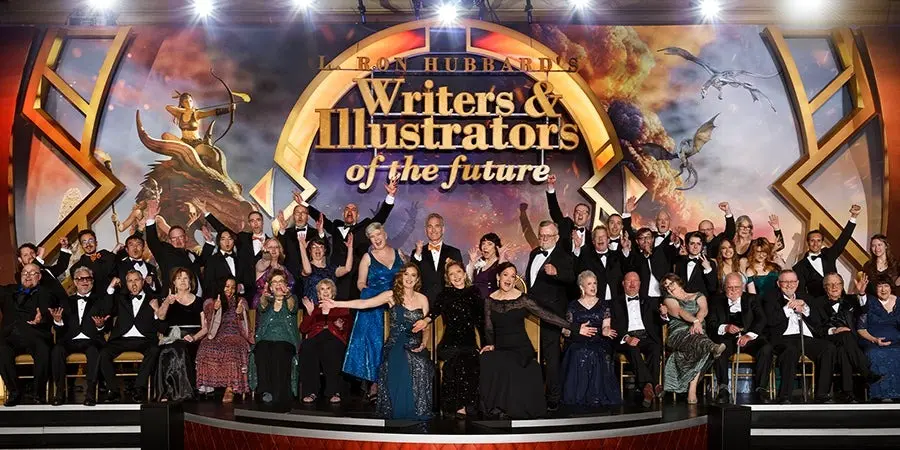
Launching Into the Unknown: Inside the 43-Year Legacy and Global Impact of the Writers of the Future Contest
Executive Overview
In the literary world, the transition from an aspiring wordsmith to a published, commercially viable author is notoriously difficult. For decades, traditional gatekeepers, shifting market trends, and the sheer saturation of the publishing landscape have conspired to keep fresh, imaginative voices on the sidelines. Yet, for over four decades, a singular institution has served as a beacon for speculative fiction writers worldwide: the Writers of the Future Contest.
Established in 1983 by acclaimed visionary and author L. Ron Hubbard, the contest was conceived with a singular, democratizing mission: to provide an equitable, merit-based platform for new and aspiring writers of science fiction and fantasy to have their work seen, heard, and celebrated. Now entering its milestone 43rd year, the initiative has evolved far beyond a simple writing competition. It has cemented its status as one of the most prestigious, career-launching launchpads in the speculative fiction genre.
Boasting a staggering alumni network that includes 16 New York Times bestsellers and numerous award-winning authors across multiple genres, Writers of the Future continues to set the gold standard for literary mentorship. With the fast-approaching September 30 deadline for Volume 43 drawing near, the global writing community once again turns its eyes toward a competition that has continually changed lives, broken down industry barriers, and birthed some of the most enduring imaginations of our time.
Read Also
This comprehensive report examines the history, mechanics, judicative heavyweight roster, and future outlook of a contest that proves, year after year, that new talent is the lifeblood of speculative literature.
Detailed Chronology: From a 1983 Vision to a Global Literary Institution
The Genesis (1983)
By the early 1980s, the science fiction and fantasy genres were experiencing a renaissance, yet new writers faced immense hurdles in breaking into print. Recognizing the profound lack of structured opportunities for undiscovered talent, L. Ron Hubbard founded the Writers of the Future Contest in 1983. Hubbard, a prolific and influential figure in speculative fiction, wanted to create a platform that mirrored the kind of encouragement he wished he had encountered at the start of his own professional journey.
Unlike many contests of the era that existed merely to collect entry fees or publish vanity anthologies, Writers of the Future was designed from day one to be entirely free to enter, with professional rates paid for winning stories. The philosophy was simple: discover raw talent, validate it through professional publication, and surround winning authors with industry veterans who could guide their early steps.
Expansion and Institutionalization (1990s–2000s)
As the decades progressed, the contest scaled alongside the booming popularity of sci-fi and fantasy. What began as a domestic initiative rapidly expanded into an international phenomenon, drawing submissions from every corner of the globe.
During this era, the contest formalized its annual anthology release—L. Ron Hubbard Presents Writers of the Future—giving winning stories a permanent home in print and digital formats. Concurrently, the operational structure expanded to include a companion contest for illustrators (Illustrators of the Future), creating a symbiotic creative ecosystem where newly minted writers were paired with rising visual artists to bring their worlds to life.
The Modern Era and Digital Transformation (2010s–Present)
Entering its fourth decade, the contest adapted seamlessly to the digital publishing revolution. While physical anthologies remained a cornerstone of the brand, online submission portals and global digital outreach allowed the organization to tap into previously inaccessible literary communities.
Today, in its 43rd year, the Contest stands as a massive international enterprise. It has launched the careers of hundreds of professional authors—many of whom have gone on to win Hugo, Nebula, and World Fantasy Awards—proving the enduring validity of Hubbard’s foundational vision.
Supporting Context & Metrics: The Anatomy of a Literary Powerhouse
To understand the magnitude of the Writers of the Future Contest, one must look at the data and the sheer scale of its operations. Over the course of 43 years, the metrics tell a compelling story of consistency, prestige, and tangible career acceleration.
- 16 New York Times Bestsellers: A testament to the commercial viability and high editorial caliber of the contest’s alumni. Winning the contest is frequently the first major stepping stone on a path to mainstream commercial success.
- Genre Versatility: While entries must be science fiction or fantasy—the core pillars of speculative fiction—the foundational storytelling craft learned and rewarded in the contest translates seamlessly across industries. Numerous alumni have forged acclaimed, award-winning careers in historical fiction, thrillers, mainstream drama, and non-fiction.
- Zero Financial Barrier: Maintaining its founding ethos, the contest is entirely free to enter, ensuring that socioeconomic status never bars a talented storyteller from having their work evaluated purely on its merits.
- Global Reach: Entrants hail from dozens of countries across multiple continents, making the annual anthology a truly global tapestry of imaginative thought.
The Judging Panel: A Pantheon of Speculative Fiction Royalty
What truly separates Writers of the Future from other literary competitions is the active involvement of its judges. Rather than relying on anonymous readers or junior editors, entrants have their work evaluated by some of the most successful, critically acclaimed authors in the history of science fiction and fantasy.
The current roster reads like a literal "Hall of Fame" of modern speculative literature:
- Kevin J. Anderson (Dune prequels & sequels, The Saga of Seven Suns)
- Orson Scott Card (Hugo and Nebula Award-winning author of Ender’s Game)
- Brian Herbert (Dune prequels & sequels, co-architect of the expanded Dune universe)
- Nina Kiriki Hoffman (Award-winning author of A Fistful of Sky)
- Hugh Howey (Indie publishing phenomenon and author of the Silo series)
- Nancy Kress (Multiple Hugo and Nebula Award winner, author of Beggars in Spain)
- Katherine Kurtz (Creator of the seminal historical fantasy Deryni series)
- Mark Leslie Lefebvre (Prolific writer and creator of the Canadian Werewolf series)
- Todd McCaffrey (Dragon’s Kin & dragonrider universe—co-authored with his mother, Anne McCaffrey)
- Rebecca Moesta (Star Wars: Young Jedi Knights, Crystal Doors series)
- Larry Niven (Legendary Grand Master of Science Fiction, author of Ringworld)
- Jody Lynn Nye (Renowned fantasy author of The Dreamland and numerous collaborative works)
- Nnedi Okorafor (World Fantasy and Hugo Award winner, author of Death of the Author, Binti, and Who Fears Death)
- Tim Powers (World Fantasy Award winner, author of On Stranger Tides—the acclaimed novel that served as the basis for the Pirates of the Caribbean film)
- Kristine Kathryn Rusch (Hugo Award-winning editor and author of Millennium Babies)
- Brandon Sanderson (Modern fantasy titan, creator of the Mistborn series and the Cosmere universe)
- Robert J. Sawyer (Hugo and Nebula Award-winning Canadian sci-fi master, author of FlashForward)
- Dean Wesley Smith (Prolific tie-in and original fiction writer, including Star Trek: The Next Generation — The Soldiers of Fear)
- SM Stirling (New York Times bestselling creator of the post-apocalyptic Emberverse series)
- Sean Williams (New York Times bestselling author of Star Wars: The Force Unleashed and the Troubletwisters series)
This unprecedented gathering of literary minds ensures that winning the contest is not merely a pat on the back, but a profound validation from the masters of the craft themselves.
Official Statements and Industry Perspective
The impact of the contest on individual lives and the broader publishing ecosystem is best articulated by those who have walked the path. Over the decades, judges and alumni alike have consistently praised the contest for its unwavering commitment to artistic integrity.
"The Writers of the Future Contest does something vital for our industry: it looks past the noise, ignores the marketing hype, and finds pure, unadulterated storytelling talent. For a new writer, hearing that your work has been read and approved by masters of the genre changes everything. It gives you the courage to keep writing."
— Anonymous Industry Analyst & Speculative Fiction Historian
Alumni who entered the contest as obscure amateurs and emerged as bestselling authors frequently point to the mentorship workshops and peer networks formed during the annual winner’s event as the defining turning points of their professional lives.
Furthermore, the longevity of the contest highlights a shifting paradigm in publishing: the democratization of discovery. In an era where traditional publishing houses are increasingly risk-averse, relying heavily on established franchises and celebrity memoirs, institutional incubators like Writers of the Future play an indispensable role in surfacing the next generation of creative voices.
Future Outlook: The Road to Volume 43 and Beyond
As the literary world accelerates into an uncertain technological and cultural landscape—marked by shifting media consumption habits and the rise of artificial intelligence in creative spaces—the value of authentic, human imagination has never been higher.
The Writers of the Future Contest stands as a bulwark for human-generated storytelling. By continuing to provide a free, merit-based gateway for undiscovered authors, the institution ensures that the future of science fiction and fantasy will remain diverse, vibrant, and driven by passionate human storytellers.
Actionable Information: Enter Now Before the Deadline
For aspiring writers sitting on a completed manuscript or a polished short story, the clock is ticking.
- Deadline: September 30
- Target: Volume 43 of the internationally acclaimed anthology series.
- Cost: Completely FREE to enter.
- Requirements: An original science fiction or fantasy short story or novelette.
As the old adage in publishing goes: You have nothing to lose and a career to gain. Whether you are writing hard science fiction, epic high fantasy, urban magical realism, or dystopian space opera, your story deserves to be read by the best in the business.
Don’t let your manuscript languish in a digital drawer. Visit the official Writers of the Future portal, review the submission guidelines, and take your shot at literary history before the September 30 deadline closes the door on Volume 43. The next New York Times bestseller could be you.


Comments
Facebook App ID not configured. Please add it in the Customizer.