
Executive Overview
The modern global fertility industry is a multi-billion-dollar enterprise operating in a legal and ethical gray area, where the boundaries between medical necessity, commercial exploitation, and bodily autonomy continually blur. In her upcoming nonfiction book, Cash Cow (slated for publication by HarperCollins in October 2026), acclaimed journalist and author Alev Scott sets out to untangle this complex web. Represented by Antony Topping of Greene & Heaton in London, Scott delivers a piercing, deeply personal investigation into the dark side of the reproductive market—examining the commodification of the female body through the lenses of the global surrogacy trade, egg donation, and the surprisingly vast commercial market for human breast milk.
Scott is no stranger to high-stakes, investigative journalism. With a background in Classics and a diverse career writing for major British publications including The Times, The Sunday Times, and The Guardian, her literary voice has long been shaped by geopolitical and cultural inquiry. Her previous works—Turkish Awakening, Ottoman Odyssey, and Power and the People—established her as a fearless chronicler of societal shifts, a reputation further cemented when she was barred from Turkey in 2017 due to her reporting. Having lived and worked across Athens, Amsterdam, London, and Istanbul, Scott brings a truly global perspective to Cash Cow.
However, her latest project was born not from a foreign dispatch, but from the profoundly intimate experience of early motherhood. What began as a local act of charity transformed into a multi-year, cross-border investigation into how global capitalism capitalizes on reproduction. In this comprehensive feature, we examine the genesis of Cash Cow, the arduous four-year writing process, the shifting legal landscapes of global fertility, and Scott’s ultimate mission: to challenge public preconceptions about bodily autonomy and the true cost of modern family-building.
Read Also
Detailed Chronology: From NICU Donation to Global Investigation
The origins of Cash Cow trace back to a hospital room shortly after the birth of Scott’s first child. Like many new mothers navigating the overwhelming transition into parenthood, Scott sought a meaningful way to utilize her body’s natural resources to help others. She chose to donate her excess breast milk to a local hospital’s neonatal intensive care unit (NICU), providing vital nutrition to vulnerable infants whose mothers could not nurse.
Yet, this altruistic act opened a window into a hidden underworld. While researching the mechanics of milk banking, Scott stumbled upon a thriving, unregulated online commercial market for human breast milk. Intrigued and unsettled by the digital trade of bodily fluids, she took a page out of the investigative journalist’s playbook: she posed online as a seller of breast milk to map out how the market operated, who bought the product, and what safety or ethical protocols were being bypassed.
What started as a localized curiosity quickly snowballed. Recognizing that the commercialization of breast milk was merely a symptom of a much larger, systemic issue, Scott expanded her scope. Over the next four years, the project evolved from a series of targeted medical articles into a sweeping, mass-market investigative book encompassing the entire spectrum of the maternal body.
The production of Cash Cow was uniquely intertwined with Scott’s own life cycle. Spanning a four-year timeline, the writing process required rigorous international travel, extensive interviews with industry insiders, surrogate mothers, intended parents, medical ethicists, and legal experts. Simultaneously, Scott navigated profound personal milestones: she experienced two pregnancies and one pregnancy loss while drafting the manuscript. This convergence of personal vulnerability and clinical investigation infused the book with a rare emotional resonance, grounding macro-economic critiques in the visceral reality of lived female experience.
Supporting Context & Metrics: The Expanding Global Fertility Industry
To understand the urgency of Scott’s investigation, one must look at the macro-economic and demographic trends fueling the modern fertility market. Globally, birth rates are declining in developed nations while rates of infertility are rising, driven by environmental factors, delayed childbearing, and shifting socioeconomic conditions. Simultaneously, the global In-Vitro Fertilization (IVF) market has experienced exponential growth, projected to reach tens of billions of dollars over the coming decade.
This surging demand for assisted reproductive technologies (ART) has created a lucrative gray market. The commodification of reproduction no longer stops at clinical fertility treatments; it extends deep into the supply chain of human biological material:
- The Egg and Sperm Markets: Cross-border reproductive travel is increasingly common, with intended parents flying to jurisdictions with looser regulations or lower costs to secure donor eggs and sperm.
- The Global Surrogacy Trade: Surrogacy remains a legal patchwork globally. While commercial surrogacy is tightly regulated or outright banned in many European nations, it persists as a multi-billion-dollar industry in parts of Asia, Latin America, and select U.S. states, raising acute ethical concerns regarding the exploitation of economically disadvantaged women.
- The Human Milk Trade: As Scott discovered, the digital age has democratized the trade of bodily fluids, allowing unregulated peer-to-peer sales of breast milk that bypass the stringent health screenings of institutional milk banks, introducing potential health risks alongside commercial exploitation.
Scott notes that keeping pace with these developments was one of the most demanding aspects of the writing process. Because reproductive law is still actively evolving across different jurisdictions, the legal ground beneath the global fertility industry is constantly shifting, making the need for timely, critical journalism more pressing than ever.
Official Statements & Insights from the Author
In an exclusive look behind the scenes of her publishing journey, Alev Scott reflects on the unexpected turns she encountered while bringing Cash Cow to fruition—both in the drafting process and through the editorial pipeline at HarperCollins.
Navigating the Editorial Transition
The publishing process itself provided a unique learning moment for the seasoned author. Just as Scott submitted her first complete manuscript draft, her female editor transitioned out of her role, and the book was reassigned to a male editor.
Far from disrupting the process, Scott found this editorial handoff to be profoundly beneficial. Inviting a male perspective onto a manuscript so intimately tied to female biology and maternal labor provided a fresh, objective lens. It reinforced Scott’s core belief that the topics covered in Cash Cow are not merely "women’s issues," but fundamental human issues that require universal engagement.
Working Through Personal Milestones
The timing of the book’s release added a layer of poetic intensity to Scott’s promotional obligations. She gave birth to her subsequent child just two weeks after Cash Cow was published in the UK. Consequently, Scott found herself conducting media interviews, appearing on panels, and attending publicity events while heavily pregnant—living proof of the book’s central themes of maternal labor, bodily autonomy, and public visibility.
Challenging Preconceptions
Reflecting on her research interviews, Scott admits that many of her own initial assumptions were upended—particularly regarding the ethics and realities of the global surrogacy market.
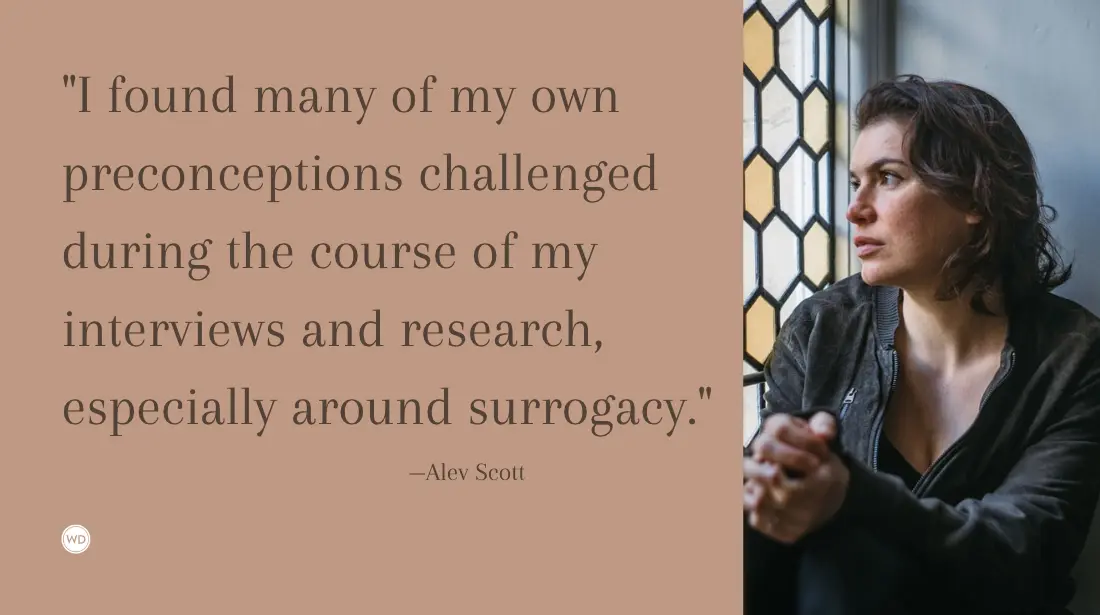
"I found many of my own preconceptions challenged during the course of my interviews and research, especially around surrogacy," Scott notes.
This realization forms the bedrock of what she hopes readers will take away from the text. Rather than offering simplistic moral judgments, Cash Cow invites readers into the messy, complicated realities of modern reproduction, forcing them to confront the uncomfortable intersections of capitalism, ethics, and human life.
Future Outlook: A Call for Open Dialogue on Bodily Autonomy
As Cash Cow prepares for its North American and broader international release through HarperCollins in October 2026, the book arrives at a critical cultural juncture. Conversations surrounding reproductive rights, bodily autonomy, and the ethics of healthcare are at the forefront of global discourse. Yet, the commercial mechanics of how children are conceived, birthed, and nourished remain largely shrouded in silence.
Scott’s overarching objective for Cash Cow transcends mere exposure; she aims to foster a genuinely inclusive public dialogue. She emphasizes the importance of appealing to a diverse readership:
"I would also like their preconceptions to be challenged, and I do hope both men and women read it because it covers so many topics—bodily autonomy, reproductive rights, how people choose to have children, empowerment and exploitation—all these things that are tied up in the global fertility industry that are not discussed enough."
By laying bare the financial machinery operating behind the miracle of modern birth, Cash Cow challenges us to reconsider the true value of human life and the ethics of putting a price tag on the maternal body. As reproductive technologies continue to advance faster than our legal and ethical frameworks can adapt, Alev Scott’s rigorous investigation serves as both an urgent warning and an essential guide for navigating the future of family-building in the twenty-first century.





Comments
Facebook App ID not configured. Please add it in the Customizer.