
Executive Overview
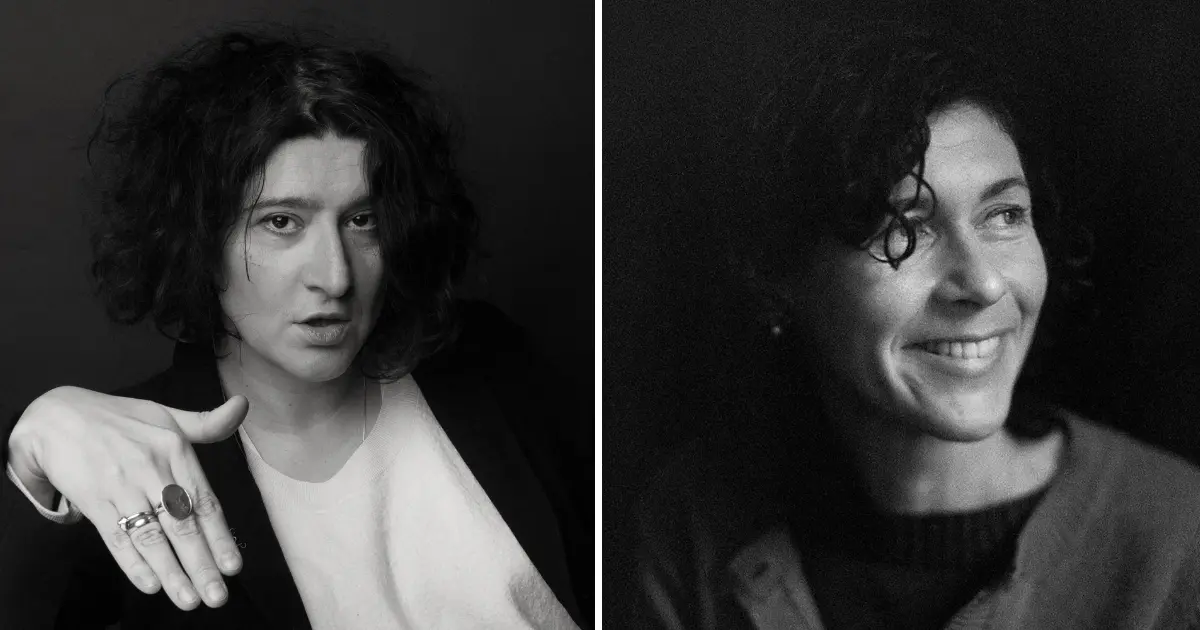
In the realm of contemporary world literature, few collaborations possess the intellectual rigor and stylistic synergy shared by acclaimed Russian author Maria Stepanova and her translator, British poet and writer Sasha Dugdale. Their ongoing creative partnership has continually pushed the boundaries of genre, memory, and language. At the center of this literary ecosystem is a profound commitment to capturing the nuances of displacement, historical trauma, and philosophical inquiry.
Stepanova, a towering figure in modern letters—celebrated internationally for her monumental novel In Memory of Memory, which earned widespread critical acclaim and an International Booker Prize shortlist—operates at the intersection of poetry, essay, and narrative prose. When her work crosses the linguistic threshold into English, it does so through the meticulous, deeply empathetic craftsmanship of Sasha Dugdale.
This deep-dive feature explores the anatomy of their collaborative process, examining how a canceled train ride and an unfamiliar afternoon in a foreign city sparked the genesis of Stepanova’s latest work. It dissects the intricate translation challenges inherent in merging essayistic precision with realist narrative momentum, and traces how historical devastation imprints itself onto vocabulary. Rich with literary theory, personal anecdotes, and shared metaphors—ranging from the surrealist dreamscapes of painter Leonora Carrington to the archetypal journey of the Tarot’s Fool—this article offers an authoritative examination of how a book comes into the world in one language, only to be entirely reborn in another.
Read Also
Detailed Chronology: From the Germ of an Idea to the English Page
To understand how a work of literature transitions from a fleeting psychological impression to a bound volume in a foreign tongue, one must trace its evolution from the initial spark of inspiration to the final, polished translation.
Phase 1: The Incubation and the "Germ"
The genesis of Stepanova’s latest creation bypasses the grand, sweeping historical gestures that often characterize her wider oeuvre, originating instead from a place of quiet dislocation. Literary history is filled with famous accounts of the creative "germ"—a term popularized by mystery writer Patricia Highsmith, who famously described visual catalysts like a young man walking alone under the blazing Italian sun as the seed of her Ripley series.
For Stepanova, the catalyst was far more mundane yet intensely atmospheric: a canceled train and an extended, unplanned afternoon stranded in an unfamiliar, unknown city. Standing amidst foreign streets, she was struck by a singular, lingering existential question: Could I stay here forever?
Rather than sitting down to meticulously outline a plot, Stepanova bypassed conscious deliberation. The writing process mirrored the ephemeral nature of human consciousness. As she describes it, starting the book felt akin to recording a fading dream upon waking, racing against time to capture the imagery before the morning light dissolves the memory. It was an act of preservation born from stillness and sudden displacement.
Phase 2: Discovery and Initial Absorption
Once the manuscript reached its complete form in Russian, it crossed the desk of Sasha Dugdale. Unlike editorial relationships where the translator only interacts with fragments or struggles through unfinished drafts, Dugdale encountered the work in its entirety. Her immediate reaction was one of visceral connection: she read the completed manuscript and fell in love with it instantly. This immediate aesthetic and emotional alignment laid a rock-solid foundation for the rigorous, painstaking months of translation that followed.
Phase 3: The Translation Crucible
Translating Stepanova is never a straightforward linguistic substitution. It requires entering a complex literary machinery where intellectual rigor meets lyrical fluidity. Dugdale’s task was to bridge two distinct literary traditions while preserving the unique pulse of Stepanova’s voice—a voice that simultaneously functions as an analytical essayist, a lyrical poet, and a contemporary chronicler of human experience. Through an ongoing, years-long dialogue between author and translator, the English text slowly materialized, balancing philosophical precision with narrative drive.
Supporting Context & Metrics: The Architecture of Translation Challenges
Translating a work that bridges the gap between deep philosophical inquiry and narrative fiction presents extraordinary technical hurdles. Below, we examine the structural, historical, and linguistic metrics that defined the English translation of Stepanova’s work.
Balancing Essayistic Precision and Realist Narrative
One of the primary challenges Dugdale faced was maintaining the dual nature of Stepanova’s prose. Stepanova writes with the intellectual and philosophical rigor characteristic of the essay form, yet anchors her books in a lively, approximately realist narrative.
[Stepanova's Russian Text]
       │
       ├──> Intellectual & Philosophical Precision (Essayist)
       └──> Lively, Realist Narrative (Novel)
       │
       ▼ [Dugdale's Translation Strategy]
[English Target Text]
       ├──> Pursuit of "le mot juste" (Poetic Precision)
       └──> Maintenance of Forward Narrative Momentum
To preserve this delicate ecosystem, Dugdale had to function simultaneously as a philosopher, a novelist, and a poet. She noted that Stepanova employs language with the hyper-awareness of a poet, treating every sentence as an architectural unit where sound, rhythm, and meaning are inextricably linked. This demanded an unyielding search for le mot juste—the precise, irreplaceable word—in English, while ensuring the narrative never bogged down under the weight of its own intellectual ambition.
Navigating Historical Trauma in Vocabulary
Language is not a neutral vessel; it is constantly shaped, scarred, and transformed by historical events. A critical linguistic challenge arose when Stepanova utilized specific Russian words whose cultural and historical meanings had been profoundly altered, or "besmirched," by recent history and ongoing war.
A direct, literal translation of these terms would have failed to carry the appropriate emotional weight for an English-speaking audience, because the historical traumas embedded in the Russian lexicon do not map neatly onto standard English equivalents.
Instead of searching for semantic matches, Dugdale looked for functional equivalents: English words that bore the same psychological and historical scars. A prime example of this strategy is her selection of the word "collateral." For Dugdale, this term is permanently stained and colored by its modern, grim association with the military-bureaucratic euphemism "collateral damage." By deploying words carrying similar historical baggage, Dugdale successfully recreated the sense of linguistic contamination and trauma present in the original Russian text.
Official Statements and Insights: In Their Own Words
The collaborative dynamic between author and translator is rarely a solitary endeavor; at its best, it is an extension of a continuous, living dialogue.
The Nature of Authorial Involvement
When asked about Stepanova’s involvement in the translation process, Dugdale rejects the idea of a distant author handing off a manuscript and walking away. Instead, she characterizes the novel as a natural continuation of an ongoing, years-long conversation between the two women.
While Dugdale admits there were numerous instances where she reached out to Stepanova for clarification on a complex thought, a buried cultural reference, or an intricate sentence structure, these individual queries were merely micro-adjustments within a larger, macro-level understanding. This overarching dialogue serves as the philosophical compass guiding Dugdale’s approach to all of Stepanova’s texts. The translation is thus authorized not merely by a contract, but by a deep, mutual intellectual kinship.
Visual Metaphors: Leonora Carrington and the Tarot
To capture the essence of the book beyond strict linguistic definitions, both author and translator turn to striking visual and artistic metaphors.
- Sasha Dugdale’s Metaphor: Dugdale compares the aesthetic texture of the prose to the visionary, surrealist paintings of British-born Mexican artist Leonora Carrington. She points to the beautiful, dreamlike, almost shimmering color of the prose, which is seamlessly coupled with profound intellectual depth and overt references to the Tarot.
- Maria Stepanova’s Metaphor: Embracing and expanding upon this visual framework, Stepanova zeroes in on a specific image drawn directly from the Tarot descriptions within her book: The Fool, marching blithely into the unknown with a faithful dog nipping at his heels. Upon discovering that Leonora Carrington had herself painted an entire Tarot deck—an artistic treasure that Dugdale enthusiastically shared with her—Stepanova found the ultimate metaphor for the book’s thematic journey into uncertainty, wandering, and discovery.
Future Outlook: The Legacy of Stepanova and Dugdale
The enduring impact of Stepanova’s work, amplified by Dugdale’s masterful translations, points toward a vibrant future for translated literature in the English-speaking world. As global geopolitics continue to fracture communities and disrupt historical narratives, literature that interrogates the nature of memory, loss, and language becomes increasingly vital.
Stepanova’s decorated career—spanning ten poetry collections, major essay volumes, and international accolades including PEN Translates awards, the Big Book Award, and shortlists for the International Booker Prize, the Warwick Prize for Women in Translation, and the James Tait Black Prize—cements her status as a monumental voice of our time. Simultaneously, Dugdale’s celebrated contributions as both an original poet and a master translator of Russian literature—from modern prose to historical icons like Marina Tsvetaeva and Elena Shvarts, alongside her extensive theatrical translation work for the Royal Court Theatre and the Royal Shakespeare Company—redefine the standard for cross-cultural literary exchange.
As this creative duo continues their ongoing conversation across languages, readers can anticipate future works that challenge intellectual complacency, honor historical consciousness, and prove that even when language is scarred by history, it can be brilliantly, painstakingly restored in translation.





Comments
Facebook App ID not configured. Please add it in the Customizer.