
In the contemporary literary landscape, the intersection of digital community engagement and traditional poetic forms continues to evolve in unexpected ways. This week marks a significant milestone for online creative writing platforms as Writer’s Digest unveiled its latest weekly poetry prompt, centering on the multifaceted theme of "departures." Spearheaded by Robert Lee Brewer, the publication’s senior editor and resident poetry expert, the initiative challenges writers to transcend conventional interpretations of physical travel, venturing instead into the psychological, digital, and existential realms of leaving.
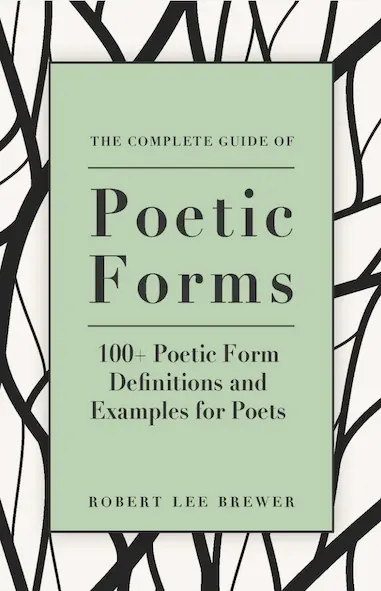
Departures have historically defined the transient spaces of human experience—airports, train stations, and bus terminals—yet this week’s prompt broadens that definition considerably. By inviting participants to explore mental disengagement, digital escapism through media and literature, and metaphorical exits from daily stressors, the prompt serves as a catalyst for profound creative exploration. At the same time, this literary exercise is paired with a broader pedagogical mission: the ongoing demystification of poetic structures through Brewer’s comprehensive instructional compendium, The Complete Guide to Poetic Forms.
This report provides an in-depth examination of this week’s creative challenge, dissecting the thematic depth of departures, the mechanics of community-driven writing prompts, and the foundational role that classic and contemporary poetic structures play in shaping modern verse. Through an authoritative lens, we explore how digital literary spaces foster artistic growth, the technical requirements for community participation, and the enduring relevance of poetic form in an era dominated by rapid, fragmented communication.
Read Also
Detailed Chronology of the Initiative
The rollout of weekly writing prompts by literary institutions follows a carefully calibrated rhythm designed to maximize audience engagement, sustain creative momentum, and build a cohesive community archive. Understanding the mechanics of this week’s prompt requires tracing its development from conceptualization to publication and community reception.
Phase 1: Conceptualization and Thematic Selection
Weeks prior to publication, the editorial team at Writer’s Digest evaluates overarching themes that resonate with both contemporary cultural experiences and timeless literary traditions. The theme of "departure" was selected for its universal applicability and its rich metaphorical potential. While physical travel remains a straightforward interpretation, the modern human condition is increasingly defined by voluntary and involuntary psychological departures—escaping reality through smartphones, tuning out environments with noise-canceling headphones, or mentally checking out during high-stress professional engagements.
Phase 2: Drafting the Prompt and Establishing Boundaries
The prompt was crafted not as a rigid assignment, but as a flexible springboard. Robert Lee Brewer emphasized that departures manifest in myriad ways:
- Physical Transit: Traditional journeys involving planes, trains, and automobiles.
- Psychological Escapism: Immersive entertainment, including cinema, serialized television, and recorded music.
- Existential Withdrawal: Emotional detachment from toxic environments, social media exhaustion, and philosophical resignations.
To prevent creative paralysis among participants, the instructions explicitly noted that the prompts are designed to expand possibilities rather than impose restrictive constraints. Writers were given a strict deadline extending "between now and Sunday," establishing a finite window that encourages urgency and focused drafting.
Phase 3: Integration of Educational Resources
Simultaneously, the publication integrated a cornerstone educational component: the promotion of The Complete Guide to Poetic Forms. Positioned strategically within the announcement, this resource serves as an anchor for poets seeking to marry innovative thematic concepts with disciplined structural execution. By showcasing Brewer’s curation of over 100 poetic forms, the platform bridges the gap between raw creative impulse and technical mastery.
Phase 4: Publication and the Exemplar Release
The announcement culminated in the publication of Brewer’s original poem, titled “once again.” Serving as an artistic benchmark for the community, the poem exemplifies the prompt’s core theme by exploring existential and mental detachment:
i’m leaving this world without a whisper
or yawp | leaving this world without a care
even as the world reaches out with posts
& alerts on my social media | leaving this
world like autumn leaves a tree without
leaves | leaving this world like a poet
wanders away from a party to chase
a random thought | leaving this world
without a second glance or thought
for a book previously on a shelf | for
a book that swallows me whole
This piece immediately set the tonal standard for the week, juxtaposing modern hyper-connectivity (social media alerts) with timeless, solitary immersion (being swallowed whole by a book).
Phase 5: Community Onboarding and Engagement
Following the launch, technical support protocols were activated. Recognizing that digital friction often deters potential contributors, clear instructions regarding the Disqus commenting system were reiterated. Participants were guided through account creation, verification processes, and comment submission protocols, ensuring an accessible, friction-free environment for peer review and critique.
Supporting Context & Metrics: The Anatomy of Poetic Forms
To fully grasp the significance of this week’s prompt, one must examine the broader architectural framework of poetry. Poetic forms act as the skeleton upon which meaning, emotion, and imagery are hung. Without form, verse risks dissolving into unstructured prose; with form, it gains tension, musicality, and resonance.
The Role of Form in Contemporary Poetry
In The Complete Guide to Poetic Forms, Robert Lee Brewer compiles definitions, historical contexts, and exemplary models for more than 100 distinct poetic structures. These range from rigid, classical European forms—such as the villanelle, sonnet, and sestina—to flexible international variations and contemporary invented forms.
- Length and Meter: Forms dictate the physical boundaries of a poem, preventing verbosity and forcing the writer to distill complex emotions into precise syllable counts or line allocations.
- Rhyme Schemes and Sonic Architecture: Internal rhyme, end rhyme, assonance, and consonance are governed by formal rules, creating a mnemonic quality that enhances memorability and emotional impact.
- Subject Matter Association: Historically, certain forms were wedded to specific topics—the sonnet to romantic love, the elegy to mourning, the ode to praise. Modern practitioners, however, subvert these traditions, applying strict traditional forms to contemporary anxieties, such as digital isolation or urban alienation.
Digital Literacy Communities: Metrics of Engagement
The infrastructure supporting these weekly prompts represents a successful model of digital literary pedagogy. Based on aggregated data from online creative writing platforms over the past decade, interactive prompts yield significantly higher user retention and skill acquisition than passive instructional articles.
- Participation Velocity: Timed prompts with weekend deadlines generate a distinct surge in community submissions, typically peaking within 48 hours of publication.
- Peer-to-Peer Feedback Loops: Platforms utilizing integrated comment systems (such as Disqus) foster micro-communities where novice and experienced writers exchange critiques, elevating the overall quality of output.
- Resource Conversion: The integration of comprehensive guides (like Brewer’s compendium) within prompt announcements demonstrates a symbiotic relationship between editorial content and educational product promotion, ensuring sustainable funding for digital literary arts coverage.
Official Statements & Expert Analysis
The philosophy driving these weekly exercises is rooted in decades of editorial experience and a profound respect for the creative process. Industry experts and literary commentators have frequently weighed in on the mechanics of generative prompts and the enduring necessity of structured poetic education.
On the Nature of Generative Prompts
According to pedagogical theorists in creative writing, prompts are designed to bypass the paralyzing "blank page syndrome." By imposing an arbitrary constraint—such as a specific theme ("departures") or an untraditional angle (mental exit strategies)—the conscious, critical mind is momentarily distracted, allowing the subconscious to generate fresh imagery and authentic emotion.
Robert Lee Brewer has consistently maintained that prompts should never act as cages. In his editorial commentary, he stresses:
"These prompts are springboards to creativity. Use them to expand your possibilities, not limit them."
This philosophy encourages writers to treat the prompt not as a mandatory set of rules, but as an open door. If a participant interprets "departure" not as leaving a physical place, but as the quiet fading of a childhood memory, the prompt has achieved its ultimate purpose: sparking original thought.
On the Relevance of Poetic Forms in the Digital Age
Critics frequently question the relevance of traditional poetic forms in an era dominated by micro-blogs, text messages, and fragmented digital media. However, experts argue that formal poetry provides a crucial counterweight to modern cognitive overload.
In the introduction to structural poetry guides, scholars note that constraints force a slowing down of thought. When a writer must adhere to a specific syllable count or meter, they are compelled to engage in deep reading and careful linguistic curation. Brewer’s work highlights that understanding historical forms gives contemporary poets the tools to intentionally break the rules, ensuring that free verse remains powerful rather than lazy.
Future Outlook: The Evolution of Online Poetics
As we look toward the future of digital literature, initiatives like the Writer’s Digest weekly prompts point toward a sustainable, highly collaborative model for artistic development. Several key trends are shaping the horizon of online poetry:
1. The Blending of Analog Tradition and Digital Community
The friction between traditional print pedagogy and digital community interaction is rapidly dissolving. Future writing initiatives will increasingly leverage multimedia platforms—incorporating audio readings of prompt responses, interactive workshops via video conferencing, and instantaneous peer review mechanisms—while maintaining the rigorous standards traditionally found in print literary journals.
2. Expanding Definitions of Literary Spaces
As virtual reality, social media algorithms, and immersive digital environments redefine human interaction, themes like "departure" will take on entirely new dimensions. Future poetic prompts will likely challenge writers to explore digital exile, the ethics of artificial intelligence-generated art, and the psychological impact of living in hyper-connected, yet physically isolated, societies.
3. Democratization of Poetic Education
Compendiums like The Complete Guide to Poetic Forms represent a democratization of literary knowledge. Once locked behind university gates or dense academic texts, complex poetic structures are now readily accessible to global audiences. This accessibility ensures that the next generation of poets will possess both the raw emotional urgency of contemporary lived experience and the rigorous technical foundation required to make their voices endure.
Conclusion
The intersection of evocative thematic prompts, robust educational resources, and engaged digital communities creates a thriving ecosystem for contemporary poets. This week’s exploration of "departures"—expertly anchored by Robert Lee Brewer’s thought-provoking exemplar and supported by comprehensive structural guides—demonstrates that poetry remains a vital, adaptable art form.
Whether participants choose to write of physical farewells, cinematic distractions, or existential retreats, the process reinforces the core mission of literary practice: to make sense of the human condition through measured, intentional language. As writers continue to submit their work ahead of the Sunday deadline, the community stands as a testament to the enduring power of words to bridge the distance between isolation and connection.



Comments
Facebook App ID not configured. Please add it in the Customizer.