
Executive Overview
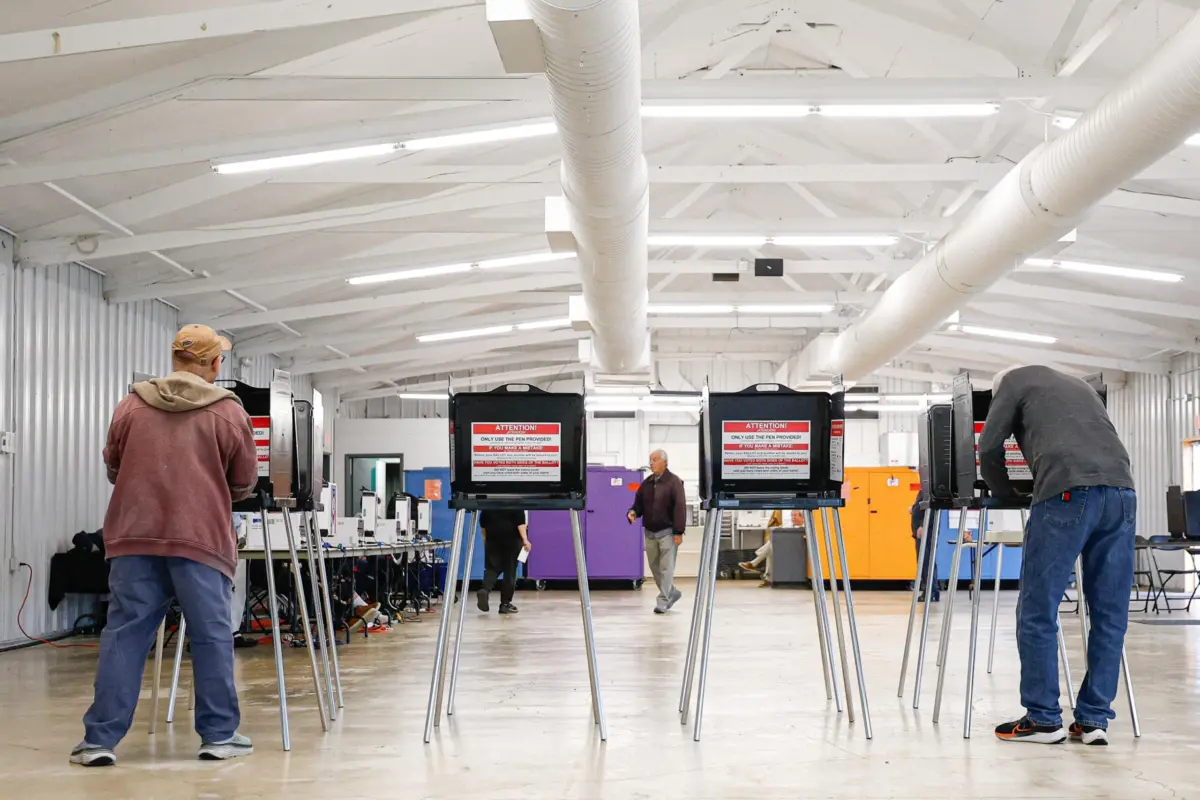
With fewer than six weeks remaining until Americans head to the polls for the 2026 midterm elections, the political landscape is experiencing a seismic, structural shift. This year’s contest is not merely a routine referendum on the party in power; it is an existential crucible testing the resilience of American democratic norms, the authority of an unconventional executive, and the ideological futures of both major political parties.
Voters will decide control of Congress and a critical mass of state and local offices under unprecedented conditions. President Donald Trump, who fundamentally remade the Republican Party in his own image during his return to the White House, now faces a profound paradox: while his legislative agenda continues to reshape the nation, his base is showing distinct signs of fatigue and disillusionment. Concurrently, the Democratic Party is undergoing its own radical metamorphosis following the sobering defeat of the 2024 presidential cycle. Abandoning the comforting centrist illusion that Trumpian populism was merely a temporary aberration, today’s Democrats have embraced a more pugnacious, populist posture aimed at dismantling entrenched oligarchies, corporate monopolies, and elite insider networks.
This special five-part collaborative reporting series—anchored by Today, Explained and Vox’s Midterms, Actually team—dives deep into the fractures redefining American politics. By examining record-low approval metrics, surging anti-establishment factions within both parties, and crucial bellwether races across the country, this investigation explores how the November 3 ballot will dictate the final chapters of Trump’s presidency and lay the groundwork for the 2028 White House race.
Read Also
Detailed Chronology: The Road to the 2026 Midterms
To understand the volatile dynamics of the current electoral environment, one must trace the rapid evolution of the political timeline from the aftermath of the 2024 presidential election to the eve of the 2026 midterms.
The Post-2024 Awakening (Late 2024 – Early 2025)
Immediately following the 2024 presidential election, the Democratic Party entered a period of intense, often agonizing introspection. The defeat shattered the party’s reigning theory of the Trump era—the belief that American voters would eventually reject populism in favor of institutional competence, traditional decency, and political normalcy. Instead, the election results signaled that systemic voter distrust of established institutions was structural and deep-seated.
Within the Republican Party, the immediate aftermath of the 2024 victory was characterized by total consolidation. President Trump reclaimed the Oval Office with a mandate to enact sweeping tariffs, curb immigration, and challenge traditional foreign policy doctrines. Yet, the seeds of intra-party friction were sown almost immediately as the reality of governance collided with populist campaign rhetoric.
The Spring Fracture (March – June 2025)
As the Trump administration pursued its second-term legislative and executive priorities, early warning signs began to emerge within the Republican coalition. Congressional battles over federal spending, coupled with contentious debates over escalating economic interventions and shifting foreign entanglements, tested the ideological discipline of the GOP caucus.
Concurrently, the Democratic Party began shifting its organizational apparatus away from conventional, consultant-led moderation. Grassroots organizers and insurgent progressive candidates seized control of local party machinery, capitalizing on the public’s exhaustion with the political status quo. This period witnessed the rapid ascent of populist left-wing figures who championed aggressive economic reform, drawing inspiration from urban success stories like New York’s progressive democratic socialist movement.
The Summer Disillusionment (July – August 2026)
The summer of 2026 marked a decisive turning point in public opinion. Persistent economic anxieties—exacerbated by inflation, volatile energy markets, and the downstream effects of aggressive trade tariffs—weighed heavily on working-class households.
Simultaneously, two major geopolitical and domestic flashpoints galvanized voter dissatisfaction. First, the administration’s military posture and renewed hostilities involving Iran directly contradicted Trump’s foundational 2024 promise to keep the United States out of foreign entanglements and endless overseas wars. Second, the delayed, highly contentious release of the federal Epstein files exposed uncomfortable ties between political elites of all stripes and the very “insider class” that populist voters believed Trump was uniquely positioned to vanquish. These dual shocks shattered the insularity of the Republican base.
The Fall Campaign Squeeze (September – October 2026)
Entering the home stretch of the campaign cycle in September 2026, political dynamics shifted into hyper-drive. Polling data revealed record lows for the administration, prompting vulnerable Republican incumbents and congressional candidates to actively distance themselves from the White House in campaign messaging.
As October 1 arrived, both political parties found themselves fractured along internal ideological fault lines. The upcoming November 3 election transformed from a standard bipartisan referendum into a multi-front civil war fought both across the aisle and within party primaries.
Supporting Context & Metrics: The Data Behind the Realignment
The qualitative accounts of political shifts are heavily underscored by quantitative data gathered from national polling institutes and economic assessments throughout late 2026.
Polling Metrics and GOP Disillusionment
The most striking statistical revelation of the 2026 cycle is the measurable erosion of President Trump’s support among self-identified Republicans. According to a comprehensive national NBC poll conducted in mid-September 2026, only four in ten Republicans (40%) strongly approve of Trump’s presidential performance. This represents an alarming 11-percentage-point drop from spring metrics.
| Polling Period | Republican Strong Approval Rating | Net Change | Primary Driver of Discontent |
|---|---|---|---|
| Spring 2026 | 51% | Baseline | Economic policy & early legislative gridlock |
| Mid-September 2026 | 40% | -11 points | Handling of economy, Iran conflict, Epstein files release |
This statistical slide is mirrored in voter intensity metrics. While Democratic base voters are displaying high enthusiasm and a clear mandate to "fight" institutional power, a notable fraction of disaffected conservatives are expressing exhaustion. Political analysts note that if disillusioned right-of-center voters choose to stay home on November 3, the resulting depressed turnout could hand control of the House of Representatives and potentially the Senate to the Democratic Party.
The Demographic and Ideological Shift
Beyond top-line approval numbers, the 2026 midterms reflect a profound transformation in voter trust. Trust in party leadership and institutional gatekeepers has plummeted to historic lows.
- The Left-Wing Populist Surge: The vacuum left by establishment gatekeepers has allowed unconventional candidates to thrive. In urban centers and diverse suburban districts alike, progressive democratic socialists have captured the imagination of younger voters (Gen Z and Millennials), proving that economic populism resonates across traditional demographic lines.
- The Independent Factor: Across the rust belt and plains states, independent candidates are challenging the two-party duopoly, capitalizing on voter fatigue with hyper-partisan gridlock.
Official Statements & Expert Analysis
To grasp the philosophical undercurrents of the 2026 midterms, political observers must look closely at the commentary provided by leading analysts, strategists, and journalists tracking the cycle.
Astead Herndon, speaking on the structural evolution of the parties, emphasized the profound nature of the current moment:
"If you were to step out of a political time capsule from 2024 and drop straight into late 2026, the single most jarring surprise would not be the policy debates, but the sheer breadth of the GOP’s disillusionment with Donald Trump. He remade the party in his image, but governing realities have fractured that monolithic base."
On the Democratic side, Herndon points out that the party has fundamentally discarded its previous playbook of institutional preservation:
"Today’s Democrats want a party that fights. The open question defining their internal identity is not whether to fight, but who they are fighting: Is it the oligarchy? Big Tech? The billionaire and Epstein-adjacent class? Or simply Trump’s Republican Party?"
Strategists from both sides of the aisle have offered competing interpretations of the data:
- Republican Strategists argue that public frustration is a normal midterm phenomenon tied to inflationary pressures and global instability, maintaining that candidates who localize their races and emphasize economic pragmatism will ultimately retain voter loyalty.
- Democratic Strategists contend that the erosion of trust in executive leadership represents a permanent realignment, opening a historic window for the opposition to capture legislative majorities and enact structural accountability measures.
Future Outlook: Races to Watch and What’s at Stake
As the calendar turns to October and the final sprint toward November 3 begins, the outcome of the 2026 midterms will set the parameters for the remainder of the decade. The results will directly dictate whether President Trump spends his final years in office facing aggressive congressional oversight, subpoena investigations, and legislative paralysis, or whether his party manages to rally its fractured base and preserve its governing majority.
Several key electoral battlegrounds encapsulate the nationwide struggle:
- Michigan’s Senate Race: A premier bellwether where progressive Democrat Abdul El-Sayed faces Republican nominee Mike Rogers. This race tests whether a galvanized, unapologetically progressive message can win over working-class Rust Belt voters in a crucial swing state.
- Florida’s 27th Congressional District: Here, incumbent Republican Representative María Elvira Salazar has made headlines by publicly breaking with Trump on key economic and foreign policy issues, testing whether independent and moderate conservative voters will reward candidates who distance themselves from the party leadership.
- The Plains States Senate Contests (Nebraska, Idaho, South Dakota): High-profile independent and third-party senate bids in these traditionally safe states are serving as a national referendum on widespread voter exhaustion with the entrenched two-party duopoly.
Ultimately, November 3 will not merely determine the partisan balance of Capitol Hill; it will serve as an ideological referendum on the future of populism, executive power, and democratic governance in America. But with weeks of campaigning still ahead, voters and observers alike are bracing for an unprecedented finish to one of the most volatile midterm cycles in modern history.



Comments
Facebook App ID not configured. Please add it in the Customizer.