
Executive Overview
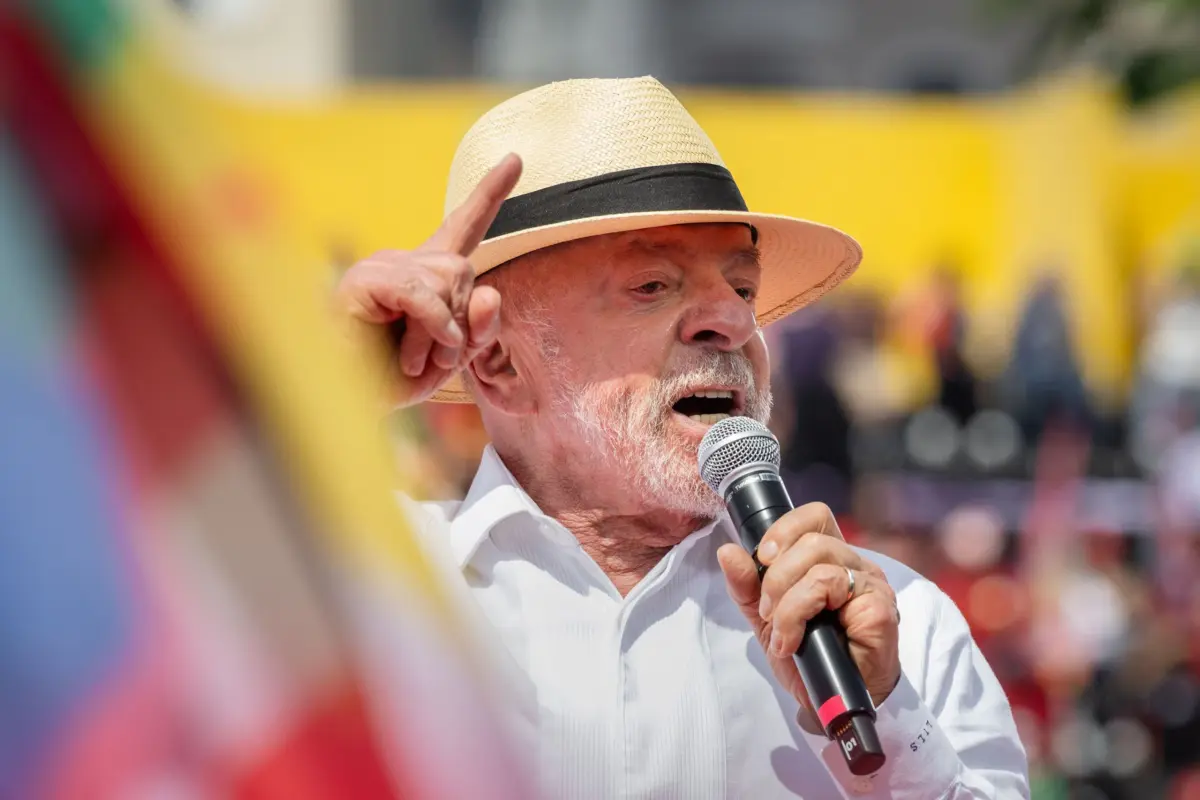
In a dramatic electoral contest with profound implications for the global political order, Luiz Inácio Lula da Silva secured a decisive victory in Brazil’s presidential election, defeating far-right candidate Flávio Bolsonaro by a margin of more than four million votes. The victory has shattered a multi-year trend in Latin America, where conservative and right-wing populist movements aligned with the political doctrine of former U.S. President Donald Trump had progressively gained leverage across the Western Hemisphere.
For democratic strategists and left-leaning movements worldwide, Lula’s return to the presidency represents far more than a domestic political realignment. It stands as a rare, highly visible defeat for the international network of right-wing populism that has dominated political discourse over the past decade. The election was defined by hyper-polarized digital warfare, geopolitical maneuvering, and deep institutional anxiety.
Lula’s victory was mirrored on the international stage by the defeat of pro-Russia strongman Aleksandar Vučić in Serbia, signaling a potential ebb in the global wave of autocratic populism. However, the aftermath in Brazil has been marked by elite evasion, digital subversion, and economic turbulence. Flávio Bolsonaro—running as a proxy for his father, the convicted former President Jair Bolsonaro—initially challenged the legitimacy of the results before orchestrating a covert flight to Florida to evade domestic prosecution. As Lula assumes leadership over Latin America’s largest economy, Brazil faces the daunting tasks of repairing severely damaged democratic institutions, confronting severe market volatility, and navigating a fractured geopolitical landscape.
Read Also
Detailed Chronology: From Digital War to Flight to Florida
               CHRONOLOGY OF BRAZIL'S ELECTORAL TURMOIL

   2018             2020–2022           Jan 2023            Late 2024
----|-------------------|-------------------|-------------------|---->
  Jair Bolsonaro      Jair loses to       Bolsonarista        Jair convicted (27 yrs);
  wins presidency;    Lula; flees to      Capital attack      placed under house arrest.
  stabbed at rally.   Florida; plots      in Brasília.        Flávio takes over campaign.
                      coup.

   Early Oct 2024       Late Oct 2024       Post-Election
----|-------------------|-------------------|------------------------->
  Flávio leads        Janones launches    Lula wins by 4M+ votes.
  First Round vote.   "Lula's Army";      Flávio rejects results,
                      Meta enjoined over  then flees to Florida via
                      algorithm bias.     Argentina.
The Legacy of Jair Bolsonaro and the Rise of Flávio
The foundations of the 2024 election were laid during the tumultuous presidency of Jair Bolsonaro (2019–2022). A former Army captain whose political identity was built on anti-environmentalism, deregulation, and overt hostility toward minority populations, Jair Bolsonaro’s ascent was catalyzed by a 2018 campaign attack in which he was stabbed at a rally—an event that foreshadowed Donald Trump’s near-assassination in Butler, Pennsylvania, six years later.
Throughout their respective terms, Jair Bolsonaro and Donald Trump operated as ideological soulmates, orchestrating synchronized attacks on democratic norms and demonstrating catastrophic mismanagements of the COVID-19 pandemic. Under their administration, the United States and Brazil recorded the world’s highest pandemic death tolls, at 1.2 million and over 700,000 deaths, respectively.
Following his defeat by Lula in the 2022 presidential election, Jair Bolsonaro mirrored Trump’s political playbook. He repeatedly claimed without evidence that the Brazilian electronic voting system was rigged, retreated to Florida, and plotted with security personnel to reverse the outcome. On January 8, 2023—one week after Lula’s inauguration—thousands of Bolsonarista insurgents stormed Brazil’s Supreme Court, Presidential Palace, and National Congress in a violent attempt to force a military intervention.
Jair Bolsonaro was eventually convicted of conspiracy to overthrow the state and sentenced to twenty-seven years in prison, a sentence later commuted to house arrest on humanitarian grounds. Legally barred from seeking public office, the patriarch passed the mantle to his son, Flávio Bolsonaro, a lawyer and legislator in his forties.
Flávio ran on an explicit platform of retributive restoration:
- Full pardons for his father and key political co-conspirators.
- Judicial retaliation against the jurists who upheld his father’s conviction.
- Deregulation of environmental protections in the Amazon basin.
- Integration into the U.S.-led "Shield of the Americas" initiative, allowing American military deployments in Latin America under the banner of anti-narcotics enforcement.
The Campaign: Algorithms, Disinformation, and "Janonisme"
In the first round of voting in early October, Flávio Bolsonaro captured a surprising plurality of the vote, capitalizing on entrenched voter fatigue and high crime rates. The momentum, however, shifted radically during the intense three-week runoff campaign.
To counter the far-right’s dominant digital ecosystem, Lula’s campaign empowered André Janones, a tech-savvy legislator who engineered a digital counter-offensive known as "Lula’s Army." Janones synchronized the messaging of millions of supporters across social platforms, effectively overwhelming the algorithmic dominance long enjoyed by right-wing digital networks.
This digital strategy prevailed despite fierce legal and technical pushback:
+-------------------------------------------------------------------------+
|                    DIGITAL CAMPAIGN BATTLEGROUND                        |
+-------------------------------------------------------------------------+
|  RIGHT-WING ECOSYSTEM                   LEFT-WING COUNTER-OFFENSIVE     |
|  * Disinformation networks             * "Lula's Army" (André Janones)  |
|  * Operatives (e.g., F. Cerimedo)       * Algorithmic synchronization    |
|  * Alleged Meta algorithm bias          * High-court injunctions against |
|                                           platform manipulation         |
+-------------------------------------------------------------------------+
Janones’s WhatsApp channels were blocked twice by the Superior Electoral Court at the behest of the Bolsonaro campaign. In response, Lula’s legal team presented forensic evidence showing that Meta’s algorithms had been systematically modified to boost Bolsonaro-aligned content in search queries. While Meta denied intentional political bias, attributing the anomaly to unspecified "technical issues," the court issued a binding injunction ordering the platform to remediate its systems.
The digital conflict also exposed international networks of political manipulation, notably involving Fernando Cerimedo, an Argentinian digital strategist linked to the Bolsonaros. Indicted in Brazil for his alleged role in the January 8 coup plot, Cerimedo later advised Javier Milei’s successful presidential campaign in Argentina. In August, while operating out of Bolivia’s presidential palace, Cerimedo was arrested on suspicion of hiring hitmen to assassinate his pregnant girlfriend—a charge he denies while remaining incarcerated.
Post-Election Chaos and Flight to Florida
When the final ballots were tallied, Lula emerged victorious by more than four million votes. Flávio Bolsonaro’s reaction was erratic: he initially rejected the results, briefly posted a social media statement declaring himself the legitimate president, deleted it, and subsequently published an edited version.
Recognizing that domestic institutions, the military, and major international powers—with the exception of Javier Milei’s administration in Argentina—had formally recognized Lula’s victory, Flávio initiated an escape plan. Facing imminent questioning by the Federal Police in a high-profile money-laundering investigation, he crossed the border into Argentina. From there, aided by operatives within Milei’s government and a White House aide who facilitated a private charter, Flávio and his family flew directly to Florida.
Upon arrival in the United States, the Biden-Trump transition framework allowed the family entry under temporary parole status, with the State Department preparing long-term visas—a sequence reminiscent of his father’s post-election exile spent frequenting Orlando supermarkets and fast-food venues while plotting a political return.
Supporting Context & Metrics: Digital Battlefield and Demographic Shift
The 2024 election highlighted the deep divisions in Brazilian society while showcasing historic breakthroughs for underrepresented groups. The contrast between the human cost of the preceding administration and the changing makeup of Brazil’s Congress underlines the high stakes of the election.
Comparative Data & Institutional Parallels
| Metric / Event | United States | Brazil |
|---|---|---|
| COVID-19 Total Reported Deaths | ~1,200,000 | ~700,000+ |
| Institutional Insurrection Event | January 6, 2021 (U.S. Capitol Attack) | January 8, 2023 (Brasília Congress Attack) |
| Leading Disinformation Vector | Social Media / Nativist Digital Ads | WhatsApp / Algorithmic Manipulation |
| Electoral Defeat Margin (Most Recent) | ~7 million votes (2020 Popular Vote) | ~4+ million votes (2024 Popular Vote) |
| Primary Foreign Political Ally | Right-Wing Movements (e.g., AfD, Milei) | U.S. Far-Right / MAGA Network |
Historic Demographic Breakthroughs
Despite severe polarization and overt hostility from far-right factions, the election produced landmark victories for progressive representation in the Brazilian National Congress:
- Erika Hilton: A 33-year-old Black transgender woman and former sex worker, Hilton secured the highest vote count of any female congressional candidate in Brazilian history, running on a platform of human rights, economic protection, and LGBTQ+ advocacy.
- Ana Elisa Santos: A 21-year-old Black digital influencer who won a seat in the Chamber of Deputies despite facing coordinated harassment and explicit death threats from white supremacist groups during the campaign.
       CONGRESSIONAL BREAKTHROUGHS IN THE 2024 ELECTION

   [ Erika Hilton ]  -----------------> Most voted female congressional
                                        candidate in Brazilian history.

   [ Ana Elisa Santos ] --------------> 21-year-old Black influencer elected
                                        despite white supremacist threats.
Official Statements & Global Reactions
The global response to Lula’s victory reflected the deep geopolitical divisions surrounding the election.
                        GLOBAL REACTION MATRIX

     [ UNITED STATES ]  -----------------> Hedged response; Trump cited
                                           alleged "rigging" while stating
                                           "I like Lula."

     [ ARGENTINA ] ----------------------> Javier Milei refused recognition;
                                           aided Flávio's flight to Florida.

     [ SERBIA ] -------------------------> Aleksandar Vučić conceded defeat,
                                           breaking from typical strongman
                                           tactics.

     [ EUROPEAN LEFT ] ------------------> Pedro Sánchez (Spain) & French
                                           activists adopted "Janonisme"
                                           digital strategies.
Donald Trump, Former U.S. President
In typical fashion, Donald Trump issued a hedged response that balanced lingering election-denial rhetoric with pragmatic diplomatic ambiguity:
"The election over there had some very strange things happen—it could have been rigged, who knows? But I’ve always said, I like Lula. He’s a tough guy, but I like him."
Walter Salles, Brazilian Filmmaker & Intellectual
Commenting on the injunction against Meta and the systemic nature of digital campaign manipulation across South America, Salles noted:
"The revelations surrounding algorithmic manipulation are not isolated. This has probably been happening for some time in past elections throughout South America, undermining democratic processes before voters even reach the ballot box."
Anonymous Brazilian Human Rights Activist & Pro-Democracy Friend
Reflecting on the international significance of defending the Amazon basin and Brazilian democratic institutions:
"Much more than the future of Brazilian democracy is at stake. We Latin Americans know that democracies can die, but, in time, they can also be restored. There is a great deal of suffering along the way, but it has been done."
International Export of "Janonisme"
The success of André Janones’s campaign tactics has attracted attention from left-leaning administrations worldwide. Prime Minister Pedro Sánchez of Spain recruited members of Janones’s digital team ahead of Spain’s upcoming general elections. Similarly, in France, anti-fascist organizations and activists attempting to counter Marine Le Pen’s National Rally have begun adopting "Janonisme" methods to combat online far-right campaigns.
Future Outlook: The Fragile Restoration of Democracy
While Lula’s victory has halted the immediate threat of a far-right authoritarian expansion in South America, his administration confronts immediate economic and social headwinds.
+-------------------------------------------------------------------------+
|                  IMMEDIATE CHALLENGES FOR LULA ADM.                     |
+-------------------------------------------------------------------------+
|  1. FINANCIAL INSTABILITY                                               |
|     * Stock market declines following far-right defeat                  |
|     * Investor skepticism regarding social spending                     |
|                                                                         |
|  2. PUBLIC SAFETY & CRIME                                               |
|     * High violent crime rates exploiting police divisions               |
|     * Persistent influence of organized crime networks                  |
|                                                                         |
|  3. ENVIRONMENTAL & GOVERNANCE STAKES                                   |
|     * Rebuilding environmental enforcement in the Amazon                |
|     * Managing a deeply divided, highly polarized Congress              |
+-------------------------------------------------------------------------+- Market Volatility and Economic Anxiety: Immediately following the election results, financial markets plummeted. Investors had largely priced in a business-friendly victory for Flávio Bolsonaro, and Lula’s platform of expanded social safety nets, redistributive taxation, and environmental regulation has fueled short-term market uncertainty.
- Persistent Security and Crime Issues: Violent crime remains a major vulnerability for the incoming administration. The far-right leveraged law-and-order rhetoric to consolidate its base, leaving Lula with the challenge of addressing public safety without resorting to extrajudicial police tactics.
- The Global Tug-of-War Over Digital Governance: The legal confrontations with Meta and WhatsApp have turned Brazil into a test case for how sovereign nations regulate global tech monopolies. As Elon Musk continues to leverage X (formerly Twitter) to amplify far-right figures globally—from Javier Milei in Argentina to the Alternative for Germany (AfD)—Brazil’s judicial model for penalizing algorithmic bias may serve as a blueprint for other democracies.
Ultimately, Lula’s return to power demonstrates that while democratic institutions can be systematically degraded by digital disinformation and populist movements, they retain the capacity for self-correction. The ultimate survival of Brazil’s democratic experiment will depend on the government’s ability to deliver economic stability, protect its natural ecosystems, and dismantle the trans-national networks of subversion that continue to operate from Florida to Buenos Aires.




Comments
Facebook App ID not configured. Please add it in the Customizer.