
Executive Overview
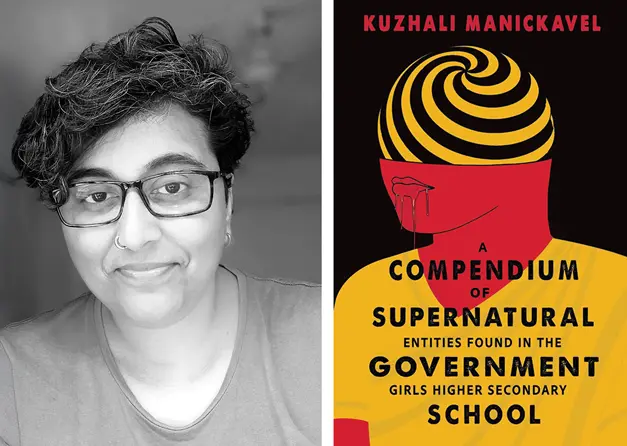
In the contemporary landscape of speculative fiction, debut novels frequently rely on established tropes to anchor their fantastical elements. Yet, every so often, a literary work emerges that completely upends these conventions, offering an entirely fresh perspective rooted in lived reality and regional specificity. Such is the case with A Compendium of Supernatural Entities Found in the Government Girls Higher Secondary School, a striking and atmospheric debut that seamlessly infuses a subtle coming-of-age narrative with the paranormal.
The novel follows its protagonist, Thamari, a depressed and disconnected teenager navigating the labyrinthine corridors of a small-town Indian school. Through Thamari’s eyes, readers are introduced to a world where the mundane pressures of adolescence collide with inexplicable, non-Western supernatural phenomena. The book does not merely use the paranormal as a cheap trick for cheap thrills; rather, it uses otherworldly manifestations to mirror the profound alienation, existential dread, and emotional stagnation experienced by young women trapped within rigid societal frameworks.
Beyond its atmospheric haunting, the novel tackles complex themes of queer identity and institutional erasure. Thamari is queer, yet she faces the daunting, inevitable prospect of an arranged marriage to a man upon her graduation—a reality that forces her to confront the absolute boundaries of her self-expression. Furthermore, the author deliberately rejects Western frameworks of both the supernatural and LGBTQ+ identity, opting instead for a deeply localized, authentic lexicon. By weaving non-English phrases throughout the text without pandering to a Western gaze, the author crafts an immersive experience that challenges readers to step outside their comfort zones. This executive overview sets the stage for a comprehensive exploration of the novel’s origins, thematic underpinnings, structural choices, and its broader implications for contemporary global literature.
Read Also
Detailed Chronology
To fully understand the genesis of A Compendium of Supernatural Entities Found in the Government Girls Higher Secondary School, one must trace the winding path of the author’s own formative years and the trajectory that led to the book’s publication.
The Formative Years: Culture Shock and Dislocation
The foundational experiences driving the narrative trace back to the author’s adolescence. Having grown up in Canada, the transition to attending a small-town Indian school proved to be a profound and disorienting culture shock. The author was entirely unprepared for the stark differences in daily life, social structures, and interpersonal dynamics.
During this period, feelings of hopelessness and existential isolation—the pervasive "what’s the point?" mentality—were acutely felt by young girls navigating oppressive environments. The protagonist, Thamari, was born out of this specific emotional landscape. The author has noted that Thamari mirrors her own teenage self, capturing the sensation of merely existing without understanding the underlying purpose of that existence. The small-town Indian school setting became a pressure cooker where institutional rules, societal expectations, and adolescent development clashed violently.
The Evolution of the Manuscript
Writing the novel required a delicate balancing act between personal catharsis and fictional craft. As the author processed the memories of culture shock and institutional rigidity, the manuscript began to take shape not as a straightforward memoir, but as a work of speculative fiction.
The integration of the paranormal was a direct result of the author’s early experiences in India. Because so much of the environment was utterly confounding and alien to a Canadian-raised teenager, everyday occurrences often felt supernatural, defying rational explanation. This translated directly into the novel’s fabric, where the boundary between the mundane horrors of school life and actual supernatural entities blurs entirely.
The Publication Journey and Editorial Decisions
As the manuscript progressed toward publication, critical decisions were made regarding language, terminology, and cultural context. The author wrestled significantly with how to incorporate non-English phrases without alienating the reader or reducing the text to a cultural glossary.
Initially, a glossary was compiled to aid comprehension. However, the author quickly recognized a major artistic risk: leaning too heavily on explanatory aids risks turning a nuanced piece of fiction into a tourist guide. Ultimately, the decision was made to preserve the authenticity of the language, trusting readers to engage with the text on its own terms. Released to critical acclaim, the novel has quickly established itself as a standout title in contemporary independent publishing, challenging readers to reevaluate how they consume translated and cross-cultural narratives.
Supporting Context & Metrics
To appreciate the cultural weight of A Compendium of Supernatural Entities Found in the Government Girls Higher Secondary School, it is essential to examine the broader sociological, linguistic, and literary metrics surrounding queer representation and non-Western supernaturalism in modern fiction.
The Linguistic Landscape of Queer Identity in South Asia
One of the most compelling aspects of the novel is its treatment of queer identity within a restrictive linguistic framework. As the author points out, while English terminology for various sexual orientations—such as queer, gay, and lesbian—is readily accessible to globally connected youth, equivalent indigenous terms in regional languages like Tamil are frequently absent, obscured, or entirely taboo.
| Dimension | Western Framework | Small-Town Indian Context (as depicted in the novel) |
|---|---|---|
| Terminology | Highly articulated (Queer, Lesbian, Bisexual, Pansexual) | Lacking localized equivalents; reliance on English loan-words or silence |
| Exploration | Encouraged through community networks and media visibility | Terminated abruptly by institutional and familial pressure (e.g., mandatory marriage to men) |
| Supernaturalism | Codified in specific tropes (vampires, ghosts, Western demonology) | Inextricable from daily institutional life, cultural memory, and the inexplicable |
This linguistic disconnect serves as a powerful mirror for how sexuality is navigated in conservative settings. Because the vocabulary does not officially exist in the local lexicon, the horizon of possibility is severely curtailed. Young women realize early on: "Okay, this is about as far as I can go with this. I won’t be able to explore this further." This tragic realization forms the emotional core of Thamari’s arc, highlighting a systemic form of erasure that goes beyond mere legal or physical restriction.
Rejecting Western Paradigms of the Paranormal
In the book’s introductory framing, the author issues a vital caveat: Western concepts of the supernatural should not be used as a framework. In contemporary global publishing, speculative fiction is frequently dominated by Western mythologies—poltergeists, European witchcraft, and Hollywood-style hauntings.
When readers approach international texts with a default Western mindset, they risk flattening distinct cultural expressions of the uncanny. The supernatural entities inhabiting the Government Girls Higher Secondary School do not operate according to Western rules of exorcism or scientific investigation. They are manifestations of institutional trauma, repressed desires, and the lingering spirits of a specific cultural ecosystem. By refusing to cater to a Western gaze, the novel insists that supernaturalism and queerness manifest differently across the globe, and that forcing them into a monolithic template strips away their true power.
Official Statements & Author Insights
In recent interviews and introductory essays, the author has elaborated extensively on the creative philosophy, emotional motivations, and linguistic strategies driving A Compendium of Supernatural Entities Found in the Government Girls Higher Secondary School. Below are key insights reflecting the author’s intent:
-
On the Parallels Between Protagonist and Creator:
"I think I was similar to her when I was in school. A lot of the novel is based on my own experiences at a small-town Indian school. Because of the way things were for young girls then, having that feeling of hopelessness—like, what’s the point?—was very prevalent. For my protagonist, Thamari, I wanted to focus on that feeling of just existing, and not really being able to figure out why you’re existing."
-
On Navigating Queer Identity and Restricted Futures:
"What’s interesting is, I know the English words for various types of queerness—there’s the word queer, the word gay, the word lesbian—but I don’t know the Tamil words for those things, which I think is a good reflection of how sexuality in general is navigated in this setting. Because things are so restrictive, there’s this feeling of, Okay, this is about as far as I can go with this. I won’t be able to explore this further. I find that very sad, of course, and I wanted to explore it in the novel."
-
On Dismantling Western Literary Expectations:
"The supernatural elements were also inspired by my own experiences. I grew up in Canada, and going from a typical Canadian junior high to a small-town Indian school was a huge culture shock. I was unprepared for how many little things would be so different. Because of that, so much of my experience in school, like Thamari’s, was stuff that I could not understand. In terms of the non-Western element, if you’re coming to this story with a Western mindset—I hope that doesn’t sound offensive—I wanted to make it clear that supernaturalism and queerness exist in different ways in different parts of the world. We miss out on a lot of stories when we expect them to fit a particular perspective."
-
On the Challenge of Untranslatable Language:
"In so much of what I went through, things happened that I don’t have English equivalents for. I couldn’t describe those experiences in English. Still, I went back and forth on this a lot. I actually made a glossary, but the risk you run when you do something like that is that your work starts resembling more of a tourist guide than a piece of fiction. I hope that readers are able to get something from it. We each read with our own baggage; we’re always going to get different things out of a work."
Future Outlook
As A Compendium of Supernatural Entities Found in the Government Girls Higher Secondary School continues to circulate among critics, independent publishing advocates, and global readerships, its long-term impact on the literary ecosystem is poised to be significant.
Expanding Horizons for Global Speculative Fiction
The novel’s success signals a growing appetite for boundary-pushing speculative fiction that refuses localization for Western consumption. By demonstrating that readers are fully capable of engaging with untranslated idioms, culturally specific institutional settings, and non-Western paranormal frameworks, the book paves the way for a new generation of international authors. Publishers are increasingly recognizing that authenticity and resistance to homogenization are major assets in a diverse literary market.
The Evolution of Queer Narratives Outside the West
Furthermore, the novel contributes crucial nuance to the global conversation surrounding queer literature. Too often, queer narratives are expected to follow a linear trajectory of coming out, community building, and triumphant acceptance—a trajectory that frequently mirrors urban Western experiences. By depicting the quiet, heartbreaking reality of a queer protagonist who hits an institutional and linguistic wall—facing an inescapable heterosexual marriage—the book expands the emotional spectrum of LGBTQ+ fiction. It validates the stories of those who must navigate love, desire, and identity in silence, under the heavy shadow of societal compliance.
Ultimately, A Compendium of Supernatural Entities Found in the Government Girls Higher Secondary School transcends the standard boundaries of genre fiction. It stands as a brilliant testament to the haunting nature of adolescence, the power of unnameable emotions, and the necessity of telling stories that refuse to be neatly categorized. As the literary world continues to reckon with the demand for genuine cross-cultural representation, this debut serves as a gold standard for how to write the uncanny with fierce, uncompromising honesty.





Comments
Facebook App ID not configured. Please add it in the Customizer.