
Executive Overview
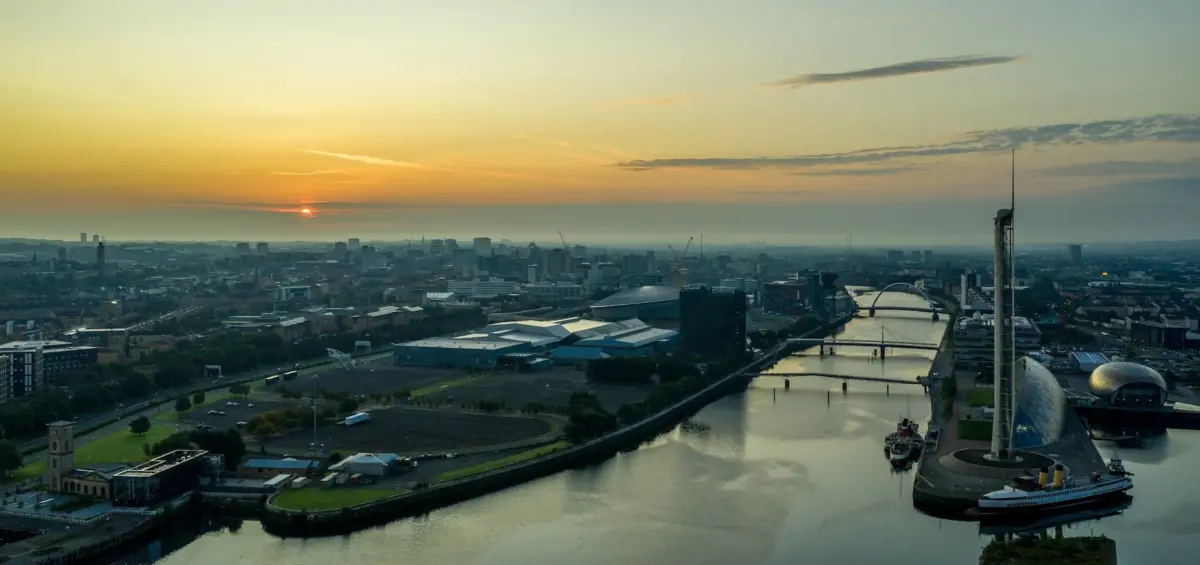
In the fading light of a rapidly secularizing Western Europe, Glasgow—Scotland’s largest and most vibrant metropolis—has delivered a sobering milestone to the global Catholic community. This past October, Archbishop William Nolan stood before his flock to announce a decision that many had long feared yet desperately hoped would never materialize: the Archdiocese of Glasgow is slated to shutter fully half of its parishes.
Conceding the stark reality that there are "too many parishes but too few people," the archdiocese faces an unprecedented vocations crisis. Current demographic and ordination projections suggest that by the midpoint of this century, the entire jurisdiction will be served by a mere eight priests. For a city whose Bellahouston Park hosted massive papal Masses drawing hundreds of thousands of the faithful within living memory, this contraction marks the end of an era.
Yet, the tremors shaking Glasgow’s parishes are not isolated incidents. They represent a severe manifestation of a broader, continental-wide erosion of religious practice. Across Western Europe, centuries-old institutions are buckling under the weight of declining birth rates, secularization, internal cultural shifts, and the long-term fallout of clerical scandals.
Read Also
This deep-dive investigation examines the intricate tapestry of Glasgow Catholicism—its turbulent history forged in the fires of migration and sectarianism, the structural and liturgical missteps of the post-Vatican II era, the culpability of the laity, and the difficult, purifying path toward a genuine, faith-driven revival.
Detailed Chronology: From Sectarian Bastions to Secular Desolation
To understand how Glasgow arrived at this historic crossroads, one must trace the historical trajectory of Catholicism in the west of Scotland, a story inextricably bound to migration, socioeconomic struggle, and cultural identity.
The 19th Century: The Irish Diaspora and the Reformed Scowl
The seeds of modern Scottish Catholicism were planted during the early to mid-nineteenth century, when waves of Irish immigrants—driven by famine, destitution, and political oppression—fled across the Irish Sea to the industrial hubs of western and central Scotland. Arriving in a country firmly anchored by the reformed Church of Scotland, these newcomers encountered deep-seated suspicion and open hostility.
The resulting communal tensions were fundamentally national-cultural rather than strictly theological. As these immigrants and their descendants built new lives, they maintained a fierce, enduring affinity for Ireland through its revolutionary struggles against British rule, the birth of the modern Irish state, and the protracted sectarian conflicts of Northern Ireland. In response, Scotland’s Protestant majority frequently aligned itself with whichever political or social forces stood in direct opposition to their Catholic neighbors.
The 20th Century: A Distinct Subculture and the Football Divide
By the twentieth century, Irish Catholicism in Scotland had matured into a distinct, self-contained subculture. It was defined not only by sacramental practice, but by a rich constellation of institutions, parochial schools, social clubs, and community customs.
This deep cultural chasm—separating two demographics that shared the same God, the same Bible, and a shared geography—found its most potent and combustible expression in Glasgow’s legendary football rivalry. The bitter animosity between fans of Celtic FC (founded by a Marist brother with deep roots in the Irish community) and Rangers FC (traditionally viewed as a bastion of British patriotism and Protestant steadfastness) became a proxy war for cultural dominance.
For generations of Glaswegians, tribal allegiance to Parkhead or Ibrox occasionally eclipsed regular participation in Mass or Kirk services. Nevertheless, the institutional Church remained robust, anchored by high birth rates, strong family structures, and a steady stream of native vocations.
The 21st Century: The Great Evacuation
The turning point arrived quietly in the latter half of the twentieth century and accelerated dramatically in the twenty-first. While Scotland’s overall population identifying as Catholic has remained relatively stable on paper—dipping only modestly from 16 percent in the 2001 census to 13 percent in 2022 (a stark contrast to the Church of Scotland, which plummeted from 42 percent to 20 percent over the same period)—weekly practice has collapsed. Today, figures from the Bishops’ Conference of Scotland indicate that a meager 14 percent of Scottish Catholics attend Sunday Mass.
The closure of half of Glasgow’s parishes is the bitter fruit of decades of compounding neglect, structural inertia, and cultural assimilation.
Supporting Context & Metrics: The Anatomy of Decline
The crisis in Glasgow cannot be viewed in a vacuum. It is symptomatic of a pan-European malaise affecting historic Christian denominations, though Catholicism possesses unique vulnerabilities.
Key Demographic and Sociological Drivers
Sociologists and ecclesiastical historians point to several converging factors that have hollowed out Scottish parishes:
- Educational Advancement and Social Mobility: The post-war expansion of higher education and the dismantling of traditional anti-Catholic employment discrimination integrated Catholics into the broader secular mainstream. While economically beneficial, this assimilation often diluted distinct religious identity.
- Intermarriage and Demographic Shifts: As social barriers dissolved, intermarriage between Catholics and non-Catholics surged, frequently leading to the dilution or abandonment of sacramental upbringing for children. Coupled with falling birth rates across Scotland, the traditional Catholic family size shrank dramatically.
- The Secular Consensus: Modern Scottish politics and media culture have grown aggressively secular. The Church’s traditional moral teachings on issues surrounding the family, bioethics, and human sexuality are increasingly viewed not merely as unfashionable, but as socially retrograde.
- The Paradox of Catholic Schools: Scotland remains unique in the UK for its taxpayer-funded Catholic school system. Yet, critics note that institutional schooling has catastrophically failed to translate into active adult devotion, acting more as a cultural heritage program than a crucible for living faith.
The Liturgical Experiment and Its Discontents
Beyond external sociological pressures, many traditionalists and theologians argue that the internal trajectory of the Church post-Vatican II played a pivotal role in alienating successive generations.
The liturgical reforms of the 1960s and 1970s—often pushed far beyond the actual mandates of the Second Vatican Council—aimed to democratize and open up the Mass. Latin, long revered as a sacred, immutable language set apart for the worship of God, was replaced by vernacular English. Gregorian chant and solemn polyphony were largely supplanted by contemporary guitar-driven folk music.
While these innovations resonated with the sensibilities of the Baby Boomer generation, they frequently failed to nourish the spiritual appetites of their children and grandchildren. Today, a striking counter-trend is visible among Gen-Z Catholics: an intense, vocal hunger for reverence, traditional liturgical aesthetics, Latin chant, and an authentic encounter with the transcendent.
The Shadow of Clerical Abuse
No honest appraisal of the Church’s current standing can ignore the devastating impact of clerical sexual abuse. Scotland has not been spared these institutional sins. The high-profile downfall of Keith O’Brien, Cardinal Archbishop of St. Andrews and Edinburgh, years before international scandals shook the global Church, inflicted a profound moral wound on the faithful. For many, these revelations shattered their spiritual foundation, while others used the moral failures of the clergy as a convenient pretext to abandon their own religious obligations.
Official Statements and Institutional Reflection
Faced with existential decline, the ecclesiastical leadership in Scotland has been forced into painful introspection.
When announcing the sweeping parish closures, Archbishop William Nolan emphasized the impossibility of sustaining a vast infrastructure built for a bygone demographic era. "We have too many parishes and too few people," Nolan stated, framing the restructure as a necessary, albeit agonizing, pruning process to ensure the long-term survival of the archdiocese.
Yet, church leaders have increasingly turned their focus from mere structural management to questions of spiritual authenticity. In various pastoral letters and addresses, Scottish bishops have cautioned against reducing the Church to a non-governmental organization focused solely on secular social justice campaigns.
As critics within and outside the hierarchy have observed, a lukewarm Catholicism that focuses exclusively on progressive political consensus—be it environmentalism, economic policy, or international geopolitics—risks devolving into "Amnesty International with sacraments." While service to the poor remains an immutable pillar of the Gospel, ecclesiastical leaders acknowledge that social activism divorced from deep doctrinal grounding and sacramental devotion ultimately fails to sustain a vibrant faith community.
Future Outlook: Beyond Identity to Authentic Faith
As the Archdiocese of Glasgow prepares to redraw its map, closing doors and merging communities, the path forward requires a rigorous and unsparing examination of conscience—not merely by the episcopacy, but by the laity.
The Perils of "Eorum Culpa"
There is a persistent temptation among lay Catholics to attribute the entirety of the Church’s woes to the hierarchy. Pointing fingers at bishops and priests is an easy deflection; it represents an eorum culpa ("their fault") that absolves the individual from personal accountability.
True reform, however, demands a communal mea culpa. The Church is not a corporate franchise managed from the top down; it is the living Body of Christ. Neglect and indifference take root when Catholic fathers abdicate their spiritual leadership, leaving religious observance solely to mothers and children. They occur when parents shirk their primary duty to catechize their offspring, treating parish priests and Catholic school teachers as spiritual babysitters.
Furthermore, decades of apathy toward Holy Orders have starved the altar. As generations of bishops have warned, hierarchies do not close parishes; a severe, prolonged shortage of priests does. Without Catholic families actively fostering vocations within their homes, the sacramental life of the Church inevitably withers.
Redefining Catholic Identity in Glasgow
Ultimately, the crisis in Glasgow forces a long-overdue purification of what it means to be "Catholic" in the twenty-first century.
For generations, Scottish Catholicism was heavily sustained by a tribal cultural persona—a complex mix of heritage, political alignment, football loyalties, St. Christopher medals, and nostalgic memories of May altars and bingo nights. But cultural Catholicism is a fragile house of cards. It treats the faith as an inherited identity or a badge of historical victimhood rather than a radical, life-altering commitment to Jesus Christ.
The faithful Catholic, by contrast, seeks—imperfectly yet perseveringly—to die to the world in order to live in Christ. Cultural Catholicism craves the approval of a secular world that has little use for dogma, sin, or redemption.
A Renaissance Through Refinement
The shuttering of half of Glasgow’s parishes is undeniably a tragedy of historic proportions, marking the end of an architectural and social chapter. Yet, from the ashes of institutional bloat, the possibility of a purified, resilient remnant emerges.
If the Church in Glasgow sheds its reliance on secular prestige and tribal nostalgia, and instead embraces traditional reverence, rigorous catechesis, and deep personal devotion, it may one day require new foundations to be laid. Buildings and administrative structures come and go, but the living spirit of the faith remains eternal. In a future stripped of illusions, authentic Catholicism in Scotland may finally find its true voice.



Comments
Facebook App ID not configured. Please add it in the Customizer.