

Executive Overview
On August 17, 2026, the literary world turned its attention to a striking meditation on existence, longing, and domestic surrealism as "In Another Life" by Appalachian writer Amanda Gaines was named Poem of the Week. Selected by the prestigious Missouri Review, the poem immediately captured the attention of critics and readers alike for its bracing juxtaposition of the mundane and the mythic. Through an unbroken cascade of discoveries—ranging from finding a fox skull in a highway freezer to losing God at a wholesale club—Gaines constructs a kaleidoscopic mirror of contemporary self-interrogation.
At a time when contemporary verse often leans heavily toward polished irony or detached confession, Gaines’s work operates as an exercise in radical vulnerability. It is a text born from a period of creative paralysis, engineered as a literary thought experiment to break through the dry rot of routine writing habits. By anchoring thirty distinct lines with the anaphoric refrain "I found," the poet transforms the act of inventorying one’s interior life into an act of profound, if occasionally absurd, resilience.
This article explores the mechanics of Gaines’s breakout piece, examining its thematic resonance, its roots in Appalachian storytelling traditions, and the creative genesis that brought it to life. Through contextual analysis, authorial insight, and a close reading of the text, we examine how "In Another Life" redefines the contours of modern poetic surprise and cements Gaines’s status as a formidable voice in contemporary American literature.
Read Also
Detailed Chronology: From Creative Drought to Literary Acclaim
The trajectory of "In Another Life" offers a compelling glimpse into the erratic, often invisible labor of the working writer. Understanding the poem requires tracing its evolution from a psychological hurdle into a celebrated piece of public art.
The Genesis of the Drought
Long before the accolades from the Missouri Review, Amanda Gaines found herself adrift. Operating within the demanding rhythms of academia—balancing her postdoctoral fellowship and teaching assistant professorship at the University of Tennessee with her roots in Appalachian literary traditions—Gaines hit a definitive creative wall.
"Back then, I felt unmoored. Bored," Gaines recalls in her author’s note. This stagnation was not merely a lack of ideas, but a deeper existential fatigue. Writers often experience dry spells when the machinery of observation feels worn down by repetition. The friction of daily life—navigating administrative duties, personal transitions, and the quiet weight of unfulfilled ambitions—had dulled the edge of her poetic impulse.
The Thought Experiment
To combat this creative paralysis, Gaines initiated a formal constraint. She began experimenting with revisionist histories and speculative frameworks. Rather than searching for grand, transcendent epiphanies, she leaned into the embarrassing, the trivial, and the messy realities of human fantasy. She realized that human daydreams are frequently as disappointing or absurd as our lived realities.
The breakthrough arrived through repetition. By deploying the anaphora "I found" at the start of every line, Gaines established a rhythmic baseline. This structural engine allowed her to bypass the inner critic that usually throttles draft work. Instead of worrying about narrative progression, she compiled an inventory of encounters with the surreal.
Publication and Public Reception
Following its refinement, the poem found a home among Gaines’s extensive publication credits in journals such as Passages North, Cleaver, The Southern Review, and Rattle. However, its selection as Poem of the Week by the Missouri Review on August 17, 2026, marked a distinct inflection point, thrusting the piece into a broader cultural conversation.
Readers quickly latched onto the poem’s democratic blend of high mythology and low consumer culture—where Atlantis shares space with Sam’s Club, and the mythical fève in a king cake sits alongside a discarded highway dollar. The poem resonated because it offered an antidote to burnout: a blueprint for moving through the world with wide-eyed, stubborn wonder.
Supporting Context & Metrics: The Landscape of Gaines’s Craft
To fully appreciate the weight of "In Another Life," one must examine the literary pedigree and academic foundation that inform Amanda Gaines’s craftsmanship.
Academic Rigor and Appalachian Roots
Gaines holds a PhD in creative writing from Oklahoma State University, a crucible that refined her technical range. Yet, her voice remains deeply tethered to her Appalachian identity. Appalachian literature has long balanced a fierce, gothic surrealism with stark realism—a tradition where the supernatural and the domestic sit comfortably side-by-side.
This lineage is visible throughout her broader bibliography. Her work has appeared in over twenty prominent literary magazines and reviews, including:
- The Southern Review
- American Literary Review
- Ninth Letter
- Pleiades
- SmokeLong Quarterly
- Southern Humanities Review
This extensive publication history demonstrates a writer operating at the height of her powers, capable of navigating flash fiction, traditional lyric poetry, and sprawling narrative verse with equal agility.
The Anatomy of the List Poem
"In Another Life" belongs to a rich lineage of catalog or list poems—a form stretching from Walt Whitman’s expansive inventories to Aimee Nezhukumatathil’s vibrant observations of the natural world. However, Gaines subverts the traditional celebratory scope of the list poem. Her catalogs are domestic, self-deprecating, and occasionally grotesque.
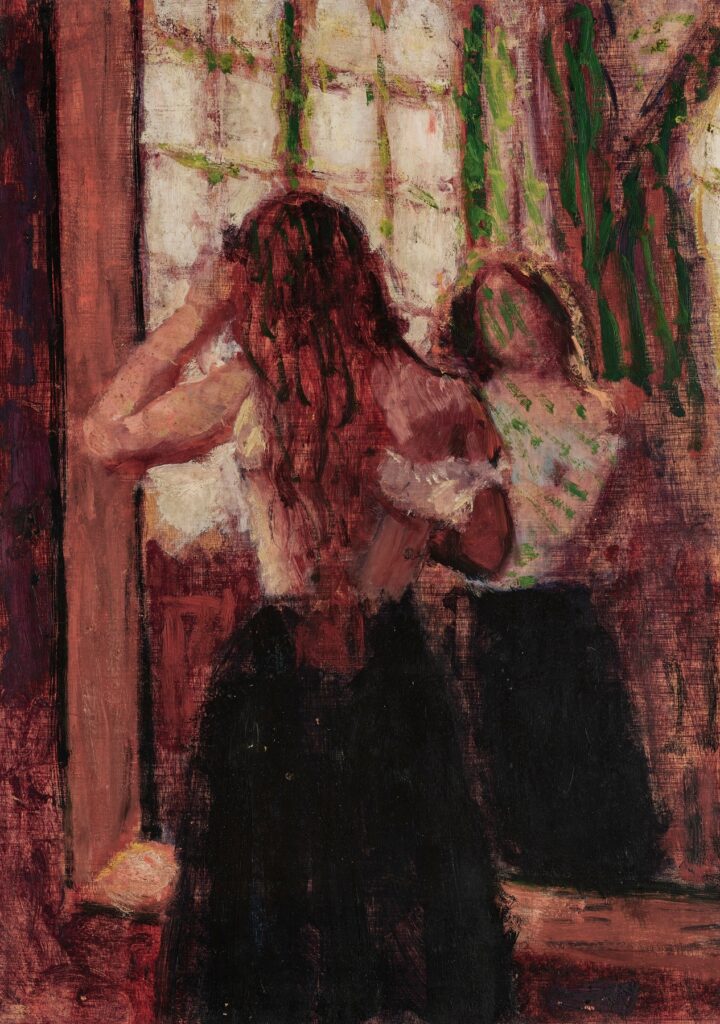
Consider the tonal breadth captured within the thirty lines:
- The Macabre: "I found a fox skull on the highway and kept it in my freezer."
- The Domestic Mundane: "I found a vacuum cleaner on sale and couldn’t afford it."
- The Existential Absurd: "I found God but lost Him at Sam’s Club."
- The Deeply Vulnerable: "I found it within myself to say I hope you’re happy and mean it."
By maintaining a flat, deadpan delivery across these wildly disparate registers, Gaines creates a hypnotic effect. The speaker does not moralize or rank these discoveries; finding Atlantis is given the same grammatical weight as pulling an endless strand of yarn from a rug.
Official Statements & Authorial Insights
In her official author’s note accompanying the publication, Gaines provided a rare, candid window into the psychological mechanics that birthed the poem. Her reflections offer a masterclass in how artists can weaponize their own vulnerabilities to reignite their creative sparks.
"This poem began as a kind of thought experiment—one I hoped would pull me out from a writing dry spell," Gaines writes.
She speaks directly to the disillusionment that plagues many contemporary creators, noting that she spent significant time contemplating "the allure of speculation, and the ways in which, if we are honest with ourselves, our fantasies can be pretty embarrassing or just as disappointing as our lived lives."
Crucially, Gaines identifies the anaphoric structure of the poem not as a stylistic trick, but as an emotional survival tactic:
"The anaphora of I found allowed me to consider the repetitive act of being in the world with wonder rather than resignation. What possibilities open up when we allow ourselves to play or get real with the stickier aspects of our humanity?"
In a cultural climate that often demands absolute certainty and pristine personal branding, Gaines’s confession of a "dream self" that is messy, petty, or confused feels revolutionary. Concluding her statement, she writes:
"Conceding a dream self—even ones that are messy or silly—is to confess the most vulnerable of feelings: hope. This poem is an exercise in hopefulness that I, we, you, whoever, can still be surprised when tracing the worn grooves of our interior lives."
Future Outlook: The Ongoing Evolution of a Literary Voice
As Amanda Gaines continues her work as a postdoctoral fellow and teaching assistant professor at the University of Tennessee, the literary community is watching closely to see how "In Another Life" influences her forthcoming projects.
Impact on Contemporary Poetics
The poem’s viral reception across literary circles signals a growing appetite for poetry that refuses to choose between high-art introspection and low-culture humor. Readers exhausted by overly solemn verse find sanctuary in Gaines’s willingness to admit that she "found her G-spot hiding behind her ears" or that she "found a fortune teller who said she’d refer me to a psychologist."
This blend of wit and despair expands the boundaries of what confessional poetry can achieve in the twenty-first century. It suggests that modern interiority is not a quiet sanctuary of solitary thought, but a crowded, chaotic room filled with lost grocery receipts, taxidermied animals, broken appliances, and unexpected moments of grace.
What Lies Ahead
With a robust academic career and an ever-expanding footprint in top-tier literary journals, Gaines is positioned as a defining voice of her literary generation. Whether she turns her gaze next toward longer narrative forms, a debut full-length poetry collection, or continued explorations in short fiction, her work promises to retain its trademark unflinching honesty.
"In Another Life" reminds us that discovery does not require an ocean liner or an uncharted continent. Sometimes, it requires nothing more than looking down at the threadbare rug of our own minds, finding a stray piece of yarn, and having the stubborn courage to keep pulling.





Comments
Facebook App ID not configured. Please add it in the Customizer.