
Executive Overview
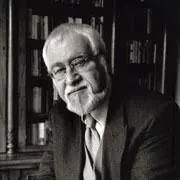
The global literary community is mourning the loss of one of the twentieth and twenty-first centuries’ most perceptive, compassionate, and technically accomplished voices. Douglas Dunn—the celebrated Scottish poet, critic, academic, and emeritus professor whose work mapped the shifting contours of working-class life, human grief, and the quiet dignity of the everyday—passed away on October 16, 2026, at the age of 83.
Dunn’s passing marks the end of an extraordinary era in British letters. Emerging in the late 1960s alongside a generation of writers who sought to democratize poetry without sacrificing formal rigor, Dunn established himself as a master chronicler of urban experience, social change, and profound personal loss. From his breakout debut, Terry Street (1969), to his devastating, transcendent Elegies (1985)—written in the wake of the untimely death of his first wife, Lesley—Dunn’s poetry balanced a fierce social conscience with an exquisite lyric sensitivity.
Throughout a career spanning more than half a century, Dunn’s contributions were recognized with some of the English-speaking world’s highest literary honors, including the Hawthornden Prize, the Whitbread Book of the Year Award, an OBE, and the prestigious Queen’s Gold Medal for Poetry. Beyond his own verse, he served as a vital mentor, a pioneering academic at the University of St Andrews, and a custodian of poetic heritage whose influence echoes through the work of generations of contemporary writers.
Read Also
This retrospective examines Dunn’s remarkable life, tracing his journey from an industrial Scottish upbringing through his formative years under the mentorship of Philip Larkin, his major publications, and his enduring legacy in the global canon.
Detailed Chronology: The Life and Times of Douglas Dunn
Early Life and Formative Years (1942–1968)
Douglas Dunn was born in 1942 in the village of Inchinnan, located in the historic county of Renfrewshire, Scotland. Growing up against the backdrop of wartime and post-war industrial Scotland, Dunn developed an acute awareness of working-class realities, community structures, and the quiet textures of ordinary lives—themes that would later form the beating heart of his poetic output.
Before dedicating his life fully to literature, Dunn pursued training as a librarian, attending the Scottish School of Librarianship. This early vocational path instilled in him a deep, archival reverence for language, books, and the structural integrity of literature. Following a transformative period spent living and working in the United States, Dunn returned to the United Kingdom, securing a position in the library at the University of Hull.
It was at Hull that Dunn entered one of the most intellectually stimulating environments of his life. Working within the university library, he came under the mentorship of the formidable and reclusive English poet Philip Larkin. While Larkin’s influence is frequently cited in discussions of Dunn’s early attention to local settings and colloquial speech, Dunn quickly forged a distinct, socially attuned voice that was entirely his own—one that looked outward toward community as much as it looked inward toward psychological introspection.
The Breakthrough and the 1970s: Capturing the Working-Class Experience
Dunn’s arrival on the British literary scene was nothing short of seismic. In 1969, Faber and Faber published his debut poetry collection, Terry Street. Set in a working-class street in Hull, the collection offered a sharp, empathetic, and unromanticized snapshot of urban neighbors, corner shops, domestic routines, and struggling households. Poems such as "A Removal from Terry Street" demonstrated Dunn’s uncanny ability to elevate the mundane into the monumental, treating the lives of ordinary citizens with anthropological grace and poetic dignity.
The 1970s saw Dunn cement his reputation as a vital voice in modern poetry through a succession of acclaimed collections:
- The Happier Life (1972): Expanded his thematic range while retaining his characteristic observational clarity.
- Love or Nothing (1974): Explored the complexities of human connection, romantic vulnerability, and emotional resilience.
- Barbarians (1979): Marked a politically charged turning point, engaging more directly with class consciousness, cultural identity, and the historical marginalization of working-class Scots.
The Crucible of Loss and Masterpiece Status: The 1980s
The early 1980s brought both major critical triumphs and profound personal devastation. In 1981, Dunn published St Kilda’s Parliament, a collection that explored isolation, history, and the ghost-haunted landscapes of the Scottish islands. The book was a critical triumph, earning him the prestigious Hawthornden Prize.
However, the trajectory of Dunn’s life and art was irrevocably altered by tragedy. His first wife, Lesley, fell ill and passed away at a tragically young age. Out of this abyss of grief emerged one of the most important collections of elegiac poetry in the English language: Elegies, published in 1985.
Elegies is widely regarded as a masterpiece of mourning. Eschewing easy consolations or sentimental platitudes, Dunn’s poems documented the shock of absence, the persistence of domestic memory, the cruelty of hospitals, and the enduring power of love. The collection struck a universal chord, winning the Whitbread Book of the Year Award and establishing Dunn not merely as a regional or social poet, but as an essential voice on the universal human condition of loss and remembrance.
Academic Distinction, Later Works, and National Honors (1988–2026)
As his career progressed, Dunn’s institutional and cultural footprint expanded significantly. He returned to Scotland to take up a prominent academic post, eventually serving as Professor of English and later as Emeritus Professor at the University of St Andrews, where he nurtured a new generation of writers and scholars.
His poetic output continued to thrive across the decades:
- Northlight (1988): Explored memory, landscape, and cultural inheritance with deepened philosophical maturity.
- The Year’s Afternoon (2000) and The Donkey’s Ears (2000): Demonstrated his sustained technical control and emotional resonance at the turn of the millennium.
- New Selected Poems 1964–2003 (2003): Offered readers and critics a comprehensive overview of a four-decade journey through modern British poetry.
In recognition of his towering contribution to literature, Dunn was appointed an Officer of the Order of the British Empire (OBE) in 2003. Ten years later, in 2013, he received the Queen’s Gold Medal for Poetry—an accolade reserved for those who have exerted a profound, lasting influence on the nation’s poetic heritage. Dunn continued to write, read, and comment on the literary arts well into his later years, remaining an active, beloved figure until his passing on October 16, 2026.
Supporting Context & Metrics: Dunn’s Place in the Literary Ecosystem
To fully appreciate the scope of Douglas Dunn’s impact, one must examine the intersection of his publishing history, critical reception, and educational legacy.
Key Publishing Milestones & Awards
- First Publication: Terry Street (Faber & Faber, 1969)
- Hawthornden Prize: Awarded for St Kilda’s Parliament (1981)
- Whitbread Book of the Year: Awarded for Elegies (1985)
- OBE Conferred: 2003
- Queen’s Gold Medal for Poetry: 2013
Critical and Archival Presence
Dunn’s work remains actively studied and celebrated across international platforms. His recorded readings of career-defining works—including "A Removal from Terry Street," "Washing the Coins," "Loch Music," and "Tursac"—are permanently preserved on The Poetry Archive, ensuring that future generations can experience the distinct cadence, warmth, and precision of his spoken delivery.
Academic and critical engagement with his oeuvre has remained robust. Notable literary assessments include Declan Ryan’s illuminating 2023 essay for The Poetry Review, titled "No victim to my place," published to coincide with Dunn’s eightieth birthday. Ryan’s analysis dissected Dunn’s complex relationship with geography, class, and artistic independence, demonstrating how the poet transcended regional labels to speak to universal truths.
Furthermore, Dunn’s influence extends deep into contemporary pedagogy and mentorship. Writing for The Poetry Society’s Young Poets Network in 2011, acclaimed poet Kayo Chingonyi reflected on the seismic impact of discovering Dunn’s work in his youth. Chingonyi noted how Dunn’s ability to render the textures of everyday British life accessible yet formally dazzling opened doors for younger writers from diverse backgrounds, proving that poetry could belong to everyone.
Official Statements and Tributes
Following the announcement of Douglas Dunn’s passing, literary institutions, former students, and fellow poets flooded public channels with tributes honoring his warmth, integrity, and monumental artistic output.
A spokesperson for The Poetry Society remarked:
"We remember fondly Scottish poet Douglas Dunn… whose work fundamentally enriched the tapestry of British verse. From his vivid, humane chronicling of urban community in Terry Street to the heartbreaking, restorative brilliance of Elegies, Douglas gave us a language for our shared humanity. He was a poet of extraordinary generosity, rigorous intellect, and fierce compassion. His voice will echo through the archives and classrooms for generations to come."
Colleagues from the University of St Andrews highlighted his immense dedication to teaching and academic leadership:
"As an Emeritus Professor of English, Douglas Dunn was more than a celebrated writer; he was a mentor, a scholar, and a passionate advocate for the transformative power of literature. He approached both his poetry and his students with profound humility and rigorous standards. The St Andrews community has lost a dear friend and a towering literary giant."
Contemporary poets and critics emphasized his fearlessness in confronting emotional and social realities. As noted in critical retrospectives, Dunn never sought refuge in academic abstraction or poetic posturing; instead, he met the world head-on—whether through the soot-stained windows of Hull or the desolate beauty of Scottish coastal landscapes.
Future Outlook: Preserving and Studying the Legacy of Douglas Dunn
As the literary world transitions from mourning his loss to celebrating his monumental achievements, the focus turns toward the preservation, dissemination, and ongoing critical re-evaluation of Douglas Dunn’s life’s work.
1. Archival Preservation and Digital Accessibility
With his foundational poems permanently housed in institutions like The Poetry Archive, digital scholars and educators are well-equipped to introduce Dunn’s work to new digital-native generations. Plans are underway among literary societies to curate expanded digital syllabi that pair Dunn’s social realist texts with contemporary urban poetry, highlighting his role as a structural bridge between mid-century modernism and twenty-first-century verse.
2. Academic Scholarship and Re-evaluations
University departments of English literature—particularly in Scotland and the North of England—are anticipating a resurgence in doctoral research focusing on Dunn’s synthesis of Scottish literary traditions with English working-class realism. Scholars are increasingly examining how Dunn’s poetry anticipates modern conversations surrounding regionalism, environmental isolation (as seen in St Kilda’s Parliament), and the therapeutic mechanics of grief in contemporary literature.
3. Mentorship and the Next Generation
The spirit of Douglas Dunn lives on through the writers he directly mentored at St Andrews and those who discovered their own poetic voices through his printed pages. As Kayo Chingonyi and Declan Ryan have demonstrated, Dunn’s legacy is not a static monument, but a living tradition—an open invitation for writers to look closely at their immediate surroundings, honor the dignity of ordinary lives, and speak truth to experience with unflinching honesty and technical mastery.
Douglas Dunn may have left us at the age of 83, but his poems—anchored in the concrete of Terry Street, polished by the waters of lochs, and tempered by the fires of profound love and loss—remain immortal fixtures of the literary landscape.




Comments
Facebook App ID not configured. Please add it in the Customizer.