
Executive Overview
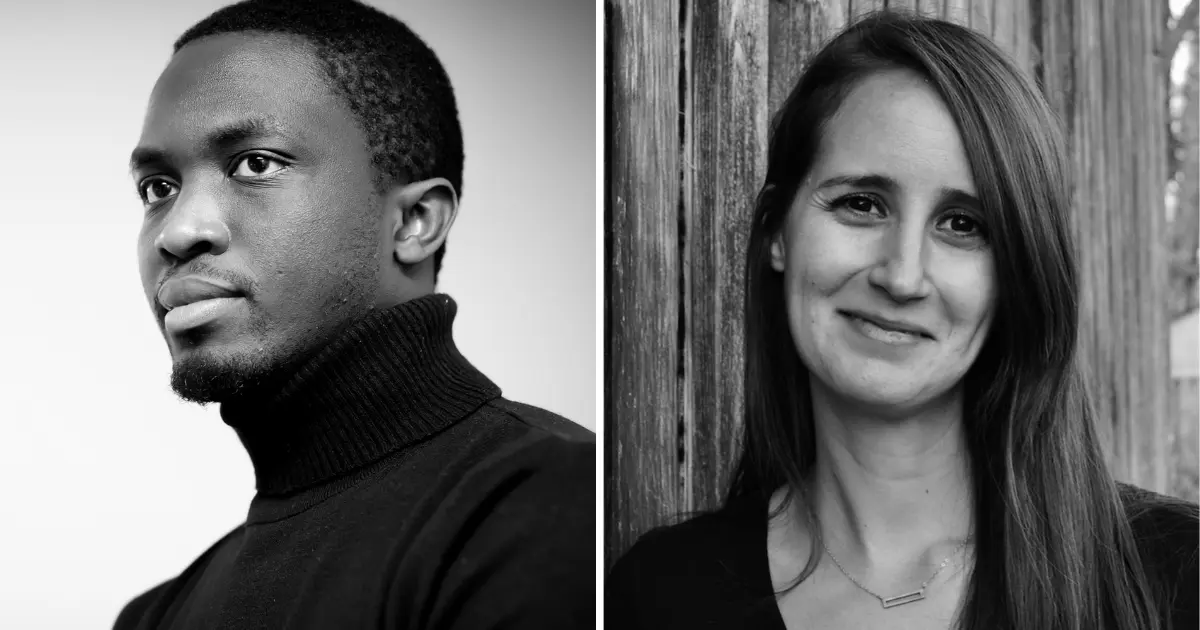
In the landscape of contemporary world literature, few creative partnerships are as seamlessly attuned as that of the Senegalese novelist Mohamed Mbougar Sarr and the American literary translator Lara Vergnaud. Following their celebrated collaboration on Sarr’s Goncourt-winning masterpiece, The Most Secret Memory of Men, the duo has returned with an English rendition of Sarr’s earlier, equally daring novel: Pure Men. Originally published in French, the novel plunges headfirst into the harrowing societal fault lines of Senegal through the lens of a deeply visceral, culturally embedded trauma.
The genesis of Pure Men traces back nearly two decades to a piece of digital footage that haunted Sarr from his adolescence. The novel examines state-sanctioned homophobia, societal violence, and the burden of historical and cultural memory. Bringing such a multifaceted, linguistically layered text into English was no small feat. It required Vergnaud to navigate volatile terminologies, historical temporalities, and the unique lyrical cadence of an author whose prose oscillates between scathing irony and profound tenderness.
This journalistic deep dive explores the anatomy of their collaboration. Drawing from exclusive insights into their translation process, this feature examines the real-world horrors that sparked the novel’s conception, the specific linguistic hurdles overcome during translation, the delicate balance of authorial involvement, and the enduring cultural legacy of a book that refuses to look away from human cruelty.
Read Also
Detailed Chronology: From a Senegalese Mobile Screen to the Global Anglophone Stage
To understand the weight of Pure Men, one must trace the timeline of its creation—a trajectory that spans nearly two decades of socio-political reckoning, personal maturation, and international literary acclaim.
2008: The Germ of an Idea in Senegal
The chronicle of Pure Men begins in 2008. Sarr, then just 18 years old and studying at a military high school in Senegal, encountered a piece of digital media that would permanently alter his worldview. A disturbing video was circulating peer-to-peer across mobile phones, capturing a frenzied, raging mob in the act of exhuming the corpse of a man suspected of having been homosexual during his lifetime.
The desecration of the dead—a violation of both human dignity and sacred cultural taboos—shocked the young Sarr to his core. The images refused to leave his psyche, lingering in his mind for nearly ten years. This lingering trauma eventually crystallized into the foundational opening scene of Pure Men. Though chronologically Sarr’s third novel written in French, it arrived before his breakout international hits, capturing a younger, more urgent, yet uniquely distinct phase of his literary voice.
The Chronological Inversion in Translation
In the Anglophone literary market, Pure Men arrives in the wake of The Most Secret Memory of Men, which was translated by Vergnaud for Other Press and catapulted Sarr into global prominence. Because The Most Secret Memory of Men was translated first, it created a wave of well-deserved anticipation and curiosity surrounding Sarr’s earlier catalog.
When Pure Men finally crossed the linguistic bridge into English, it offered readers a chance to look backward through Sarr’s bibliography. It allowed them to witness the artistic precursors to his mature style—a stylistic evolution marked by hesitation mixed with unwavering moral clarity.
The Mechanics of Translation: Challenges and Collaboration
Once Vergnaud took up the mantle of translating Pure Men, the project entered its grueling linguistic phase. Sarr assumed the role of a benevolent shadow—present, deeply respectful of the translation as an independent artistic creation, yet standing back to let Vergnaud work her craft.
Rather than relying solely on asynchronous digital communication, the duo bridged the geographic gap through direct dialogue. Whether through scheduled phone calls or face-to-face meetings in Parisian cafes, their working relationship relied on spoken resonance. When Vergnaud hit roadblocks—such as unlocking the meaning of elusive Senegalese cultural references, specific musical interludes like the sabar scene, or the symbolic weight of the jotalikat—hearing Sarr speak the lines aloud served as the master key that unlocked the English equivalent.
Supporting Context & Metrics: The Cultural and Linguistic Architecture of Pure Men
Translating a novel deeply rooted in a specific socio-political landscape requires a meticulous approach to linguistic plurality, historical verisimilitude, and cultural geography. Pure Men is not merely a story about homophobia in West Africa; it is an exploration of how language, rumor, state power, and collective violence intersect.
Linguistic Multiplicity and Historical Register
Sarr’s prose is characterized by an eclectic rhythm that blends classical French structures with the cadence of oral traditions, Wolof inflections, and searing journalistic observations. For Vergnaud, the primary challenge lay in maintaining this linguistic multiplicity without alienating the English-speaking reader or flattening the text into standard, homogenized prose.
Consider the deliberate choice of terminology. One of the most fiercely debated decisions during the translation of Pure Men involved rendering the French term “travesti.” Vergnaud ultimately opted for the intentionally outdated English term “transvestite.” This was not an arbitrary choice; it was a calibrated effort to capture the specific time period, cultural positioning, and linguistic architecture of the original text. The gamble paid off, drawing critical praise from literary journals like Words Without Borders, which lauded the translation’s historical sensitivity.
Metaphorical Landscapes: Time Travel and Musicality
When asked to encapsulate the essence of the book through metaphor, both creator and translator reached for profound comparative imagery:
- Mohamed Mbougar Sarr likened the book to the song “Xoolal bu baax” by legendary Senegalese artist Wasis Diop. It is a musical meditation centered on a vital ethical imperative: the refusal to judge others before knowing the unvarnished truth.
- Lara Vergnaud envisioned the translation process as operating a time machine. Translating Pure Men felt akin to stepping backward through an artistic timeline to encounter a younger, more uninhibited version of Sarr. While his trademark humor and intellectual rigor were fully present, they were freighted with the raw, exploratory tension of a developing novelist.
Official Statements and Dialogue
The collaborative dynamic between Sarr and Vergnaud highlights a masterclass in mutual professional respect. Below are key excerpts from their reflections on the collaborative journey behind Pure Men.
On the Genesis of the Book
Mohamed Mbougar Sarr: "In 2008 (I was 18, in a military high school in Senegal), I watched a sordid video that circulated from phone to phone. A raging crowd was seen digging up the body of a man suspected of having been homosexual during his lifetime. These images shocked me, and did not leave me for almost ten years. They ended up being the first scene of Pure Men… Lara perfectly managed to capture the energy, tones, voices, irony, lyricism, rhythms, and the violence of the novel. The love, too."
On Translation Challenges and Cultural Nuance
Lara Vergnaud: "There were many challenges—Sarr is not a simple writer to translate! I was especially attentive to terminology, aiming to simultaneously capture and convey the original text’s time period, cultural and geographical setting, and linguistic multiplicity. Translating ‘travesti’ as the outdated ‘transvestite’ was one choice I deliberated over at length… But the trickiest challenge was probably the last line of the book, which is deceptively simple and yet critical. To my immense relief, Sarr sent me a kind message after the English translation was published, telling me that I got it just right."
On the Author-Translator Relationship
Mohamed Mbougar Sarr: "I try to act like a shadow, always present but silent. However, I am curious about the work-in-progress, and I try to be available if needed, to specify, clarify, give some helpful elements… Lara and I usually organize a call or—even better—meet in a café, to talk very freely about the book."
Lara Vergnaud: "Sarr is an ideal writer to translate—a distant benevolent presence whom I know is there to help if needed, but also slightly indifferent, in the sense that he respects the translation as its own creation… In the case of Pure Men, while also clarifying a few terms and phrases, simply hearing him talk through a passage or scene was all I needed to ‘unlock’ the English meaning."
Future Outlook: The Ongoing Legacy of Sarr and Vergnaud
The publication of Pure Men in English marks a critical milestone not only for Mohamed Mbougar Sarr’s expanding global bibliography, but also for the art of literary translation itself. As contemporary literature increasingly breaks down linguistic silos, the partnership between Sarr and Vergnaud demonstrates how deep cultural empathy and rigorous intellectual dialogue can preserve the integrity of provocative works.
Expanding the Anglophone Canon
With Sarr’s literary star continuing to rise—bolstered by his status as a Chevalier of the National Order of Merit in Senegal and his sweeping international awards—the availability of Pure Men provides Anglophone critics and readers with a complete picture of his artistic evolution. It contextualizes the intellectual leaps that led to The Most Secret Memory of Men and sets a high watermark for socio-political fiction translated from French.
Upcoming Projects and Memoirs
Lara Vergnaud shows no signs of slowing down her prolific output as a literary champion of Francophone voices. Alongside her celebrated translations of works like Mathieu Belezi’s Attacking Earth and Sun, Vergnaud has announced her own deeply anticipated memoir, Untranslatable, slated for publication in early 2027. Given her profound insights into the mechanics of language, cultural transference, and literary collaboration, her memoir promises to offer invaluable perspectives to the global literary community.
Ultimately, Pure Men stands as a testament to literature’s capacity to confront the darkest corners of human behavior. Through Sarr’s unyielding gaze and Vergnaud’s meticulous, luminous translation, the ghosts of that 2008 digital video have been given a voice—one that demands to be heard across every language barrier.




Comments
Facebook App ID not configured. Please add it in the Customizer.