
Executive Overview
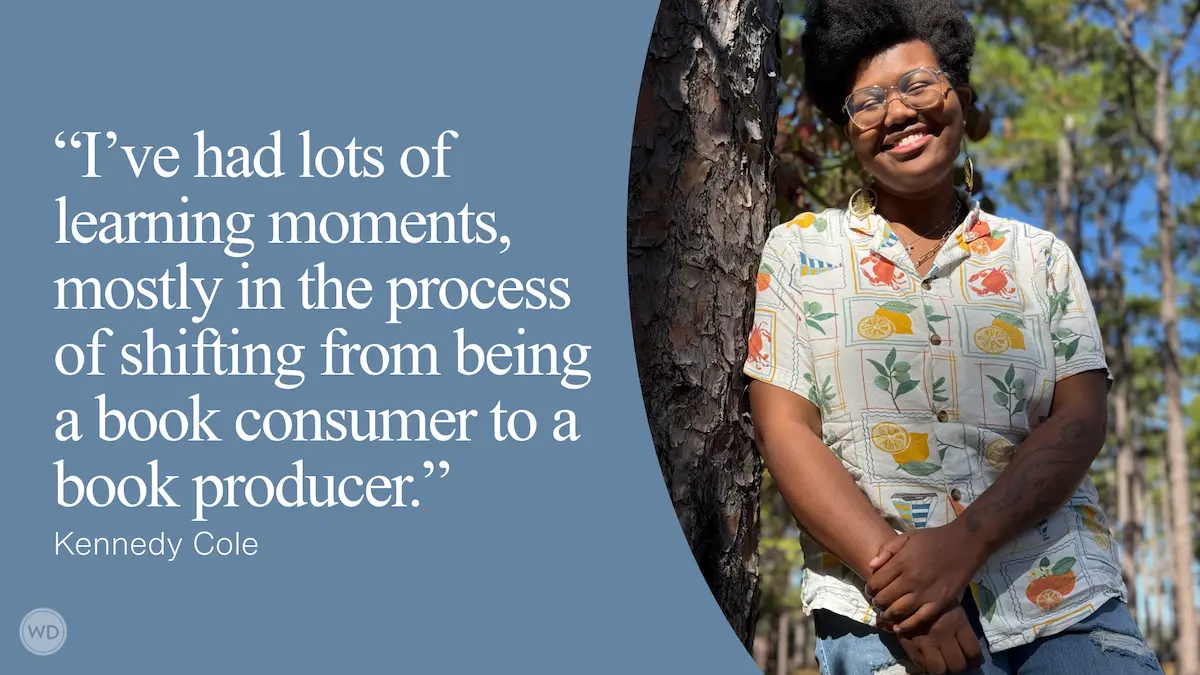
The contemporary literary landscape is undergoing a thrilling renaissance of speculative fiction, with horror carving out a particularly daring and subversive space. At the forefront of this movement is Kennedy Cole, a rising voice whose journey from a college creative writing classroom to a major-house book deal epitomizes the modern crucible of publishing. Cole’s highly anticipated debut novel, There Used to Be People Here, scheduled for publication by Berkley on November 3, 2026, promises to challenge genre boundaries.
Set against the atmospheric backdrop of 1970s Mississippi, the novel follows a Black detective and his temporary partner as they are assigned an investigation that metastasizes from a conventional murder mystery into a chilling paranormal conspiracy with profound, life-altering ramifications.
Secured by literary agent Alex Land at Mad Woman Literary Agency and championed by editor Candice Coote at Penguin Random House, Cole’s debut represents more than just a chilling ghost story or a period crime drama. It is a masterclass in genre-fluid storytelling, born from an organic writing process and shaped by collaborative editorial intervention. This profile examines the rigorous chronology of Cole’s path to publication, the creative challenges of cultivating suspense, the structural evolution of her characters, and the broader implications of stepping into the elite echelon of Black horror authorship.
Read Also
Detailed Chronology: From College Classroom to Berkley Debut
The trajectory of There Used to Be People Here is a testament to persistent creative momentum. Cole’s odyssey began during her sophomore year of undergraduate studies, a period marked by the customary anxieties and uncertainties familiar to emerging writers. Following a previously unsuccessful querying cycle for an earlier project, Cole sought solace and focus in a new narrative endeavor.
Phase 1: The Spark and the Sprint
The seed of the novel was planted during Cole’s very first fiction-oriented university class, where she penned a short story that would eventually be refined and repurposed as the novel’s prologue. By the time she penned the first official chapter, the project seized her imagination, transforming into a creative hyperfixation.
Working at a blistering pace, Cole completed the first draft of There Used to Be People Here in just three and a half months—her first completed novel-length manuscript since graduating from high school two years prior.
Phase 2: The Querying and Genre Reimagining
True to her self-described "panster" (writing by the seat of her pants) methodology, Cole finished the manuscript without a definitive roadmap for marketing or categorization. After a strategic cooling-off period of a few months, she shared the draft with a trusted circle of friends and beta readers. Their feedback highlighted an unexpected truth: the book functioned primarily as a high-stakes thriller.
Armed with this assessment, Cole queried the manuscript as an "upmarket thriller with elements of sci-fi." This positioning caught the attention of literary agent Alex Land. Recognizing the raw potential of the manuscript, Land encouraged Cole to heighten the atmospheric horror elements and deepen the psychological and romantic tension between the central characters, Samuel and Harvey.
The manuscript entered the acquisition market pitched as a sophisticated thriller, eventually capturing the interest of Berkley editor Candice Coote. It was Coote who proposed the most transformative leap of all: pushing the narrative completely across the threshold into the horror genre.
Phase 3: The Editorial Metamorphosis
Stepping fully into the horror genre required extensive structural overhauls. Collaborating closely with her editor, Cole spent multiple rounds of revision amplifying the ambient dread, sharpening the pacing, and integrating supernatural dread into the fabric of the 1970s Mississippi setting. The resulting text arriving on shelves in November 2026 bears little resemblance to the initial collegiate draft. Yet, for Cole, the transformation from thriller writer to debut horror author is a title she embraces with unbridled excitement.
Supporting Context & Metrics: The Mechanics of Modern Publishing
Transitioning from an avid consumer of literature to an active producer of commercial fiction demands a profound psychological and professional shift. For Cole, the publishing journey has been defined by distinct logistical milestones and creative realizations.
| Project Milestone | Detail / Entity |
|---|---|
| Author | Kennedy Cole (BFA in Creative Writing, Certificate in Publishing) |
| Literary Agent | Alex Land (Mad Woman Literary Agency) |
| Publisher | Berkley (an imprint of Penguin Random House) |
| Release Date | November 3, 2026 |
| Genre Category | Horror / Speculative Fiction |
| Timeline (Idea to Shelf) | Approximately 3.5 Years |
| Setting | 1970s Mississippi |
The Reality of Professional Authorship
The mechanics of traditional publishing often catch debut authors unawares, particularly regarding the commercial lifecycle of a book. Cole notes that the true magnitude of her industry transition did not fully crystallize until she began pitching her sophomore novel.
Where her debut was written organically out of academic and personal inspiration, her second book required a formalized industry approach: conceptualizing entirely new concepts from scratch, pitching them directly to her editor and publishing executives at Penguin Random House, and executing the manuscript based on a fully approved structural outline. Balancing the enduring identities of reader and writer while formally adopting the professional weight of "author" has proven to be a whirlwind of accelerated industry education.
Official Statements and Author Insights
In discussions regarding her creative philosophy, genre categorization, and character development, Cole offers profound insights into the psychological underpinnings of There Used to Be People Here.
Navigating the Expectations of Black Horror
Addressing the editorial pivot that cast her book firmly into the horror genre, Cole admits to initial hesitation, rooted in her deep reverence for the lineage of Black speculative storytelling:
"Honestly, I was surprised. I personally view Black horror authors as their own tier of authorhood, in a way. While all Black authors certainly have expectations within the publishing sphere, I believe Black horror exists in its own genre. I knew that if I were to be labeled as such, I’d have a different standard to live up to than if I were a thriller author. The idea of it was, frankly, exhilarating."
Character Evolution: The Genesis of Cassandra
Behind every compelling supernatural mystery lies a deeply human core. During the developmental phases of the manuscript, Cole faced a major structural dilemma regarding a key supporting character, Cassandra. Originally conceived as Samuel’s wife, Cassandra’s narrative function shifted as the organic chemistry between detectives Samuel and Harvey developed undeniable romantic tension.
Transitioning Cassandra into Samuel’s sister proved vital, though early beta readers questioned her narrative weight. Reflecting on the temptation to excise the character entirely to streamline the focus on Samuel and Harvey, Cole recognized the psychological peril of isolating her protagonist:
"The issue with taking her away, however, was how poorly Samuel would function without her. Knowing him, he’d be extremely miserable. And beyond that, there would be very little for him to do aside from mull over the case and talk to Harvey. In an effort to keep Samuel’s worth from revolving around the man he was unexpectedly paired up with, I decided to keep Cassandra and flesh out her impact on the plot."
Today, Cassandra stands as a pillar of the narrative, enriching the thematic resonance of the book from its opening pages to its chilling conclusion.
Future Outlook: The Legacy and Mandate of Kennedy Cole
As the publishing world counts down to the November 3, 2026 release of There Used to Be People Here, the literary community is keeping a close watch on Cole’s trajectory. Her work taps into a vital cultural moment where historical fiction, detective procedurals, and speculative horror intersect to examine systemic realities through a supernatural lens.
More than commercial success or genre classification, Cole’s ultimate aspiration remains deeply personal. Having poured years of self-discovery, identity exploration, and emotional maturation into the characters of Samuel and Harvey, her primary hope is one of profound resonance:
"I hear a lot of authors say this, but I honestly hope that my readers will feel seen. Throughout the process of drafting, querying, and publishing There Used to Be People Here, I’ve gone through a lot of self-discovery in terms of my identity and stepping into adulthood. Samuel and Harvey are near and dear to my heart; sharing them and all they’ve endured isn’t easy in the slightest. Their journey is my own. I’ve poured my all into this book, and I pray that at least one person is able to sense that."
For aspiring writers navigating the turbulent waters of the publishing industry, Cole offers an enduring piece of advice that serves as both a shield and a compass:
"Your story is yours. Beyond publishing, beyond being an author, beyond sending your book to beta readers or critique partners or friends or family, it belongs to you. Remember that first and foremost when you’re querying agents, and pitching new books to your editor, and chasing your dreams."
With a sophomore novel already deep in development following rigorous editorial approvals, Kennedy Cole is not merely enjoying the fleeting spotlight of a debut success. She is methodically building a literary career defined by emotional honesty, genre agility, and uncompromising artistic vision. When There Used to Be People Here hits shelves this November, readers will discover a new master of modern horror—one who understands that the most terrifying monsters are often those we uncover within ourselves and our collective histories.



Comments
Facebook App ID not configured. Please add it in the Customizer.