
Executive Overview
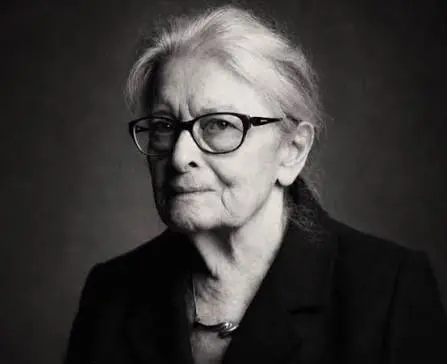
The global philosophical community is in mourning following the passing of Dr. Ioanna Kuçuradi, one of the most prominent, prolific, and influential thinkers of the twentieth and twenty-first centuries. Kuçuradi died on October 2, 2026, at the age of 89. A towering figure in Turkish academia and an internationally celebrated moral philosopher, her life’s work fundamentally shaped how modern societies conceptualize ethics, human dignity, and human rights.
Across a career spanning more than six decades, Dr. Kuçuradi bridged the often-fractured worlds of rigorous academic philosophy and practical, institutional policymaking. Her intellectual footprint spans dozens of foundational texts—including Human Beings and Their Values (İnsan ve Değerleri), Ethics (Etik), Looking at Art Through Philosophy (Sanata Felsefeyle Bakmak), and Human Rights: Concepts and Problems—which remain core texts for students and scholars of moral philosophy.
Beyond her extensive bibliography, Kuçuradi was an institutional architect. She founded university departments, established specialized research centers, and led major international philosophical bodies, serving as the Honorary President of the World Federation of Philosophical Societies (FISP) and the long-standing president of the Turkish Philosophy Association. Furthermore, her influence extended deeply into the apparatus of governance and international diplomacy, where she chaired the High Advisory Council for Human Rights of the Prime Ministry of Turkey and contributed extensively to European monitoring bodies dedicated to combating racism and xenophobia.
Read Also
This article explores the life, career, and enduring intellectual legacy of Dr. Ioanna Kuçuradi, charting her journey from a brilliant student at Istanbul University to a global stateswoman of ethics and human rights.
Detailed Chronology: The Making of a Philosopher
Early Life, Academic Foundations, and the Istanbul Years (1936–1959)
Ioanna Kuçuradi was born in 1936, entering a world navigating the turbulent aftermath of the interwar period and the formation of modern geopolitical landscapes. Growing up in Turkey during a period of rapid institutional modernization, she displayed an early aptitude for rigorous intellectual inquiry.
Her formal academic journey began at Istanbul University, one of the region’s premier centers of higher learning. Immersed in the university’s vibrant intellectual milieu, Kuçuradi pursued her undergraduate studies in philosophy, a field that would become her lifelong vocation. During an era when the discipline was heavily shaped by European expatriate scholars and the internal evolution of Turkish republican thought, Kuçuradi developed a fierce commitment to clarity, conceptual rigor, and humanistic values.
She continued her graduate studies at Istanbul University, successfully defending her doctoral dissertation and earning her Ph.D. in philosophy. Her early academic training laid the groundwork for a career defined by an insistence that philosophy was not merely an abstract, ivory-tower exercise, but a vital instrument for understanding and improving the human condition.
The Anatolian Ascent and the Hacettepe Revolution (1960–2005)
Before cementing her legacy at Hacettepe University, Kuçuradi honed her pedagogical craft at Atatürk University, bringing rigorous philosophical discourse to regional institutions of higher education. However, her most enduring institutional contribution began to take shape in the late 1960s.
In 1968, Kuçuradi joined Hacettepe University in Ankara, where she was tasked with founding the Department of Philosophy. Under her visionary leadership as chair—a position she held for many years—the department rapidly evolved into Turkey’s premier academic hub for philosophical research. Kuçuradi engineered a curriculum that balanced the history of philosophy with contemporary analytical and continental traditions, instilling in generations of students a deep dedication to critical thinking.
Recognizing that the traditional boundaries of university departments were insufficient to tackle the complex moral crises of the late twentieth century, Kuçuradi expanded her institutional footprint. She founded Hacettepe University’s Centre for Research and Application of the Philosophy of Human Rights, an innovative entity designed to bridge theoretical ethics with empirical human rights advocacy.
Her academic excellence and international standing were further recognized globally when she was appointed to a prestigious UNESCO Chair of Philosophy, a role she held from 1998 to 2005. Following her formal retirement from Hacettepe in 2005, Kuçuradi refused to slow down. She transitioned to Maltepe University in Istanbul, where she replicated her pioneering model by creating and directing a specialized human rights philosophy institute, ensuring that her pedagogical mission would continue unhindered into the twenty-first century.
Supporting Context & Metrics: A Life in Numbers and Leadership
To fully appreciate the scale of Dr. Kuçuradi’s impact, one must examine the vast network of professional roles, public appointments, and international honors she accumulated throughout her lifetime. Her career represents a rare synthesis of grassroots academic administration, national public service, and global intellectual diplomacy.
Institutional Leadership Roles
- Turkish Philosophy Association: Served as President, steering the organization through decades of political and social transformation while fostering a vibrant national philosophical community.
- World Federation of Philosophical Societies (FISP): Held the esteemed position of Honorary President, representing the pinnacle of global philosophical governance.
- Prime Ministry of Turkey: Chaired the High Advisory Council for Human Rights, translating philosophical frameworks into concrete national policy recommendations.
- United Nations & European Bodies:
- Chaired the Turkish National Committee for the UN Decade for Human Rights Education.
- Served on the National Advisory Council for Human Rights of Turkey.
- Contributed her expertise to the European Monitoring Centre on Racism and Xenophobia (EUMC), helping shape regional strategies against prejudice.
Academic Milestones & Global Recognition
- Founding Chair: Established the Department of Philosophy at Hacettepe University (1968).
- UNESCO Chair Holder: Directed the UNESCO Chair of Philosophy from 1998 to 2005.
- Center Director: Founded and directed the Centre for Research and Application of the Philosophy of Human Rights at Hacettepe University, followed by a similar institute at Maltepe University.
Major Publications & Scholarly Output
Kuçuradi’s literary corpus is vast, addressing the intersection of human value, moral agency, and aesthetic appreciation. Her foundational works include:
- Human Beings and Their Values (İnsan ve Değerleri)
- Ethics (Etik)
- Looking at Art Through Philosophy (Sanata Felsefeyle Bakmak)
- Human Rights: Concepts and Problems (İnsan Hakları: Kavramları ve Sorunları)
These works explore the ontological status of human values, arguing that human rights are not merely legal constructs or political concessions, but philosophical imperatives rooted in the very nature of human agency and dignity.
Official Statements and Tributes
Following the announcement of her passing on October 2, 2026, academic institutions, philosophical associations, and international bodies released heartfelt tributes, honoring her memory and intellectual contributions.
Luca Scarantino, President of the World Federation of Philosophical Societies, issued a statement noting:
"Ioanna Kuçuradi was a pillar of the international philosophical community. She possessed that rare combination of profound theoretical brilliance and unyielding moral courage. Under her guidance, international philosophy was reminded of its fundamental duty: to defend human dignity through rational discourse and uncompromising ethical clarity. Her loss is immeasurable, but her blueprint remains."
The Turkish Philosophy Association released a commemorative address reflecting on her national impact:
"Our beloved president, teacher, and guiding light has left us. Professor Kuçuradi dedicated every waking moment to the elevation of thought in Turkey and across the globe. She taught us how to think, how to value human beings, and how to stand firm in the defense of rights. Her legacy is woven into the very fabric of Turkish academia and the global philosophical conscience."
Colleagues from Hacettepe University recalled her rigorous academic standards and her fierce advocacy for institutional integrity:
"She did not merely build a department; she built a temple of critical reason. To study under Dr. Kuçuradi was to understand that philosophy is a lifelong ethical commitment. Her standards were exacting, her intellect razor-sharp, and her dedication to her students absolute."
Future Outlook: The Enduring Legacy of Ioanna Kuçuradi
As the international academic community processes the loss of Dr. Ioanna Kuçuradi, attention naturally turns to the longevity of her work and the future of the institutions she built. In an era marked by rising authoritarianism, algorithmic disruption of human agency, and deep geopolitical polarization, Kuçuradi’s insistence on the objective reality of human values and the universal imperative of human rights feels more urgent than ever.
The research centers she founded at Hacettepe and Maltepe universities stand as dynamic incubators for the next generation of ethicists and human rights advocates. Her books, translated and studied across multiple continents, continue to train young minds in the art of conceptual analysis and moral reasoning.
Furthermore, the philosophical frameworks she championed—which view human rights not as political bargaining chips, but as the normative conditions required for individuals to develop their human capabilities—provide a vital theoretical compass for international law and governance in the twenty-first century.
Dr. Ioanna Kuçuradi leaves behind a legacy defined by intellectual fearlessness, institutional excellence, and an unwavering belief in the moral capacity of humankind. Though her voice has been silenced, the echoes of her rigorous questioning and her fierce defense of human dignity will reverberate through seminar rooms, courtrooms, and international halls of power for generations to come.





Comments
Facebook App ID not configured. Please add it in the Customizer.