
Executive Overview
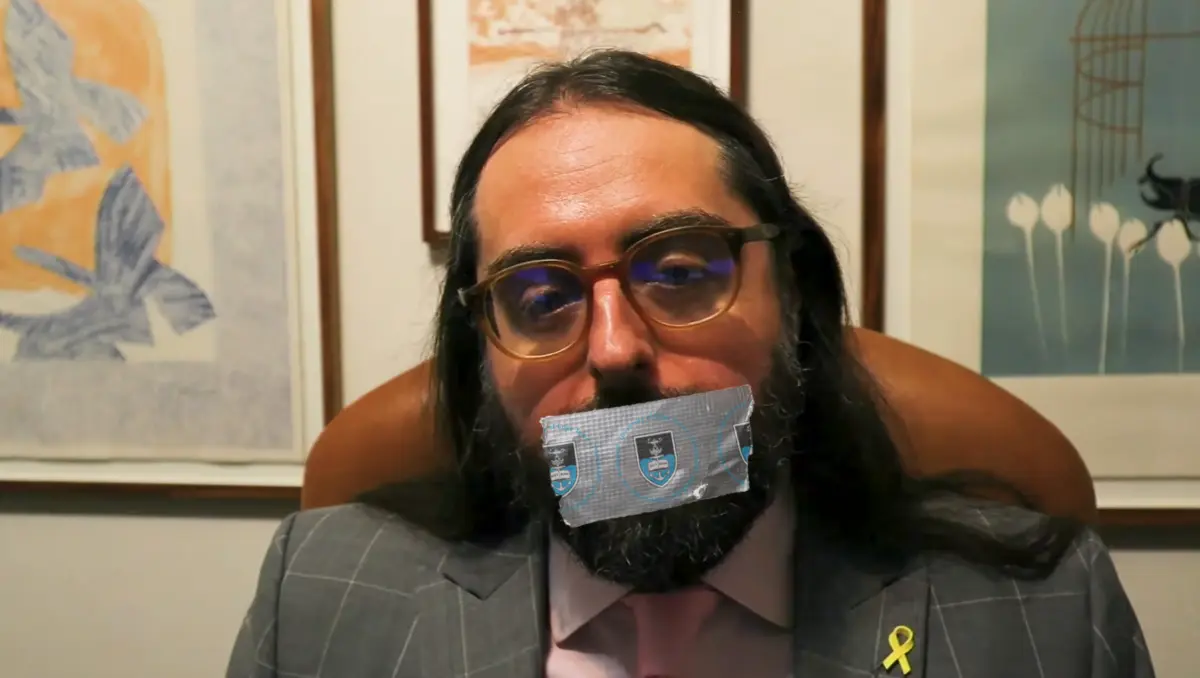
The intersection of academic governance, geopolitical conflict, and freedom of expression has ignited a fierce constitutional battle at the University of Cape Town (UCT). Mark Oppenheimer—a prominent South African human rights lawyer, co-host of the acclaimed Brain in a Vat philosophy podcast, and a member of the UCT Council—faces imminent removal from the institution’s highest governing body. Simultaneously, fellow Council member David Ansara faces a six-month suspension.
The disciplinary actions stem from an independent investigation led by retired judge Mahomed Navsa, which concluded that comments made by Oppenheimer during a March 2025 appearance on Ayaan Hirsi Ali’s podcast breached the Council’s code of conduct. In the interview, Oppenheimer criticized UCT’s posture regarding the Middle East—specifically targeting its stance on Israeli academic boycotts—and alleged that "Islamist elements" had exerted undue influence over campus administration and decision-making bodies. Ansara’s impending suspension is tied to his decision to repost social media commentary praising Oppenheimer’s interview.
This controversy has escalated rapidly from an internal governance dispute into a national flashpoint concerning the limits of free speech, the safeguarding of academic freedom, and the application of South Africa’s constitutional protections. Critics of the university’s disciplinary measures, including a rapidly growing coalition of academics, legal scholars, and public intellectuals rallying behind an open letter, argue that UCT is weaponizing internal codes of conduct to punish heterodox viewpoints and stifle robust institutional critique. As the university’s five-member subcommittee weighs final sanctions, the outcome of this case threatens to establish a critical legal and cultural precedent for public institutions across South Africa.
Read Also
Detailed Chronology
March 2025: The Podcast Interview that Sparked the Crisis
The foundational catalyst for the current crisis occurred during a March 2025 episode of Ayaan Hirsi Ali’s widely distributed podcast. Mark Oppenheimer, participating as a guest, engaged in a wide-ranging discussion concerning institutional capture, ideological orthodoxies, and freedom of expression.
Approximately 32 minutes into the broadcast, the conversation turned toward South Africa’s higher education landscape, with a specific focus on UCT. Oppenheimer—identifying himself as a member of the UCT Council—vocalized sharp critiques of the university’s trajectory. He addressed UCT’s controversial resolutions concerning the Gaza conflict, characterizing them as a de facto academic boycott directed at academics associated with the Israeli Defense Force. Furthermore, he alleged that "Islamist elements" had successfully navigated positions of influence within the university, creating an environment where dissenting or moderate voices were marginalized, and detailing incidents of anti-Semitic intimidation on campus.
While Oppenheimer’s professional background includes high-profile appearances in the Supreme Court of Appeal and the Constitutional Court litigating the boundaries between freedom of expression and genuine hate speech, his podcast remarks quickly transcended academic debate to become an internal institutional liability.
October 2025: The Navsa Inquiry and Council Adoptions
Following public fallout and internal complaints from aggrieved members of the university community, UCT commissioned retired judge Mahomed Navsa to investigate the conduct of both Mark Oppenheimer and David Ansara.
Judge Navsa’s investigative report concluded that Oppenheimer’s assertions regarding "Islamist control" were baseless, finding no evidence that Council or Senate members were Islamists or acting under Islamist influence. Although Oppenheimer did not name specific individuals, the report determined that his commentary directly implicated and maligned members of the Council and Senate who supported the contentious Gaza resolutions. Judge Navsa asserted that the remarks violated the Council’s code of conduct by breaching requirements of good faith, institutional respect, and collective responsibility.
Concurrently, the investigation targeted David Ansara for reposting social media content that lauded Oppenheimer’s interview, characterizing the amplification as complicit in the code violation.
On October 18, 2025, during a special meeting of the UCT Council, the governing body formally adopted Navsa’s investigative reports. Moving swiftly past the investigative phase, the Council appointed a five-subcommittee panel tasked with hearing final representations from Oppenheimer and Ansara before officially executing the proposed sanctions: the expulsion of Oppenheimer from the Council and a six-month suspension for Ansara.
October 18, 2025 and Beyond: Public Pushback and Legal Defense
In immediate defiance of the Council’s actions, Mark Oppenheimer published a comprehensive response on October 18, 2025, via the publication The Daily Friend. He categorized the proposed removal as "an egregious attack on freedom of expression."
Oppenheimer maintained that his podcast commentary addressed legitimate, urgent concerns regarding anti-Semitic intimidation, campus safety, and the institutional protection of Jewish students. In his formal submissions to the inquiry, he clarified that he had never labeled every supporter of the Gaza resolutions as an "Islamist," nor had he categorized Council or Senate members as terrorists. He argued that critiquing Islamism as a distinct political ideology does not equate to bigotry against Muslims, and that his references to individuals being "terrorized" described peer-to-peer intimidation on campus rather than coordinated terrorist activity.
Parallel to Oppenheimer’s defense, an open letter defending freedom of expression at UCT began circulating within academic and legal circles, rapidly gathering signatures from prominent figures demanding that the Council reverse its punitive trajectory.
Supporting Context & Metrics
The Geopolitical Fault Lines at UCT
The disciplinary proceedings against Oppenheimer and Ansara do not exist in a vacuum; they are symptoms of deep, polarized ideological fissures that have characterized the University of Cape Town in recent years. The university has been a focal point for intense activism surrounding the Israeli-Palestinian conflict. Resolutions passed by the Council concerning Gaza have triggered passionate internal campaigns, pitting student and faculty factions against one another.
Supporters of the university’s resolutions view them as a moral imperative against perceived human rights violations. Conversely, critics—including Oppenheimer—argue that such institutional positions alienate Jewish students and faculty, stifle open academic discourse, and cross the line from political solidarity into discriminatory academic boycotts.
Legal precedent in South Africa further complicates this environment. UCT received explicit legal advice in 2019 warning that an institutional academic boycott of Israel would fundamentally breach the constitutional right to academic freedom. The tension between institutional foreign-policy stances and domestic constitutional guarantees forms the bedrock of the ongoing dispute.
Constitutional Protections of Free Expression
At the heart of the legal argument surrounding the Oppenheimer case is Section 16 of the Constitution of the Republic of South Africa, 1996, which guarantees freedom of expression. The text explicitly states:
16. Freedom of expression
(1) Everyone has the right to freedom of expression, which includes—
(a) freedom of the press and other media;
(b) freedom to receive or impart information or ideas;
(c) freedom of artistic creativity; and
(d) academic freedom and freedom of scientific research.(2) The right in subsection (1) does not extend to—
(a) propaganda for war;
(b) incitement of imminent violence; or
(c) advocacy of hatred that is based on race, ethnicity, gender or religion, and that constitutes incitement to cause harm.
Legal analysts reviewing the transcript of Oppenheimer’s podcast appearance note that his rhetoric falls comfortably outside the exclusionary parameters defined in Section 16(2). He did not engage in war propaganda, incite imminent violence, or advocate for hatred inciting harm based on protected characteristics. Because UCT is a fully public university funded by the state, it is bound as an organ of state to respect, protect, promote, and fulfill the rights enshrined in the Bill of Rights.
Official Statements & Arguments
The Institutional Position: Judge Navsa’s Findings
The official stance of the UCT Council, anchored by Judge Navsa’s report, frames the controversy not as a suppression of free speech, but as a breach of fiduciary duty, institutional decorum, and factual integrity.
According to the findings, members of a university’s governing council occupy positions of profound trust. When a council member utilizes an international media platform to claim that "Islamist elements have taken control" of the university, they are alleged to have:
- Impugned the integrity and collective character of their fellow council and senate colleagues.
- Imparted verifiable falsehoods regarding the internal governance of a public institution.
- Compromised the university’s public standing and operational stability during a volatile socio-political climate.
The inquiry maintained that the Council’s code of conduct requires members to exercise a standard of responsibility that precludes making sweeping, unverified accusations against the institution they were elected or appointed to govern.
The Dissenting Perspective: The Open Letter Defense
Conversely, the open letter circulating in defense of Mark Oppenheimer articulates a robust defense of institutional pluralism and intellectual liberty. Key excerpts from the document challenge the foundational logic of the Navsa report:
"Our support for Oppenheimer’s freedom of expression does not require agreement with his political views, his assessment of events at UCT, or his choice of words. These matters are open to vigorous disagreement. The principle we defend is that members of a university community must be free to question institutional policies and prevailing orthodoxies, including on subjects that provoke deep political and religious disagreement."
The signatories directly address Judge Navsa’s framing of the case:
"Judge Navsa writes that this case concerns good faith and respect for Council, not free speech. We disagree. The report finds against Oppenheimer because it judges his claims false and insulting… When a governing body removes a member because it finds his public account of such a dispute untrue, it punishes speech, whatever it calls the offence. The case against Ansara is weaker still: he faces suspension for sharing another person’s praise of the interview."
The open letter concludes with a defense of traditional academic dispute resolution:
"Some of Oppenheimer’s claims in the interview may be overstated, and some may be wrong. Colleagues who felt maligned had every right to answer him, in public and at length. That is how a university should settle such disputes. It is no reason to remove an elected member from the body that oversees the university."
Future Outlook
The immediate future of the UCT Council depends on the deliberations of the five-member subcommittee tasked with determining the final sanctions for Mark Oppenheimer and David Ansara. Should the subcommittee proceed with the recommended expulsion and suspension, the dispute is widely expected to spill out of internal academic committees and into the South African high courts.
Legal experts suggest that an expulsion based on public commentary regarding matters of intense public interest would leave UCT vulnerable to judicial review. A court challenge would force the judiciary to test the boundaries of a public university’s code of conduct against the supreme constitutional right to freedom of expression and academic liberty.
Beyond the legal ramifications, the case carries profound institutional consequences for the University of Cape Town. Critics warn that executing punitive measures against dissenting council members risks creating a chilling effect, transforming governance bodies into ideological echo chambers where robust internal critique is met with expulsion. As signatures continue to accrue on the open letter, the eyes of the South African legal, academic, and civil rights communities remain fixed on UCT, awaiting a decision that will test the resilience of free speech in the country’s higher education sector.





Comments
Facebook App ID not configured. Please add it in the Customizer.