
Executive Overview
In the quiet, climate-controlled seminar rooms of elite universities, a curious cultural norm reigns supreme: take everything at face value. When an academic stands before their peers and argues that life is devoid of ultimate meaning, or that external reality is an elaborate illusion, the professional response is rarely an expression of clinical concern. No one reaches for a telephone to dial human resources or suggests a wellness check. Instead, the collective response of the philosophical guild is an austere, intellectual parry: “What, exactly, do you mean by ‘ultimate’?”
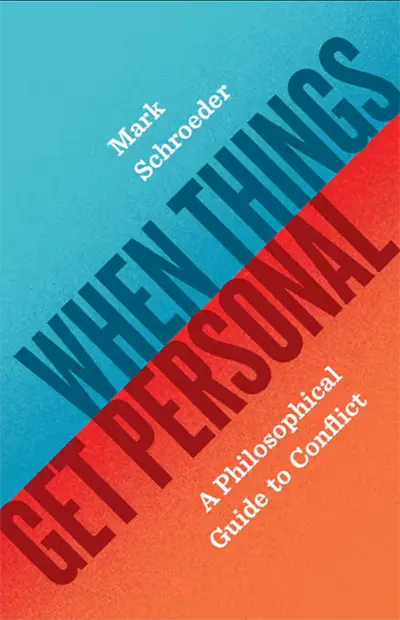
Yet, a provocative new intervention from Mark Schroeder, a professor of philosophy at the University of Southern California, suggests that this baseline professional courtesy may be hindering the discipline. In his recent book, When Things Get Personal: A Philosophical Guide to Conflict, Schroeder argues that philosophers are profoundly averse to a fundamental tool of human interaction: diagnosis. While ordinary life relies on our ability to look past the literal words someone is saying—attributing their sharp tone to exhaustion, ideology, nerves, or an obsessive-compulsive flare-up—philosophy tends to treat every argument as an immaculate conception of pure reason.
According to Schroeder, this radical charity goes too far. By refusing to diagnose the psychological, historical, or linguistic noise underlying scholarly arguments, philosophers frequently achieve a worse understanding of what is actually happening in a debate. This article explores Schroeder’s thesis, examining the fine line between charitable engagement and intellectual naivety, the role of diagnosis in everyday life, and why philosophy desperately needs to embrace the messy art of interpretation.
Read Also
Detailed Chronology: The Evolution of Academic Engagement vs. Real-World Diagnosis
To understand Schroeder’s critique, one must trace how the philosophical discipline has historically separated itself from the messy realities of human psychology.
The Classical Precedent
The reluctance to dismiss an argument based on its source has deep historical roots in the Western philosophical tradition. Consider Book 1 of Plato’s Republic, where the sophist Thrasymachus launches into an aggressive, cynical defense of injustice, declaring that "might makes right." To modern sensibilities, Thrasymachus’s abrasive delivery and self-serving posture invite an immediate psychological dismissal—a modern observer might be tempted to diagnose him as an embittered contrarian or an arrogant provocateur.
Yet, in subsequent books, Glaucon and Adeimantus step forward to rescue the challenge. They effectively acknowledge that while Thrasymachus may have been an abrasive interlocutor, his underlying argument must not be dismissed simply because of his unpleasant demeanor. Socrates and his interlocutors proceed to take the challenge seriously despite its source.
This foundational moment established an enduring professional ethos: philosophy is meant to be a safe space where ideas are judged on their logical merits, entirely insulated from ad hominem attacks, class privilege, patriarchy, or psychological quirks.
The Modern Scholarly Self-Selection
Over centuries, this ethos transformed into a powerful self-selection mechanism. People who thrive in philosophy tend to possess an unusually low comfort level with psychological diagnosis. While a literary theorist might immediately historicize a text as a manifestation of bourgeois guilt, and a sociologist might reduce a political stance to identity-based ideology, the philosopher insists on analyzing the truth conditions of the proposition itself.

Schroeder illustrates this with a personal anecdote about a former student named Sam (a pseudonym for a real individual). As a freshman away from home, Sam became intensely gripped by Cartesian skepticism—not merely as an academic exercise, but with a debilitating anxiety over whether he was genuinely surrounded by physical objects like brick buildings and skateboards. His philosophy professors attempted to engage him by debating closure principles for knowledge.
It was only when Sam went home for the holidays and expressed his existential dread to his mother that a true breakthrough occurred. His mother took one look at the situation and offered a blunt, non-philosophical diagnosis: “Sam, you’re letting your OCD get control of you again!”
Armed with this external perspective, Sam immediately recognized that his skeptical terror was not a pristine insight into the metaphysical structure of reality, but rather the noise of a well-managed neurological condition. The obsessive voice lost its authority. Sam returned to college with renewed focus, eventually earning a PhD in philosophy—remarkably maintaining a meticulous, detail-oriented research style informed in part by the very traits tied to his diagnosis.
Supporting Context & Metrics: Signal, Noise, and "Discord"
Schroeder’s exploration of Sam’s case study opens a broader theoretical window into how humans manage interpersonal conflict. He draws a direct parallel between everyday emotional regulation and scholarly debate, utilizing concepts of signal and noise.
[ Human Communication ]
       │
       ├──► SIGNAL (Inherent semantic content, valid arguments)
       │
       └──► NOISE (Confounding factors: hunger, fatigue, OCD, academic dogmas, graduate school "imprinting")
The Imperfectly Embodied Interlocutor
We are all imperfectly embodied beings. Human communication is routinely contaminated by factors that have nothing to do with objective rationality:
- Physiological states: Hunger, exhaustion, hormonal fluctuations, and elevated adrenaline.
- Psychological conditions: Attachment styles, anxiety disorders, and deeply ingrained cognitive biases.
- Subcultural conditioning: The invisible hand of academic lineages. For instance, a philosopher who earned a PhD at USC in the 2010s may constantly frame every normative question through the lens of "reasons," whereas a contemporary schooled in a different tradition might naturally reach for the concept of "value." Similarly, mid-century Quineans carry an invisible methodological ghost on their shoulders, clucking disapprovingly at the mere mention of the word "analytic."
In everyday life, we recognize that not everything someone says is pure "signal." If a friend snaps rudely after a long, grueling workday, we do not automatically treat it as a profound philosophical statement on the collapse of our friendship. We diagnose the exhaustion or the low blood sugar, allowing resentment to recede.
The Problem of "Discord"
However, applying this realization to academic philosophy introduces significant friction. When two philosophers debate a complex metaethical or epistemological position, they rarely agree on what constitutes the core signal of an argument versus what is mere noise.
Schroeder refers to this interpretive mismatch as discord. If Scholar A interprets Scholar B’s view by substituting the word "reason" with "value," arguing that "value" better captures the underlying logical architecture of the position, Scholar B is likely to object strenuously. Scholar B will insist that their choice of terminology was precise and literal, and that Scholar A is subtly changing the subject.

Because philosophy is conducted out in the open—via peer-reviewed journals, monographs, and public lectures—these diagnostic interventions cannot be handled with the gentle, behind-the-scenes tact available in close personal relationships. When a philosopher tells a colleague, “You only think that because you were trained at Harvard in the 1960s,” it easily crosses the line from charitable interpretation into patronizing condescension.
Official Statements & Expert Perspectives
To contextualize Schroeder’s arguments within the wider landscape of contemporary epistemology and philosophy of mind, several core tenets from his framework can be systematically evaluated:
-
The Rejection of Universal Face-Valueism:
Traditional philosophical training instills an almost religious adherence to taking texts precisely as written. Schroeder contends that this creates systemic blind spots. By refusing to acknowledge that authors are humans whose arguments are shaped by historical accidents, stylistic dogmas, and cognitive blind spots, philosophers systematically misunderstand the true contours of historical and contemporary debates. -
Extending P.F. Strawson’s Framework:
Schroeder builds upon the foundational insights of P.F. Strawson’s classic lecture, Freedom and Resentment. Strawson argued that when we adopt an "objective attitude" (diagnosing someone as mentally ill, emotionally immature, or compelled by external forces), certain reactive attitudes—such as resentment, but also admiration, respect, and love—naturally recede. Schroeder extends this list to include specifically intellectual attitudes: listening to, engaging with, answering, and being persuaded by. When an argument is diagnosed as a byproduct of noise rather than signal, the obligation to engage with it logically evaporates. -
The Necessary Balance of Judgment:
Diagnosis is a double-edged sword. Like knowing the lighting conditions in a photograph—understanding that a reddish ambient light makes a white wall look pink—a correct diagnosis helps us separate true properties from incidental illusions. Yet, misapplying a diagnosis is catastrophic. If we prematurely dismiss a genuinely novel, paradigm-shifting argument as merely the psychological quirk or ideological bias of its author, we commit a severe epistemic error.
Future Outlook: Navigating the Balancing Act
As philosophy continues to grapple with its internal methodology, the publication of works like When Things Get Personal signals a growing appetite for self-reflection within the discipline. The future of philosophical discourse depends on navigating a delicate tightrope walk:
- Embracing Intellectual Grace: Philosophers must accept that no single methodology—neither uncritical face-value literalism nor hyper-cynical deconstructionism—holds a monopoly on truth. Scholars must grant one another the grace to be imperfectly embodied thinkers whose prose is occasionally warped by the intellectual equivalent of bad lighting or academic conditioning.
- Refining Diagnostic Tools: The discipline must cultivate a sophisticated taxonomy of interpretive charity. Recognizing when to look at an argument versus when to look through it at its psychological or historical underpinnings will determine whether future debates descend into tribal dogmatism or rise to higher levels of clarity.
- Bridging the Gap Between Life and Theory: Ultimately, Schroeder’s work reminds us that academic inquiry is not an ethereal simulation conducted by disembodied minds. It is an enterprise carried out by flesh-and-blood human beings. By bringing the messy, vital art of diagnosis into the seminar room, philosophy can finally bridge the artificial chasm between the rigorous demands of formal logic and the complex realities of human existence.




Comments
Facebook App ID not configured. Please add it in the Customizer.