
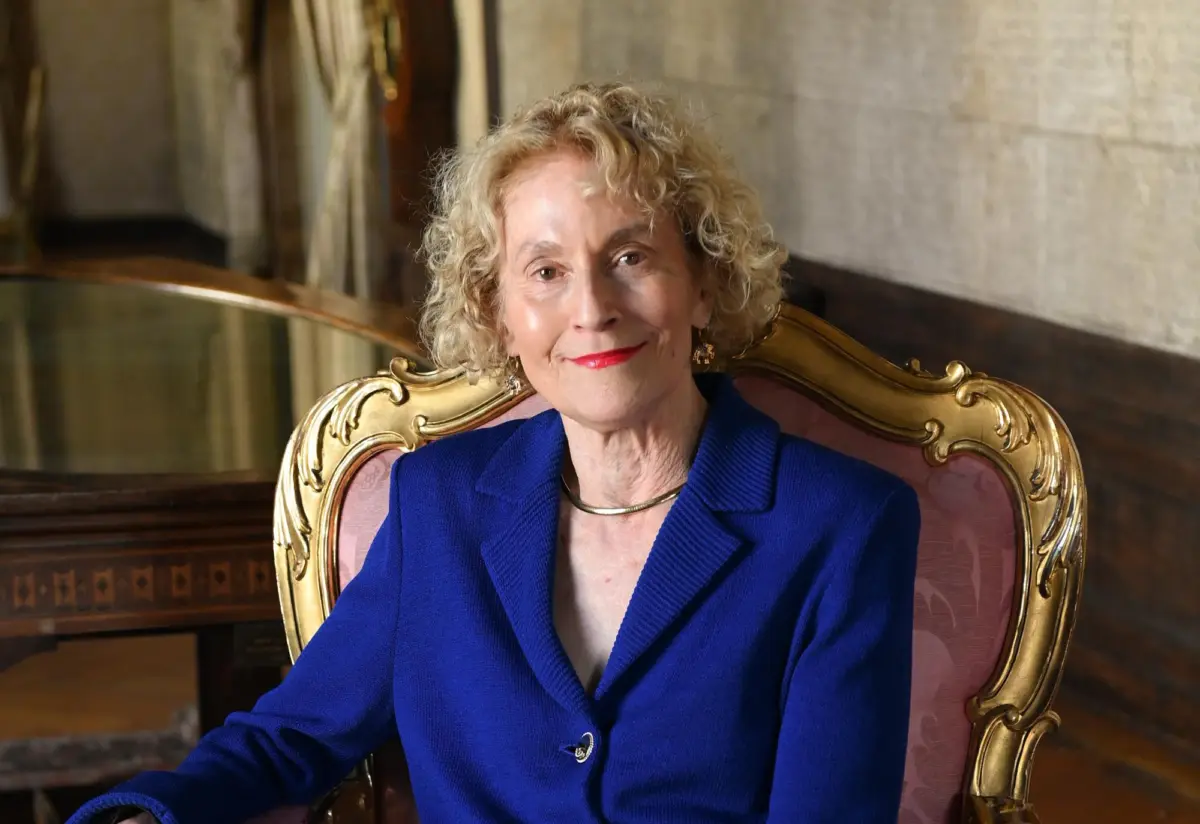
In a landmark announcement that underscores the vital intersection of rigorous academic scholarship and practical public policy, the Library of Congress has named renowned University of Chicago philosopher and legal scholar Martha C. Nussbaum as the recipient of the 2026 John W. Kluge Prize for Achievement in the Study of Humanity.
Valued at $500,000, the prestigious biennial international prize stands as one of the world’s most significant accolades for lifetime achievement in the humanities and social sciences. It honors scholars whose intellectual contributions have fundamentally shaped public affairs, deepened our understanding of civil society, and offered transformative frameworks for addressing the most complex moral and political challenges of our time.
Dr. Nussbaum, the Ernst Freund Distinguished Service Professor of Law and Ethics at the University of Chicago—with appointments in the Law School, the Department of Philosophy, and the Divinity School—was selected for her monumental body of work spanning moral philosophy, political theory, classical Greek and Roman philosophy, feminist philosophy, and the philosophy of law. Over a career spanning more than five decades, Nussbaum has not merely analyzed the human condition from the safety of the academy; she has actively reshaped global conversations surrounding human capabilities, social justice, emotions, animal rights, and the foundational requirements of a decent human life.
Read Also
Beyond her prolific publishing record, which includes dozens of authored and edited volumes that have been translated into numerous languages, the Library of Congress specifically recognized Nussbaum’s unwavering commitment to intellectual pluralism. In an era marked by deep political polarization and campus tribalism, Nussbaum has consistently championed the virtues of open dialogue, radical empathy, and rigorous engagement with opposing viewpoints—a pedagogical ethos vividly embodied in her renowned student roundtables at the University of Chicago.
As the 2026 laureate, Nussbaum will receive the award during a forthcoming ceremony in Washington, D.C., where she is scheduled to deliver a major public address. In keeping with the traditions of the Kluge Center, she may also engage in a brief residency at the Library of Congress, participating in policy discussions and informal exchanges with members of the United States Congress to help bridge the often-fragmented worlds of rigorous academic research and legislative decision-making.
Detailed Chronology: The Evolution of a Philosophical Giant
To understand the magnitude of Martha Nussbaum selection for the 2026 Kluge Prize, one must trace a career defined by intellectual fearlessness, institutional trailblazing, and a rare ability to translate abstract philosophical concepts into tangible legal and social reforms.
Early Foundations and Classical Scholarship (1940s–1980s)
Born in New York City in 1947, Nussbaum pursued her undergraduate education at New York University, initially studying theater and classics before earning her Bachelor of Arts degree from NYU in 1969. She then transitioned to Harvard University, where she immersed herself in the rigorous study of ancient philosophy. At a time when the philosophical landscape was heavily dominated by formal logic and Anglo-American analytical traditions—often divorced from historical and literary contexts—Nussbaum carved out a distinctive path. She earned her Master of Arts (1972) and Doctor of Philosophy (1975) from Harvard, writing a doctoral dissertation on Aristotle’s De Motu Animalium under the supervision of eminent scholar G.E.L. Owen.
Her early academic appointments included serving as an assistant professor of philosophy and classics at Harvard University (1975–1983), where she was notably one of the few women in a heavily male-dominated department. During this period, she published her groundbreaking book The Fragility of Goodness: Luck and Ethics in Greek Tragedy and Philosophy (1986). This seminal work challenged the prevailing neo-Kantian and utilitarian frameworks of moral philosophy by demonstrating how ancient Greek drama and philosophy grapple with the inescapable vulnerability of human life to external forces, chance, and tragedy.
Expanding Horizons: Ethics, Capabilities, and Global Development (1980s–1990s)
In the late 1980s and 1990s, Nussbaum’s intellectual trajectory expanded dramatically beyond classical philosophy into contemporary ethics, political philosophy, and international development. Collaborating with Nobel laureate economist Amartya Sen, Nussbaum co-founded the World Institute for Development Economics Research (WIDER) project on quality of life, which gave birth to the Capabilities Approach.
Unlike traditional economic metrics that measure societal progress solely through Gross Domestic Product (GDP) or aggregate wealth, the Capabilities Approach asks a fundamentally different question: What are people actually able to do and to be? Nussbaum later formalized a core list of central human capabilities—ranging from life, bodily health, and bodily integrity to affiliation, play, and control over one’s political and material environment. This framework revolutionized international human rights law, gender studies, and development economics, providing the theoretical bedrock for the United Nations Human Development Reports and inspiring policy reforms across the globe.
Her appointment as the Ernst Freund Distinguished Service Professor of Law and Ethics at the University of Chicago in 1995 marked the beginning of her most prolific and impactful decades. Operating fluidly across disciplinary boundaries, Nussbaum began producing a steady stream of paradigm-shifting books that directly engaged pressing legal, political, and social controversies.
Contemporary Contributions and Public Advocacy (2000s–Present)
In the 21st century, Nussbaum’s scholarship has tackled the emotional architecture of democracy and law. In Hiding from Humanity: Disgust, Shame, and the Law (2004), she investigated how disgust and shame are improperly weaponized within legal systems to marginalize vulnerable populations, particularly LGBTQ+ individuals. Her subsequent works, such as Not for Profit: Why Democracy Needs the Humanities (2010), served as a passionate manifesto defending liberal arts education against the encroaching tide of corporate-driven technocratic schooling.
More recently, Nussbaum has expanded her moral philosophy to encompass non-human animals. Her acclaimed book Justice for Animals: Our Collective Responsibility (2023) applies the capabilities approach to the animal kingdom, arguing that human society has a profound moral duty to foster the flourishing of sentient creatures and to radically rethink practices surrounding factory farming, animal experimentation, and environmental degradation.
Throughout these decades, Nussbaum has remained a tireless public intellectual, penning essays, delivering keynote addresses worldwide, and mentoring generations of scholars who now occupy leading positions in philosophy, law, and public policy across the globe.
Supporting Context & Metrics: The Kluge Prize and Its Legacy
Established through a multi-million-dollar endowment from the late philanthropist John W. Kluge—media mogul and former head of Metromedia—the Kluge Prize is administered by the John W. Kluge Center at the Library of Congress. The prize was created to fill a perceived gap in the global awards landscape: while prizes in mathematics, the physical sciences, and medicine (such as the Nobel Prizes) are widely celebrated, there was no comparable international platform dedicated exclusively to honoring lifetime achievement in disciplines that do not fit neatly into traditional scientific categories.

Key Metrics of the Kluge Prize
- Financial Award: $500,000 USD, making it one of the largest single monetary awards for lifetime achievement in the humanities and social sciences.
- Frequency: Awarded biennially (every two years), ensuring a rigorous and highly selective vetting process.
- Scope: Recognizes scholars whose work has transcended narrow academic silos to exert a profound, measurable impact on public affairs, government policy, and civil society.
- Institutional Integration: Winners participate in a high-profile residency in Washington, D.C., fostering direct intellectual exchanges with lawmakers, federal policy analysts, and the broader public.
A Storied Lineup of Laureates
Martha Nussbaum joins an elite pantheon of intellectual giants who have previously received the Kluge Prize. Past recipients include:
- Leszek Kołakowski (2003): The Polish philosopher and historian of ideas whose blistering critiques of totalitarianism and Marxist ideology helped lay the intellectual groundwork for the collapse of the Soviet bloc.
- Jaroslav Pelikan (2004): The legendary Yale historian of Christianity, whose vast scholarship mapped the evolution of religious dogma across millennia.
- John Hope Franklin (2006): The preeminent African American historian whose meticulous documentation of the American South and civil rights history transformed the national narrative on race.
- Yu Ying-shih (2006): The renowned historian of Chinese intellectual history, sharing the prize with Franklin.
- Fernando Henrique Cardoso (2012): The sociologist and former President of Brazil, recognized both for his pioneering theories of dependency and global economic development and for his democratic governance.
- Jürgen Habermas (2015): The towering German sociologist and philosopher, celebrated for his theories of communicative rationality, the public sphere, and deliberative democracy.
- Charles Taylor (2015): The Canadian philosopher whose explorations of secularism, identity, and modernity have deeply informed contemporary political theory.
- Rita Felski (2020/2022 series adjustments): Continuing a tradition of honoring scholars whose work redefines literary and cultural criticism.
By awarding the 2026 prize to Martha Nussbaum, the Library of Congress explicitly signals that her interdisciplinary synthesis of moral philosophy, legal theory, and human development is of equal historical and practical magnitude to the contributions of these legendary figures.
Official Statements and Institutional Perspectives
The announcement of Nussbaum’s selection elicited warm praise from federal officials, academic leaders, and philosophical societies worldwide, highlighting the unique dual nature of her career as both a meticulous scholar and a passionate public advocate.
Acting Librarian of Congress Robert R. Newlen emphasized not only the staggering breadth of Nussbaum’s research, but also her personal dedication to fostering civil discourse in a fractured world:
"In addition to the breadth and depth of her scholarship, Martha Nussbaum exemplifies a spirit of intellectual openness and a willingness to engage with thinkers with vastly different opinions," Newlen stated in the official press release. "Her student roundtables at the University of Chicago do just that, bringing together those with varied ideological viewpoints and encouraging them to explore ideas that may not match their own."
This pedagogical model—where students from across the political and ideological spectrum are required to listen to one another, unpack complex ethical dilemmas, and subject their own assumptions to rigorous philosophical critique—has become a hallmark of Nussbaum’s tenure at the University of Chicago. University colleagues and former students have frequently lauded her classrooms as rare sanctuaries of genuine free inquiry, where passion for truth supersedes partisan posturing.
In statements released following the announcement, leadership within the University of Chicago community echoed these sentiments. Colleagues noted that Nussbaum’s ability to move effortlessly from deep textual analysis of ancient Greek playwrights like Sophocles and Euripides to modern debates on animal welfare, constitutional law, and feminist jurisprudence represents the absolute gold standard of interdisciplinary humanistic inquiry.
Furthermore, human rights advocates and international legal scholars pointed out that Nussbaum’s theoretical framework for capabilities has quietly transformed practical policymaking in dozens of developing nations, providing ministries of health, education, and labor with concrete philosophical justifications for protecting basic human dignity.
Future Outlook: The Impact of the 2026 Kluge Prize
As preparations get underway for the official presentation of the 2026 John W. Kluge Prize in Washington, D.C., academic and policy communities are looking ahead to the ripple effects of this recognition.
Bridging the Academy and the Capitol
One of the most distinctive features of the Kluge Prize is its emphasis on direct engagement with lawmakers. In an era characterized by legislative gridlock, plummeting public trust in institutions, and a widespread skepticism regarding the utility of higher education, Nussbaum’s impending residency at the Library of Congress offers a vital opportunity.
Her life’s work demonstrates that philosophy is not an ivory-tower luxury, but an indispensable practical tool for governance. Whether lawmakers are grappling with the ethical frontiers of artificial intelligence, drafting legislation on environmental conservation and animal rights, or designing international aid packages to combat global poverty, Nussbaum’s writings offer rigorous, humane frameworks for decision-making. Observers anticipate that her congressional roundtables will spark much-needed dialogues on Capitol Hill regarding the ethical dimensions of public policy.
The Enduring Relevance of the Humanities
At a time when universities across the globe face mounting pressure to defund humanities departments in favor of strictly STEM-oriented vocational training, the selection of Martha Nussbaum serves as a powerful counter-narrative. The Kluge Prize reminds the public that technical knowledge without ethical grounding, economic growth without human capabilities, and legal systems without a robust philosophy of justice are fundamentally incomplete.
Nussbaum’s upcoming public lecture in Washington will undoubtedly be closely watched by intellectuals, policymakers, and students alike. It will provide a platform for one of our era’s most perceptive thinkers to address the fragile state of global democracy, the responsibilities of global citizenship, and the urgent necessity of cultivating emotional literacy and empathetic imagination in public life.
In honoring Martha C. Nussbaum with the 2026 John W. Kluge Prize, the Library of Congress has not only celebrated a lifetime of peerless scholarly achievement; it has reaffirmed the enduring truth that the unexamined life is worth neither living individually nor governing collectively.



Comments
Facebook App ID not configured. Please add it in the Customizer.