
Executive Overview
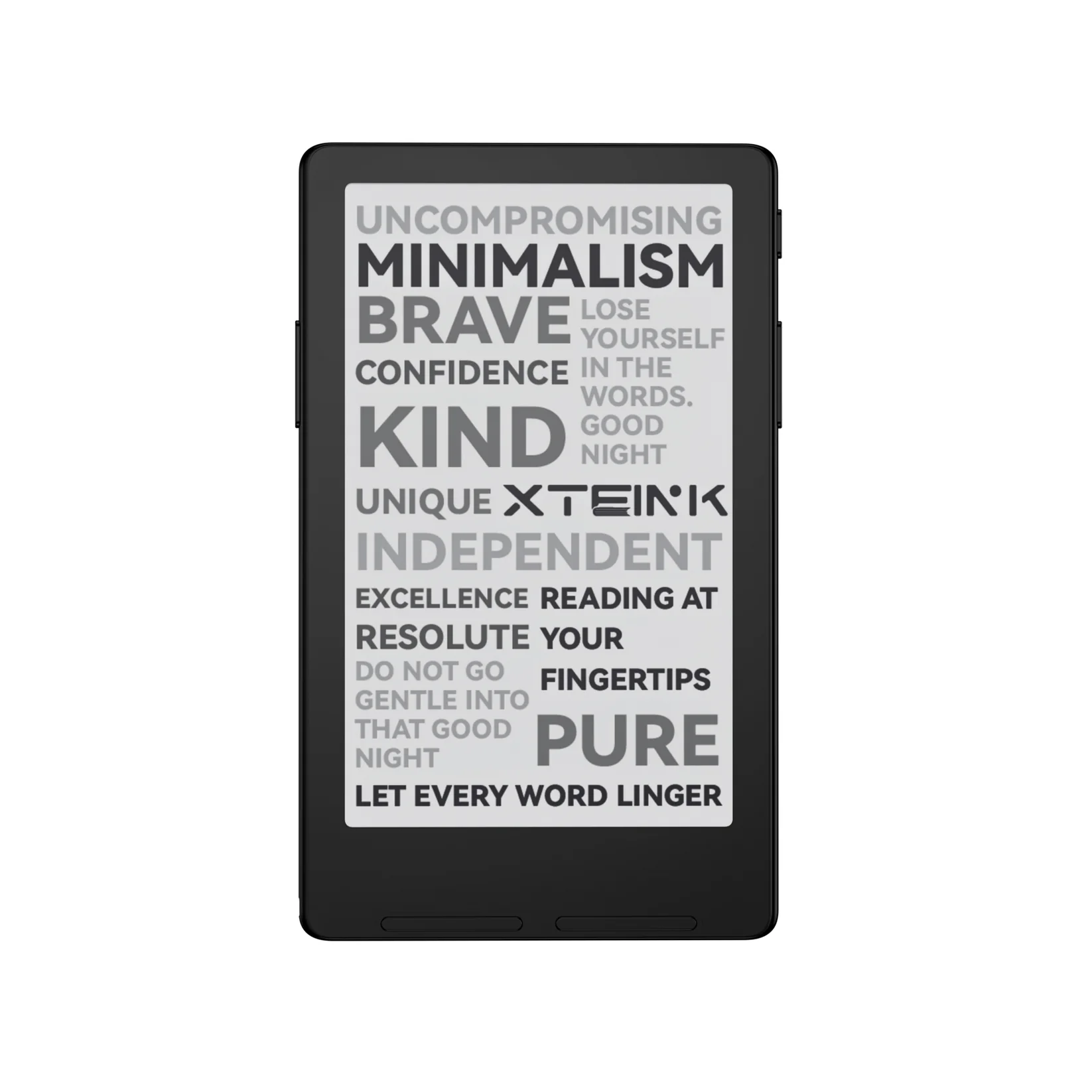
In an era defined by hyper-connectivity, endless algorithmic feeds, and the creeping anxiety of the constant notification ping, a quiet counter-revolution is taking shape in the pocket. The modern consumer is increasingly exhausted by smartphones that demand perpetual attention, drain focus, and blur the lines between productivity, entertainment, and digital exhaustion. Enter the XTEINK X4 Classic (also widely recognized in tech circles as the X4 V2)—an ultra-portable, minimalist, pocket-sized E Ink e-reader engineered specifically for distraction-free, on-the-go reading.
Stripping away the complex, multi-tasking software layers of a modern smartphone, the XTEINK X4 Classic represents a purist’s approach to literature. It is not designed to run social media apps, stream high-definition video, or ping you with urgent work emails. Instead, it offers a deliberate return to tactile, single-purpose technology. Weighing a mere 68 grams and featuring a compact 4.3-inch E Ink display, this featherlight device challenges the hegemony of glowing LCD and OLED screens.
Priced accessibly at $79, the X4 Classic targets a growing demographic of digital minimalists, commuters, and book lovers who yearn for a dedicated reading sanctuary that can slide seamlessly into a coin pocket. Beneath its unassuming, matte-black exterior lies an intriguing fusion of nostalgic physical controls and modern hardware upgrades—including an ESP32-S3 processor, expandable micro-SD storage, and a quirky, accelerometer-driven page-turning mechanism. This article provides a comprehensive deep dive into the architecture, design philosophy, market context, and future implications of the XTEINK X4 Classic.
Read Also
Detailed Chronology: The Evolution to the X4 Classic
To understand the positioning of the XTEINK X4 Classic, one must examine the iterative journey of niche E Ink hardware design over recent years. The original XTEINK X4 established the brand’s footprint in the micro-eReader segment, appealing to enthusiasts looking for a dedicated alternative to reading on bulky 6-inch or 7-inch devices like the Amazon Kindle or Kobo Clara. However, the first-generation iteration, while praised for its novel form factor, suffered from the growing pains typical of small-batch hardware production: sluggish processing speeds, inconsistent battery optimization, and a lack of refined software stability.
Recognizing these hardware bottlenecks, XTEINK engineers went back to the drawing board to develop the X4 Classic (V2). The evolution from the V1 to the V2 represents a targeted refinement rather than a total reinvention.
- Phase One: Processing Overhaul. The company identified that the original chipset struggled with rendering larger EPUB and PDF files smoothly, leading to frustrating latency during pagination. The integration of the upgraded ESP32-S3 processor solved this bottleneck, providing snappy responsiveness while maintaining exceptionally low power draw.
- Phase Two: Power Management and Charging Redesign. Early versions of pocket e-readers often experimented with varied port configurations. XTEINK doubled down on a streamlined, rugged aesthetic by completely omitting a standard USB-C port in favor of pogo pins and a magnetic pogo-pin connection. This choice not only bolsters the device’s sleek, port-free profile on the chassis sides but also enhances durability against dust and pocket lint.
- Phase Three: Ergonomic Fine-Tuning. The physical interface was meticulously audited. Rather than chasing the industry trend toward touch-centric interfaces—which often invite accidental inputs on ultra-small screens—the design team leaned heavily into tactile feedback, retaining and improving the placement of front and side physical navigation buttons.
- Phase Four: Global Commercial Rollout. Culminating months of beta testing and community feedback loops within the digital minimalism community, the X4 Classic officially hit the market at a highly competitive price point of $79, cementing its status as an accessible entry point for everyday carry (EDC) enthusiasts.
Supporting Context & Metrics: Hardware Specifications and Ergonomics
To appreciate what makes the XTEINK X4 Classic tick, one must dissect its technical blueprint. In a consumer electronics market obsessed with higher pixel densities, rapid refresh rates, and multi-lens camera arrays, the X4 Classic proudly flies the flag of purposeful limitation.
Display and Visual Architecture
At the heart of the device is a 4.3-inch E Ink display. While it lacks a front light—a deliberate design choice intended to reduce thickness, eliminate component complexity, and encourage reading in ambient natural light or well-lit environments—its grayscale performance is remarkably crisp for typography. Typographic posters and text render with high contrast, mimicking the look of traditional newsprint. The absence of a capacitive touchscreen layer means there is zero parallax gap between your finger and the electronic ink capsules; however, because touch input is omitted entirely, all navigation is routed strictly through physical buttons or motion sensors.
Physical Dimensions and Weight
- Weight: Approximately 68 grams (making it lighter than most modern wireless earbuds charging cases).
- Chassis: Ultra-thin, matte-black housing designed to withstand the rigors of pocket carry.
- Magnetic Backplate: Features an integrated magnetic mounting system, allowing the device to snap securely onto magnetic everyday carry (EDC) panels, car mounts, or specialized folio cases.
- Charging/Data Interface: Proprietary magnetic pogo-pin connection, breaking away from the universal USB-C standard to achieve a cleaner exterior surface.
Internal Hardware and Storage
- Processor: Upgraded ESP32-S3 system-on-a-chip, renowned in the maker and IoT community for its high energy efficiency and robust Wi-Fi/Bluetooth capabilities.
- Battery Capacity: 920 mAh. Given the ultra-low power consumption of E Ink technology (which draws power only when the image changes on screen), the 920 mAh cell yields weeks of standby and reading time on a single charge.
- Internal Storage: 16 GB of onboard flash storage, which is practically cavernous for text-based documents, capable of holding tens of thousands of books.
- Expandability: Built-in microSD card slot, a increasingly rare feature in modern mobile hardware that allows users to physically swap massive libraries in and out without relying on cloud syncs.
- Format Support: Out-of-the-box compatibility with standard e-reader formats, including EPUB, TXT, MOBI, and PDF.
- Connectivity: Integrated Wi-Fi and Bluetooth modules for wireless file transfers and potential accessory pairing.
The Unique Page-Turn Mechanics: Shake to Read
Perhaps the most polarizing and innovative feature of the XTEINK X4 Classic is its dual-mode page-turning system. For readers navigating crowded subway cars, holding onto overhead straps with one hand, the device incorporates an internal accelerometer. Users can simply shake the device to advance to the next page, enabling true one-handed operation.

For those who prefer a more traditional, deliberate reading posture during deep-focus sessions at a cafe or in bed, the tactile physical buttons on the front and sides offer a satisfying, clicky mechanical response. Crucially, XTEINK has included a software toggle allowing users who find the shake-to-turn feature overly sensitive or unnecessary to completely disable the accelerometer gesture, ensuring the device adapts to individual user habits.
Official Statements and Industry Perspectives
While major tech conglomerates pour billions into foldable OLED displays and augmented reality headsets, a counter-movement led by independent hardware designers is capturing the imagination of weary consumers. In product briefs and developer notes accompanying the launch of the X4 Classic, XTEINK’s design philosophy has been anchored around a single core concept: cognitive reclamation.
Industry analysts observing the rise of micro-gadgets note that devices like the X4 Classic tap into the broader "dumb phone" and digital detox movements. As consumers increasingly seek hardware that separates them from the dopamine loops of social media algorithms, single-purpose devices are transitioning from novelty curiosities to legitimate lifestyle tools.
Michael Kozlowski, editor-in-chief at Good e-Reader and a leading voice in electronic paper technology analysis over the past fifteen years, has closely tracked the trajectory of such specialized reading hardware. In reviews and industry commentary highlighting the X4 Classic’s physical layout, experts emphasize that the removal of distracting elements—such as front lights, touchscreens, and web browsers—is not a compromise, but a feature. By forcing the user to focus exclusively on the text before them, manufacturers are creating a sacred psychological boundary between the digital workspace and personal literary relaxation.
Furthermore, the choice of the ESP32-S3 processor speaks volumes about the shifting manufacturing paradigms in the e-reader sector. Rather than relying on expensive, over-engineered mobile processors designed for Android tablets, open-source-friendly microcontrollers are enabling boutique manufacturers to produce robust, highly stable, and repairable operating environments at a fraction of the cost, passing those savings directly to the consumer.
Future Outlook: The Horizon of Micro-E-Readers and Digital Minimalism
The commercial debut of the XTEINK X4 Classic at the $79 price point serves as a litmus test for the viability of ultra-portable reading devices in an increasingly saturated market. As smartphones continue to grow larger, heavier, and more demanding of our cognitive bandwidth, the counter-trend toward pocket-sized, analog-adjacent technology is poised for steady expansion.
Where Does the Market Go From Here?
- Mainstream Adoption of Digital Minimalism: The cultural appetite for "unplugging" is no longer restricted to fringe wellness circles; it is becoming a mainstream consumer preference. Devices that bridge the gap between retro aesthetic appeal and modern electronic paper reliability are uniquely positioned to capture this demographic.
- Hardware Iterations and Open-Source Communities: Because devices utilizing chips like the ESP32-S3 often attract developer communities, we can anticipate a vibrant ecosystem of custom firmware, community-driven UI tweaks, and localized software modifications that extend the lifespan and utility of pocket e-readers far beyond factory limitations.
- The Rise of EDC (Everyday Carry) Tech Integration: With features like magnetic backplates and ultra-slim profiles, micro-e-readers are increasingly being styled as lifestyle accessories rather than mere electronics. Expect to see a burgeoning secondary market of artisan leather sleeves, custom lanyards, and specialized EDC gear designed specifically for devices of this scale.
Final Verdict
The XTEINK X4 Classic is unapologetically niche. It will not appeal to users looking for a backlit, color-saturated tablet for reading graphic novels in the dark, nor will it satisfy those who require seamless synchronization with cloud reading apps across multiple ecosystems.
However, for the commuter standing on a packed train, the backpacker watching gram weights on a wilderness trek, or the corporate worker desperate for an evening free of blue-light notifications, the X4 Classic offers something far more valuable than raw processing power: peace of mind. At $79, it is an affordable, elegantly engineered passport back to the simple joy of uninterrupted reading.


Comments
Facebook App ID not configured. Please add it in the Customizer.