The landscape of children’s and young adult literature is undergoing a vital transformation, shifting away from monolithic historical narratives toward intersectional biographies that spotlight historically marginalized changemakers. Among the most profoundly influential yet historically under-documented figures of the mid-20th-century civil rights and human rights movements is Yuri Kochiyama. A Japanese American activist whose life spanned eras of profound geopolitical turmoil—from World War II internment to the Black Power and international human rights movements of the 1960s and beyond—Kochiyama’s legacy has long waited for a dedicated literary footprint.
Today, that silence is steadily breaking. With authors, educators, and descendants stepping forward to chronicle her extraordinary journey, a burgeoning canon of children’s and middle-grade literature is finally placing Yuri Kochiyama front and center. This movement to reclaim her story not only restores a critical narrative to American history but also equips a new generation of young readers with the social-emotional frameworks and tactical blueprints needed for collaborative, cross-movement activism.
This report provides a comprehensive examination of the literary revival surrounding Yuri Kochiyama, highlights the foundational titles spearheading this movement, explores the deep historical ties that defined her life—most notably her mentoring relationship with Malcolm X—and details an exclusive literary giveaway celebrating these vital historical works.
Detailed Chronology: From Seal Beach to Global Activism
To understand the weight and significance of the current children’s book renaissance centered on Yuri Kochiyama, one must trace the chronological milestones that forged her fierce commitment to justice. Her life can be read as a masterclass in resilience, empathy, and international solidarity.
Early Life and World War II Internment
Born Mary Yuriko Nakahara in May 1921, Kochiyama grew up in a predominantly white community in Seal Beach, California. Her childhood was marked by a strong sense of community-oriented leadership and an "All-American" upbringing. However, the trajectory of her life shifted violently on December 7, 1941, following the imperial Japanese bombing of Pearl Harbor.
In the wake of Executive Order 9066, Kochiyama and her family—alongside more than 120,000 Japanese Americans—were forcibly removed from their homes and incarcerated. Her father, who had been arrested by the FBI immediately after Pearl Harbor due to baseless suspicions, fell critically ill and died just hours after his release from custody. Kochiyama spent years incarcerated behind barbed wire in an American concentration camp in Jerome, Arkansas. It was within these harrowing confines that her activist instincts first took root; she organized letter-writing campaigns to support Japanese American soldiers serving in the U.S. military, establishing an early pattern of utilizing written correspondence as a tool for solidarity.
Post-War Migration and Harlem Years
Following her release and subsequent marriage to Bill Kochiyama, a veteran of the legendary all-Nisei 442nd Regimental Combat Team, the couple eventually settled in Harlem, New York City, in the late 1940s. Living in Harlem deeply transformed Kochiyama’s worldview. Rather than retreating into isolation after the trauma of wartime incarceration, she immersed herself in the community, building profound, boundary-crossing relationships with Black neighbors, civil rights organizers, and international anti-imperialist leaders.
Denied a professional career in journalism due to systemic racism, Kochiyama redirected her formidable intellect, precise cataloging systems, and "genius-level" social-emotional intelligence into letters, essays, and interpersonal organizing. Her home became a vibrant, open hub for activists of all backgrounds.
The Malcolm X Alliance and International Solidarity
In the autumn of 1963, Kochiyama met Malcolm X at a courtroom press conference in Brooklyn, where civil rights demonstrators were on trial. This encounter sparked a legendary, life-changing sixteen-month friendship. Malcolm X became her mentor, teacher, and guiding light. He invited her to join the Organization of Afro-American Unity (OAAU) Liberation School, encouraging her to study global histories of resistance.
Kochiyama’s life was forever altered by this mentorship. She adopted his internationalist perspective, recognizing that domestic civil rights struggles in the United States were inextricably linked to global anti-imperialist movements. Her life intersected with history again on February 21, 1965, when she rushed to the Audubon Ballroom and cradled Malcolm X in her arms after he was assassinated—a moment captured in iconic, haunting photographs that etched her name into the annals of American history.
Supporting Context & Metrics: The Literary Gap and Revival
For decades, despite her active involvement in the Asian American Movement, the Puerto Rican independence movement (including support for the FALN prisoners), the movement for Japanese American redress and reparations, and international human rights advocacy, books specifically focusing on Yuri Kochiyama were virtually nonexistent.
When author Mia Wenjen began drafting her manuscript on Kochiyama nearly seven years ago, she noted a stark vacuum in the literary marketplace.
"When I started my manuscript on Yuri Kochiyama nearly seven years ago, there weren’t any books on her," Wenjen reflects. "I felt compelled to write a book about her because she deserved one!"
The Quantitative Landscape of Yuri Kochiyama Literature
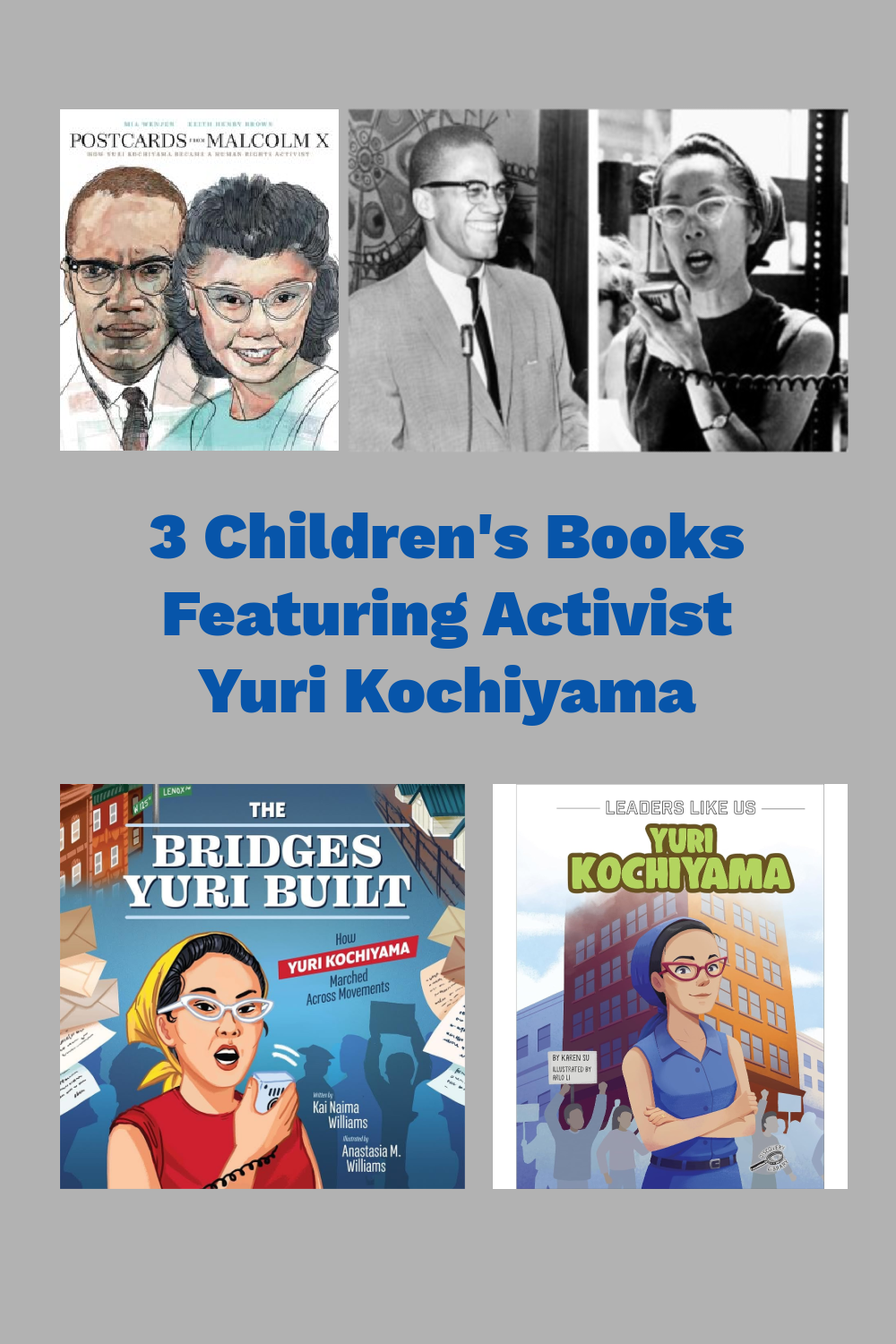
Total Dedicated Titles (Front and Center Protagonist): Currently stands at three primary children’s and youth titles.
Target Audience Age Range: Spans from early independent readers (ages 5–6) to middle-grade and picture book formats (ages 7+).
Demographic Representation: Features unique familial perspectives, including contributions from Kochiyama’s own great-granddaughter, Kai Naima Williams.
This quantitative scarcity highlights an ongoing challenge in multicultural publishing: while diverse historical figures are increasingly finding their way into classrooms, foundational leaders who bridged racial and ideological divides are often sidelined in traditional school curricula. The emergence of these three landmark books represents a critical corrective to this historical omission.
Official Spotlight: Core Texts in the Yuri Kochiyama Revival
Three seminal children’s and youth books currently form the literary bedrock of the Yuri Kochiyama renaissance. Each offers a distinct lens through which young readers can access her legacy.
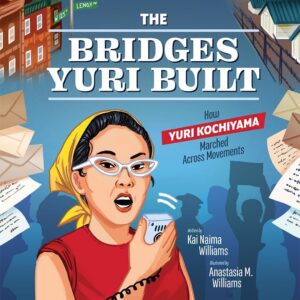
1. The Bridges Yuri Built: How Yuri Kochiyama Marched Across Movements
Author: Kai Naima Williams
Illustrator: Anastasia M. Williams
Format: Picture Book Biography (Ages 5 and up)
Publisher Insights: Written by Yuri Kochiyama’s great-granddaughter, this text offers an intimate, inside look at her life’s work. The book traces her evolution from a young girl in a mostly white California town to a tireless organizer in Harlem.
Kai Naima Williams emphasizes the core philosophy of her great-grandmother:
"Yuri’s ability to personally connect with people from all walks of life and to bring communities together, despite differences, to achieve common goals is part of what makes her such a beloved and unique figure."
The book’s central theme resonates deeply with contemporary educational frameworks: "The legacy I would like to leave is that people try to build bridges and not walls." The narrative highlights the micro-level dedication required for sustainable activism—maintaining meticulous address books, hosting community members, and remembering personal details that make every individual feel valued.
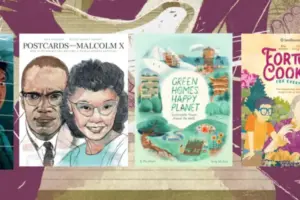
2. Postcards From Malcolm X: How Yuri Kochiyama Became a Human Rights Activist
Author: Mia Wenjen
Illustrator: Keith Henry Brown
Format: Picture Book Biography (Ages 7 and up)
Publisher Insights: Authored by Mia Wenjen, this book explores Kochiyama’s ideological transformation through the lens of her profound friendship and mentorship with Malcolm X.
Wenjen highlights the global and historical lessons imparted by Malcolm X that Kochiyama absorbed and practiced:
"One of the greatest lessons Malcolm taught people was to learn their own history. Know your history. Know the world. Be proud of who you are… But don’t stop there. Learn about the histories of other people. And learn about the social movements because this is how you learn to create social change."
Malcolm X deeply valued their intellectual partnership. During his second trip abroad, he sent postcards to Kochiyama, writing: "I have read all of your wonderful cards and letters of encouragement and I think you are the most beautiful family in Harlem." Though their alliance was cut short after sixteen months by Malcolm X’s assassination, his internationalist framework shaped Kochiyama’s lifelong dedication to human rights.
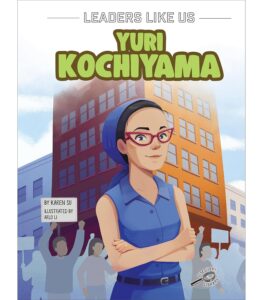
3. Yuri Kochiyama (Leaders Like Us)
Author: Karen Su
Illustrator: Arlo Li
Format: Nonfiction Chapter Book / Leveled Reader (Guided Reading Level P, Ages 6 and up)
Publisher Insights: Tailored for newly independent readers, Karen Su’s contribution breaks down Kochiyama’s complex political life into accessible, concise chapters. The text guides young readers from her "All-American" childhood through the devastating disruption of Pearl Harbor and Executive Order 9066.
By illustrating how her activism began behind the barbed wire of the Jerome incarceration camp through letter-writing campaigns to Japanese American soldiers, the book demonstrates that leadership and resistance can emerge under the most oppressive conditions. Su’s leveled text serves as an invaluable classroom tool for bridging literacy development with social justice education.
Future Outlook: Expanding the Canon of Youth Activism
The growing availability of literature on Yuri Kochiyama signals a promising horizon for multicultural children’s literature. Educators, parents, and authors are increasingly recognizing that children do not need sanitized histories; they require honest, inspiring accounts of ordinary people who confronted extraordinary injustice through coalition-building, empathy, and relentless dedication.
As literacy programs incorporate titles focused on youth activists, civil rights pioneers, and women changemakers—supported by classroom toolkits like those provided by Multicultural Children’s Book Day—the principles embodied by Yuri Kochiyama are finding new life in modern classrooms.
Special Literary Giveaway Announcement
To foster engagement with these essential historical narratives, a special promotional giveaway is currently underway. Three signed copies of Postcards From Malcolm X are being gifted to readers.
How to Enter: Interested readers can leave a comment on the hosting platform or official publication page.
Eligibility: Fulfillment is restricted to U.S. and A.P.O. mailing addresses.
With additional manuscripts currently in development and educators continuously seeking resources that promote unity and cross-cultural solidarity, the legacy of Yuri Kochiyama—the ultimate bridge-builder—will continue to inspire generations of young readers to stand up, know their history, and connect across movements for a more just world.





Comments
Facebook App ID not configured. Please add it in the Customizer.