
Executive Overview
In an ambitious effort to bridge the centuries-old gap between classical antiquity and the modern digital learner, a collaborative team of contemporary philosophers, classicists, and software engineers has launched the Open Plato Project. The initiative’s inaugural offering—a meticulously curated, open-access, and heavily annotated digital edition of Plato’s dialogue Alcibiades—is now live at OpenPlato.org.
Designed from the ground up to democratize access to classical philosophy, the Open Plato Project aims to strip away the intimidating academic barriers that have historically kept canonical Greek texts locked within university libraries and expensive scholarly monographs. By offering a clean, user-friendly, and multi-layered digital interface, the project endeavors to fulfill its core mission: to widen the audience of people who are able to find intellectual joy, ethical guidance, and existential meaning in ancient Greek philosophy.
The newly released digital edition of the Alcibiades is not merely a static text translated onto a screen. Instead, it represents a reimagining of how classical texts can be experienced in the twenty-first century. Featuring dual English translations tailored to different levels of academic familiarity, a modular side-by-side Greek and English text display, an integrated glossary, and comprehensive scholarly commentaries, the edition serves as both a welcoming front door for novices and a sophisticated resource for advanced researchers.
Read Also
Behind this initiative is a distinguished interdisciplinary collective of scholars hailing from institutions such as Boston University, the University of Pennsylvania, Brown University, the University of North Carolina at Chapel Hill, Indiana University Bloomington, Idaho State University, the University of Michigan, Northeastern University, and the Brooklyn Institute for Social Research.
As the Open Plato team looks toward the future, the Alcibiades is intended to be only the first drop in a much larger reservoir of digitized classical literature. By marrying rigorous philological scholarship with modern software engineering, the project signals a new paradigm for digital humanities—one where accessibility, open-source philosophy, and pedagogical innovation take center stage.
Detailed Chronology: From Concept to Digital Reality
The realization of the Open Plato Project did not happen overnight; it is the culmination of years of pedagogical frustration, collaborative networking, and technological development within the philosophical community. While the exact timeline of the project’s incubation involves private workshops, grant applications, and backend software engineering, its public emergence marks a significant milestone in open-access digital publishing.
Phase One: Identifying the Pedagogical Gap
For decades, undergraduate educators and independent learners alike have wrestled with a fundamental dilemma: how to introduce students to the richness of Platonic dialogue without overwhelming them. Traditional translations often lean heavily into archaic phrasing or dense academic commentaries that alienate first-time readers. Conversely, highly popularized summaries often sacrifice philosophical nuance for the sake of readability.
The founders of the Open Plato Project—recognizing a collective desire to make classical texts genuinely approachable—began conceptualizing a digital platform that could cater to multiple audiences simultaneously. They wanted a tool where a high school student or curious autodidact could grasp the fundamental arguments of a text, while a graduate student or seasoned researcher could easily toggle to the original ancient Greek and deep-dive technical commentaries.
Phase Two: Assembling an Interdisciplinary Collective
Turning this pedagogical vision into reality required a rare mix of talents. Philosophy departments are rich in historical expertise and translation skills, but building a responsive, modular web application demands sophisticated software architecture. To achieve this, the project team brought together an interdisciplinary powerhouse:
- Marc Gasser-Wingate (Boston University)
- Sukaina Hirji (University of Pennsylvania)
- Robert Howton (Brooklyn Institute for Social Research / Software Engineer)
- Emily Kress (Brown University)
- Patricia Marechal (University of North Carolina at Chapel Hill)
- Katy Meadows (Indiana University Bloomington)
- Evan Rodriguez (Idaho State University)
- Gabe Shapiro (University of Michigan)
- Jacob Stump (Northeastern University)
- Claudia Yau (University of Michigan)
This unique blend of Hellenic scholarship and technical engineering allowed the team to design a platform optimized specifically for reading, annotating, and cross-referencing ancient texts.
Phase Three: Selecting the Inaugural Text—Plato’s Alcibiades
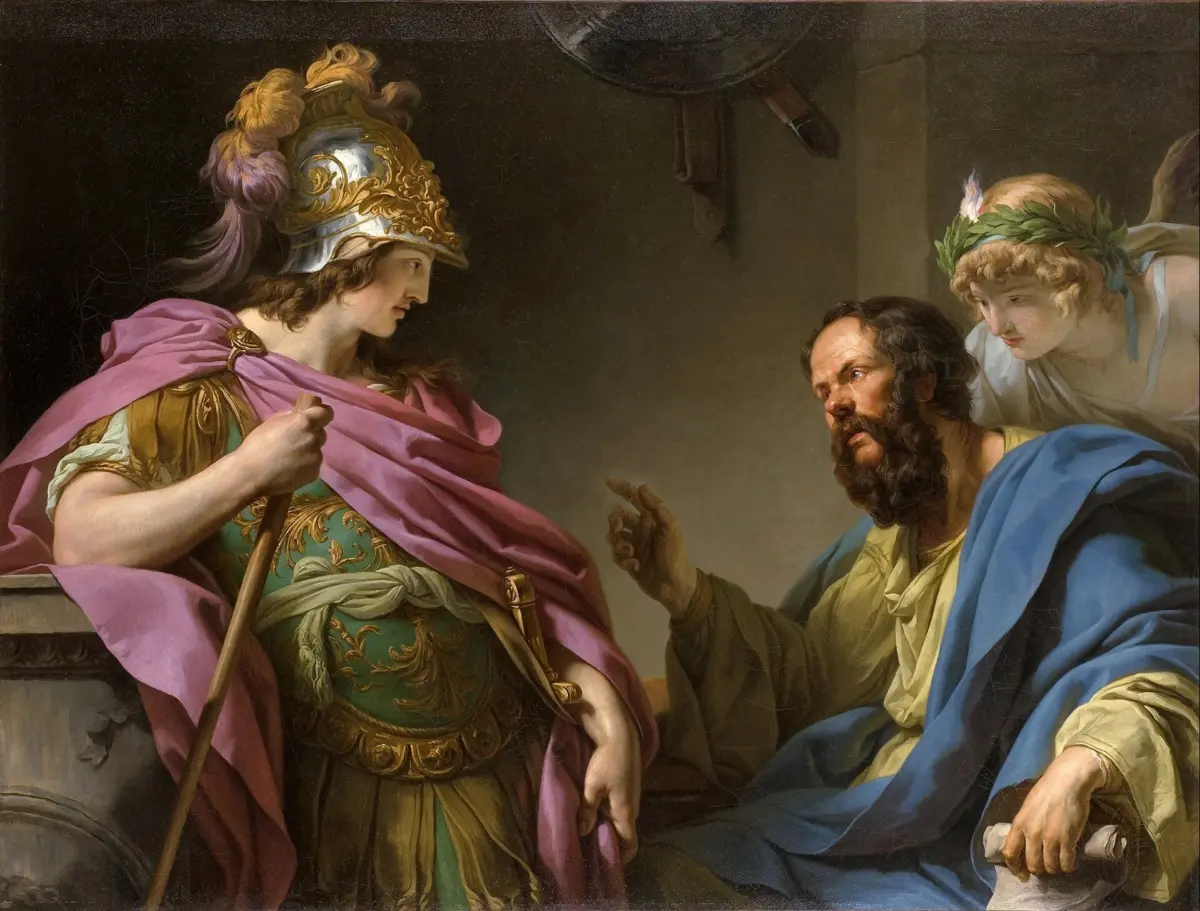
The choice of Plato’s Alcibiades as the project’s maiden release is both historically poignant and philosophically strategic. In the dialogue, Socrates engages in a profound, probing conversation with Alcibiades—the notoriously brilliant, ambitious, and ultimately ill-fated Athenian statesman. The dialogue famously explores themes of self-knowledge, the care of the soul, and the ethical responsibilities of political leadership.
Historically, the authenticity of the Alcibiades has been a subject of scholarly debate, yet its pedagogical value as an introduction to Socratic method and ethics has never been in doubt. By tackling the Alcibiades first, the Open Plato team selected a text that directly addresses the human struggle for self-understanding, making it an ideal entry point for readers seeking personal meaning in ancient philosophy.
Phase Four: The Official Launch and Beyond
With the website officially live, the project has transitioned from development to public engagement. The release of the Alcibiades serves as a proof-of-concept for the Open Plato platform, demonstrating how modular software design can enhance textual comprehension. As users log onto OpenPlato.org to explore the dialogue, the team is already looking ahead to future releases, ensuring that the library of open-access Platonic texts will continue to grow.
Supporting Context & Metrics: The State of Open Access in Classical Philosophy
To fully appreciate the significance of the Open Plato Project, one must examine the broader landscape of academic publishing, digital humanities, and the accessibility of classical texts in the modern era.
The Paywall Dilemma in Academic Research
For generations, classical philosophy has been bound by traditional publishing models. Critical editions of ancient Greek texts, accompanied by modern commentaries and fresh translations, are typically published by university presses. These volumes often carry hefty price tags, rendering them largely inaccessible to independent scholars, community college students, and philosophy enthusiasts in the developing world.
Even when digital databases like the Perseus Digital Library or commercial scholarly archives offer access to texts, they frequently present raw, unannotated translations or demanding academic interfaces that assume a pre-existing mastery of ancient languages and historical context.
The Open Plato Project directly combats this gatekeeping by adopting an open-access model. By removing paywalls and simplifying user navigation, the project aligns with a broader international movement toward open science and open-access humanities research.
Anatomy of the OpenPlato.org Platform
The technical infrastructure of the Open Plato Project is engineered to solve specific reading comprehension challenges native to classical philosophy. Key features of the platform include:
- Dual-Track Translation: Understanding that a single translation cannot simultaneously serve a beginner and an advanced scholar, the platform features two distinct English translations of the Alcibiades. One translation is optimized for first-time readers, prioritizing flowing syntax and accessible modern phrasing. The other offers a closer, more literal rendering designed for deep textual analysis.
- Modular Display: The website features a flexible split-screen or modular display mode, allowing readers to view the ancient Greek text side-by-side with their preferred English translation. This feature is invaluable for students learning classical Greek or researchers wishing to verify specific philosophical nuances against the original terminology.
- Integrated Glossaries and Commentaries: Navigating Plato requires familiarity with specialized Athenian concepts, historical figures, and philosophical jargon. The Open Plato edition integrates contextual commentaries and a dynamic glossary directly into the reading experience, ensuring that readers do not need to constantly flip to the back of a physical book or open external search engines to understand references.
- Upcoming Multimedia Enhancements: Demonstrating a commitment to universal design and diverse learning styles, the project team has announced that future updates will include printable versions of the scholarly translation and commentary, as well as professionally produced audio recordings of the dialogue. This makes the text accessible to auditory learners, commuters, and educators looking for classroom listening material.
Official Statements & Scholarly Insights
The philosophy community has received the launch of the Open Plato Project with widespread enthusiasm. The initiative represents a rare convergence of high-level academic research and public-facing civic engagement.
In detailing the architecture and philosophy behind the new digital edition, Marc Gasser-Wingate of Boston University emphasized the comprehensive nature of the launch:
"This digital edition includes two new translations: one aimed at first-time readers, and another at those who might seek a deeper dive into the text. It includes accompanying commentaries, a glossary, and a modular display for both Greek and English text. We are still working on some additional features, including printable versions of the scholarly translation and commentary, and an audio recording of the dialogue."
The collaborative ethos of the project is reflected not only in its digital outputs but also in the diverse expertise of its editorial board. Philosophers specializing in ancient ethics, metaphysics, and political philosophy have pooled their knowledge to ensure that while the texts are accessible to novices, they do not compromise on scholarly rigor.
Educational experts have noted that initiatives like Open Plato are vital for the survival and relevance of the humanities in the twenty-first century. By lowering the barrier to entry, the project invites a broader demographic of learners to grapple with foundational questions of human existence: What does it mean to know oneself? How should we live our lives? What are the duties of a citizen and a leader? These questions, first posed in the agora of ancient Athens, are as urgent today as they were over two millennia ago.
Future Outlook: Expanding the Canon of Open Plato
While the successful launch of the Alcibiades marks a major triumph for the Open Plato Project team, it is explicitly framed as a beginning rather than an endpoint.
The Roadmap for Subsequent Dialogues
Plato’s corpus contains dozens of dialogues, ranging from short, aporetic exchanges like the Euthyphro and Crito to massive, sweeping treatises like the Republic and the Laws. Each text presents unique pedagogical challenges and interpretive traditions.
The Open Plato Project team has confirmed that work is already underway to expand the platform’s library. While specific titles for upcoming releases have not yet been formally announced, the editorial board is expected to target other foundational dialogues that serve as natural gateways to ancient Greek thought. By applying the same rigorous, dual-translation, and heavily annotated format to future texts, the project aims to build a comprehensive digital library of Platonic philosophy.
Transforming Modern Pedagogy
Looking ahead, the platform is poised to become a staple in high school and university classrooms. Instructors teaching courses in philosophy, political science, and classical studies can now assign primary source material without worrying about textbook costs or student alienation caused by archaic translations.
Furthermore, the integration of print-ready formats and upcoming audio recordings ensures that the project will remain adaptable to evolving educational technologies and teaching methodologies. As digital humanities continue to mature, projects like Open Plato serve as a gold standard for how traditional academic disciplines can leverage technology to foster public engagement, lifelong learning, and a renewed appreciation for the roots of Western thought.
For scholars, students, and curious minds worldwide, the ancient world has never been more accessible. To explore the new digital edition of the Alcibiades and learn more about the initiative, visitors can access the platform directly at OpenPlato.org.




Comments
Facebook App ID not configured. Please add it in the Customizer.