
Executive Overview
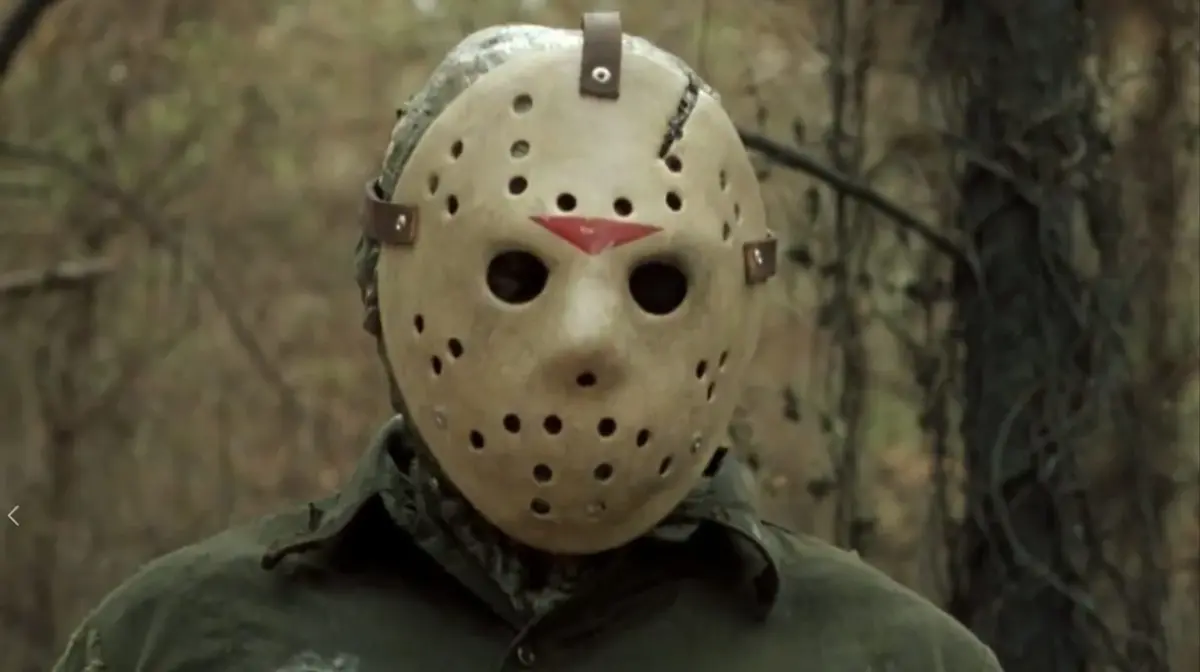
Friday the 13th, historically celebrated as an auspicious day for the macabre, delivered a monumental surprise for horror enthusiasts worldwide in late 2026. Industry confirmations revealed that not only is a brand-new theatrical Friday the 13th feature film officially entering production, but it marks the historic return of franchise veteran Steve Miner—the visionary director behind Friday the 13th Part 2 (1981) and Friday the 13th Part 3 (1982)—to the director’s chair.
For a franchise that has spent the better part of two decades trapped in a debilitating labyrinth of legal disputes and copyright grey areas, this announcement acts as a resurrection. Yet, the scope of this revival extends far beyond a standalone slasher sequel. Speaking exclusively to trade publications, producer Robbie Barsamian laid out a sweeping, multi-platform master plan operating under the banner of the newly crystallized "Jason Universe."
This calculated multimedia strategy aims to bridge the gap between legacy audiences and a modern demographic, utilizing interconnected storytelling across cinema, television, gaming, and immersive experiences. With aggressive timelines targeting a theatrical release in 2027 and a comprehensive 45-year strategic blueprint, the stakes could not be higher. This report examines the structural anatomy of the franchise’s revival, the creative rationale behind enlisting Miner, the logistics of navigating a cinematic universe for a silent, masked icon, and the profound industry implications of Jason Voorhees reclaiming his throne on the silver screen.
Read Also
Detailed Chronology: From Crystal Lake to the Courtroom and Back
To fully understand the magnitude of the upcoming 2027 feature, one must examine the tumultuous timeline that kept one of horror history’s most lucrative intellectual properties dormant for over fifteen years.
[1980] Original 'Friday the 13th' Released
  │
[1981-1982] Steve Miner directs Parts 2 & 3 (Introduces the Hockey Mask)
  │
[1980s-2009] Paramount & New Line Cinema Sequels / Crossovers (Freddy vs. Jason)
  │
[2009] Platinum Dunes Theatrical Reboot
  │
[2009-2016] Copyright Ownership Battle (Victor Miller vs. Sean S. Cunningham)
  │
[2018-2021] Legal Stalemate halts all video game updates and film development
  │
[2021-2022] Federal courts rule in favor of Victor Miller (Domestic Rights)
  │
[2024-2025] Formation of the "Jason Universe" multi-platform initiative
  │
[2026] Official announcement of Film #13 + Steve Miner's return
  │
[2027 (Projected)] Theatrical Release of the New "Jason Universe" Kickoff
The Golden Age of Camp Blood (1980–1989)
The franchise’s genesis dates back to Sean S. Cunningham’s 1980 sleeper hit, distributed by Paramount Pictures. Capitalizing on the runaway success of John Carpenter’s Halloween (1978), the original film introduced audiences to Pamela Voorhees and established a blueprint for low-budget, high-return slasher cinema. Steve Miner, serving as an associate producer on the original, stepped into the directorial spotlight for Part 2 and Part 3. It was under Miner’s stewardship in 1982 that Jason Voorhees donned his iconic, disfigured face-covering—the white hockey mask—transforming from a deformed backwoods legend into an immortal pop-culture icon.
The Wilderness Years and the Reboot (2003–2009)
Following a string of sequels that migrated from Paramount to New Line Cinema—culminating in the long-awaited crossover Freddy vs. Jason in 2003—the studio mounted a high-profile, Platinum Dunes-produced reboot in 2009 directed by Marcus Nispel. While commercially viable, grossing over $90 million worldwide, internal studio shifts and diverging priorities stalled momentum for a planned sequel.
The Legal Quagmire (2009–2021)
What followed was arguably the most devastating period in the franchise’s history. A bitter, protracted copyright termination lawsuit erupted between original screenwriter Victor Miller and director/producer Sean S. Cunningham. Under United States copyright law, creators can reclaim rights to their original works after a specific statutory period.
Miller sought to claim the domestic rights to the original 1980 screenplay, while Cunningham and production entities argued that Miller was a "work-for-hire" employee ineligible for termination claims. This legal purgatory paralyzed the entire franchise. Development on feature films ground to a halt, merchandise lines stalled, and even live-service multiplayer titles like Friday the 13th: The Game were legally barred from issuing new content or patches, despite a thriving global player base.
The Resolution and the Rebirth (2021–Present)
After winding its way through federal district and appellate courts, legal rulings ultimately favored Victor Miller regarding domestic script rights, while international rights and certain elements of the adult Jason character introduced in later sequels remained heavily contested. Rather than continuing an attrition war that threatened to destroy the property’s commercial viability, stakeholders ultimately realized that cooperation was more profitable than conflict.
This detente paved the way for the consolidation of rights under cohesive leadership, clearing the path for the development of the "Jason Universe"—a unified brand management strategy designed to streamline licensing, production, and distribution across all media channels.
Supporting Context & Metrics: The Economics of Terror
Horror remains one of the most reliable, high-margin asset classes in the modern entertainment landscape. To contextualize the financial ambition behind the Jason Universe’s 45-year roadmap, it is essential to evaluate the historical performance of the franchise alongside contemporary box-office metrics for the genre.
Franchise Box Office Metrics (Unadjusted for Inflation)
| Film Title | Release Year | Production Budget | Domestic Box Office | Worldwide Gross |
|---|---|---|---|---|
| Friday the 13th | 1980 | $550,000 | $39,754,601 | $59,800,000 |
| Friday the 13th Part 2 | 1981 | $1,250,000 | $21,722,776 | $21,722,776 |
| Friday the 13th Part 3 | 1982 | $4,000,000 | $36,690,067 | $36,690,067 |
| Friday the 13th: The Final Chapter | 1984 | $2,600,000 | $32,980,880 | $32,980,880 |
| Freddy vs. Jason | 2003 | $30,000,000 | $82,622,655 | $116,634,693 |
| Friday the 13th (Reboot) | 2009 | $19,000,000 | $65,002,019 | $92,679,165 |
Note: Across twelve theatrical entries, the franchise has historically operated on exceptionally lean production budgets while consistently generating robust theatrical returns, resulting in an aggregate box office exceeding $465 million unadjusted—equivalent to over $1 billion in contemporary purchasing power.
The Modern Slasher Landscape
In the post-Halloween (2018) and Scream (2022) era, studios have proven that legacy horror properties thrive when treated with theatrical prestige rather than rushed, direct-to-video exploitation. Audiences have demonstrated a profound appetite for elevated genre filmmaking that respects continuity while introducing dynamic, modern character writing.
The Jason Universe team is consciously stepping into this economic window. By treating the upcoming film not as a standalone cash-grab, but as the foundational anchor stone for an interconnected universe spanning television, gaming, and immersive location-based entertainment, producers are looking to mirror the transmedia strategies pioneered by Marvel Studios and DC Entertainment, albeit filtered through an uncompromised R-rated lens.
Official Statements and Strategic Vision
Producer Robbie Barsamian, who is spearheading the comprehensive expansion of the intellectual property, provided deep insights into the creative philosophy steering the franchise into its next epoch. In his interview with TheWrap, Barsamian emphasized that connectivity is the core engine driving the new era.
"This is definitely the first of many new films to come," Barsamian stated. "Our goal with this movie is to kick off the next era of the franchise on the big screen. We’re making sure there’s real connective tissue starting now that carries directly into the films that follow. This is the foundation for where the movie franchise goes next."
Unlike past decades where sequels were often conceived as episodic, standalone gore-fests with little regard for internal continuity or character arcs, the Jason Universe is designed to reward long-term engagement. Barsamian confirmed that his oversight is absolute across all operational verticals:
"I am now leading every part of the Jason Universe expansion. The TV series, gaming, merchandise, fan experiences and this new movie. On our upcoming movie, I’ve been on the ground as the producer doing everything from story development and putting together our incredible cast and crew to watching every shot on set to make sure we get this right."
Balancing Nostalgia and Modern Narrative Mechanics
A central challenge in reviving a 1980s slasher icon is avoiding self-parody. Audiences today expect higher standards of cinematography, psychological depth, and script construction. According to production leadership, the creative team has deliberately focused on marrying classic practical filmmaking with contemporary character dynamics:
- Practical Effects & Innovation: Eschewing over-reliance on digital computer-generated imagery, the production is doubling down on tactile, old-school practical monster effects and innovative dispatch methods designed to shock seasoned horror veterans.
- Dynamic Character Writing: Historically, slasher victims served as cannon fodder with minimal emotional resonance. The new creative mandate flips this script by developing three-dimensional, deeply relatable protagonists whom audiences actively root for, thereby exponentially raising the dramatic tension when the body count begins to rise.
- A More Terrifying Jason: Rather than portraying Jason as a slow-moving, predictable automaton, the production is recalibrating the character’s physical presence, psychological menace, and predatory cunning to match contemporary cinematic fears.
The Return of Steve Miner
The decision to bring back Steve Miner—who has spent decades away from directing major studio horror features—was not born out of mere nostalgia, but out of strategic reverence for his foundational contributions. Barsamian highlighted Miner’s unique perspective on the franchise’s trajectory:
"When we sat down and asked ourselves how to make the absolute best movie, who better to put at the helm than the guy who shaped the icon and set up the movie franchise to thrive for decades to come? What blew us away about Steve’s vision was that he wasn’t just looking back—he was looking forward. He came in focused on taking an iconic ’80s franchise and relaunching it for the next 45 years."
Future Outlook: The 45-Year Horizon
The establishment of a 45-year operational roadmap for a slasher property is an astonishingly audacious target. It implies a corporate and creative commitment that spans generations, positioning Crystal Lake alongside enduring mythologies like Star Wars, James Bond, or Godzilla.
Transmedia Integration
The immediate future of the franchise will not rely solely on the box office performance of the 20th-century icon. Key components of the rollout include:
- Thematic Television Content: Expanding the lore beyond the 90-minute runtime of a feature film allows writers to explore the complex municipal history of Camp Crystal Lake, the psychological fallout of surviving trauma, and the mysterious folklore surrounding the Voorhees family tree.
- Interactive Gaming Experiences: Capitalizing on the lessons learned from previous digital adaptations, future gaming initiatives will integrate deeply with franchise narrative expansions, offering fans interactive agency within the mythos.
- Experiential Fan Activations: Immersive physical installations, pop-up horror experiences, and high-end collectible merchandise lines are slated to roll out systematically to maintain brand saturation between cinematic releases.
Challenges on the Horizon
Despite the palpable enthusiasm, hurdles remain. Maintaining creative consistency across multiple media platforms is notoriously difficult. Furthermore, modern audiences can quickly fatigue if franchise expansion feels corporatized or devoid of genuine suspense. Steve Miner’s involvement serves as the ultimate litmus test; if the veteran director can successfully translate the gritty, visceral terror of early-1980s cinema into a sleek, high-stakes modern narrative, the Jason Universe may indeed secure its longevity.
As production ramps up toward an anticipated theatrical release in 2027, the cultural zeitgeist prepares once more for the unmistakable, rhythmic audio cue: Ki-ki-ki, ma-ma-ma. After years of silence in the woods, Jason Voorhees is sharpening his machete, and the entertainment industry is watching to see if his new empire can conquer the next half-century of horror cinema.

Comments
Facebook App ID not configured. Please add it in the Customizer.