
Executive Overview
For decades, the turbulent epoch of adolescence has been universally recognized as a crucible of psychological torment, social alienation, and relentless existential dread. It is precisely this structural alignment between the nightmare of growing up and the conventions of horror storytelling that has sustained a lucrative subgenre of young adult (YA) fiction. From the genre-defining supernatural metaphors of Buffy the Vampire Slayer and Teen Wolf to the overtly lethal social dynamics of I Know What You Did Last Summer and Pretty Little Liars, creatives have long understood that teenagers navigate mortal dangers and monumental emotional stakes concurrently.
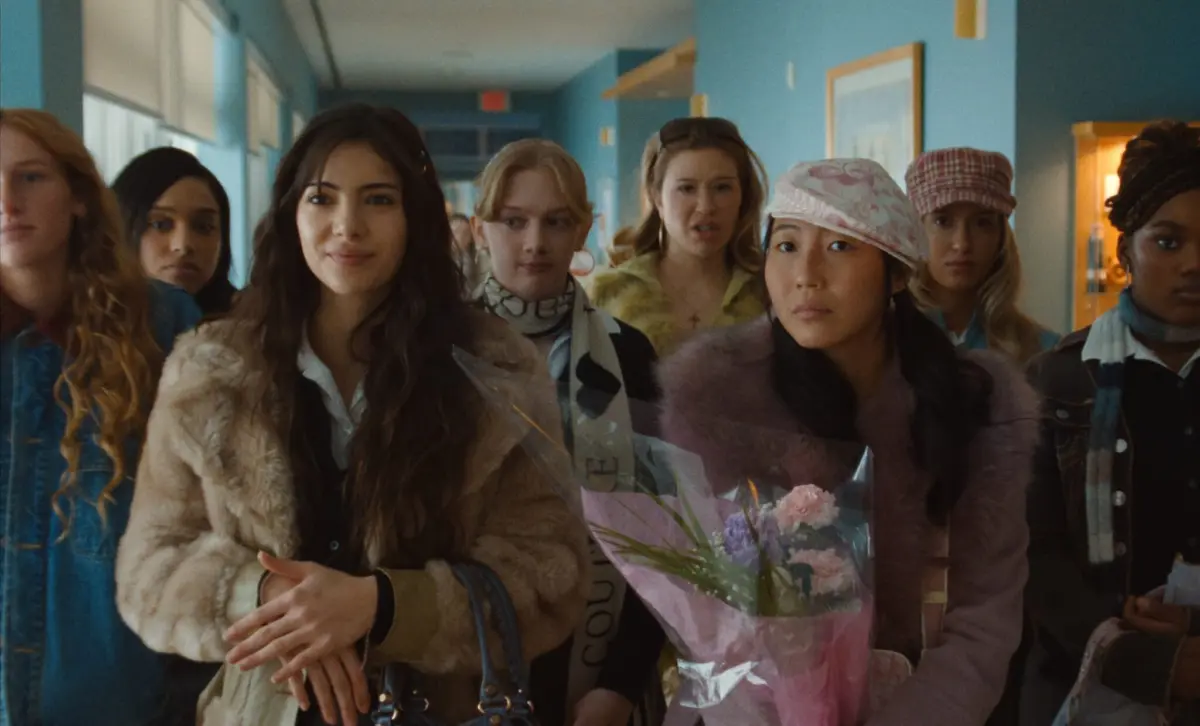
Enter Netflix’s The Body, an eight-part contemporary series that attempts to fuse the hyper-specific angst of the early 2000s coming-of-age experience with queer sexual awakenings, demonic possession, obsessive spiritual fervor, and mass hysteria. Drenched in heavy Catholic iconography, traditional dogma, and Y2K-era nostalgia, the series positions itself as a complex psychodrama, a theological cautionary tale, and a high school tragedy all at once.
However, despite a compelling premise that theoretically promises the structural verve of Jennifer’s Body crossed with the biting social satire of Mean Girls, the series ultimately falters. The Body struggles to maintain narrative momentum across its overlong runtime, succumbing to thin characterizations and a baffling inability to fully exploit its atmospheric settings. While it boasts flashes of brilliance—particularly in its visual direction and evocative handling of secular-versus-sacred motifs—the drama ultimately squanders its high-concept potential, leaving critics and audiences with an ambitious yet sluggish meditation on faith, doubt, and toxic peer dependency.
Read Also
Detailed Chronology: The Anatomy of a High School Haunting
Set against the claustrophobic backdrop of a small-town Catholic high school circa 2004, The Body establishes its world through an intoxicating cocktail of period-accurate details: dial-up modems, AOL Instant Messenger (AIM) chat logs, bedazzled team jackets, and a meticulously curated soundtrack of noughties needle drops. At the center of this insular universe are the Lions, the school’s nationally acclaimed all-girls dance troupe. Operating with high-stakes competitiveness and fierce territoriality, the squad is actively scouting for a new member to fill out its roster of glittery, skintight-leotard-clad performers. (The logistical reality of a traditional Catholic institution harboring an elite dance squad performing in short shorts is a detail the narrative cheerfully declines to interrogate, inviting the audience to simply surrender to the vibe.)
The Light and the Dark
The ensemble is anchored by its two dynamic, combustible team captains: Anya (Kristina Bogic), the untouchable golden girl, and Elise (Sara Boustany), the resident bad girl. Their relationship forms the emotional engine of the series—a classic light-and-dark dichotomy whose underlying romantic tension is consistently thwarted by the internalized stigmas of the era. Surrounding them is a chorus of largely interchangeable dancers, including twins Bailey (Kyra Pierce) and Brit Bradley (Phallon Pierce). While notable as the squad’s only Black members, the twins are unfortunately relegated to a recurring, thin running joke centered on the fact that outsiders cannot tell them apart.
The Auditions and the Outsiders
The narrative’s inciting incidents truly kick off during open tryouts, which introduce two starkly contrasting candidates:
- Grace Franklin (Sofia Wylie): The polished, exceptionally popular niece of the school’s resident clergyman, Father Franklin (Nnamdi Asomugha). Grace embodies systemic privilege and effortless social capital.
- Lisbeth Anderson (Geena Meszaros): A homely, ostracized newcomer residing in charity housing. Lisbeth’s familial background is rooted in a splinter religious group bearing all the hallmarks of a cult, cementing her status as an outcast.
While Grace inevitably secures the coveted open spot on the Lions, Lisbeth is granted a superficial "pity invite" to the troupe’s exclusive Halloween gathering. The venue—an abandoned convent locally dubbed "The Devil’s House"—serves as a prime example of the show’s missed opportunities. Despite its rich historical lore and atmospheric potential, the location is utilized with a baffling lack of imagination; the narrative treats it with such generic anonymity that the party could have just as easily been staged in a suburban barn.
The Initiation and the Aftermath
The Halloween festivities double as a hazing ritual for Grace. Under the influence of MDMA (molly), the girls participate in a pseudo-satanic summoning circle, treating dark promises and demonic invocations with the casual, impulsive disregard characteristic of intoxicated teenagers.
However, the morning light brings chilling real-world consequences. Grace is discovered unresponsive in her bed, plunging the community into immediate panic and forcing the Lions into a frantic conspiracy to align their stories. Sensing an opportunity for upward social mobility, Lisbeth aggressively inserts herself into Anya’s inner circle. Despite her transparently manipulative machinations, the entire squad falls effortlessly under her spell. Meszaros delivers a standout performance, anchoring her character’s one-dimensional villainy with an unhinged, performative religiosity that remains consistently compelling even when the surrounding script falters.
As medical professionals struggle to diagnose Grace’s comatose state, the remaining members of the Lions begin experiencing a cascade of shared hallucinations and borderline-supernatural phenomena. These eerie occurrences quickly ripple outward, catalyzing a community-wide bout of mass hysteria reminiscent of the Salem witch trials. Whether these visions stem from actual demonic intervention or collective psychological trauma remains purposefully ambiguous, highlighting how grief and fear are weaponized by various factions within the town to secure their own objectives.

Supporting Context & Metrics
To understand the broader cultural and industrial reception of The Body, one must examine its position within Netflix’s broader content strategy for YA supernatural thrillers.
Production and Narrative Metrics
- Episode Count: 8 episodes, heavily serialized.
- Runtime per Episode: ~55 to 65 minutes. (Critics have universally noted that this extended runtime creates significant pacing drag, particularly across the back half of the season.)
- Setting: Fictional Catholic high school, circa autumn 2004.
- Core Themes: Toxic female friendship, religious fanaticism, queer coming-of-age, Y2K technological isolation, and social contagion.
The Aesthetics of Y2K Nostalgia
One of the series’ undeniable triumphs lies in its commitment to its period aesthetic. The production design captures a distinct historical sweet spot: a time when teenagers possessed cell phones with limited utility, relied heavily on AIM away messages for emotional communication, and navigated social hierarchies without the panoptic gaze of modern Instagram or TikTok. As critics frequently observe, the psychological contagion depicted in The Body would look fundamentally different in the era of social media; the show wisely harnesses the pre-smartphone era’s unique brand of isolated, insular panic.
Furthermore, the cinematography occasionally achieves moments of genuine high art. The series excels when it visually parallels sacred and secular rituals, drawing striking aesthetic equivalencies between Holy Communion, drug-induced euphoria, and high school confessionals.
Official Statements and Critical Reception
While Netflix has heavily promoted The Body as a prestige entry into its growing library of dark teen dramas, early critical consensus has pointed toward a frustrating disparity between the show’s high-concept aspirations and its execution.
"On paper, a show like The Body should be thoroughly enjoyable. Maybe not good in the strictest, most prestige TV sense, but fun, at least. But while it does have moments of brilliance—its ability to simultaneously mirror scenes of communion, ecstasy, and confession across both secular and religious settings—it doesn’t live up to the promise of its premise."
— Lead Television Critic Review
Industry insiders have noted that the series suffers from a reluctance to fully commit to its own absurdity. Unlike the flamboyant, blood-soaked excesses of Ryan Murphy productions or the razor-sharp self-awareness found in contemporary satirical horror hits like Widow’s Bay, The Body frequently plays its melodramatic beats with a straight face. This tonal rigidity prevents the series from achieving the gleeful, campy entertainment value that its premise practically begs for.
Cast performances, conversely, have received widespread praise. Kristina Bogic and Sara Boustany have been singled out for their nuanced portrayal of codependent, emotionally repressed teenage friendship. Additionally, Jackson Kelly’s portrayal of Leo—Lisbeth’s sincere, endearing outsider brother—provides a welcome emotional anchor amidst a sea of archetypal malice. Yet, critics emphasize that these strong individual performances are continually undermined by a screenplay that treats its secondary characters with perfunctory indifference.
Future Outlook: Will The Body Rise Again?
As The Body concludes its eight-episode run, the series pivots sharply into surreal territory, culminating in a final-act twist clearly designed to secure a second-season renewal from Netflix executives.
Prospects for Season 2
The narrative foundation for a potential second season hinges on whether the creative team can rectify the structural flaws that plagued the debut outing. To earn a sustained audience, future episodes must:
- Deepen Character Development: Move beyond rudimentary archetypes and provide the supporting cast—particularly marginalized characters like the Bradley twins—with authentic narrative agency and internal psychological depth.
- Embrace Tonal Liberality: Lean harder into either high-camp excess or self-aware satire, capitalizing on its atmospheric locations (such as the underutilized abandoned convent) rather than playing standard teen drama tropes straight.
- Tighten the Pacing: Streamline narrative arcs to eliminate the mid-season drag that hampered the momentum of the inaugural run.
Conclusion
Ultimately, The Body remains a fascinating missed opportunity. It stands as a testament to the enduring appeal of stories about defiant young women rejecting patriarchal and institutional control. Its failure is not one of imagination, but of execution—a poignant reminder of how easily brilliant stylistic choices, strong acting talent, and evocative atmospheric aesthetics can be diluted by overlong, thinly sketched writing. For audiences willing to wade through its pacing issues for the sake of evocative Y2K aesthetics and moments of visual brilliance, The Body offers a passable diversion; for those seeking the razor-sharp bite of its cinematic forebears, it serves as a frustrating reminder of what could have been.




Comments
Facebook App ID not configured. Please add it in the Customizer.