
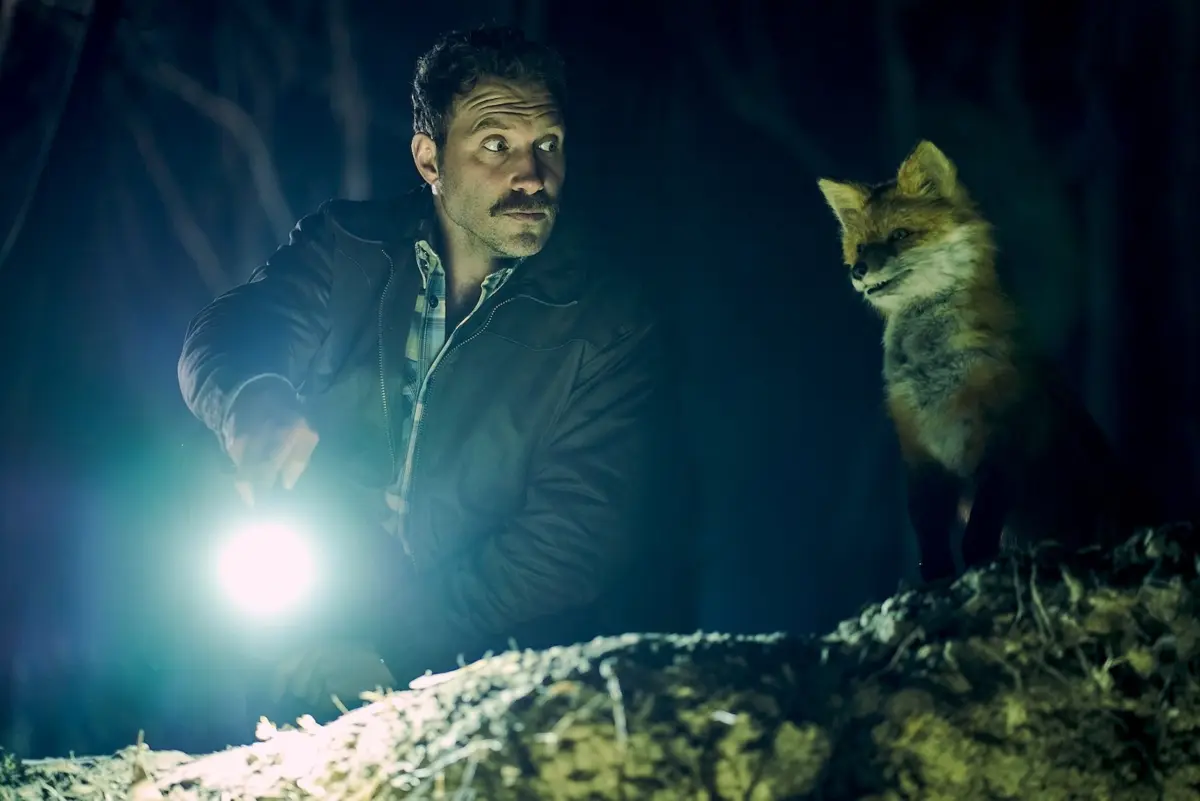
In the contemporary landscape of cinema, a distinct thematic current has steadily risen to the forefront of auteur-driven storytelling: the perilous delusion of male social engineering. Across various genres, filmmakers are increasingly dissecting the archetype of the man who seeks to sculpt, alter, or domesticate a female partner to satisfy his own narcissistic or idealized projections, only to be met with catastrophic and deeply ironic subversion. This cinematic motif—a satirical, often macabre rejection of the Pygmalion myth—finds its most surreal and eccentric manifestation yet in The Fox, an upcoming black comedy directed and written by Dario Russo.
Slated for theatrical release on December 4, 2026, The Fox effortlessly marries absurdist rural fable with biting psychological satire. The project immediately demands attention not merely for its high-concept premise, but for its extraordinary ensemble. The film features Academy Award winner Olivia Colman voicing a cunning, supernatural fox and boasts one of the final cinematic performances of the legendary Sam Neill, who portrays a philosophical talking magpie before his passing earlier this year.
At its core, The Fox explores the delicate architecture of rural wealth, broken engagements, and magical realism. Anchored by performances from Jai Courtney and Emily Browning, Russo’s sophomore feature attempts to construct a modern Australian folklore where the emotional stakes remain agonizingly human, even as the narrative spirals into the domain of the absurd. This executive overview explores the anatomy of The Fox, situating it within broader cinematic trends, detailing its production and narrative mechanics, and evaluating its cultural significance ahead of its wide release in late 2026.
Read Also
Detailed Chronology: From Concept to the Absurdist Screen
The genesis of The Fox did not arrive overnight; it is the culmination of years of thematic development by writer-director Dario Russo, who sought to interrogate the friction between modern romantic disillusionment and ancient folklore traditions.
The Conceptual Seed and Early Development
Dario Russo, celebrated for his distinct aesthetic sensibilities, initially conceived the project as an exercise in modernizing the classic fable. Russo wanted to explore the psychological architecture of an affluent, complacent rural heir whose primary life crisis stems from romantic betrayal. Rather than turning to traditional relationship counseling or legal mediation, Russo’s protagonist stumbles into an encounter with the uncanny.
The director’s vision was explicitly rooted in the creation of a uniquely Australian brand of magical realism—one where the bush is not just a backdrop, but an active, supernatural participant in human folly. Early script drafts focused on refining the balance between pitch-black comedy and genuine emotional pathos. Russo deliberately designed the animal characters—the cunning Fox voiced by Olivia Colman and the world-weary Magpie voiced by Sam Neill—not as cute, anthropomorphic sidekicks, but as ancient, sardonic arbiters of chaos who treat human romantic misery with aristocratic indifference.
Casting and Production Milestones
Casting began taking shape as the script garnered attention across international marketplaces for its audacious blend of high art and low comedy. Securing Olivia Colman to voice the titular rogue fox established the film’s pedigree, ensuring that the animal characters would carry immense dramatic weight and comedic timing. Tragically, the production also marks a poignant milestone in cinema history: it features one of the final performances by Sam Neill, whose iconic voice brings gravitas and dry wit to the role of the talking magpie.
Principal photography captured the sun-drenched, isolating expanse of rural Australia, contrasting the manicured estates of the wealthy landowning class with the wild, untamed periphery of the bush. Alongside Colman and Neill, the production assembled a formidable ensemble cast, including Jai Courtney as the affable yet deeply flawed heir Nick, Emily Browning as his beleaguered fiancée Kori, alongside supporting turns from Claudia Doumit (The Boys) and Damon Herriman (Neagley).
As post-production wrapped, industry insiders began positioning The Fox as one of the most unpredictable releases on the upcoming theatrical calendar. The decision by distributors to slate the film for a December 4, 2026 premiere signals confidence in its ability to counter-program against traditional year-end prestige dramas with a jolt of subversive, dark comedic energy.
Supporting Context & Metrics: Deconstructing the "Fix-Her-Upper" Trope
To fully appreciate the cultural resonance of The Fox, one must examine the cinematic ecosystem it inhabits. The trope of the man attempting to reshape a woman to fit his internal mold is as old as narrative art itself, traceable from Ovid’s Metamorphoses (the myth of Pygmalion) to contemporary psychological thrillers and dark satires like Obsession.
The Pygmalion Complex in Modern Cinema
In recent years, critical discourse has increasingly scrutinized the "man wanting to change a woman for his own selfish desires" trope. Where classic Hollywood melodramas often romanticized this transformation—framing the male protagonist as a savior or an architect of perfection—modern cinema delights in the subversion of this fantasy. Contemporary filmmakers recognize that when a partner is treated as a DIY renovation project, the resulting backlash from agency and identity is explosive.
The Fox weaponizes this exact thematic tension. The official synopsis outlines a textbook cautionary tale of male hubris:
Nick (Jai Courtney), affable heir to a wealthy rural landowner, discovers his fiancée, Kori (Emily Browning), is cheating on him and wants nothing more than to just fix the problem. One night, he captures a rogue Fox (Olivia Colman), and she offers him a trade-off: if Nick lets her live, the Fox will help him save his relationship. All he has to do is push Kori into a magic hole with the power to change her into the perfect partner. Nick follows the Fox’s advice and the Kori who re-emerges seems to be everything he ever wanted. Until her strange new quirks make him question his decision.
Narrative Metrics and Cast Synergy
The mechanics of this plot rely heavily on the elasticity of moral boundaries within a dark comedy framework. The structural elements can be broken down into key analytical metrics:
- The Catalyst: Infidelity met not with communication, but with transactional desperation.
- The Supernatural Intermediary: A talking, apex-predator fox offering a Faustian bargain.
- The Instrument of Change: A literal "magic hole" in the earth—a brilliantly tactile, folkloric metaphor for shortcuts in emotional labor.
- The Pivot Point: The realization that absolute perfection breeds alienation, turning the "fixed" partner into an uncanny, unpredictable entity.
Furthermore, the ensemble cast represents a masterclass in tonal balance. Jai Courtney’s knack for playing strapping figures burdened by latent cluelessness makes him an ideal foil for the razor-sharp intellectual dominance of Colman’s vocal performance. Emily Browning bridges the gap between vulnerability and uncanny metamorphosis, ensuring that Kori remains a compelling figure even after her supernatural alteration.
Official Statements & Creative Vision
Dario Russo has been vocal about the underlying philosophy driving The Fox, emphasizing that the film’s absurdity is anchored in genuine psychological observations about human relationships.
Director’s Intent: Modern Fables for an Absurd Reality
In promotional interviews surrounding the film’s marketing rollout, Russo articulated his ambition to bridge classical folklore with contemporary satire. "The story came about in an attempt to create a modern fable about supernatural Australian foxes," Russo explained. He noted that while the emotional struggles depicted in the film are entirely real—dealing with betrayal, insecurity, and the illusion of control—they are deliberately placed within "a slightly absurd version of our reality."
This friction between emotional authenticity and surrealism is what defines the director’s artistic signature. By utilizing native Australian fauna as vocal, cynical commentators on human behavior, Russo taps into a long-standing tradition of magical realism that uses non-human perspectives to expose human vanity.
Cast and Industry Reception
While formal press junkets are still ramping up ahead of the December 2026 premiere, early reactions from industry tastemakers who have previewed the trailer highlight the film’s uncompromising tone. The blending of high-stakes romantic farce with bleak, earthy humor has drawn comparisons to the works of Yorgos Lanthimos and classic British black comedies, yet with an unmistakably sun-baked, antipodean grit.
The participation of Sam Neill adds a layer of poignant industry reverence. As one of his final completed works, Neill’s performance as the talking magpie is expected to serve as a spiritual anchor for the film’s eccentric menagerie, blending his trademark charm with the dark, acerbic wit demanded by Russo’s script.
Future Outlook: Cultural Impact and Theatrical Prospects
As the industry looks toward the winter box office of late 2026, The Fox occupies a fascinating space. It arrives not as a franchise-driven IP or a standard awards-season biopic, but as an audacious, high-concept original comedy that trusts audiences to embrace its bizarre premise.
Box Office Viability and Counter-Programming
Releasing on December 4, 2026, positions The Fox strategically. While major studios unleash their heavy-hitting holiday blockbusters and traditional family fare, Russo’s film provides essential counter-programming for cinephiles, fans of dark comedy, and followers of prestige television talent looking for something dangerously unconventional. The inclusion of internationally recognized names like Olivia Colman, Sam Neill, Jai Courtney, and Emily Browning guarantees robust global visibility, transcending the traditional limitations of indie-leaning dark comedies.
Long-Term Legacy within the Subversive Romance Subgenre
Beyond its immediate theatrical run, The Fox has the potential to become a touchstone in the evolving conversation regarding gender dynamics and cinematic tropes on screen. By literalizing the destructive impulse to "fix" a partner through a magical hole and a sarcastic vulpine guide, the film offers a cathartic, laughing-in-the-dark critique of toxic domestic idealism.
Ultimately, The Fox reminds us that nature cannot be negotiated with, romantic partners are not cars to be tuned up, and magical foxes should never, under any circumstances, be trusted. When the film lands in theaters this December, audiences will find themselves questioning not only Nick’s questionable decision-making, but their own definitions of what it means to desire perfection.


Comments
Facebook App ID not configured. Please add it in the Customizer.