
Executive Overview
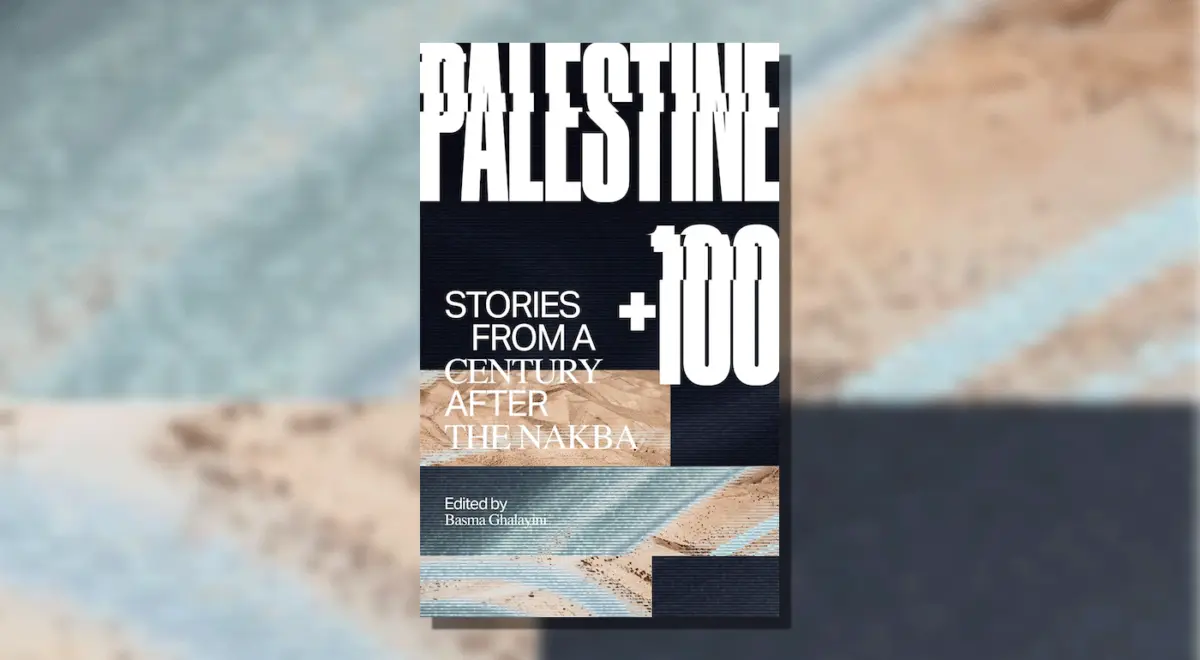
What does science fiction look like when written by a society undergoing genocide, displacement, and systemic erasure? This is the central, haunting question at the heart of Palestine +100, a groundbreaking speculative anthology edited by Basma Ghalayini and originally published in the United Kingdom by Comma Press (with US distribution by Deep Vellum). Set in the year 2048—marking exactly one century since the Nakba, the catastrophic ethnic cleansing and mass displacement of Palestinians that accompanied the creation of the State of Israel in 1948—the anthology features twelve distinct speculative visions of the future.
The collection bridges traditional science fiction tropes, experimental narrative structures, and deep cultural idioms native to Palestinian life. While speculative fiction is historically rooted in extrapolating current societal trajectories into alternate tomorrows, Palestine +100 operates under a profoundly different imperative. It asks how artists can, or even should, filter massive, generational suffering out of their creative outputs. Through the lens of Ghalayini’s editorial vision, twelve writers attempt to answer this challenge, producing a tapestry of stories that range from technocratic dystopias and psychological horror to poignant magical realism and unexpected moments of transnational and interstellar connection.
Reviewed through the bimonthly Reactor column Found in Translation, which examines translated speculative fiction from diverse linguistic landscapes, the anthology holds a unique place in contemporary world literature. Although not every piece in the collection is a direct translation from Arabic—some authors write in English, though informed by the rich linguistic patterns and cultural frameworks of refugees—the collection as a whole underscores a vital literary truth: there is always an expansive universe of storytelling waiting to be discovered beyond the dominant Anglocentric publishing ecosystem. Far from succumbing to despair, Palestine +100 uses speculative fiction not as an escape from reality, but as a crucible for reclaiming historical memory, asserting the right to exist, and imagining a future where Palestine not only survives, but endures.
Read Also
Detailed Chronology: A Journey Through the Twelve Visions of 2048
The architecture of Palestine +100 is built upon twelve distinct narrative responses to the year 2048. Each story explores a different facet of historical trauma, technological control, and resistance, mapping out a century of displacement through the speculative imagination.
1. Song of the Birds by Saleem Haddad
Opening the anthology, Saleem Haddad presents a chillingly grim landscape in a liberated Gaza. Rather than signaling an immediate utopian dawn, liberation is shadowed by a psychological crisis: a spike in suicides among the youth. The narrative follows a young girl haunted by visions of a destroyed land following her brother’s death. Haddad deploys elements of psychological horror to examine how trauma evolves, exploring a sobering premise: under extreme colonization, even hope, longing, and the memory of struggle can be weaponized as colonial tools against a vulnerable population.
2. Sleep it Off, Dr. Schott by Selma Dabbagh
Selma Dabbagh thrusts readers into an intensely hyper-surveilled future where interpersonal relationships are monitored by the state. The story follows a young woman tasked with surveilling a delicate, potentially romantic relationship between an Israeli researcher and a Palestinian researcher. Told entirely through a mosaic of digital logs, audio recordings, and intercepted messages, Dabbagh’s epistolary style captures the paranoia of algorithmic control and the quiet tragedy of discovery in an unyielding security apparatus.
3. N by Majd Kayyal (Translated by Thoraya El-Rayyes)
Majd Kayyal and translator Thoraya El-Rayyes offer a quieter, structurally inventive tale that literalizes the concept of the two-state solution. Following the complete destruction of Gaza, international pressure forces Israel to concede to the liberation of Palestine. An amendment establishes that both countries will henceforth occupy the exact same physical landmass, but within entirely separate, parallel realities accessed through strictly regulated borders. In a poignant twist, only Palestinians born after the amendment are permitted to traverse these realities, exploring the profound generational disconnect of a divided homeland.
4. The Key by Anwar Hamed (Translated by Andrew Leber)
Blending science fiction with the suffocating dread of horror, Anwar Hamed’s The Key imagines a world where Israeli scientists—exhausted by decades of intractable conflict—attempt a technological fix to coexistence. They erect invisible, omnipresent walls across the land that can only be crossed using specific algorithmic codes. However, the system backfires psychologically: Israeli citizens become plagued by phantom home invasions, perpetually haunted by the terror of an unseen neighbor crossing the threshold. Hamed cleverly subverts the enduring symbol of the actual keys held by Nakba survivors, transforming it into a manifestation of settler anxiety.
5. Digital Nation by Emad El-Din Aysha
In a high-stakes cyber-satire, Emad El-Din Aysha depicts a scenario where a massive, coordinated cyberattack converts every digital device, network, and automated infrastructure in Israel into the Arabic language. Automated cars grind to a halt, public address systems blare Arabic music, and national media shifts entirely to Palestinian-centric broadcasting. The resulting societal collapse exposes the fragility of technocratic states and ultimately paves the way for the emergence of a unified Palestinian state through sheer administrative paralysis.
6. Personal Hero by Abdalmuti Maqboul (Translated by Yasmine Seale)
Virtual reality serves as a poignant medium for mourning and political resistance in Abdalmuti Maqboul’s Personal Hero, translated by Yasmine Seale. The story explores a future where citizens utilize advanced VR technology to resurrect and interact with historical Palestinian figures. The narrative centers on an elderly daughter’s emotional, virtual encounter with her father, the legendary revolutionary leader Abd Al-Qadir al-Husayni, who was killed in combat in 1948. The story bridges the chasm between archival history and intimate familial longing.
7. Vengeance by Tasnim Abutabikh
Set in a grim ecological future where citizens are issued mandatory breathing masks at birth due to severe environmental collapse, Tasnim Abutabikh’s Vengeance follows a young man consumed by a desire for revenge. Seeking to settle an old score, he infiltrates the inner circle of the man he intends to kill. Despite the harsh, unforgiving nature of this dystopian world, the characters actively resist moral degradation, forging networks of mutual aid to protect their shared cultural identities against institutional erasure.
8. Application 39 by Ahmed Masoud
Infusing the collection with dark irony, Ahmed Masoud imagines a Gaza City Republic that has spent decades rebuilding into a sophisticated, high-tech enclave following a cycle of renewed invasions and subsequent tense peace. Two brothers, survivors of the previous devastation, submit a joke application for Gaza to host the Olympic Games. To the shock of the international community—and themselves—the application is accepted, sparking a cascade of diplomatic absurdities, bureaucratic nightmares, and deeply felt emotional confrontations.
9. The Association by Samir El-Youssef (Translated by Ralph Cormack)
Drawing on the conventions of noir fiction, Samir El-Youssef and translator Ralph Cormack depict a future where peace has been purchased through the systematic, state-mandated erasure of history. Studying the past is outlawed, and the peace is maintained through absolute collective amnesia. When a prominent historian is assassinated, an investigative journalist who has never questioned the status quo stumbles into a dangerous rabbit hole, exposing the violent cost of enforced forgetting.

10. Commonplace by Rawan Yaghi
Rawan Yaghi delivers the most deeply internal narrative in the anthology. Set in a reality where daily life remains persistently scarred by routine military attacks and bombings, a black-market dealer navigates his day while reflecting on his brilliant, deeply loved sister, who was tortured and left to die years prior. Like Kayyal’s N, Yaghi’s story prioritizes the unbreakable bonds of family and the quiet, persistent grief that persists beneath the macro-political landscape.
11. Final Warning by Talal Abu Shawish (Translated by Mohamed Ghalainey)
Perhaps the most unexpected and hopeful entry in the collection, Talal Abu Shawish’s Final Warning (translated by Mohamed Ghalainey) describes a sudden technological blackout that forces both Palestinians and Israelis out of their homes. As mass confusion takes hold, a massive alien spacecraft descends upon the region. Rather than initiating a traditional invasion narrative, the arrival of extraterrestrial visitors offers a bittersweet, unifying possibility of external connection that transcends terrestrial divisions.
12. The Curse of the Mud Ball Kid by Mazen Maarouf (Translated by Jonathan Wright)
Serving as the anthology’s climax, Mazen Maarouf’s extended novella—translated by Jonathan Wright—is a multi-chapter masterpiece of magical realism and bleak science fiction. Set in a fractured world where only a single Palestinian survivor remains, the occupier state does not view him as a defeated subject, but as a living time bomb. He physically stores the collective kinetic energy and memory of all those who were killed before him. If he dies, the entire occupying society dies with him, establishing a precarious, haunting equilibrium of mutual survival.
Supporting Context & Metrics: Publishing, Translation, and Cultural Reach
To fully understand the significance of Palestine +100, one must examine the socio-cultural ecosystem of speculative translation and international publishing. Speculative fiction translated into English remains an underrepresented segment of the global literary market, historically comprising a fraction of total translated works. Anthologies like Palestine +100 challenge these systemic imbalances by bringing marginalized voices into the global conversation through the medium of speculative genre fiction.
| Publication Metric / Detail | Value / Description |
|---|---|
| Original Publication Year | 2019 (United Kingdom) |
| Publishers | Comma Press (UK) / Deep Vellum (US) |
| Editor | Basma Ghalayini |
| Total Contributing Authors | 12 Writers |
| Literary Genres Represented | Science Fiction, Dystopia, Noir, Magical Realism, Horror |
| Primary Languages Bridged | Arabic to English (alongside original English contributions by diaspora authors) |
| Core Temporal Setting | The Year 2048 (Centenary of the Nakba) |
The integration of multi-lingual authors, translators, and diaspora writers highlights the complexity of Palestinian cultural production. Translators such as Thoraya El-Rayyes, Andrew Leber, Yasmine Seale, Ralph Cormack, Mohamed Ghalainey, and Jonathan Wright play a pivotal role as literary architects, ensuring that the linguistic nuances, idiomatic expressions, and emotional registers of Arabic speculative thought resonate accurately within the Anglophone literary landscape.
Official Statements and Critical Reception
The publication of Palestine +100 has drawn considerable attention from literary critics, human rights advocates, and scholars of speculative fiction. Reviewers have consistently praised the collection for subverting traditional dystopian tropes by grounding them in real-world historical trajectories rather than abstract imaginative flights.
Editor Basma Ghalayini noted in interviews surrounding the anthology’s launch that the project was conceived to challenge both internal and external limitations placed on Palestinian creators:
"We wanted to give writers the space to look past the immediate horizon of occupation. Asking what Palestine will look like in 100 years is a daunting exercise, but it is also an assertion of our right to a future—to imagine, to err, to build, and to remember."
Reviewers in literary columns, including Reactor’s Found in Translation, have emphasized that while the anthology depicts visions born from extreme trauma, it fundamentally rejects fatalism. As literary critics have observed, the collection operates as a testament to collective memory:
"Palestine +100 could be brushed aside as too bleak, but the book doesn’t cause a sense of defeat: instead, it reinforces the hopes for a Palestine with a future. Hope is present from start to finish… as reminders that human connections are precious, and that collective memory is a goal worth fighting for, even—or especially—after liberation."
Future Outlook: The Enduring Legacy of Speculative Resistance
As global discussions surrounding human rights, displacement, and decolonization intensify, the literary significance of Palestine +100 continues to expand. By utilizing science fiction as a political and aesthetic vehicle, the anthology demonstrates that speculative art is not merely an escape into distant galaxies, but a vital mechanism for confronting terrestrial injustices.
Looking forward, the success of collections like Palestine +100 signals a growing appetite within international publishing for translated speculative fiction that breaks away from Eurocentric techno-futures. It paves the way for future anthologies that center marginalized and occupied populations, proving that imagination is an unquenchable human resource. In envisioning 2048 through the prism of memory, resistance, and speculative invention, the contributors to Palestine +100 have ensured that the horizon of Palestinian liberation remains vividly visible, asserting that a people who can write their futures into existence cannot be permanently erased.


Comments
Facebook App ID not configured. Please add it in the Customizer.