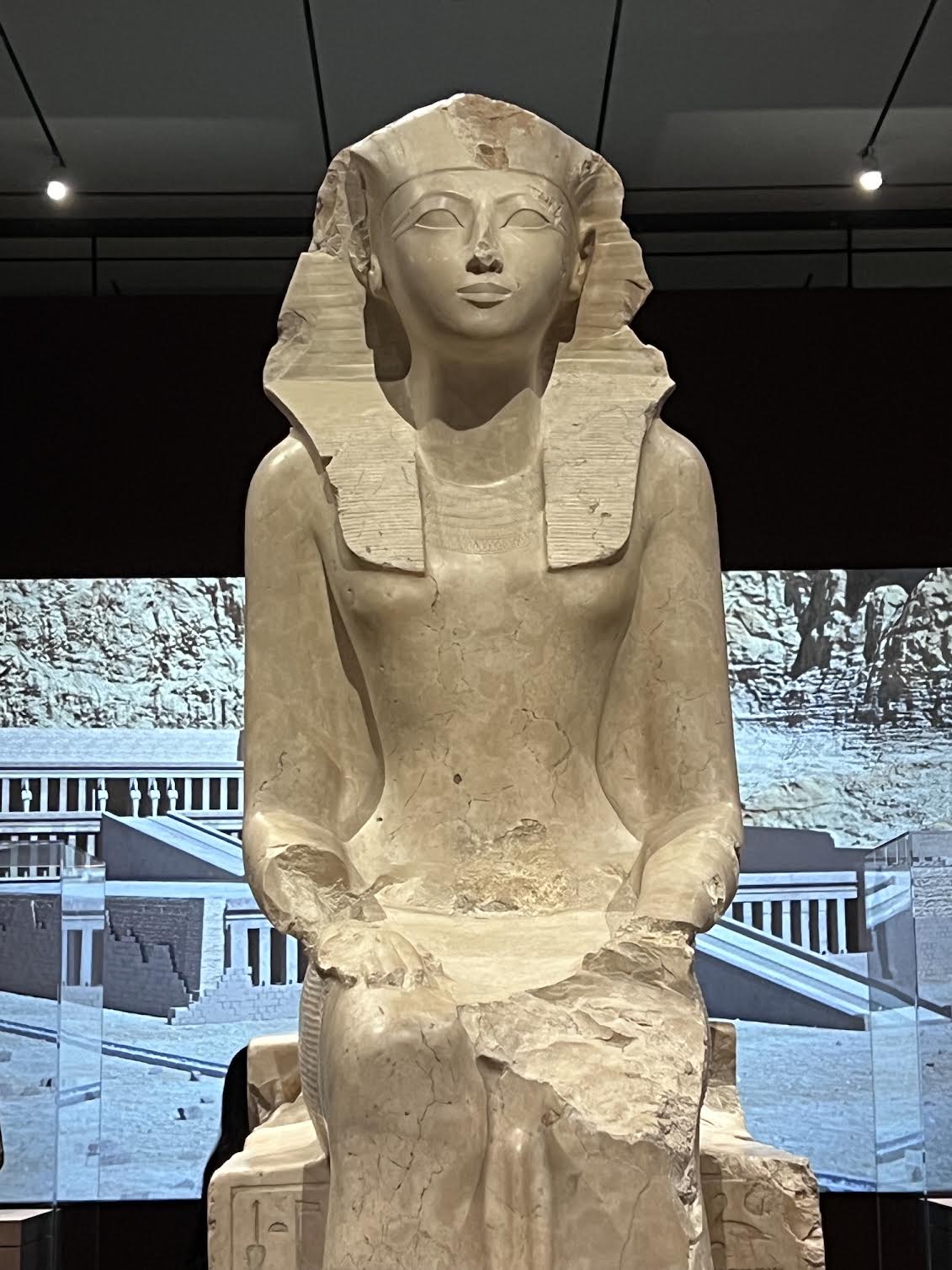
The Museum of Fine Arts (MFA) in Boston has long stood as a cultural cornerstone for the preservation and exhibition of antiquities, drawing scholars, historians, and art enthusiasts from around the globe. In its latest major exploration of ancient Mediterranean civilizations, the institution has turned its lens toward the Nile Valley with a specialized focus on the unconventional monarchs of antiquity. Titled Maverick Kings: Ancient Egyptian Pharaohs, this landmark exhibition offers a rare perspective on rulers who challenged traditional dynastic expectations, reshaped religious paradigms, and navigated geopolitical turmoil in ways that forever altered the trajectory of one of history’s most enduring civilizations.
This comprehensive report examines the core components of the Maverick Kings showcase, situating the artifacts within their broader historical and archaeological contexts. Beyond analyzing the exhibition itself, this feature explores how modern cultural institutions curate ancient history for contemporary audiences, the intersection of museum education and digital media, and the ongoing literary ecosystem—ranging from children’s educational guides to academic deep dives—that supports public engagement with Egyptology. Through a synthesis of curatorial analysis, historical overview, and related literary works by authors such as Mia Wenjen, this article provides an authoritative look at how ancient history continues to resonate in the modern cultural landscape.
Detailed Chronology: The Evolution of Ancient Egyptian Monarchy and the "Maverick" Rulers
To understand the significance of the artifacts featured in the MFA Boston exhibition, one must contextualize the chronological span of ancient Egyptian history. Spanning over three millennia—from the unification of Upper and Lower Egypt under the First Dynasty circa 3100 BCE to the conquest by the Roman Empire in 30 BCE—the Egyptian state relied heavily on the concept of ma’at (cosmic order, balance, and justice). Typically, pharaohs reinforced this order by maintaining religious orthodoxy, preserving bureaucratic stability, and building monumental architecture.
However, periods of crisis, foreign invasion, or radical ideological shifts occasionally produced rulers who broke the mold. These figures—the "maverick kings"—challenged established norms, provoking both condemnation from traditional scribes and awe from modern historians.
The Amarna Period and Akhenaten: The Ultimate Religious Revolution
Among the most notable figures associated with the concept of the unconventional pharaoh is Amenhotep IV, who later renamed himself Akhenaten (ruled c. 1353–1336 BCE). During the Eighteenth Dynasty—a high-water mark of Egyptian imperial power and wealth—Akhenaten enacted a radical religious and artistic revolution.
The Shift to Monotheism: Akhenaten diminished the power of the traditional priesthood of Amun at Thebes, closed temples dedicated to the old pantheon, and elevated the sun disk, the Aten, to the status of sole deity.
Artistic Naturalism: Artistic conventions that had remained stable for centuries were abruptly abandoned. Royal portraiture shifted away from idealized, muscular, and timeless divine youth toward a raw, expressionistic naturalism that depicted the royal family with elongated skulls, heavy-lidded eyes, and exaggerated abdominal curves.
Geopolitical Disruption: Operating from his newly founded capital at Akhetaten (modern-day Amarna), Akhenaten focused inward on his religious project, neglecting traditional foreign alliances. This period, while short-lived, represents one of the most drastic ruptures in Egyptian history, setting the stage for the traditionalist restorations led by his successors, including Tutankhamun.
The Kushite Pharaohs: The Twenty-Fifth Dynasty
Another critical era highlighted in exhibitions focusing on non-traditional leadership is the Twenty-Fifth Dynasty (c. 747–656 BCE), when rulers from the Kingdom of Kush (modern-day Sudan) assumed the throne of the pharaohs.
Reunification of a Divided Land: Led by monarchs such as Piye and Taharqa, the Kushite kings marched northward from Napata to rescue Egypt from political fragmentation and foreign Libyan domination.
Cultural Preservation: Ironically, these foreign conquerors presented themselves as the ultimate defenders of ancient Egyptian religious traditions. They restored decaying temples, adopted traditional coronation rituals, and commissioned monumental art that fused Egyptian iconography with distinct Nubian physical features and royal insignia.
The Assyrian Conflict: The reign of these "maverick" monarchs ultimately collided with the expansionist ambitions of the Neo-Assyrian Empire, leading to dramatic military campaigns that pushed the Kushite rulers back to their southern homelands, leaving a rich archaeological legacy in both Egypt and Sudan.
Supporting Context & Metrics: Exhibition Logistics and Public Engagement
The curation of ancient artifacts requires a delicate balance between historical rigor and accessible public presentation. The Maverick Kings exhibition at MFA Boston utilizes immersive gallery design, multimedia integration, and contextual labeling to bridge the gap between academic Egyptology and the general visitor.
Visitor Demographics and Educational Impact
Museum analytics indicate that special exhibitions focusing on ancient civilizations consistently drive high attendance figures across diverse demographic segments.
Intergenerational Appeal: Exhibitions on ancient Egypt possess a unique cross-generational draw, successfully engaging K-12 students, academic researchers, and senior museum patrons alike.
Digital Integration: The integration of multimedia resources—such as digital walkthrough videos, interactive timelines, and online educational guides—has expanded the reach of the exhibition far beyond the physical walls of the museum on Huntington Avenue. Modern museum strategies emphasize hybrid learning models, allowing educators to pair physical field trips with downloadable classroom materials.
The Literary Ecosystem of Egyptology
Public fascination with ancient Egypt is continuously fueled by a robust publishing ecosystem. From children’s literature designed to foster early historical curiosity to scholarly monographs examining repatriation ethics and provenance research, books play a vital role in shaping public perception.
Children’s Literature and Accessibility: Works such as 16 Great Children’s Books about Ancient Egypt provide educators and parents with vetted resources to introduce complex historical concepts to young learners. These books often focus on daily life, mythology, and the mechanics of archaeological excavation, transforming distant historical figures into relatable subjects.
Global Museum Discourse: Discussions surrounding ancient Egyptian collections increasingly intersect with contemporary debates over cultural heritage and the return of stolen artifacts. Public interest extends beyond aesthetic appreciation to critical examinations of how antiquities entered Western museum collections, as highlighted in broader museum critiques and comparative visits to institutions like the British Museum.
Official Statements and Curatorial Perspectives
Curators and museum administrators emphasize that exhibitions like Maverick Kings serve a dual purpose: they showcase exquisite material culture while challenging visitors to reconsider the simplistic narratives often found in popular media.
"When we look at the monumental sculpture and delicate jewelry of ancient Egypt, it is easy to view the civilization as a monolith that remained static for three thousand years," noted a senior curator associated with Mediterranean and Near Eastern antiquities. "Exhibitions that focus on transformative rulers—those who pushed boundaries, questioned religious dogma, or bridged cultural divides—remind us that ancient societies were dynamic, contested, and deeply human."
Furthermore, educational outreach coordinators stress the importance of contextualizing royal power within the broader administrative and labor structures of the ancient world.
"A pharaoh could not rule as a maverick in a vacuum," explains an institutional spokesperson. "Behind every unconventional decree or radical artistic shift was a vast network of scribes, artisans, priests, and laborers whose daily decisions kept the state functioning. Our goal is to bring those multifaceted stories to light."
Future Outlook: The Next Wave of Egyptological Research and Museum Programming
As archaeological methodologies evolve, the study of ancient Egypt continues to undergo a renaissance. Non-destructive imaging technologies, advanced chemical analysis of organic residues, and satellite archaeology are uncovering new dimensions of ancient settlements, burial practices, and trade networks.
Technological Advancements in Archaeology
Remote Sensing and LIDAR: Archaeologists are increasingly utilizing satellite imagery and LiDAR to map unexcavated urban centers beneath the Nile silt, revealing how cities expanded, contracted, and adapted during periods of political upheaval.
Bioarchaeology: Isotopic analysis of human remains provides unprecedented data on migration patterns, diet, and disease burdens across different social classes, offering a more complete picture of life under both traditional and "maverick" pharaohs.
Upcoming MFA Boston Programming and Cultural Integration
The Museum of Fine Arts, Boston, remains committed to maintaining a dynamic exhibition calendar that connects ancient history with modern artistic movements. Upcoming programming will continue to explore the intersections of historic preservation, community engagement, and contemporary art initiatives—such as the annual Art in Bloom festival and targeted explorations of American and international masters like Winslow Homer.
By continuously reinterpreting historical collections through fresh curatorial frameworks, institutions like the MFA ensure that antiquity remains a vibrant, conversational space for contemporary society. The legacy of Egypt’s maverick kings—marked by ambition, controversy, and profound artistic innovation—continues to challenge us to look beyond the surface of historical monuments and question the nature of power itself.

















Comments
Facebook App ID not configured. Please add it in the Customizer.