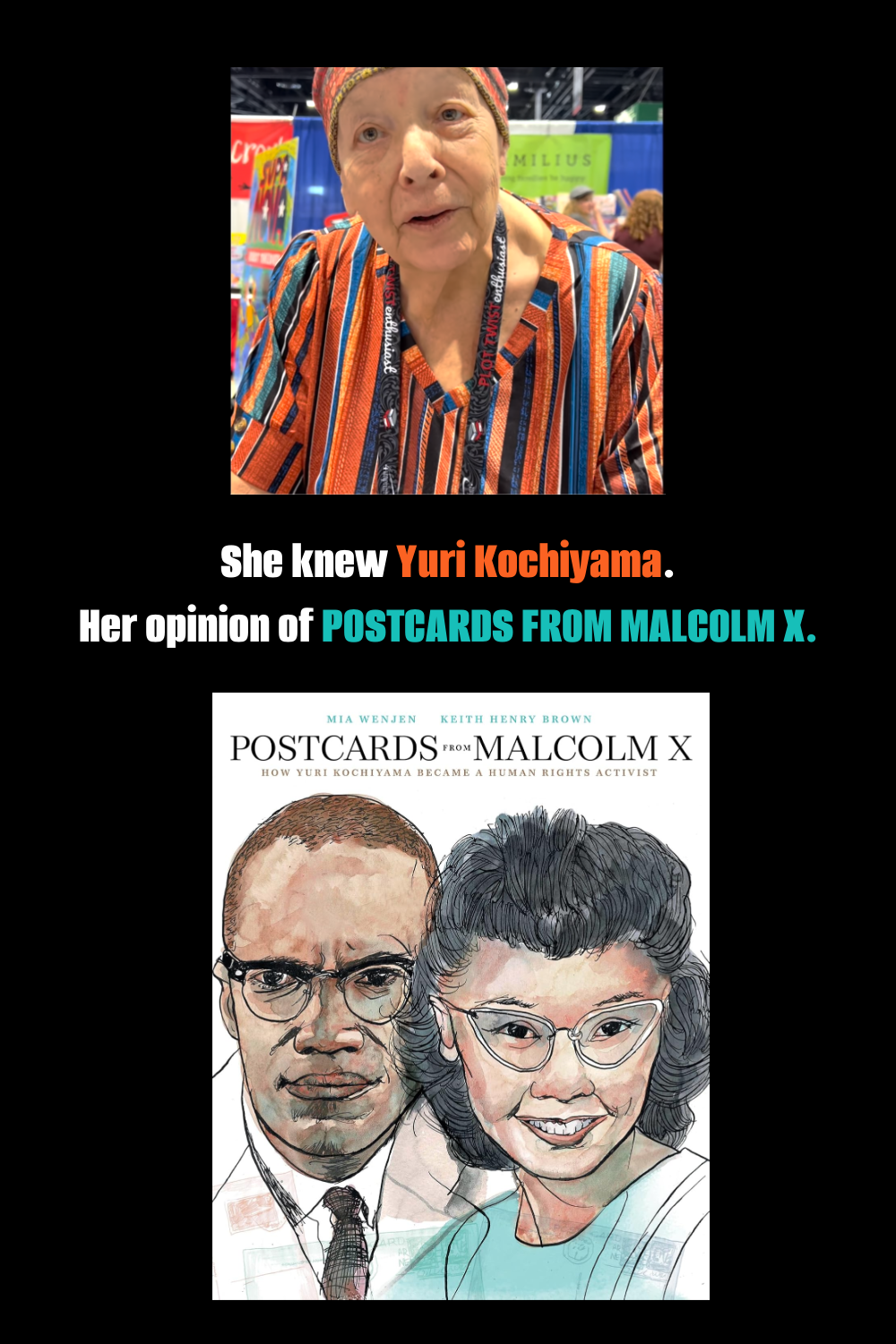
Book signings are rarely transactional; at their best, they function as dynamic cultural intersections where literature, history, and lived experience collide. During a recent American Library Association (ALA) event, author Mia Wenjen experienced one of these defining literary moments while presenting her critically acclaimed work, Postcards from Malcolm X: How Yuri Kochiyama Became a Civil Rights Activist. Standing in line to have her copy signed, a reader named Elana revealed an authentic personal connection: she had known the legendary civil rights activist Yuri Kochiyama during Kochiyama’s years living in Harlem.
This unexpected encounter transformed a standard convention stop into a profound validation of Wenjen’s biographical storytelling. For authors who document intersectional figures, hearing from someone who walked alongside their subject is the ultimate test of historical integrity. Kochiyama’s life—marked by her Japanese American internment during World War II, her subsequent relocation to Harlem, and her fierce, lifelong solidarity with Black liberation movements, including a deeply impactful friendship with Malcolm X—remains a masterclass in cross-racial activism.
This article explores the magical convergence of history and literature at the ALA convention, examines the enduring legacy of Yuri Kochiyama, highlights the importance of multicultural children’s literature in fostering youth activism, and surveys Wenjen’s extensive catalog of educational and culturally rich titles published by Red Comet Press and other independent houses.
Detailed Chronology: From Harlem Roots to the ALA Stage
To understand the weight of the encounter at the ALA event, one must trace the timeline of Yuri Kochiyama’s extraordinary life and the literary journey that brought her story to young readers.
The Foundation of an Activist
Born Mary Yuriko Nakahara in 1921 in San Pedro, California, Kochiyama’s early life was upended by the United States government’s forced removal and incarceration of over 120,000 Japanese Americans following the bombing of Pearl Harbor. Imprisoned in a concentration camp in Rohwer, Arkansas, Kochiyama experienced firsthand the devastating impact of state-sanctioned racism and xenophobia.
The Harlem Era and the Malcolm X Connection
Decades later, after relocating to Harlem, New York, Kochiyama underwent a profound political and social awakening. Immersed in the epicenter of the Civil Rights Movement, she forged a historic, life-changing alliance and friendship with Malcolm X. She was famously present at the Audubon Ballroom in Manhattan when Malcolm X was assassinated in 1965, an image captured in iconic photographs showing her cradling the dying leader. Kochiyama’s home became a sanctuary for revolutionaries, organizers, and thinkers from various racial and ethnic backgrounds, cementing her legacy as a bridge-builder between Asian American, Black, and Latinx liberation struggles.
The Literary Translation
Capturing a life of such magnitude for younger audiences requires immense care and historical precision. Mia Wenjen undertook this task in Postcards from Malcolm X: How Yuri Kochiyama Became a Civil Rights Activist, illustrated by Keith Henry Brown and published by Red Comet Press. The book explores how a young Japanese American woman transformed from a victim of wartime imprisonment into a fearless advocate for human rights, emphasizing the transformative power of cross-racial solidarity.
The ALA Encounter
During the ALA convention, where Red Comet Press hosted book signings, this history leapt off the page. Elana, a former neighbor and acquaintance of Kochiyama from her Harlem days, stood in the queue reading Postcards from Malcolm X. When she reached the front, she offered glowing praise, confirming that Wenjen had accurately captured the spirit, resilience, and essence of Kochiyama. This rare validation bridged the gap between historical text and living memory, creating an unforgettable milestone for both the author and the publisher.
Supporting Context & Metrics: The Rise of Youth Activism in Literature
The intersectional relationship between Yuri Kochiyama and the Black freedom struggle serves as a vital historical model for modern social justice movements. In an era marked by rising polarization, studying historical figures who crossed racial boundaries to fight oppression is more critical than ever.
The Demand for Multicultural Children’s Literature
Educational metrics and publishing trends indicate a surging demand for children’s and young adult literature that reflects diverse histories. Educators and librarians increasingly rely on titles that feature intersectional protagonists and youth activists. According to various children’s literacy advocates, books that spotlight civic engagement empower young readers to recognize their own agency.
Wenjen’s bibliography addresses this demand directly through curated resources and lists, such as:
86 Children’s Books for Young Activists: A comprehensive guide designed to introduce youth to civic responsibility, environmental justice, and human rights.
Multicultural Children’s Book Day Classroom Kits: Educational toolkits created to integrate diverse literature seamlessly into school curricula.
The Kids Will Save Us! (13 Children’s Books with Youth Activists): A curated exploration of youth-led movements depicted in contemporary and historical kidlit.
By contextualizing historical struggles alongside modern narratives, these resources ensure that children from all backgrounds see themselves as active participants in democracy and community care.
Official Statements and Reader Perspectives
The emotional core of Wenjen’s ALA experience is best captured through the words of readers who lived the history. In her recorded review, Elana articulated why Postcards from Malcolm X resonates so deeply with those who knew Kochiyama personally:
"It was so heartening to hear from Yuri’s contemporary that she thought I captured Yuri’s story. This is a story of a life-changing friendship. Their intersectional relationship is a model that we can follow today for cross-racial activism and support."
Publishers and literary institutions have likewise championed these narratives. Red Comet Press has consistently emphasized the necessity of publishing books that challenge young minds to think globally and empathetically. Independent publishing houses play a pivotal role in bringing marginalized histories to light, ensuring that stories like Kochiyama’s are neither diluted nor forgotten.
Furthermore, industry leaders at events like the Greater Roxbury Book Fair—where keynote speakers such as Lisa Cline-Ransom have advocated for authentic representation—reinforce the mission of modern children’s literature: to tell the truth about our collective past while inspiring a just future.
Future Outlook: A Continuing Legacy of Diverse Storytelling
As Mia Wenjen continues her literary career, her expansive catalog demonstrates a profound commitment to education, cultural preservation, and social justice. From historical biographies to explorations of global foodways and free speech, her works provide educators with versatile tools for classroom engagement.
Key Works in Wenjen’s Catalog
Barbed Wire Between Us (Illustrated by Violeta Encarnación): A poignant exploration of confinement, resilience, and human connection, supported by comprehensive, free downloadable teacher guides.
Fortune Cookies for Everyone! (Smithsonian) (Illustrated by Colleen Kong-Savage): Published by Red Comet Press, this book uncovers the surprising, multicultural history of a beloved treat.
The Traveling Taco: The Amazing and Surprising Journey of Many of Your Favorite Foods: A lively look at the diverse cultural roots behind everyday culinary staples.
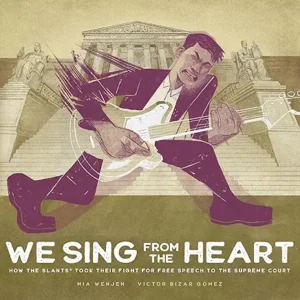
We Sing from the Heart: How the Slants® Took Their Fight for Free Speech to the Supreme Court: Chronicling the landmark legal battle fought by musician Simon Tam, this book champions First Amendment rights and Asian American identity.
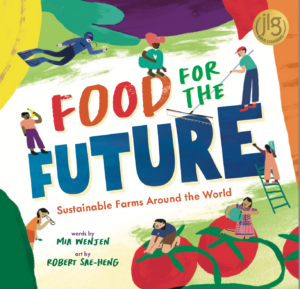
Food for the Future: Sustainable Farms Around the World (Illustrated by Robert Sae-Heng): A Bank Street College Best Children’s Book of the Year selection that highlights global ecological stewardship.
Sumo Joe and Changing the Game: Asian Pacific American Female Athletes: Inspiring titles focused on sportsmanship, cultural traditions, and breaking barriers.
Looking Ahead
Encounters like the one at the ALA convention serve as a powerful reminder of why literature matters. They prove that books are not static objects, but living conduits of memory, healing, and instruction. As educators, authors, and publishers look to the future, the integration of intersectional histories like Yuri Kochiyama’s will remain essential for raising a generation of empathetic, informed, and active global citizens.
For more information on Mia Wenjen’s books, signed copies, educator guides, and activist resources, visit Mia Wenjen’s Official Website or explore offerings from Red Comet Press.




Comments
Facebook App ID not configured. Please add it in the Customizer.